@ Škoda Auto a.s. / Škoda Storyboard
@ Volkswagen AG / VW Media
VS

Skoda Superb Combi vs VW ID.7 Touring – Which car suits you better?

Both models have their strengths – but which one suits you more?
Compare performance, efficiency, price and space directly: Skoda Superb Combi or VW ID.7 Touring?

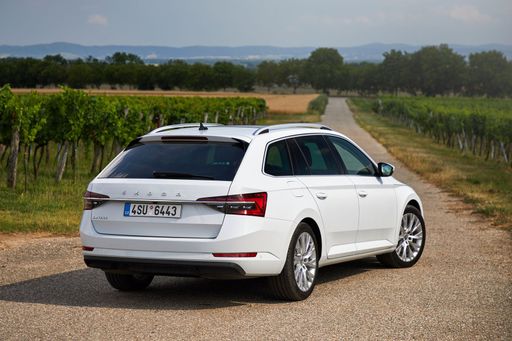
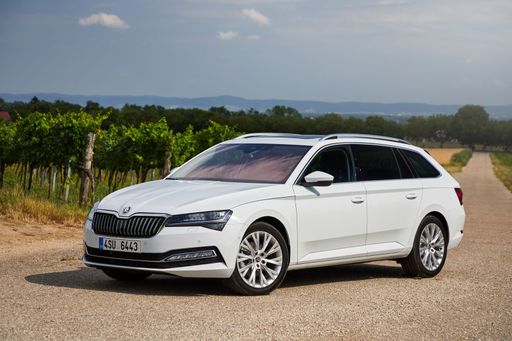
Superb Combi @ Škoda Auto a.s. / Škoda Storyboard

In the ever-evolving automotive landscape, the competition between traditional combustion engine vehicles and electric models is fiercer than ever. This article compares two formidable contenders: the Skoda Superb Combi and the VW ID.7 Touring. Both vehicles offer exceptional features, but they cater to different driving experiences and philosophies. Let's dive into the technical aspects and innovations each vehicle brings.
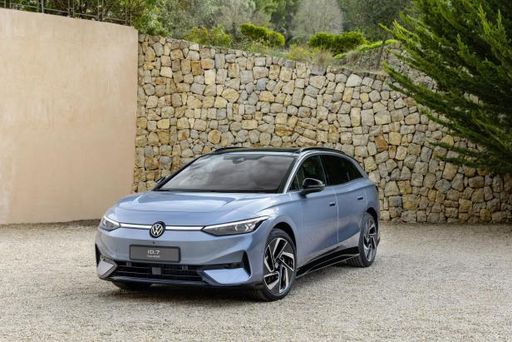
ID.7 Touring @ Volkswagen

Design and Dimensions

The Skoda Superb Combi boasts a sleek wagon design, measuring 4902 mm in length, 1849 mm in width, and standing at a height of 1521 mm. This spacious vehicle is crafted to ensure ample cabin space for both passengers and luggage, featuring a trunk capacity of 690 liters.

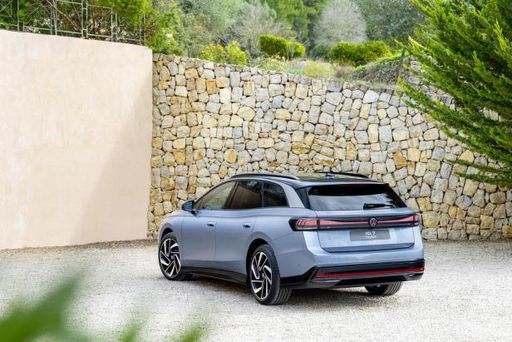
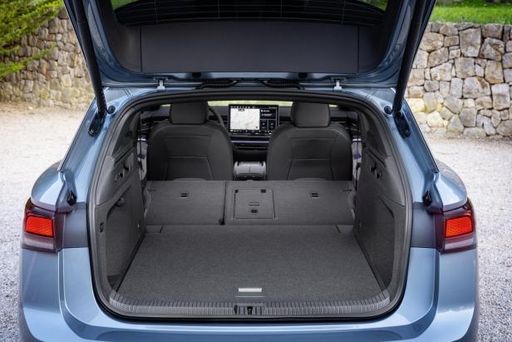
On the other hand, the VW ID.7 Touring, also a wagon, offers slightly different measurements with a length of 4961 mm, a width of 1862 mm, and a height of 1551 mm. The electric model showcases a more modern aesthetic and a trunk capacity of 605 liters, still providing generous storage for your travels.

Superb Combi @ Škoda Auto a.s. / Škoda Storyboard

Powertrains and Performance

The Skoda Superb Combi offers a range of engine options, including petrol, diesel, and hybrids. The petrol engines range from a 150 HP variant to a powerful 265 HP, paired with automatic dual-clutch transmissions. The hybrid version provides an electric range of up to 134 km and boasts a 0-100 km/h acceleration time as low as 5.7 seconds, depending on the engine choice.

Conversely, the VW ID.7 Touring is an all-electric model featuring rear and all-wheel drive options. It delivers up to 340 HP and achieves impressive torque figures, with a maximum of 679 Nm. The ID.7 Touring offers a remarkable electric range of up to 690 km on a single charge, making it ideal for drivers seeking long-distance travel without the need for frequent recharging. With an acceleration of 0-100 km/h in just 5.5 seconds, it's clear that this electric vehicle does not compromise on performance.

ID.7 Touring @ Volkswagen

Efficiency and Environmental Impact

When it comes to efficiency, the Skoda Superb Combi demonstrates diverse fuel consumption figures, with combustion engines consuming between 4.9 to 7.9 L/100 km and hybrid versions being incredibly economical with a consumption of just 0.4 L/100 km in electric mode. The vehicle also emits CO2 levels ranging from 121 to 180 g/km depending on the engine configuration, fitting into class D through G for CO2 efficiency.

In stark contrast, the VW ID.7 Touring operates entirely on electric power, producing zero tailpipe emissions. With a consumption of between 14 to 16.6 kWh/100 km, it stands out in the A-class for CO2 efficiency, showcasing a tremendous leap in sustainable technology.

Interior and Technology

The Skoda Superb Combi is well-known for its spacious interior and user-friendly layout, featuring advanced infotainment systems, comfortable seating for five, and top-tier materials throughout. Its practicality is highlighted by numerous storage solutions and a highly configurable cabin, making it perfect for families or long journeys. Tech-wise, it includes smart connectivity options and modern safety features.

In comparison, the VW ID.7 Touring does not just prioritize spaciousness; it also integrates cutting-edge technology tailored for the electric age. The digital cockpit provides drivers with intuitive controls, and voice recognition features enhance interaction. The ID.7 is equipped with advanced driver-assistance systems, ensuring a safe and enjoyable ride.

Conclusion: A Choice of Philosophy

Ultimately, the choice between the Skoda Superb Combi and the VW ID.7 Touring rests on personal preferences and driving needs. The Superb Combi offers a robust selection of engine types suitable for diverse driving conditions and preferences, while the ID.7 Touring positions itself as a pioneer in electric mobility, focusing on sustainability without compromising performance.

As each model caters to distinct market segments, consumers are encouraged to reflect on their values regarding efficiency, driving experience, and environmental impact when making their decision. Whether one favors the traditional versatility of the Superb Combi or the electric innovation of the ID.7 Touring, both vehicles represent the best of automotive engineering in 2024.

Here’s where it gets real: The technical differences in detail

Costs and Efficiency:

When it comes to price and running costs, the biggest differences usually appear. This is often where you see which car fits your budget better in the long run.

Skoda Superb Combi has a evident advantage in terms of price – it starts at 35200 £, while the VW ID.7 Touring costs 47100 £. That’s a price difference of around 11833 £.

As for range, the VW ID.7 Touring performs significantly better – achieving up to 689 km, about 555 km more than the Skoda Superb Combi.

Engine and Performance:

Power, torque and acceleration say a lot about how a car feels on the road. This is where you see which model delivers more driving dynamics.

When it comes to engine power, the VW ID.7 Touring has a evident edge – offering 340 HP compared to 265 HP. That’s roughly 75 HP more horsepower.

In acceleration from 0 to 100 km/h, the VW ID.7 Touring is hardly perceptible quicker – completing the sprint in 5.50 s, while the Skoda Superb Combi takes 5.70 s. That’s about 0.20 s faster.

In terms of top speed, the Skoda Superb Combi performs noticeable better – reaching 250 km/h, while the VW ID.7 Touring tops out at 180 km/h. The difference is around 70 km/h.

There’s also a difference in torque: VW ID.7 Touring pulls clearly stronger with 679 Nm compared to 400 Nm. That’s about 279 Nm difference.

Space and Everyday Use:

Cabin size, boot volume and payload all play a role in everyday practicality. Here, comfort and flexibility make the difference.

Both vehicles offer seating for 5 people.

In curb weight, Skoda Superb Combi is clearly perceptible lighter – 1575 kg compared to 2191 kg. The difference is around 616 kg.

In terms of boot space, the Skoda Superb Combi offers somewhat more room – 690 L compared to 605 L. That’s a difference of about 85 L.

In maximum load capacity, the Skoda Superb Combi performs somewhat better – up to 1920 L, which is about 206 L more than the VW ID.7 Touring.

When it comes to payload, Skoda Superb Combi noticeable takes the win – 584 kg compared to 465 kg. That’s a difference of about 119 kg.

Who comes out on top?

Overall, the VW ID.7 Touring shows itself to be wins the duel decisively and secures the title of DriveDuel Champion.
It convinces with the more balanced overall package and proves to be the more versatile choice for everyday use.

from about £47,100
ID.7 Touring @ Volkswagen

VW ID.7 Touring

  • Engine Type : Electric
  • Transmission : Automatic
  • Drive Type : Rear-Wheel Drive, All-Wheel Drive
  • Power HP : 286 - 340 HP
  • Consumption kWh/100km : 14 - 16.6 kWh
  • Electric Range : 584 - 689 km

Skoda Superb Combi

The Škoda Superb Combi combines practicality and elegance, making it a popular choice for families and professionals alike. Its spacious interior offers exceptional comfort and ample storage, suitable for long journeys and everyday errands. Additionally, the refined design and advanced technology features ensure a sophisticated driving experience.

details

VW ID.7 Touring

The VW ID.7 Touring blends sleek, aerodynamic fastback looks with estate practicality, delivering an electric family car that looks grown-up and feels refined. Inside it's calm and spacious with clever storage and modern tech, swallowing suitcases and weekend plans with ease — a sensible, slightly flashy choice for buyers who want electric comfort without giving up practicality.

details
Skoda Superb Combi
VW ID.7 Touring
Superb Combi @ Škoda Auto a.s. / Škoda Storyboard
ID.7 Touring @ Volkswagen

Costs and Consumption

Price
35200 - 51000 £
Price
47100 - 54900 £
Consumption L/100km
0.4 - 7.8 L
Consumption L/100km
-
Consumption kWh/100km
-
Consumption kWh/100km
14 - 16.6 kWh
Electric Range
124 - 134 km
Electric Range
584 - 689 km
Battery Capacity
19.70 kWh
Battery Capacity
77 - 86 kWh
co2
8 - 178 g/km
co2
0 g/km
Fuel tank capacity
45 - 66 L
Fuel tank capacity
-

Dimensions and Body

Body Type
Estate
Body Type
Estate
Seats
5
Seats
5
Doors
5
Doors
5
Curb weight
1575 - 1853 kg
Curb weight
2191 - 2336 kg
Trunk capacity
510 - 690 L
Trunk capacity
605 L
Length
4902 mm
Length
4961 mm
Width
1849 mm
Width
1862 mm
Height
1482 mm
Height
1549 - 1551 mm
Max trunk capacity
1770 - 1920 L
Max trunk capacity
1714 L
Payload
497 - 584 kg
Payload
459 - 465 kg

Engine and Performance

Engine Type
Plugin Hybrid, Petrol, Petrol MHEV, Diesel
Engine Type
Electric
Transmission
Automatic
Transmission
Automatic
Transmission Detail
Dual-Clutch Automatic
Transmission Detail
Reduction Gearbox
Drive Type
Front-Wheel Drive, All-Wheel Drive
Drive Type
Rear-Wheel Drive, All-Wheel Drive
Power HP
150 - 265 HP
Power HP
286 - 340 HP
Acceleration 0-100km/h
5.7 - 9.3 s
Acceleration 0-100km/h
5.5 - 6.7 s
Max Speed
220 - 250 km/h
Max Speed
180 km/h
Torque
250 - 400 Nm
Torque
545 - 679 Nm
Number of Cylinders
4
Number of Cylinders
-
Power kW
110 - 195 kW
Power kW
210 - 250 kW
Engine capacity
1498 - 1984 cm3
Engine capacity
-

General

Model Year
2024 - 2025
Model Year
2024
CO2 Efficiency Class
B, E, F, D, G
CO2 Efficiency Class
A
Brand
Skoda
Brand
VW
Is the Skoda Superb Combi offered with different drivetrains?

The Skoda Superb Combi is available as Front-Wheel Drive or All-Wheel Drive.

The prices and data displayed are estimates based on German list prices and may vary by country. This information is not legally binding.