VS

VW Caddy Compact Van vs Toyota Proace City comparison

Compare performance (150 HP vs 136 HP), boot space and price (25,800 £ vs 20,800 £ ) at a glance. Find out which car is the better choice for you – VW Caddy Compact Van or Toyota Proace City?

VW Caddy Compact Van vs Toyota Proace City: Key differences

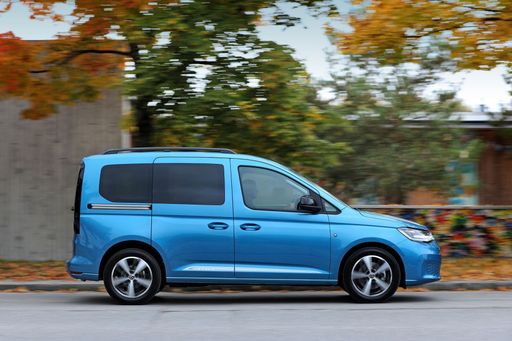
VW Caddy Compact Van

  • marginally more power
  • clearly more efficient
details

Toyota Proace City

  • clearly cheaper
  • substantially more electric range
  • very slightly lighter
details

By Achim Sedelmaier

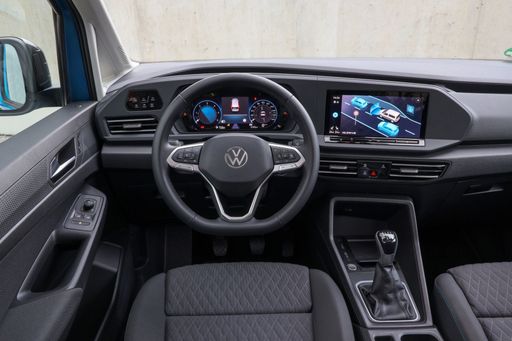
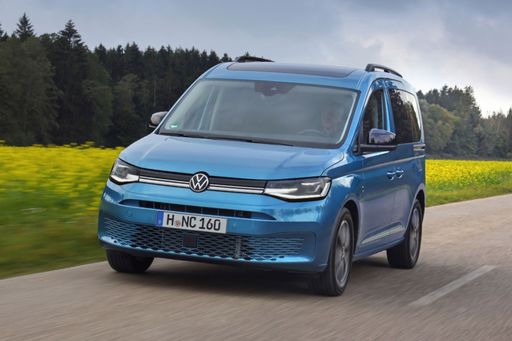
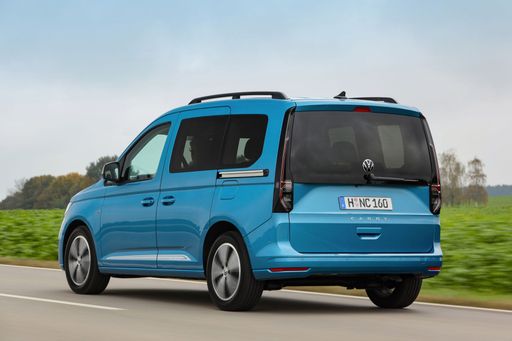
Caddy Compact Van

Versatile Vans: Toyota Proace City vs. VW Caddy Kompaktvan

For families and businesses alike, the choice between the Toyota Proace City and the VW Caddy Kompaktvan can shape daily transportation in significant ways. These two compact vans offer innovative solutions, making them both flexible and practical for diverse needs. Let's delve into the technical aspects and innovations that set them apart.
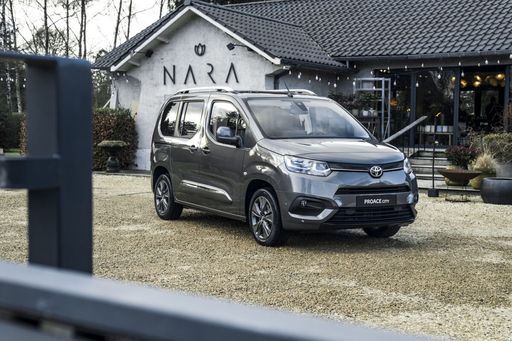
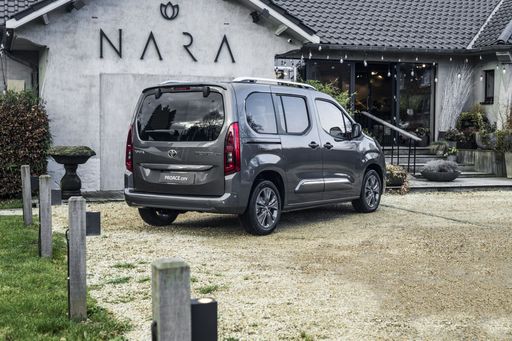
Proace City

Engine Varieties and Performance

The Toyota Proace City provides a comprehensive range of engine options, catering to gasoline, diesel, and electric preferences. With horsepower options ranging from 102 to 136 HP, and an electric powertrain that offers an impressive range of up to 343 km, it satisfies both performance enthusiasts and eco-conscious drivers. The Caddy, on the other hand, extends its power choices to include a plug-in hybrid, with power outputs reaching up to 150 HP. Despite the slightly lesser electric range of about 120 km, the hybrid version offers exceptional fuel economy at 0.5 L/100km.

Caddy Compact Van

Transmission and Drive Systems

Both the Proace City and Caddy Kompaktvan come equipped with transmission options for every driver preference. The Proace City sports manual, automatic, and reduction gearboxes, while the Caddy offers a dual-clutch automatic for seamless gear changes. Both manufacturers provide a front-wheel-drive system, enhancing urban maneuverability. For those seeking more traction, the Caddy also presents an all-wheel-drive variant, ideal for challenging road conditions.

Proace City

Space and Practicality

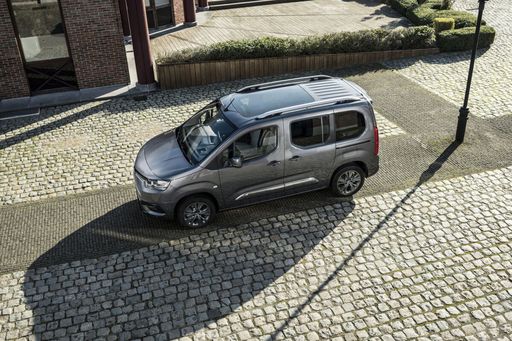
The core of any van's appeal lies in its utility. The Proace City accommodates 5 to 7 passengers comfortably, while offering up to 912 liters of trunk space, making it a respectable choice for larger families or those needing substantial storage. Meanwhile, the Caddy Kompaktvan focuses on its core as a cargo van, designed to carry payloads up to 759 kg, with seating primarily for two. This design inherently favors commercial applications needing volume and heavy-duty capabilities.

Caddy Compact Van

Dimensions and Weight

In terms of dimensions, both vehicles offer compact but spacious configurations. Proace City ranges in length from 4401 mm to 4751 mm, ideal for urban environments. The Caddy extends further, offering lengths from 4500 mm to 4853 mm, allowing additional cargo capacity. Weights vary accordingly, accommodating heavier loads, with the heaviest models reaching over 1750 kg for the Caddy and up to 1664 kg for the Proace City.

Proace City

Technological Innovations

Both models excel in integrating technological innovations aimed at improving efficiency and experience. The Proace City features a diverse array of engine technologies coupled with CO2 efficiency ratings down to 0 g/km in its electric form. The Caddy Kompaktvan aligns with contemporary needs through its hybrid systems, though its CO2 emissions are generally higher, it manages efficiency well through hybridization.

Caddy Compact Van

Final Reflections

The Toyota Proace City and VW Caddy Kompaktvan each bring unique strengths to the table. Proace City is tailored for versatility with its range of engine types and spacious design, supporting both family and business use. The Caddy, built with a focus on practicality, stands out in commercial versatility especially with its payload capacity and hybrid options. Your choice will ultimately depend on whether passenger comfort or payload capacity takes precedence in your lifestyle or business.

Here’s where it gets real: The technical differences in detail

Caddy Compact Van

Costs and Efficiency:

Price and efficiency are key factors when choosing a car – and this is often where the real differences emerge.

Toyota Proace City is clearly cheaper – starting at 20,800 £ , while the VW Caddy Compact Van costs 25,800 £ . That’s a price difference of around 5,023 £.

Fuel consumption also shows a difference: the VW Caddy Compact Van uses 0.5 L/100km and is clearly more efficient than the Toyota Proace City with 5.3 L/100km. The difference is about 4.8 L/100km.

As for electric range, the Toyota Proace City offers substantially more range – reaching up to 343 km, about 223 km more than the VW Caddy Compact Van.

Proace City

Engine and Performance:

Power, torque and acceleration are the classic benchmarks for car enthusiasts – and here, some clear differences start to show.

When it comes to engine power, the VW Caddy Compact Van offers marginally more power – delivering 150 HP compared to 136 HP. That’s roughly 14 HP more horsepower.

Looking at top speed, the VW Caddy Compact Van is markedly faster – reaching 186 km/h, while the Toyota Proace City tops out at 135 km/h. The difference is around 51 km/h.

There’s also a difference in torque: the VW Caddy Compact Van delivers marginally more torque with 320 Nm compared to 300 Nm. That’s about 20 Nm more.

Caddy Compact Van

Space and Everyday Use:

Cabin size, boot volume and payload all play a role in everyday practicality. Here, comfort and flexibility make the difference.

Seats: Toyota Proace City offers more seats – 7 vs 2.

In terms of curb weight, Toyota Proace City is very slightly lighter – 1,366 kg compared to 1,442 kg. The difference is around 76 kg.

For maximum load capacity, the VW Caddy Compact Van offers markedly more capacity – up to 3,700 L, about 1,007 L more than the Toyota Proace City.

When it comes to payload, the Toyota Proace City carries very slightly more – 829 kg compared to 759 kg. That’s a difference of about 70 kg.

Who wins the race in the data check?

The VW Caddy Compact Van holds a decisive overall lead in the objective data comparison.
This result only shows which model scores more points on paper – not which of the two cars feels right for you.

from £25,800
Caddy Compact Van

VW Caddy Compact Van

  • Engine Type : Petrol, Diesel, Plugin Hybrid
  • Transmission : Manuel, Automatic
  • Drive Type : Front-Wheel Drive, All-Wheel Drive
  • Power HP : 102 - 150 HP
  • Consumption L/100km : 0.5 - 6.8 L/100km
  • Electric Range : 117 - 120 km
VW Caddy Compact Van
Toyota Proace City

Costs and Consumption

View detailed analysis

Engine and Performance

View detailed analysis

Dimensions and Body

View detailed analysis

VW Caddy Compact Van

The VW Caddy is a clever compact van that turns urban chores into something almost enjoyable, thanks to smart packaging and a cabin that refuses to feel like punishment. For buyers who want useful practicality without drama, the Caddy is a tidy, dependable choice that quietly gets the job done while remaining surprisingly pleasant to drive.

details

Toyota Proace City

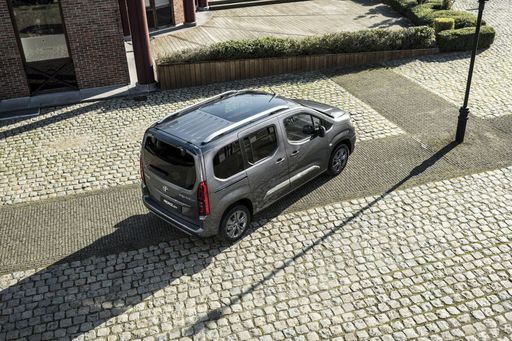
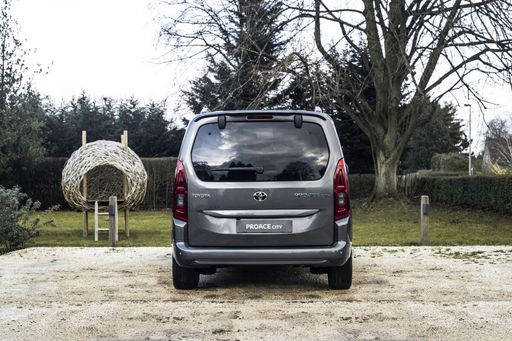
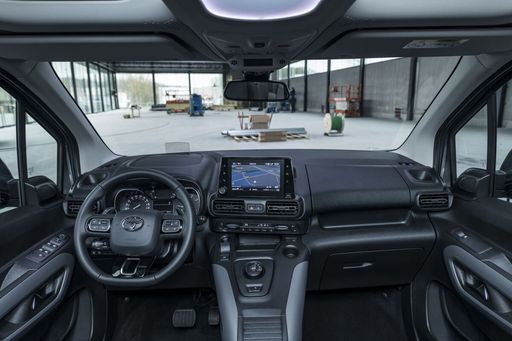
The Toyota Proace City is a clever compact workhorse that blends van practicality with passenger comfort, turning daily deliveries or weekend DIY runs into a surprisingly civilised affair. It won't set your pulse racing, but its easy driving manners, flexible interior and low-hassle ownership make it a smart pick for buyers who value usefulness over flash.

details
VW Caddy Compact Van
Toyota Proace City

Costs and Consumption

Price
25,800 - 42,300 £
Price
20,800 - 44,100 £
Consumption L/100km
0.5 - 6.8 L/100km
Consumption L/100km
5.3 - 6.3 L/100km
Consumption kWh/100km
-
Consumption kWh/100km
18.1 kWh/100km
Electric Range
117 - 120 km
Electric Range
343 km
Battery Capacity
19.7 kWh
Battery Capacity
-
co2
11 - 154 g/km
co2
0 - 146 g/km
Fuel tank capacity
50 L
Fuel tank capacity
-

Dimensions and Body

Body Type
Cargo Van
Body Type
High Roof Estate
Seats
2
Seats
5 - 7
Doors
4 - 5
Doors
5
Curb weight
1,442 - 1,818 kg
Curb weight
1,366 - 1,664 kg
Trunk capacity
-
Trunk capacity
641 - 912 L
Length
4,500 - 4,853 mm
Length
4,401 - 4,751 mm
Width
1,855 mm
Width
1,848 mm
Height
1,819 - 1,823 mm
Height
1,812 - 1,818 mm
Max trunk capacity
3,100 - 3,700 L
Max trunk capacity
2,126 - 2,693 L
Payload
628 - 759 kg
Payload
525 - 829 kg

Engine and Performance

Engine Type
Petrol, Diesel, Plugin Hybrid
Engine Type
Electric, Petrol, Diesel
Transmission
Manuel, Automatic
Transmission
Automatic, Manuel
Transmission Detail
Manual Gearbox, Dual-Clutch Automatic
Transmission Detail
Reduction Gearbox, Manual Gearbox, Automatic Gearbox
Drive Type
Front-Wheel Drive, All-Wheel Drive
Drive Type
Front-Wheel Drive
Power HP
102 - 150 HP
Power HP
102 - 136 HP
Acceleration 0-100km/h
-
Acceleration 0-100km/h
11.5 - 13.2 s
Max Speed
175 - 186 km/h
Max Speed
135 km/h
Torque
220 - 320 Nm
Torque
205 - 300 Nm
Number of Cylinders
4
Number of Cylinders
3 - 4
Power kW
75 - 110 kW
Power kW
75 - 100 kW
Engine capacity
1,498 - 1,968 cm3
Engine capacity
1,199 - 1,499 cm3

General

Model Year
2024
Model Year
2,024 - 2,026
CO2 Efficiency Class
E, B
CO2 Efficiency Class
A, E
Brand
VW
Brand
Toyota
DriveDuel uses data analysis and artificial intelligence to evaluate vehicle data and create content. Content is regularly reviewed and improved. The displayed prices are estimates based on German list prices, adjusted to the respective country’s VAT. Country-specific registration taxes are not included. This information is not legally binding.