VS

VW Caddy vs Mercedes T Class comparison

Compare performance (150 HP vs 131 HP), boot space and price (27,800 £ vs 23,000 £ ) at a glance. Find out which car is the better choice for you – VW Caddy or Mercedes T Class?

VW Caddy vs Mercedes T Class: Key differences

VW Caddy

5 (1 Reviews)
rate
  • moderately more power
  • significantly more efficient
  • very slightly quicker 0–100 km/h
details

Mercedes T Class

4 (1 Reviews)
rate
  • markedly cheaper
  • very slightly lighter
details

All details on performance, efficiency, range and trunk space can be found in the technical comparison below – including user reviews for both models.

By Achim Sedelmaier

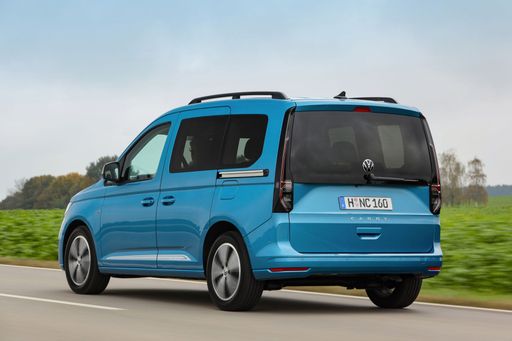
Caddy

Mercedes T-Klasse vs. VW Caddy: The Battle of High Roof Wagons

The automotive market is brimming with versatile vehicles designed for both family trips and commercial use. Two prominent contenders in the high roof wagon segment are the Mercedes T-Klasse and the VW Caddy. Both models boast impressive features, technical innovations, and engineering prowess, but how do they stack up against one another? This article aims to dissect the technical specifications, innovations, and unique characteristics of both vehicles.
T Class

Design and Dimensions

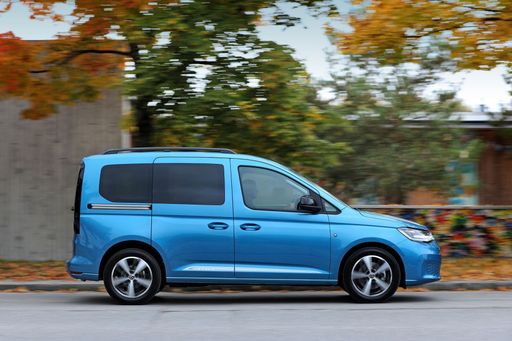
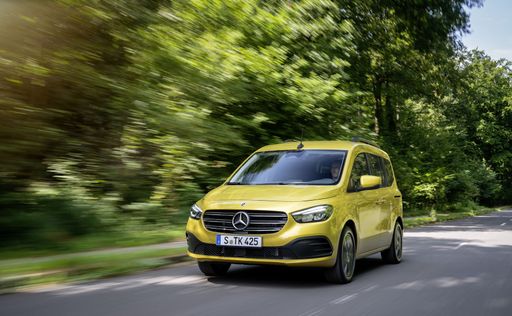
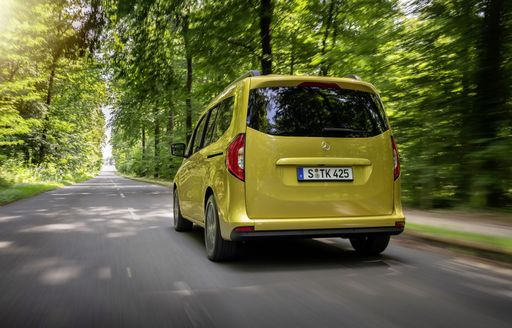
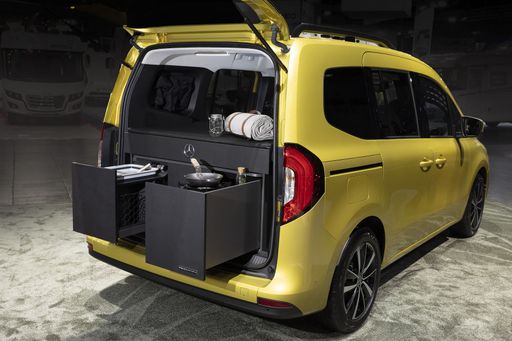
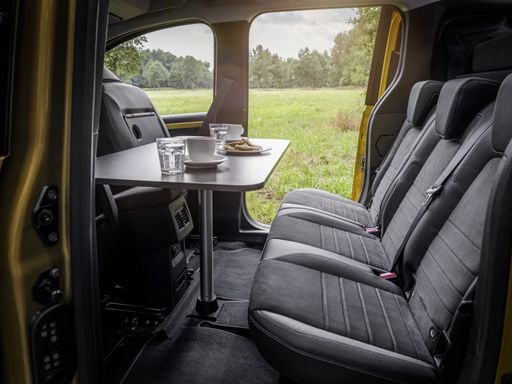
The Mercedes T-Klasse measures 4,498 mm in length, 1,859 mm in width, and stands 1,811 mm tall. It offers ample interior space, designed to comfortably seat up to five occupants with a trunk capacity of 520 liters. On the other hand, the VW Caddy's dimensions span 4,500 mm in length and 1,855 mm in width. Its height ranges from 1,819 mm to 1,860 mm, depending on the variant. The flexibility of the Caddy allows it to accommodate five or seven seats, catering to families or those needing extra space.

Caddy

Engine Options and Performance

When it comes to powertrains, both the T-Klasse and Caddy offer a variety of engine options. The T-Klasse features a range of four-cylinder engines with outputs between 95 HP and 131 HP, available with diesel and petrol choices. The 0-100 km/h acceleration times vary, with the quickest variant reaching this speed in just 11.6 seconds. Fuel consumption can range from 5.1 to 7.1 L/100 km, providing moderate efficiency without compromising power.

Conversely, the VW Caddy offers a selection of engines with power outputs from 102 HP to 150 HP, including petrol, diesel, and a plugin hybrid variant. The Caddy’s efficiency shines through its hybrid model, with an electric range of up to 121 km. Acceleration times are equally impressive, with some models capable of hitting 0-100 km/h in just 11.4 seconds. Fuel consumption varies widely, from as low as 5.3 L/100 km to 6.9 L/100 km, depending on the engine and driving conditions.

T Class

Transmission and Drive Type

Both models come with a choice of manual or automatic transmissions, including a dual-clutch option. The Mercedes T-Klasse is exclusively a front-wheel drive, ensuring ease of handling and efficiency, while the VW Caddy also offers the option of all-wheel drive, providing enhanced traction and stability in challenging conditions.

Caddy

Interior and Technology Innovations

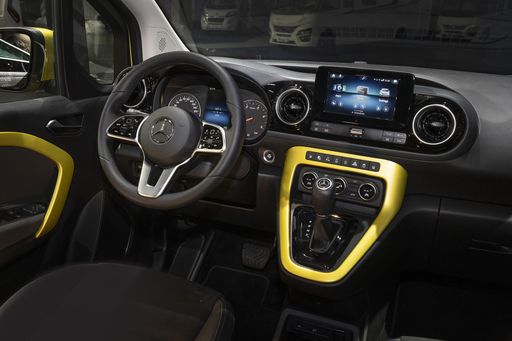
The interior of the T-Klasse showcases Mercedes-Benz's signature luxury and technological advancements. It accentuates practicality and comfort, incorporating state-of-the-art infotainment systems, driver assistance features, and high-quality materials. The dashboard is intuitive, making it easy to control a range of vehicle settings while on the move.

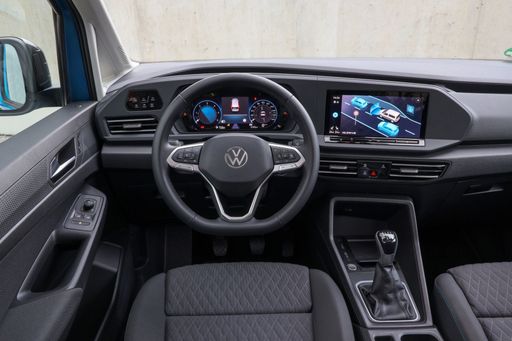
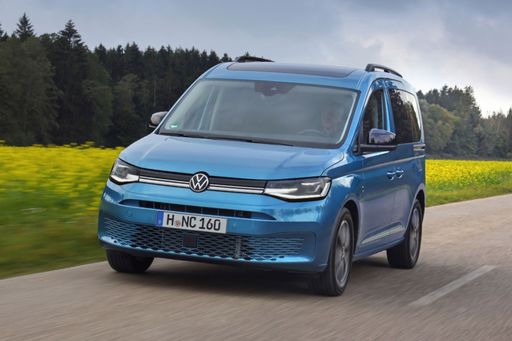
The VW Caddy, while more utilitarian, is equally commendable in its technological offerings. It features the latest VW infotainment system and driver-assistive technologies like adaptive cruise control and lane-keeping assist. The Caddy's interior is functional yet stylish, prioritizing practicality, especially for commercial use.

T Class

Safety Features

Safety remains a primary concern for both brands. The Mercedes T-Klasse is equipped with a suite of advanced safety features, including multiple airbags, electronic stability control, and advanced driver-assistance systems. It’s crafted to secure not just the driver but all passengers on board.

Similarly, the VW Caddy also incorporates numerous safety technologies, including Autonomous Emergency Braking, Blind Spot Monitoring, and Pedestrian Detection. Both vehicles have received favorable safety ratings, instilling confidence in consumers.

Caddy

Conclusion: Which One to Choose?

Choosing between the Mercedes T-Klasse and VW Caddy ultimately boils down to personal needs and preferences. The T-Klasse leans towards a luxurious experience with powerful engine options and top-notch technology, making it ideal for those seeking comfort and style. The VW Caddy, however, offers practical flexibility and a versatile engine range, catering to both families and commercial use effectively.

In the end, both models prove themselves as powerful contenders in the high roof wagon category. Whether you opt for the elegance of the T-Klasse or the pragmatic design of the Caddy, you’re guaranteed a capable and innovative vehicle that suits a variety of lifestyles.

Here’s where it gets real: The technical differences in detail

Caddy

Costs and Efficiency:

Price and efficiency are often the first things buyers look at. Here it becomes clear which model has the long-term edge – whether at the pump, the plug, or in purchase price.

Mercedes T Class is markedly cheaper – starting at 23,000 £ , while the VW Caddy costs 27,800 £ . That’s a price difference of around 4,792 £.

Fuel consumption also shows a difference: the VW Caddy uses 0.5 L/100km and is significantly more efficient than the Mercedes T Class with 5.1 L/100km. The difference is about 4.6 L/100km.

T Class

Engine and Performance:

Power, torque and acceleration are the classic benchmarks for car enthusiasts – and here, some clear differences start to show.

When it comes to engine power, the VW Caddy offers moderately more power – delivering 150 HP compared to 131 HP. That’s roughly 19 HP more horsepower.

When accelerating from 0 to 100 km/h, the VW Caddy is very slightly quicker – completing the sprint in 11.4 s, while the Mercedes T Class takes 11.6 s. That’s about 0.2 s quicker.

There’s also a difference in torque: the VW Caddy delivers moderately more torque with 320 Nm compared to 270 Nm. That’s about 50 Nm more.

Caddy

Space and Everyday Use:

Beyond pure performance, interior space and usability matter most in daily life. This is where you see which car is more practical and versatile.

Seats: VW Caddy offers more seats – 7 vs 5.

In terms of curb weight, Mercedes T Class is very slightly lighter – 1,556 kg compared to 1,575 kg. The difference is around 19 kg.

When it comes to payload, the VW Caddy carries a bit more – 710 kg compared to 630 kg. That’s a difference of about 80 kg.

Who wins the race in the data check?

The VW Caddy holds a decisive overall lead in the objective data comparison.
This result only shows which model scores more points on paper – not which of the two cars feels right for you.

from £27,800
Caddy

VW Caddy

  • Engine Type Petrol, Diesel, Plugin Hybrid
  • Transmission Manuel, Automatic
  • Drive Type Front-Wheel Drive, All-Wheel Drive
  • Power HP 102 - 150 HP
  • Consumption L/100km 0.5 - 6.9 L/100km
  • Electric Range 116 - 121 km
VW Caddy
Mercedes T Class

Costs and Consumption

View detailed analysis

Engine and Performance

View detailed analysis

Dimensions and Body

View detailed analysis

VW Caddy

The VW Caddy is the Swiss-army knife of compact vans — practical, surprisingly refined, and ready to swap a weekend adventure for a grocery run without breaking a sweat. It’s user-friendly, comfortable enough for daily driving, and sensible for buyers who want utility with a dash of style and no drama.

details

Mercedes T Class

The Mercedes T-Class dresses everyday practicality in a premium suit, blending the sensible utility of a small van with the refinement you expect from the three-pointed star. Its flexible interior and clever details make it a brilliantly pragmatic choice for families and active owners who want comfort and usefulness without the fuss.

details
VW Caddy
Mercedes T Class

Costs and Consumption

Price
27,800 - 45,900 £
Price
23,000 - 30,500 £
Consumption L/100km
0.5 - 6.9 L/100km
Consumption L/100km
5.1 - 7.4 L/100km
Consumption kWh/100km
-
Consumption kWh/100km
-
Electric Range
116 - 121 km
Electric Range
-
Battery Capacity
19.7 kWh
Battery Capacity
-
co2
10 - 165 g/km
co2
135 - 167 g/km
Fuel tank capacity
50 L
Fuel tank capacity
-

Dimensions and Body

Body Type
High Roof Estate
Body Type
High Roof Estate
Seats
5 - 7
Seats
5
Doors
5
Doors
-
Curb weight
1,575 - 1,998 kg
Curb weight
1,556 - 1,678 kg
Trunk capacity
-
Trunk capacity
-
Length
4,500 - 4,853 mm
Length
-
Width
1,855 mm
Width
1,859 mm
Height
1,819 - 1,860 mm
Height
-
Max trunk capacity
2,556 - 3,700 L
Max trunk capacity
-
Payload
501 - 710 kg
Payload
521 - 630 kg

Engine and Performance

Engine Type
Petrol, Diesel, Plugin Hybrid
Engine Type
Petrol, Diesel
Transmission
Manuel, Automatic
Transmission
Manuel, Automatic
Transmission Detail
Manual Gearbox, Dual-Clutch Automatic
Transmission Detail
Manual Gearbox, Dual-Clutch Automatic
Drive Type
Front-Wheel Drive, All-Wheel Drive
Drive Type
Front-Wheel Drive
Power HP
102 - 150 HP
Power HP
95 - 131 HP
Acceleration 0-100km/h
11.4 - 14 s
Acceleration 0-100km/h
11.6 - 15.1 s
Max Speed
173 - 186 km/h
Max Speed
-
Torque
220 - 320 Nm
Torque
200 - 270 Nm
Number of Cylinders
4
Number of Cylinders
4
Power kW
75 - 110 kW
Power kW
70 - 96 kW
Engine capacity
1,498 - 1,968 cm3
Engine capacity
1,332 - 1,461 cm3

General

Model Year
2024
Model Year
2025
CO2 Efficiency Class
E, F, B
CO2 Efficiency Class
F, D, E
Brand
VW
Brand
Mercedes-Benz
DriveDuel uses data analysis and artificial intelligence to evaluate vehicle data and create content. Content is regularly reviewed and improved. The displayed prices are estimates based on German list prices, adjusted to the respective country’s VAT. Country-specific registration taxes are not included. This information is not legally binding.