VS

VW Caddy vs Peugeot Partner comparison

Compare performance (150 HP vs 136 HP), boot space and price (27,800 £ vs 22,400 £ ) at a glance. Find out which car is the better choice for you – VW Caddy or Peugeot Partner?

VW Caddy vs Peugeot Partner: Key differences

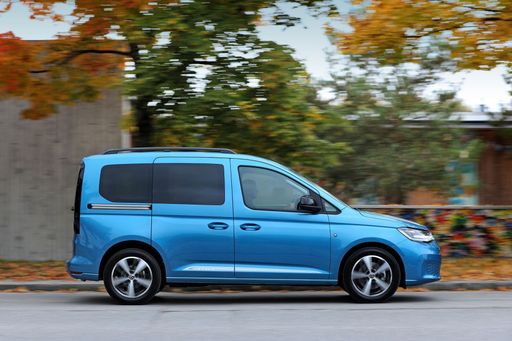
VW Caddy

  • very slightly more power
  • substantially more efficient
details

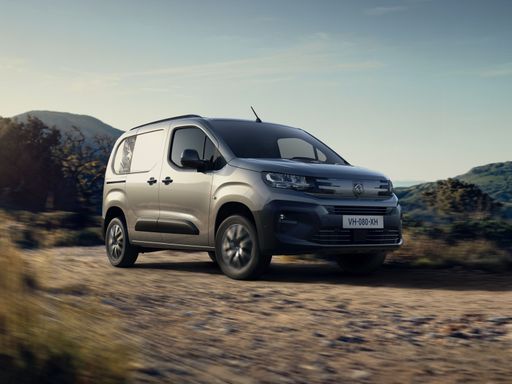
Peugeot Partner

  • noticeably cheaper
  • substantially more electric range
  • marginally quicker 0–100 km/h
  • slightly lighter
details

By Achim Sedelmaier

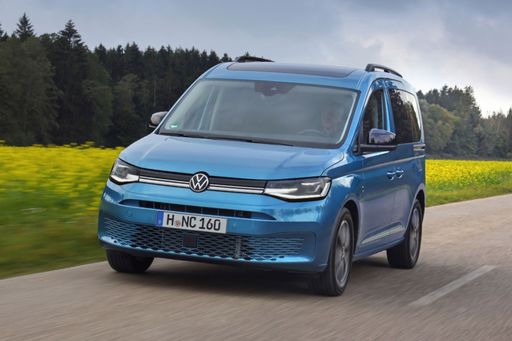
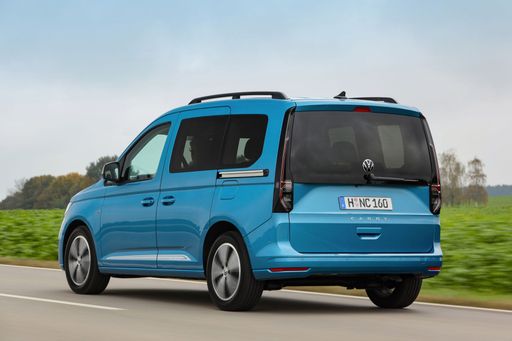
Caddy

Peugeot Socio vs. VW Caddy: A Clash of Versatile Vans

The 2024 automotive market introduces two formidable contenders in the cargo-carrying van segment: the Peugeot Socio and the VW Caddy. Both models bring unique features and have their own take on efficiency, technology, and utility. Here, we delve into the technical aspects and innovations of each to determine which van might best suit your needs.
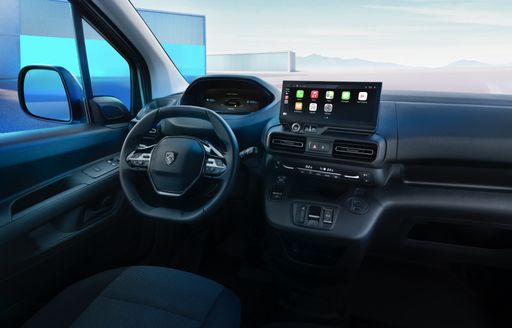
Partner

Engine Diversity and Performance

The Peugeot Socio offers a versatile range of powertrains. Buyers can choose between electric, diesel, and petrol engines. The electric variant delivers 136 HP with an impressive electric range of 354 km, while diesel and petrol options max out at 131 HP. It features either a reduction gearbox for the electric model or manual and automatic gearboxes for the combustion engines. The Socio’s torque peaks at 300 Nm, providing ample power for most cargo needs.

On the Caddy side, VW presents a choice between petrol, diesel, and plug-in hybrid powertrains. The hybrid boasts an electric range between 116 km and 121 km, while the petrol and diesel versions produce up to 150 HP, offering strong torque of 320 Nm. The Caddy provides manual and dual-clutch automatic transmissions for a smoother driving experience. The spectrum of engine options caters to various needs, from urban deliveries to longer hauls.

Caddy

Efficiency and Environmentally Friendly Options

Emission-conscious buyers will appreciate the Socio’s electric model, which achieves a remarkable CO2 efficiency class of A. This variant emits 0 g/km of CO2, setting a high standard for eco-friendly vans. The diesel and petrol variants, however, have higher emissions in the range of 136-143 g/km, classified under efficiency class E.

VW’s Caddy offers a plug-in hybrid with reduced CO2 emissions, starting at just 11 g/km, and an efficiency class B. The conventional engines have higher emissions, ranging from 138 to 165 g/km. VW’s hybrid technology provides a strong case for those prioritizing sustainability while still offering the practicality of a high-roof wagon.

Partner

Loading Capacity and Dimensions

A key factor for many van buyers is cargo capacity. The Peugeot Socio boasts a substantial trunk capacity of 1800 liters and a payload ranging up to 991 kg, depending on the configuration. The length of the van stands at 4751 mm with a width of 1848 mm, making it spacious enough for various cargo demands.

The VW Caddy offers a slightly different setup with dimensions that cater more to passenger configurations. Its length ranges from 4500 mm to 4853 mm, and although its payload is slightly less, maxing at 710 kg, it offers more versatility in seat configurations, accommodating up to 7 passengers. This makes the Caddy a valuable option for those needing a multipurpose vehicle.

Caddy

Technology and Modern Features

Both the Peugeot Socio and the VW Caddy emphasize technology and driver convenience. The Socio offers modern automatic and manual gearbox options tied to its advanced infotainment systems, particularly useful for commercial operators emphasizing efficiency and ease of use. Its electric variant also includes cutting-edge battery management systems to maximize range and efficiency.

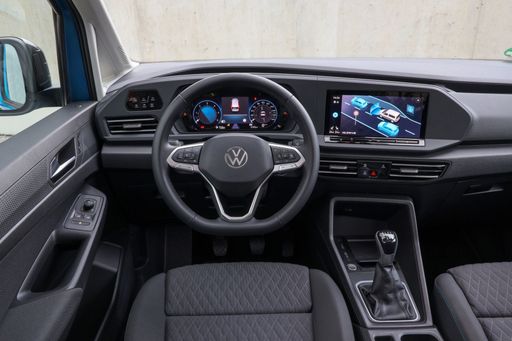
VW's Caddy shines with its dual-clutch automatic transmission, providing a sleek, smooth drive. Coupled with an array of technological innovations, including adaptive cruise control and state-of-the-art navigation systems, the Caddy ensures drivers and passengers experience comfort and ease on the go.

Partner

Conclusion

In conclusion, the decision between the Peugeot Socio and the VW Caddy largely depends on specific requirements. For those seeking an environmentally friendly, versatile cargo van, the electric Socio is a commendable choice. Meanwhile, the VW Caddy, with its hybrid option and enhanced passenger capacity, speaks to families or businesses needing more from their vehicle than mere cargo transportation. Both models promise efficiency, reliability, and innovation in the ever-competitive world of commercial vehicles.

Here’s where it gets real: The technical differences in detail

Caddy

Costs and Efficiency:

Price and efficiency are often the first things buyers look at. Here it becomes clear which model has the long-term edge – whether at the pump, the plug, or in purchase price.

Peugeot Partner is noticeably cheaper – starting at 22,400 £ , while the VW Caddy costs 27,800 £ . That’s a price difference of around 5,370 £.

Fuel consumption also shows a difference: the VW Caddy uses 0.5 L/100km and is substantially more efficient than the Peugeot Partner with 5.2 L/100km. The difference is about 4.7 L/100km.

As for electric range, the Peugeot Partner offers substantially more range – reaching up to 354 km, about 233 km more than the VW Caddy.

Partner

Engine and Performance:

Power, torque and acceleration say a lot about how a car feels on the road. This is where you see which model delivers more driving dynamics.

When it comes to engine power, the VW Caddy offers very slightly more power – delivering 150 HP compared to 136 HP. That’s roughly 14 HP more horsepower.

When accelerating from 0 to 100 km/h, the Peugeot Partner is marginally quicker – completing the sprint in 11.2 s, while the VW Caddy takes 11.4 s. That’s about 0.2 s quicker.

Looking at top speed, the VW Caddy is barely faster – reaching 186 km/h, while the Peugeot Partner tops out at 183 km/h. The difference is around 3 km/h.

There’s also a difference in torque: the VW Caddy delivers very slightly more torque with 320 Nm compared to 300 Nm. That’s about 20 Nm more.

Caddy

Space and Everyday Use:

Whether family car or daily driver – which one offers more room, flexibility and comfort?

Seats: VW Caddy offers more seats – 7 vs 5.

In terms of curb weight, Peugeot Partner is slightly lighter – 1,329 kg compared to 1,575 kg. The difference is around 246 kg.

For maximum load capacity, the Peugeot Partner offers only slightly more capacity – up to 4,000 L, about 300 L more than the VW Caddy.

When it comes to payload, the Peugeot Partner carries markedly more – 991 kg compared to 710 kg. That’s a difference of about 281 kg.

Who wins the race in the data check?

The VW Caddy holds a decisive overall lead in the objective data comparison.
This result only shows which model scores more points on paper – not which of the two cars feels right for you.

from £27,800
Caddy

VW Caddy

  • Engine Type : Petrol, Diesel, Plugin Hybrid
  • Transmission : Manuel, Automatic
  • Drive Type : Front-Wheel Drive, All-Wheel Drive
  • Power HP : 102 - 150 HP
  • Consumption L/100km : 0.5 - 6.9 L/100km
  • Electric Range : 116 - 121 km
VW Caddy
Peugeot Partner

Costs and Consumption

View detailed analysis

Engine and Performance

View detailed analysis

Dimensions and Body

View detailed analysis

VW Caddy

The VW Caddy is the Swiss-army knife of compact vans — practical, surprisingly refined, and ready to swap a weekend adventure for a grocery run without breaking a sweat. It’s user-friendly, comfortable enough for daily driving, and sensible for buyers who want utility with a dash of style and no drama.

details

Peugeot Partner

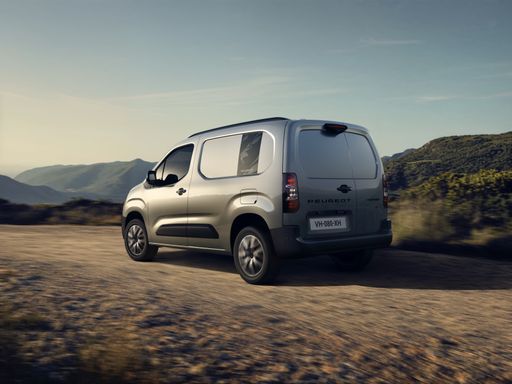
The Peugeot Partner is a no-nonsense workhorse that doubles as a surprisingly comfy family mover, combining clever storage solutions with an easy-to-live-in cabin. It won’t win any beauty contests, but for small businesses and active families it’s practical, economical and utterly reliable when the day gets busy.

details
VW Caddy
Peugeot Partner

Costs and Consumption

Price
27,800 - 45,900 £
Price
22,400 - 33,800 £
Consumption L/100km
0.5 - 6.9 L/100km
Consumption L/100km
5.2 - 6.3 L/100km
Consumption kWh/100km
-
Consumption kWh/100km
17.4 kWh/100km
Electric Range
116 - 121 km
Electric Range
354 km
Battery Capacity
19.7 kWh
Battery Capacity
-
co2
10 - 165 g/km
co2
0 - 143 g/km
Fuel tank capacity
50 L
Fuel tank capacity
53 - 61 L

Dimensions and Body

Body Type
High Roof Estate
Body Type
Cargo Van
Seats
5 - 7
Seats
2 - 5
Doors
5
Doors
4 - 5
Curb weight
1,575 - 1,998 kg
Curb weight
1,329 - 1,813 kg
Trunk capacity
-
Trunk capacity
1,800 L
Length
4,500 - 4,853 mm
Length
4,403 - 4,753 mm
Width
1,855 mm
Width
1,848 mm
Height
1,819 - 1,860 mm
Height
1,796 - 1,812 mm
Max trunk capacity
2,556 - 3,700 L
Max trunk capacity
3,300 - 4,000 L
Payload
501 - 710 kg
Payload
611 - 991 kg

Engine and Performance

Engine Type
Petrol, Diesel, Plugin Hybrid
Engine Type
Electric, Diesel, Petrol
Transmission
Manuel, Automatic
Transmission
Automatic, Manuel
Transmission Detail
Manual Gearbox, Dual-Clutch Automatic
Transmission Detail
Reduction Gearbox, Manual Gearbox, Automatic Gearbox
Drive Type
Front-Wheel Drive, All-Wheel Drive
Drive Type
Front-Wheel Drive
Power HP
102 - 150 HP
Power HP
102 - 136 HP
Acceleration 0-100km/h
11.4 - 14 s
Acceleration 0-100km/h
11.2 s
Max Speed
173 - 186 km/h
Max Speed
135 - 183 km/h
Torque
220 - 320 Nm
Torque
205 - 300 Nm
Number of Cylinders
4
Number of Cylinders
3 - 4
Power kW
75 - 110 kW
Power kW
75 - 100 kW
Engine capacity
1,498 - 1,968 cm3
Engine capacity
1,199 - 1,499 cm3

General

Model Year
2024
Model Year
2,024 - 2,025
CO2 Efficiency Class
E, F, B
CO2 Efficiency Class
A, E
Brand
VW
Brand
Peugeot
DriveDuel uses data analysis and artificial intelligence to evaluate vehicle data and create content. Content is regularly reviewed and improved. The displayed prices are estimates based on German list prices, adjusted to the respective country’s VAT. Country-specific registration taxes are not included. This information is not legally binding.