
 Deutschland
 France
 Nederland
 Great Britain
 Sverige
 Danmark
 Suomi
Suomi Italia
 Polska
 España
VS
VW Caddy vs Porsche 911 Convertible comparison
Compare performance (150 HP vs 711 HP), boot space and price (27800 £ vs 122400 £ ) at a glance. Find out which car is the better choice for you – VW Caddy or Porsche 911 Convertible?
Caddy
Costs and Efficiency:
Price and efficiency are often the first things buyers look at. Here it becomes clear which model has the long-term edge – whether at the pump, the plug, or in purchase price.
VW Caddy has a significantly advantage in terms of price – it starts at 27800 £ , while the Porsche 911 Convertible costs 122400 £ . That’s a price difference of around 94641 £.
Fuel consumption also shows a difference: VW Caddy manages with 0.50 L and is therefore clearly more efficient than the Porsche 911 Convertible with 10.30 L. The difference is about 9.80 L per 100 km.
Caddy
Engine and Performance:
Power, torque and acceleration are the classic benchmarks for car enthusiasts – and here, some clear differences start to show.
When it comes to engine power, the Porsche 911 Convertible has a clearly edge – offering 711 HP compared to 150 HP. That’s roughly 561 HP more horsepower.
In acceleration from 0 to 100 km/h, the Porsche 911 Convertible is decisively quicker – completing the sprint in 2.60 s, while the VW Caddy takes 11.40 s. That’s about 8.80 s faster.
In terms of top speed, the Porsche 911 Convertible performs clearly better – reaching 322 km/h, while the VW Caddy tops out at 186 km/h. The difference is around 136 km/h.
There’s also a difference in torque: Porsche 911 Convertible pulls significantly stronger with 800 Nm compared to 320 Nm. That’s about 480 Nm difference.
Caddy
Space and Everyday Use:
Cabin size, boot volume and payload all play a role in everyday practicality. Here, comfort and flexibility make the difference.
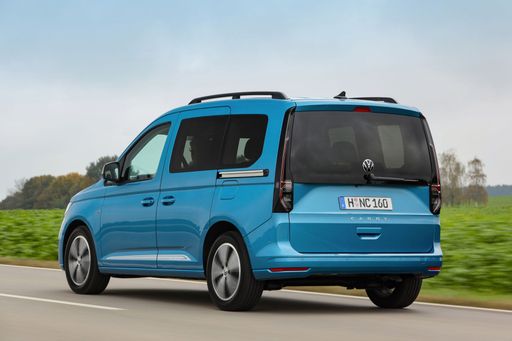
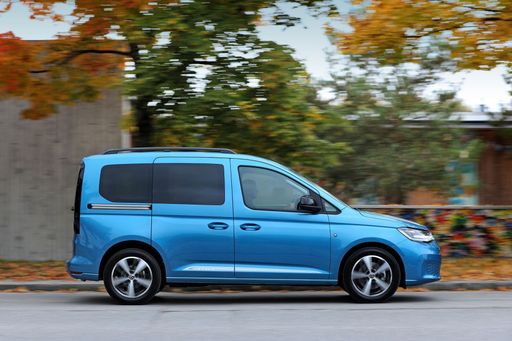
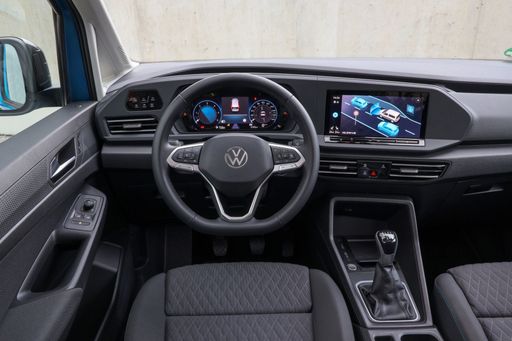
Seats: VW Caddy offers clearly more seating capacity – 7 vs 4.
In curb weight, VW Caddy is barely noticeable lighter – 1575 kg compared to 1655 kg. The difference is around 80 kg.
When it comes to payload, VW Caddy decisively takes the win – 710 kg compared to 345 kg. That’s a difference of about 365 kg.
Who wins the race in the data check?
The VW Caddy is far ahead overall in the objective data comparison.
This result only shows which model scores more points on paper – not which of the two cars feels right for you.
VW Caddy
Porsche 911 Convertible
Costs and Consumption
View detailed analysis
View detailed analysis
Engine and Performance
View detailed analysis
View detailed analysis
Dimensions and Body
View detailed analysis
View detailed analysis
from about £27,800
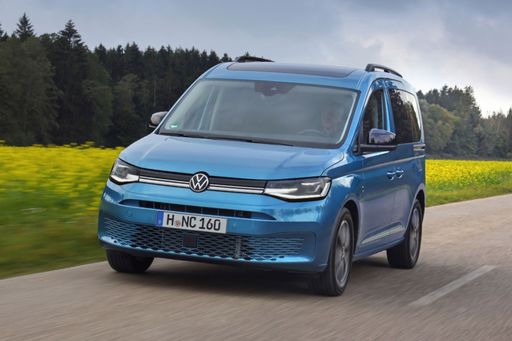
VW Caddy
VW Caddy
The VW Caddy is the Swiss-army knife of compact vans — practical, surprisingly refined, and ready to swap a weekend adventure for a grocery run without breaking a sweat. It’s user-friendly, comfortable enough for daily driving, and sensible for buyers who want utility with a dash of style and no drama.
details
Porsche 911 Convertible
The Porsche 911 Cabriolet transforms the iconic silhouette into an open‑air weapon, offering roof-down glamour and razor-sharp handling that still feels perfectly composed on normal roads. It’s the kind of car that serves daily duties with surprising ease while delivering intoxicating engine music and a grin factor that makes every trip feel like a small victory.
details
VW Caddy
Porsche 911 Convertible
Costs and Consumption |
|
|---|---|
|
Price
27800 - 45900 £
|
Price
122400 - 244500 £
|
|
Consumption L/100km
0.5 - 6.9 L
|
Consumption L/100km
10.3 - 11.7 L
|
|
Consumption kWh/100km
-
|
Consumption kWh/100km
-
|
|
Electric Range
116 - 121 km
|
Electric Range
-
|
|
Battery Capacity
19.70 kWh
|
Battery Capacity
-
|
|
co2
10 - 165 g/km
|
co2
234 - 265 g/km
|
|
Fuel tank capacity
50 L
|
Fuel tank capacity
63 L
|
Dimensions and Body |
|
|---|---|
|
Body Type
High Roof Estate
|
Body Type
Convertible
|
|
Seats
5 - 7
|
Seats
4
|
|
Doors
5
|
Doors
2
|
|
Curb weight
1575 - 1998 kg
|
Curb weight
1655 - 1900 kg
|
|
Trunk capacity
-
|
Trunk capacity
163 L
|
|
Length
4500 - 4853 mm
|
Length
4542 - 4553 mm
|
|
Width
1855 mm
|
Width
1852 - 1900 mm
|
|
Height
1819 - 1860 mm
|
Height
1292 - 1298 mm
|
|
Max trunk capacity
2556 - 3700 L
|
Max trunk capacity
-
|
|
Payload
501 - 710 kg
|
Payload
275 - 345 kg
|
Engine and Performance |
|
|---|---|
|
Engine Type
Petrol, Diesel, Plugin Hybrid
|
Engine Type
Petrol, Full Hybrid
|
|
Transmission
Manuel, Automatic
|
Transmission
Automatic, Manuel
|
|
Transmission Detail
Manual Gearbox, Dual-Clutch Automatic
|
Transmission Detail
Dual-Clutch Automatic, Manual Gearbox
|
|
Drive Type
Front-Wheel Drive, All-Wheel Drive
|
Drive Type
Rear-Wheel Drive, All-Wheel Drive
|
|
Power HP
102 - 150 HP
|
Power HP
394 - 711 HP
|
|
Acceleration 0-100km/h
11.4 - 14 s
|
Acceleration 0-100km/h
2.6 - 4.7 s
|
|
Max Speed
173 - 186 km/h
|
Max Speed
291 - 322 km/h
|
|
Torque
220 - 320 Nm
|
Torque
450 - 800 Nm
|
|
Number of Cylinders
4
|
Number of Cylinders
6
|
|
Power kW
75 - 110 kW
|
Power kW
290 - 523 kW
|
|
Engine capacity
1498 - 1968 cm3
|
Engine capacity
2981 - 3591 cm3
|
General |
|
|---|---|
|
Model Year
2024
|
Model Year
2024 - 2026
|
|
CO2 Efficiency Class
E, F, B
|
CO2 Efficiency Class
G
|
|
Brand
VW
|
Brand
Porsche
|
Is the VW Caddy offered with different drivetrains?
Available configurations include Front-Wheel Drive or All-Wheel Drive.
The prices shown are estimates based on German list prices, adjusted for local VAT. Local registration taxes (e.g. NoVA, BPM or CO2 malus) are not included. This information is not legally binding.