VS

VW Caddy vs Toyota Proace City comparison

Compare performance (150 HP vs 136 HP), boot space and price (27,800 £ vs 20,800 £ ) at a glance. Find out which car is the better choice for you – VW Caddy or Toyota Proace City?

VW Caddy vs Toyota Proace City: Key differences

VW Caddy

  • only slightly more power
  • significantly more efficient
  • only slightly quicker 0–100 km/h
details

Toyota Proace City

  • noticeably cheaper
  • clearly more electric range
  • somewhat lighter
details

By Achim Sedelmaier

Caddy

Looks that Do the Talking

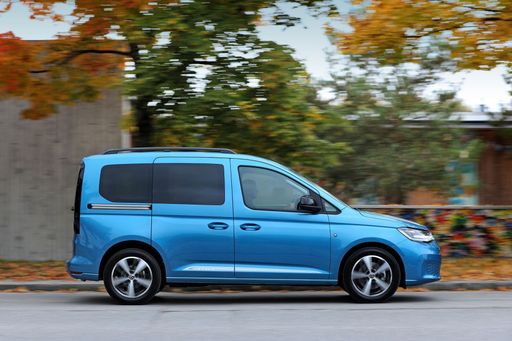
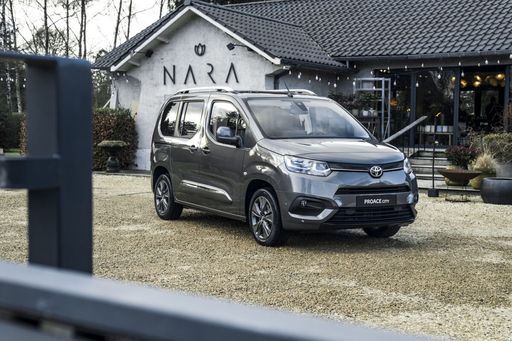
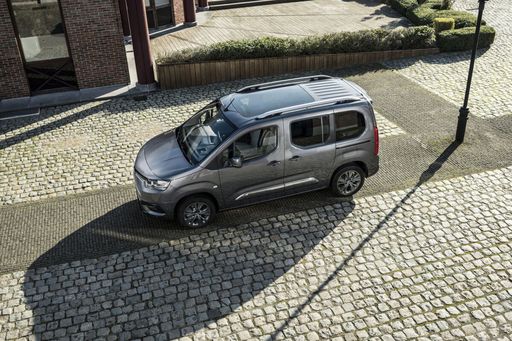
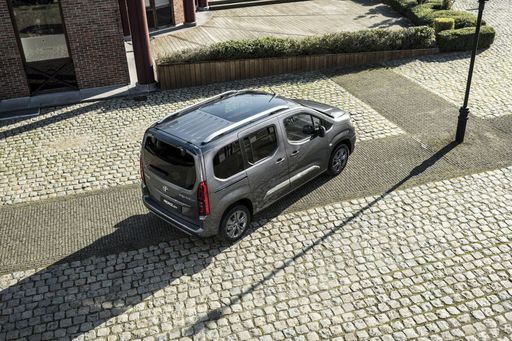
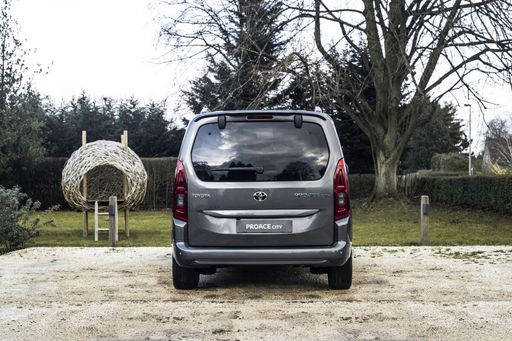
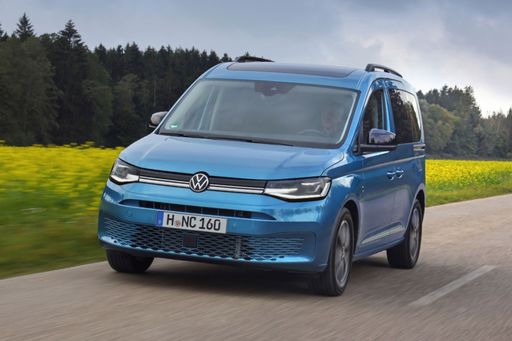
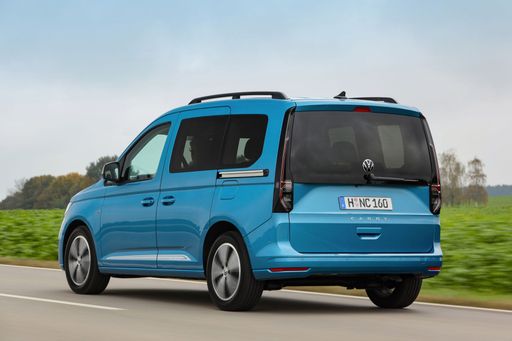
The Toyota Proace City arrives with pragmatic, no-nonsense lines that scream usefulness, while the VW Caddy leans into a cleaner, more polished presence that feels a touch premium for its class. Up close, the Toyota’s styling signals work-ready durability, whereas the Caddy trades on subtle flair that will please style-conscious buyers who don’t want to look like they’re driving a toolbox. Both approaches have charm: one is reassuringly utilitarian, the other quietly sophisticated, so your choice depends on whether you prefer function-first or city-smart looks.
Proace City

How They Feel Behind the Wheel

In traffic and tight car parks the Proace City feels uncomplicated and composed, prioritising predictability and easy manoeuvring over theatrics, while the Caddy brings a crisper steering feel that rewards a more engaged driving style. Neither is trying to be a sports car, but the character differences are clear — one comforts you with steadiness, the other with a livelier touch that makes everyday driving feel a bit less like a chore. Both are friendly companions on short hops and longer runs, but the way they communicate with the driver subtly shapes the mood of the journey.

Caddy

Packing, Seating and Practical Magic

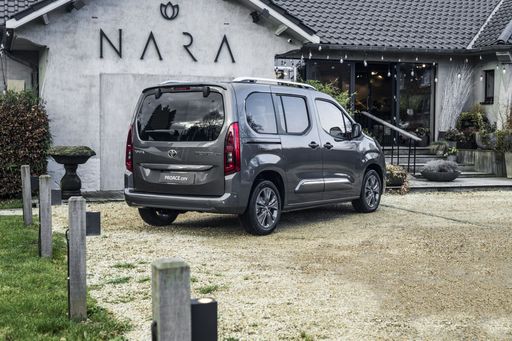
If your week is a mix of carpools, DIY runs and grocery missions, both cabins flex impressively but in different ways: the Proace City wears its practicality on its sleeve with straightforward, accessible storage and an honest approach to cargo, whereas the Caddy cleverly blends modularity with a more refined feel that makes family life a little less chaotic. Sliding doors, low load lips and configurable seats matter here, and each offers sensible solutions that keep daily routines efficient without fuss. For buyers who juggle kids, kit or both, the real test is how quickly the interior adapts — and both will make you feel prepared rather than compromised.

Proace City

Cabin Comfort: Simple Luxury vs. Functional Calm

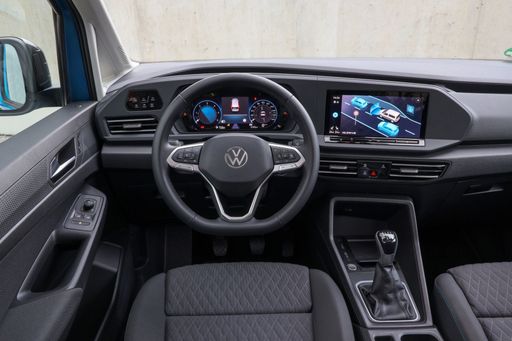
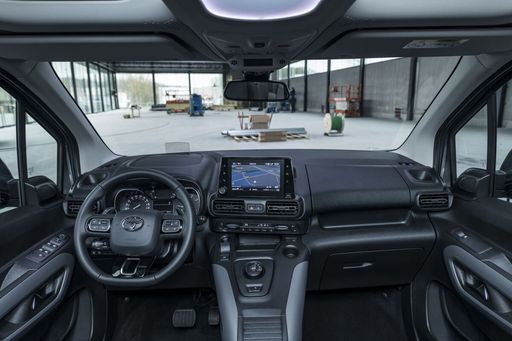
Step inside the Caddy and you get a cabin that aims to soothe with materials and surfaces that feel a notch up the ladder, while the Proace City concentrates on ergonomics and easy-to-use controls designed to withstand daily knocks and spills. Noise insulation and seat comfort shape long drives more than headline specs, and each car takes a sensible view: the Toyota keeps things durable and straightforward, the VW nudges towards a more considered, quieter environment. Either way, neither overcomplicates the interface, so what you notice most is how each one makes long commuting weeks feel less wearing.

Caddy

Running It Without Regret

Ownership is about how a vehicle fits into your life week after week, and here perception matters as much as figures: the Proace City projects value and practicality that will appeal to budget-conscious buyers and tradespeople, while the Caddy trades on a reputation for refinement and brand familiarity that can justify a slightly different spend profile. Servicing, practicality and how easy the day-to-day is will drive many decisions, and both models score by offering sensible packaging and predictable ownership realities. In short, one courts the careful shopper, the other comforts those willing to pay a touch more for polish and badge appeal.

Proace City

Who Should Buy Which?

Choose the Toyota Proace City if your priorities are straightforward: durability, straightforward practicality and a vehicle that prioritises workaday usefulness over frills, making it ideal for small business owners and families who put functionality first. Lean toward the VW Caddy if you want urban versatility wrapped in a slightly more premium everyday experience that suits commuters who value refinement and a nicer interior for longer miles. Both cover a lot of ground, but your lifestyle — tool-laden workdays, family shuttles, or city commutes with an eye on comfort — should steer the decision more than specs alone.

Caddy

Turn the Page

We’ve walked the streets and loaded the boots, and the personalities of these two rivals are clear: one pragmatic and unflappable, the other composed and cultured, each with a strong case for different buyers. If you’re still undecided, hang on — we’ll break down the finishing touches, ownership realities and who ultimately takes the DriveDuel title. Keep reading to find out which model will be crowned the DriveDuel Champion afterwards.

Here’s where it gets real: The technical differences in detail

Caddy

Costs and Efficiency:

Price and efficiency are often the first things buyers look at. Here it becomes clear which model has the long-term edge – whether at the pump, the plug, or in purchase price.

Toyota Proace City is noticeably cheaper – starting at 20,800 £ , while the VW Caddy costs 27,800 £ . That’s a price difference of around 6,961 £.

Fuel consumption also shows a difference: the VW Caddy uses 0.5 L/100km and is significantly more efficient than the Toyota Proace City with 5.3 L/100km. The difference is about 4.8 L/100km.

As for electric range, the Toyota Proace City offers clearly more range – reaching up to 343 km, about 222 km more than the VW Caddy.

Proace City

Engine and Performance:

Power, torque and acceleration say a lot about how a car feels on the road. This is where you see which model delivers more driving dynamics.

When it comes to engine power, the VW Caddy offers only slightly more power – delivering 150 HP compared to 136 HP. That’s roughly 14 HP more horsepower.

When accelerating from 0 to 100 km/h, the VW Caddy is only slightly quicker – completing the sprint in 11.4 s, while the Toyota Proace City takes 11.5 s. That’s about 0.1 s quicker.

Looking at top speed, the VW Caddy is markedly faster – reaching 186 km/h, while the Toyota Proace City tops out at 135 km/h. The difference is around 51 km/h.

There’s also a difference in torque: the VW Caddy delivers barely more torque with 320 Nm compared to 300 Nm. That’s about 20 Nm more.

Caddy

Space and Everyday Use:

Beyond pure performance, interior space and usability matter most in daily life. This is where you see which car is more practical and versatile.

Both vehicles offer seating for 7 people.

In terms of curb weight, Toyota Proace City is somewhat lighter – 1,366 kg compared to 1,575 kg. The difference is around 209 kg.

For maximum load capacity, the VW Caddy offers markedly more capacity – up to 3,700 L, about 1,007 L more than the Toyota Proace City.

When it comes to payload, the Toyota Proace City carries a bit more – 829 kg compared to 710 kg. That’s a difference of about 119 kg.

Who wins the race in the data check?

The VW Caddy is decisively ahead in the objective data comparison.
This result only shows which model scores more points on paper – not which of the two cars feels right for you.

from £27,800
Caddy

VW Caddy

  • Engine Type : Petrol, Diesel, Plugin Hybrid
  • Transmission : Manuel, Automatic
  • Drive Type : Front-Wheel Drive, All-Wheel Drive
  • Power HP : 102 - 150 HP
  • Consumption L/100km : 0.5 - 6.9 L/100km
  • Electric Range : 116 - 121 km
VW Caddy
Toyota Proace City

Costs and Consumption

View detailed analysis

Engine and Performance

View detailed analysis

Dimensions and Body

View detailed analysis

VW Caddy

The VW Caddy is the Swiss-army knife of compact vans — practical, surprisingly refined, and ready to swap a weekend adventure for a grocery run without breaking a sweat. It’s user-friendly, comfortable enough for daily driving, and sensible for buyers who want utility with a dash of style and no drama.

details

Toyota Proace City

The Toyota Proace City is a clever compact workhorse that blends van practicality with passenger comfort, turning daily deliveries or weekend DIY runs into a surprisingly civilised affair. It won't set your pulse racing, but its easy driving manners, flexible interior and low-hassle ownership make it a smart pick for buyers who value usefulness over flash.

details
VW Caddy
Toyota Proace City

Costs and Consumption

Price
27,800 - 45,900 £
Price
20,800 - 44,100 £
Consumption L/100km
0.5 - 6.9 L/100km
Consumption L/100km
5.3 - 6.3 L/100km
Consumption kWh/100km
-
Consumption kWh/100km
18.1 kWh/100km
Electric Range
116 - 121 km
Electric Range
343 km
Battery Capacity
19.7 kWh
Battery Capacity
-
co2
10 - 165 g/km
co2
0 - 146 g/km
Fuel tank capacity
50 L
Fuel tank capacity
-

Dimensions and Body

Body Type
High Roof Estate
Body Type
High Roof Estate
Seats
5 - 7
Seats
5 - 7
Doors
5
Doors
5
Curb weight
1,575 - 1,998 kg
Curb weight
1,366 - 1,664 kg
Trunk capacity
-
Trunk capacity
641 - 912 L
Length
4,500 - 4,853 mm
Length
4,401 - 4,751 mm
Width
1,855 mm
Width
1,848 mm
Height
1,819 - 1,860 mm
Height
1,812 - 1,818 mm
Max trunk capacity
2,556 - 3,700 L
Max trunk capacity
2,126 - 2,693 L
Payload
501 - 710 kg
Payload
525 - 829 kg

Engine and Performance

Engine Type
Petrol, Diesel, Plugin Hybrid
Engine Type
Electric, Petrol, Diesel
Transmission
Manuel, Automatic
Transmission
Automatic, Manuel
Transmission Detail
Manual Gearbox, Dual-Clutch Automatic
Transmission Detail
Reduction Gearbox, Manual Gearbox, Automatic Gearbox
Drive Type
Front-Wheel Drive, All-Wheel Drive
Drive Type
Front-Wheel Drive
Power HP
102 - 150 HP
Power HP
102 - 136 HP
Acceleration 0-100km/h
11.4 - 14 s
Acceleration 0-100km/h
11.5 - 13.2 s
Max Speed
173 - 186 km/h
Max Speed
135 km/h
Torque
220 - 320 Nm
Torque
205 - 300 Nm
Number of Cylinders
4
Number of Cylinders
3 - 4
Power kW
75 - 110 kW
Power kW
75 - 100 kW
Engine capacity
1,498 - 1,968 cm3
Engine capacity
1,199 - 1,499 cm3

General

Model Year
2024
Model Year
2,024 - 2,026
CO2 Efficiency Class
E, F, B
CO2 Efficiency Class
A, E
Brand
VW
Brand
Toyota
DriveDuel uses data analysis and artificial intelligence to evaluate vehicle data and create content. Content is regularly reviewed and improved. The displayed prices are estimates based on German list prices, adjusted to the respective country’s VAT. Country-specific registration taxes are not included. This information is not legally binding.