VS

VW Crafter vs Fiat Ducato comparison

Compare performance (177 HP vs 270 HP), boot space and price (47,100 £ vs 34,300 £ ) at a glance. Find out which car is the better choice for you – VW Crafter or Fiat Ducato?

VW Crafter vs Fiat Ducato: Key differences

VW Crafter

  • only slightly lighter
details

Fiat Ducato

  • visibly cheaper
  • visibly more power
  • a bit more efficient
details

By Achim Sedelmaier

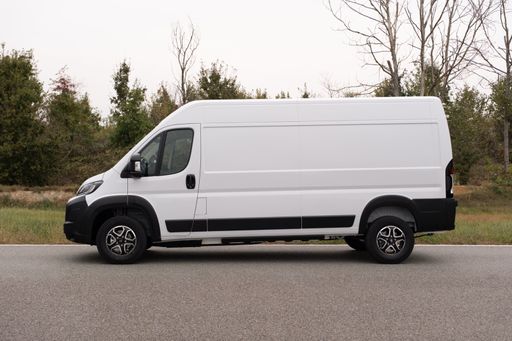
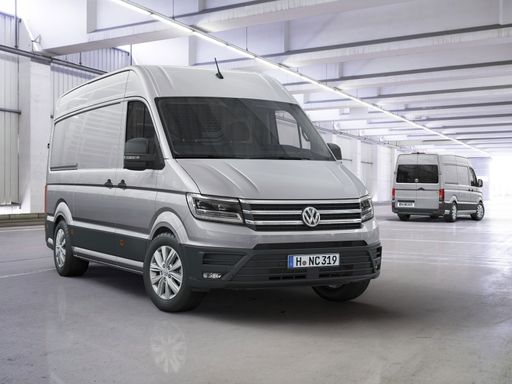
Crafter

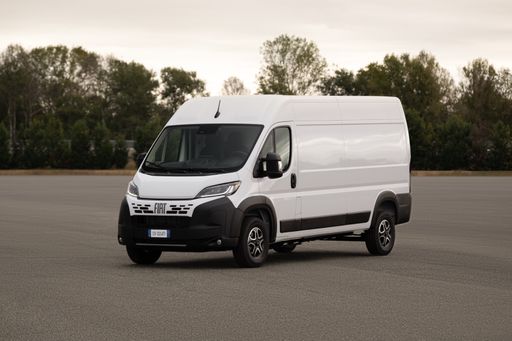
The head-to-head: Fiat Ducato VS VW Crafter in the large van arena

Fiat Ducato VS VW Crafter — this is a straight-up comparison between two of the most visible names in the commercial van world, pitting a work-ready stalwart against a more composed contender. If you’re searching for a clear van comparison to decide the right cargo or conversion base, this match-up frames the conversation around usability, presence and daily running rather than just spec sheets. Both the Fiat Ducato and the VW Crafter do the core job of hauling and carrying, but they sell very different feelings behind the wheel and in the loading bay. Read on to understand how each van behaves in everyday life and which personality fits your business, camper project or fleet thinking best.
Ducato

Two attitudes: no-nonsense utility versus composed refinement

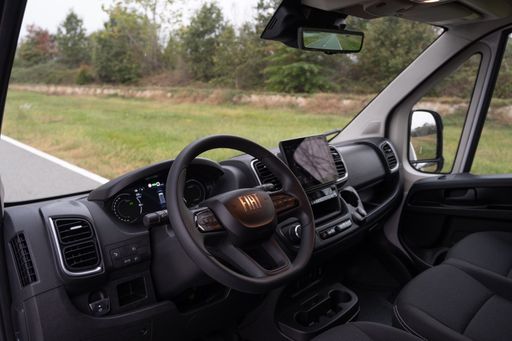
The Fiat Ducato plays the no-nonsense workhorse — rugged, straightforward and built around the essentials — while the VW Crafter leans into a more refined, almost passenger-car poise that feels considered from the driver’s seat. That contrast shows in cabin mood, control layout and the way each van interrogates potholes and motorway miles: the Ducato is matter-of-fact, the Crafter is trying to make a statement. For buyers who prize function over frills, the Fiat Ducato will feel honest and unpretentious; for those who want their commercial vehicle to look and feel closer to a premium work vehicle, the VW Crafter answers that call. It’s a difference of attitude as much as equipment — rugged practicality versus a quieter, more curated driving environment.

How they live day to day: city runs, deliveries and long hauls

In tight urban streets and repeated stops a van’s agility and ergonomics quickly reveal themselves: the Fiat Ducato tends to prioritise simple, durable interfaces and easy access to the load bay, while the VW Crafter rewards longer shifts with a calmer ride and more considered creature comforts. For quick deliveries and heavy-duty shunting, the Fiat Ducato feels like something you can work hard without worrying about delicate finishes; the VW Crafter makes long stints and motorway miles less wearing on the driver. Both vans accept conversions and custom layouts, but your choice will affect daily routine — whether you want a tool that shrugs off abuse or a mobile workspace that feels tidy and composed. Practical differences are best felt in real use: loading, reversing, and living with the cab for hours.

The story you tell with your van: practicality or presence?

Choosing between the Fiat Ducato and the VW Crafter is as much about external image as it is about spreadsheets: one says “efficient, get-the-job-done” while the other whispers “polished, professional.” Tradespeople and fleet managers might favour the straightforward honesty of the Fiat Ducato, where cost of use and simplicity make the business case easy to explain. Conversely, if you run client-facing services, use the van as a brand statement, or simply want a cab that feels premium, the VW Crafter helps justify itself through perceived quality and a neater driving experience. Both choices are defensible — it’s about which narrative you want your vehicle to carry every day.

Who should be most tempted by the Fiat Ducato?

If you’re counting operating costs, want a work-centric layout and need something that gets dusty, wet and heavy without ceremony, the Fiat Ducato will be very appealing. Small business owners, builders, mobile workshops and conversion-minded buyers will appreciate its straightforwardness and durability in daily grind situations. The Fiat Ducato is also an easy pick for buyers who prioritise value and clear utility over a fancy cab experience, and those who plan to fit it out for specific jobs or camper conversion will like the simplicity. It’s the pragmatic choice that keeps the focus on usability rather than on creature comforts.

Who should lean toward the VW Crafter (and when the Ducato still tempts)

The VW Crafter suits drivers who spend long hours in the van, want a more composed ride and appreciate a cabin that feels closer to a modern passenger vehicle; it’s an attractive option for service companies and executives who require a professional impression. For anyone converting a van into a comfortable long-distance camper or running client-facing operations, the Crafter’s refinement and perceived quality carry weight. That said, even if you’re tempted by the VW Crafter, the Fiat Ducato remains a hard-to-ignore alternative for buyers who prefer a more utilitarian, budget-savvy approach — so weigh how much premium feel matters against plain practicality before you decide. Explore the detailed delta below to see how those everyday differences translate into what you’ll live with every day.

Here’s where it gets real: The technical differences in detail

Crafter

Costs and Efficiency:

Looking at overall running costs, both models reveal some interesting differences in everyday economy.

Fiat Ducato is visibly cheaper – starting at 34,300 £ , while the VW Crafter costs 47,100 £ . That’s a price difference of around 12,801 £.

Fuel consumption also shows a difference: the Fiat Ducato uses 7.5 L/100km and is a bit more efficient than the VW Crafter with 8.4 L/100km. The difference is about 0.9 L/100km.

Ducato

Engine and Performance:

Power, torque and acceleration say a lot about how a car feels on the road. This is where you see which model delivers more driving dynamics.

When it comes to engine power, the Fiat Ducato offers visibly more power – delivering 270 HP compared to 177 HP. That’s roughly 93 HP more horsepower.

There’s no difference in top speed – both reach 165 km/h.

There’s also a difference in torque: the Fiat Ducato delivers only slightly more torque with 450 Nm compared to 410 Nm. That’s about 40 Nm more.

Space and Everyday Use:

Whether family car or daily driver – which one offers more room, flexibility and comfort?

Seats: Fiat Ducato offers more seats – 3 vs 2.

In terms of curb weight, VW Crafter is only slightly lighter – 2,072 kg compared to 2,125 kg. The difference is around 53 kg.

For maximum load capacity, the VW Crafter offers barely more capacity – up to 18,400 L, about 1,400 L more than the Fiat Ducato.

When it comes to payload, the VW Crafter carries markedly more – 2,994 kg compared to 2,020 kg. That’s a difference of about 974 kg.

Who wins the race in the data check?

The Fiat Ducato is far ahead overall in the objective data comparison.
This result only shows which model scores more points on paper – not which of the two cars feels right for you.

from £34,300
Ducato

Fiat Ducato

  • Engine Type : Diesel, Electric
  • Transmission : Manuel, Automatic
  • Drive Type : Front-Wheel Drive
  • Power HP : 120 - 270 HP
  • Consumption L/100km : 7.5 - 9 L/100km
  • Electric Range : 430 km
VW Crafter
Fiat Ducato

Costs and Consumption

View detailed analysis

Engine and Performance

View detailed analysis

Dimensions and Body

View detailed analysis

VW Crafter

The VW Crafter is a no-nonsense workhorse that makes hauling and running a mobile business feel almost civilized, with a cabin built for long days and smart storage where you need it. It may not turn heads for glamour, but its sturdy build, straightforward tech and reliable manners mean fewer headaches for owners — a van that prefers to earn your trust rather than demand attention.

details

Fiat Ducato

The Fiat Ducato is a no-nonsense workhorse that turns practicality into an artform, with a cavernous, flexible load area and predictable, car-like driving manners that make long days behind the wheel far less tedious. It’s equally at home with a tradesman’s kit or a camper conversion, offering sensible packaging, easy servicing and the sort of reliability that keeps surprises—and down-time—to a minimum.

details
VW Crafter
Fiat Ducato

Costs and Consumption

Price
47,100 - 68,800 £
Price
34,300 - 57,800 £
Consumption L/100km
8.4 - 13.1 L/100km
Consumption L/100km
7.5 - 9 L/100km
Consumption kWh/100km
-
Consumption kWh/100km
-
Electric Range
-
Electric Range
430 km
Battery Capacity
-
Battery Capacity
-
co2
220 - 342 g/km
co2
0 - 233 g/km
Fuel tank capacity
75 L
Fuel tank capacity
90 L

Dimensions and Body

Body Type
Cargo Van
Body Type
Cargo Van
Seats
2
Seats
3
Doors
4
Doors
4
Curb weight
2,072 - 2,810 kg
Curb weight
2,125 - 2,940 kg
Trunk capacity
-
Trunk capacity
-
Length
5,986 - 7,391 mm
Length
5,413 - 6,678 mm
Width
2,040 - 2,069 mm
Width
2,050 - 2,100 mm
Height
2,355 - 2,830 mm
Height
2,254 - 2,774 mm
Max trunk capacity
9,300 - 18,400 L
Max trunk capacity
10,000 - 17,000 L
Payload
1,037 - 2,994 kg
Payload
560 - 2,020 kg

Engine and Performance

Engine Type
Diesel
Engine Type
Diesel, Electric
Transmission
Manuel, Automatic
Transmission
Manuel, Automatic
Transmission Detail
Manual Gearbox, Automatic Gearbox
Transmission Detail
Manual Gearbox, Automatic Gearbox, Reduction Gearbox
Drive Type
Rear-Wheel Drive, Front-Wheel Drive, All-Wheel Drive
Drive Type
Front-Wheel Drive
Power HP
140 - 177 HP
Power HP
120 - 270 HP
Acceleration 0-100km/h
-
Acceleration 0-100km/h
-
Max Speed
90 - 165 km/h
Max Speed
90 - 165 km/h
Torque
360 - 410 Nm
Torque
320 - 450 Nm
Number of Cylinders
4
Number of Cylinders
4
Power kW
103 - 130 kW
Power kW
88 - 200 kW
Engine capacity
1,968 cm3
Engine capacity
2,184 cm3

General

Model Year
2,017 - 2,023
Model Year
2,023 - 2,025
CO2 Efficiency Class
G
CO2 Efficiency Class
G, A
Brand
VW
Brand
Fiat
DriveDuel uses data analysis and artificial intelligence to evaluate vehicle data and create content. Content is regularly reviewed and improved. The displayed prices are estimates based on German list prices, adjusted to the respective country’s VAT. Country-specific registration taxes are not included. This information is not legally binding.