VS

VW Golf vs Audi A1 comparison

Compare performance (333 HP vs 207 HP), boot space and price (25,200 £ vs 20,000 £ ) at a glance. Find out which car is the better choice for you – VW Golf or Audi A1?

VW Golf vs Audi A1: Key differences

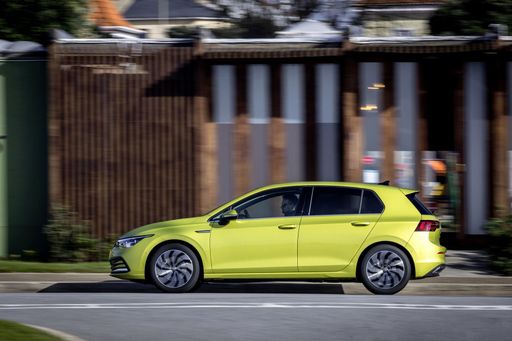
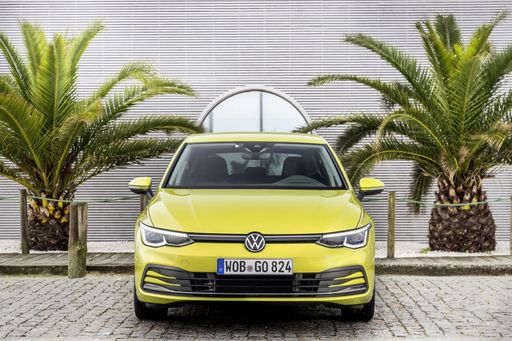
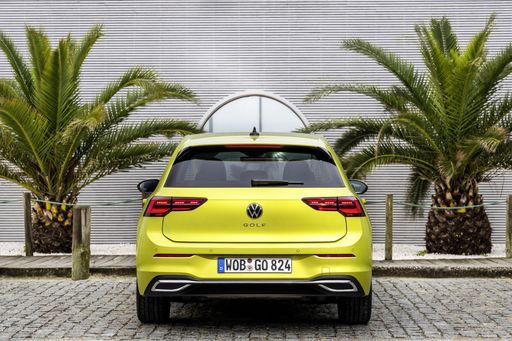
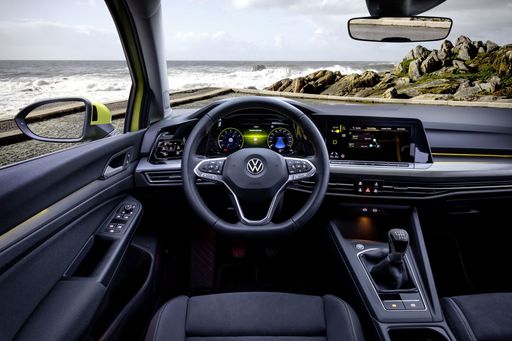
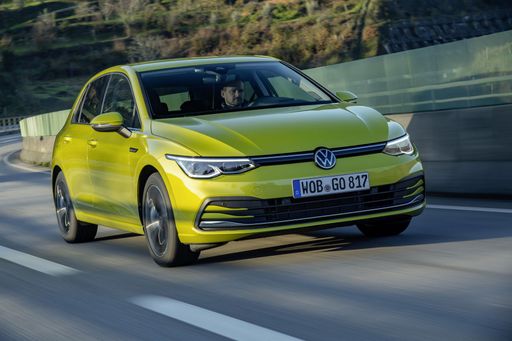
VW Golf

4.6 (1 Reviews)
rate
  • noticeably more power
  • substantially more efficient
  • clearly quicker 0–100 km/h
  • a bit more trunk space

Audi A1

  • clearly cheaper
  • somewhat lighter
Golf

Small premium hatch vs the everyman classic

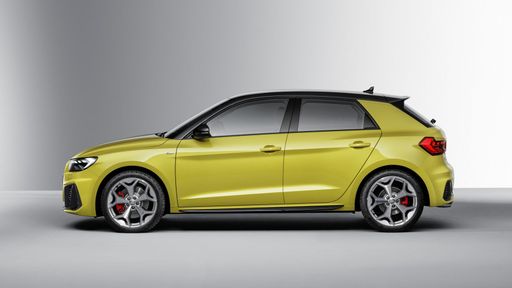
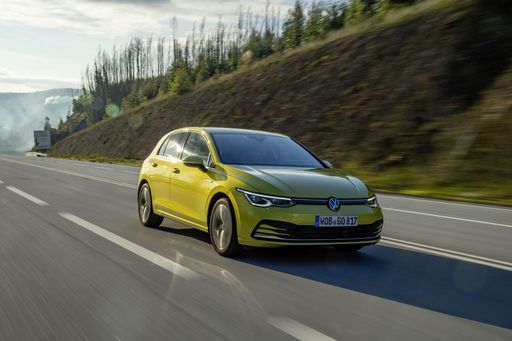
Audi A1 and VW Golf face off in this Audi A1 VS VW Golf comparison, pitting a boutique city hatch against a grown-up compact family hatch. If you’re choosing between the two, this quick read separates image from everyday sense, style from space. The Audi A1 presents itself as a small, sharp city companion while the VW Golf pitches a more grown-up, multipurpose package for real-life needs. We’ll tease out how each car feels behind the wheel, how they live day-to-day, and who should lean one way or the other. Read on to see which machine fits your street, your driveway and your motives.
A1

Character clash: flair versus function

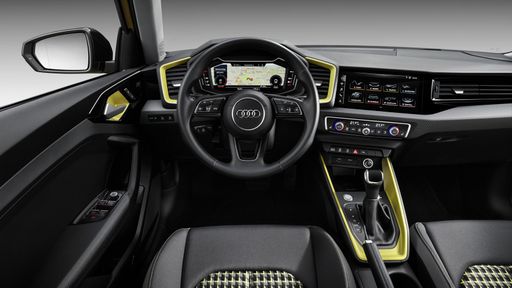
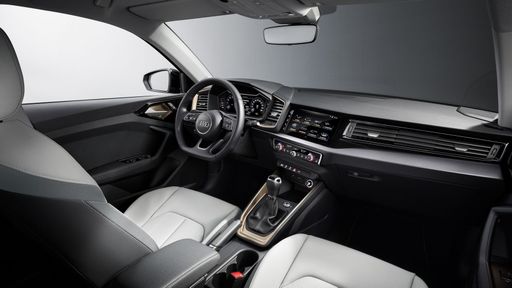
On personality alone the Audi A1 plays the sartorial younger sibling — crisp lines, a boutique interior and a badge that buys you character — while the VW Golf behaves like the sensible elder: quiet authority, conservative styling and a no-surprises manner. The Audi A1’s vibe is about flair and urban agility, the VW Golf about composure and compositional solidity on varied roads. Inside, the Audi A1 favors tactile trim and a more upright, intimate cockpit; the VW Golf gives you restrained materials and an ergonomics-first layout that says “workhorse with manners.” Neither is a show-off in the extreme, but the contrast between the Audi A1’s charisma and the VW Golf’s understated logic is what will tug at your wallet and your tastebuds.

Golf

Daily life: tight streets or long runs?

If your life is stop-start commutes and tight parking, the Audi A1 feels lighter on its feet and easier to live with; the VW Golf is the one that swallows long motorway miles with less fuss and makes family trips less stressful. Day-to-day the Audi A1 rewards city driving with a compact footprint and a cabin that feels premium despite its size, while the VW Golf’s extra width and room make shopping trips, school runs and luggage-hauling markedly simpler. Ride comfort tilts toward the VW Golf on rough surfaces and long hauls, whereas the Audi A1 trades a bit of compliance for sharper turn-in and a sportier posture. Practicality wins in the VW Golf but the Audi A1 wins when curbside charisma and smart urban packaging are priority.

A1

Why you’ll tell your friends you bought one

Choosing a Audi A1 is a statement: you value brand cues, a polished interior and a car that looks right in a boutique parking spot. Buying a VW Golf is more of a report to future-you: dependable, versatile and sensible — the kind of car your relatives will nod approvingly at. Both cars offer modern infotainment and safety features, but the Audi A1 leans on finish and perceived luxury while the VW Golf sells usability and conservative refinement. If you're justifying the purchase to friends, the Audi A1 says “style-first”, the VW Golf says “smart-choice” — both valid, just different kinds of confidence.

Golf

Who should test-drive the Audi A1?

The Audi A1 will charm buyers who care about image and interiors — think Design/Brand and Status/Expression archetypes who want a small car that reads premium. It's ideal for city professionals or couples who prize a compact footprint, sharp steering feel and cabin ambience over maximum luggage space, where the VW Golf’s greater practicality is less important. If your priority is to arrive in something that looks and feels more expensive than it costs to run, the Audi A1 delivers that shorthand well. But if you need bulk practicality or you frequently ferry family and kit, the Audi A1 will leave you wishing for just a little more room compared with the VW Golf.

A1

Who should test-drive the VW Golf (and still glance at the A1)?

The VW Golf suits Pragmatist and Comfort buyers who want a thoughtfully packaged hatch that does everything without trying to impress you at every junction. It’s the pick for small families, commuters with longer distances and anyone who values cabin space, relaxed ride manners and user-friendly controls. Golf drivers trade some of the Audi A1’s streetwise chic for day-in, day-out utility and a feeling that the car has your back on longer drives. If you admired the Audi A1 for its looks but need more room or comfort, the VW Golf is the sensible step up while still keeping the hatchback mojo intact — read on for the detailed spec breakdown below.

Here’s where it gets real: The technical differences in detail

Golf

Costs and Efficiency:

Looking at overall running costs, both models reveal some interesting differences in everyday economy.

Audi A1 is clearly cheaper – starting at 20,000 £ , while the VW Golf costs 25,200 £ . That’s a price difference of around 5,224 £.

Fuel consumption also shows a difference: the VW Golf uses 1.1 L/100km and is substantially more efficient than the Audi A1 with 5.2 L/100km. The difference is about 4.1 L/100km.

A1

Engine and Performance:

Under the bonnet, it becomes clear which model is tuned for sportiness and which one takes the lead when you hit the accelerator.

When it comes to engine power, the VW Golf offers noticeably more power – delivering 333 HP compared to 207 HP. That’s roughly 126 HP more horsepower.

When accelerating from 0 to 100 km/h, the VW Golf is clearly quicker – completing the sprint in 4.6 s, while the Audi A1 takes 6.5 s. That’s about 1.9 s quicker.

There’s also a difference in torque: the VW Golf delivers noticeably more torque with 420 Nm compared to 320 Nm. That’s about 100 Nm more.

Golf

Space and Everyday Use:

Cabin size, boot volume and payload all play a role in everyday practicality. Here, comfort and flexibility make the difference.

Both vehicles offer seating for 5 people.

In terms of curb weight, Audi A1 is somewhat lighter – 1,175 kg compared to 1,307 kg. The difference is around 132 kg.

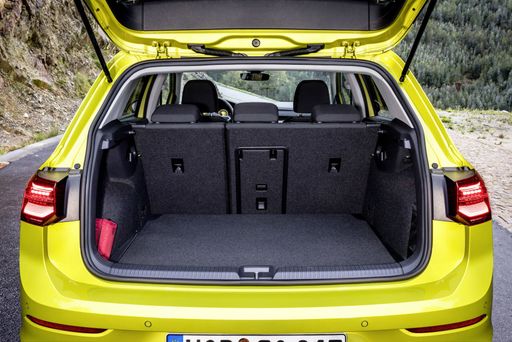
Looking at boot space, the VW Golf offers a bit more boot space – 381 L compared to 335 L. That’s a difference of about 46 L.

When it comes to payload, the VW Golf carries barely more – 508 kg compared to 470 kg. That’s a difference of about 38 kg.

Who wins the race in the data check?

The VW Golf is far ahead overall in the objective data comparison.
This result only shows which model scores more points on paper – not which of the two cars feels right for you.

from £25,200
Golf

VW Golf

  • Engine Type : Petrol MHEV, Petrol, Diesel, Plugin Hybrid
  • Transmission : Automatic, Manuel
  • Drive Type : Front-Wheel Drive, All-Wheel Drive
  • Power HP : 116 - 333 HP
  • Consumption L/100km : 1.1 - 8.1 L/100km
  • Electric Range : 131 - 143 km
VW Golf
Audi A1

Costs and Consumption

View detailed analysis

Engine and Performance

View detailed analysis

Dimensions and Body

View detailed analysis

VW Golf

The VW Golf remains the everyman’s favourite — cleverly balanced, composed and just posh enough to feel grown-up without pretending to be something it’s not. It slips through town and eats up longer trips with a refined cabin, practical layout and a kindly, capable character that turns everyday driving into something a little bit special.

details

Audi A1

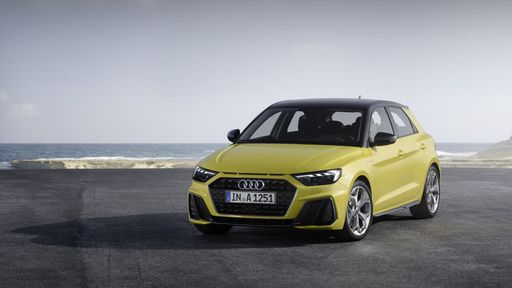
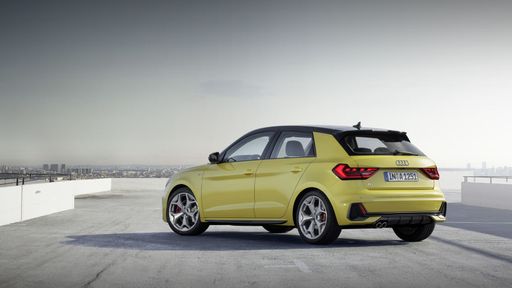
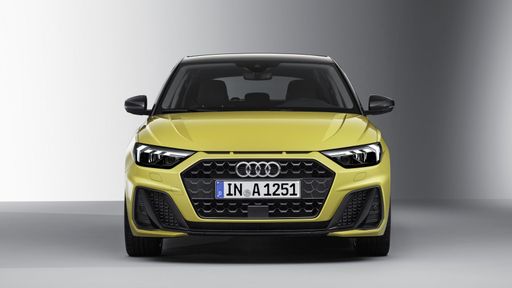
The Audi A1 is a compact premium hatch that wraps Audi's polished design and surprisingly grown-up cabin into a city-friendly package. It’s poised and fun to drive, a smart pick for buyers who want luxury flair without the fuss of a bigger car — and it makes tight parking feel almost enjoyable.

details
VW Golf
Audi A1

Costs and Consumption

Price
25,200 - 47,600 £
Price
20,000 - 28,800 £
Consumption L/100km
1.1 - 8.1 L/100km
Consumption L/100km
5.2 - 6.4 L/100km
Consumption kWh/100km
-
Consumption kWh/100km
-
Electric Range
131 - 143 km
Electric Range
-
Battery Capacity
19.7 kWh
Battery Capacity
-
co2
25 - 184 g/km
co2
118 - 146 g/km
Fuel tank capacity
40 - 55 L
Fuel tank capacity
-

Dimensions and Body

Body Type
Hatchback
Body Type
Hatchback
Seats
5
Seats
5
Doors
5
Doors
-
Curb weight
1,307 - 1,662 kg
Curb weight
1,175 - 1,365 kg
Trunk capacity
273 - 381 L
Trunk capacity
335 L
Length
4,282 - 4,296 mm
Length
-
Width
1,789 mm
Width
1,740 - 1,756 mm
Height
1,454 - 1,483 mm
Height
-
Max trunk capacity
1,129 - 1,237 L
Max trunk capacity
-
Payload
438 - 508 kg
Payload
410 - 470 kg

Engine and Performance

Engine Type
Petrol MHEV, Petrol, Diesel, Plugin Hybrid
Engine Type
Petrol
Transmission
Automatic, Manuel
Transmission
Manuel, Automatic
Transmission Detail
Dual-Clutch Automatic, Manual Gearbox
Transmission Detail
Manual Gearbox, Dual-Clutch Automatic
Drive Type
Front-Wheel Drive, All-Wheel Drive
Drive Type
Front-Wheel Drive
Power HP
116 - 333 HP
Power HP
95 - 207 HP
Acceleration 0-100km/h
4.6 - 10.2 s
Acceleration 0-100km/h
6.5 - 11.5 s
Max Speed
203 - 270 km/h
Max Speed
-
Torque
220 - 420 Nm
Torque
175 - 320 Nm
Number of Cylinders
4
Number of Cylinders
3 - 4
Power kW
85 - 245 kW
Power kW
70 - 152 kW
Engine capacity
1,498 - 1,984 cm3
Engine capacity
999 - 1,984 cm3

General

Model Year
2,024 - 2,025
Model Year
2,025
CO2 Efficiency Class
D, F, G, C, B
CO2 Efficiency Class
D, E
Brand
VW
Brand
Audi
DriveDuel uses data analysis and artificial intelligence to evaluate vehicle data and create content. Content is regularly reviewed and improved. The displayed prices are estimates based on German list prices, adjusted to the respective country’s VAT. Country-specific registration taxes are not included. This information is not legally binding.