VS

VW Golf vs Audi Q2 comparison

Compare performance (333 HP vs 300 HP), boot space and price (25,200 £ vs 24,900 £ ) at a glance. Find out which car is the better choice for you – VW Golf or Audi Q2?

VW Golf vs Audi Q2: Key differences

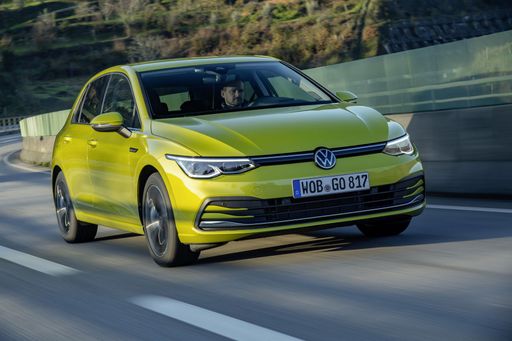
VW Golf

4.6 (1 Reviews)
rate
  • barely more power
  • clearly more efficient
  • barely quicker 0–100 km/h
  • very slightly lighter

Audi Q2

4.7 (4 Reviews)
rate
  • barely cheaper
  • only slightly more trunk space

All details on performance, efficiency, range and trunk space can be found in the technical comparison below – including user reviews for both models.

Golf

Urban Swagger vs. Continental Classic

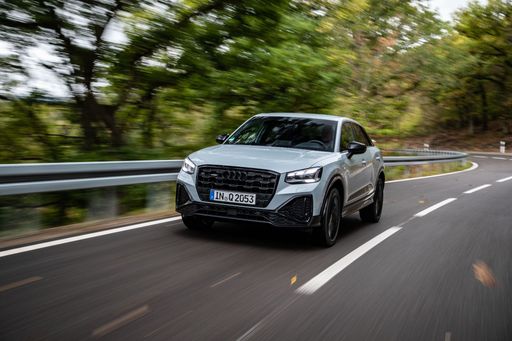
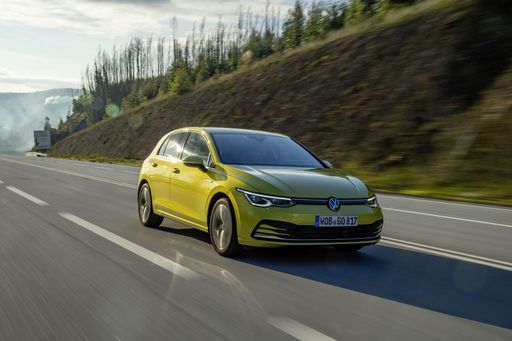
The Audi Q2 arrives with a confident, boxy presence that screams city-first attitude, while the VW Golf leans on its understated, familiar charm that has proven itself on everything from short commutes to long motorway runs. One feels like a fashion-forward compact crossover for those who value looks and a higher vantage point, the other like a textbook hatchback that earns trust through predictability and refinement. Both have clear personalities, so your choice will come down to whether you prefer to stand out at the lights or blend in and get on with the drive.
Q2

How They Feel on the Road

Drive the Q2 and you sense its desire to be nimble and composed in urban traffic, with a ride that prioritises planted confidence and a slight elevated view of the road; the Golf, meanwhile, is quietly athletic, rewarding fingertip inputs with a more connected, familiar steering feel. The Audi’s setup leans toward comfort with a bit of SUV poise, while the Golf strikes a balance that makes spirited running feel natural without fuss. Over mixed roads the differences are subtle but telling: one flirts with crossover versatility, the other doubles down on hatchback agility.

Golf

Living With It Day to Day

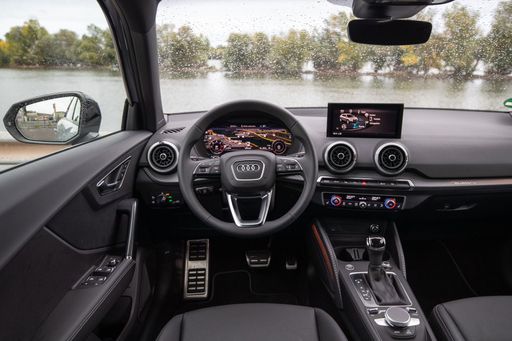
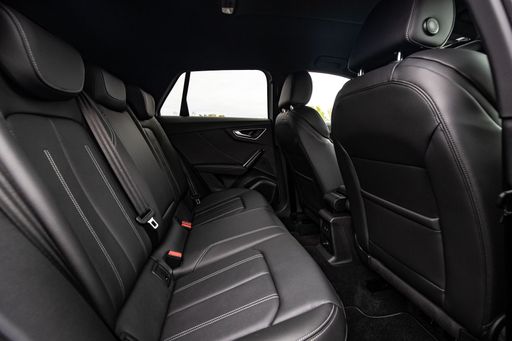
Practicality is where real-life decisions get made, and both cars are sensible companions but in different ways: the Q2’s layout and higher ride height make ingress and visibility easy around town, while the Golf’s clever packaging and sensible ergonomics feel like they were designed around packing more into an ordinary day. Cargo and cabin usability are well thought through on both, with each offering intuitive stowage and flexible seating that answers most family or weekend needs. If you often juggle kids, crates or awkward shopping trips, you’ll appreciate how each approaches everyday chores rather than raw capacity figures.

Q2

Cabin Character and Everyday Tech

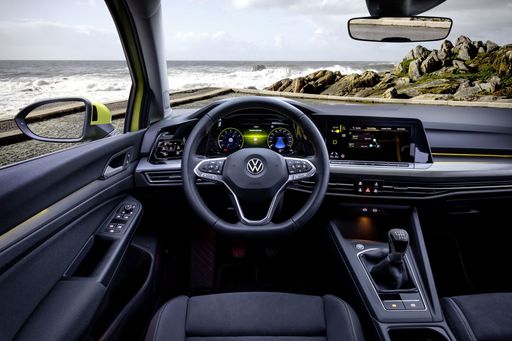
The Audi leans on a premium veneer—crisper lines, bold accents and a cabin that feels a touch more fashion-led—whereas the Golf opts for a restrained, functional elegance that ages well and keeps buttons where your hand expects them. Infotainment and connectivity are modern and competent in both, but the Golf’s layout favours quick, distraction-free operation while the Q2 offers a more visually striking, slightly gadget-forward experience. Material choices and perceived quality are strong on both machines, so the deciding factor will be whether you want a cabin that impresses guests or one that quietly excels at usability.

Golf

Value, Practical Sense and Running Ease

Owning either car is about balancing purchase sense with day-to-day running — the Golf tends to make a convincing case for pragmatic buyers who prioritise low fuss and familiar ownership, while the Q2 markets itself on style and the intangible uplift of an Audi badge. Servicing, insurance impressions and resale sentiment all play into the ownership story, and here perception often counts as much as the figures on a spec sheet. Ultimately, it’s about whether you value outright economy and sensible frugality, or prefer to pay a premium for looks, perceived prestige and a slightly more distinctive presence.

Q2

Who They Suit Best

Commuters who crave an easy, unflappable daily will find the Golf’s everyday manners hard to beat, while city dwellers and style-conscious drivers may gravitate toward the Q2 for its higher seating position and sharper exterior attitude. Families and practical users will appreciate the thoughtful packaging both provide, but the choice splits along priorities: pure usability and understated refinement versus personality and streetwise elegance. Neither is a wrong pick — it’s about which strengths match your lifestyle and the way you spend most of your miles.

Golf

The Final Tease

Both cars bring convincing arguments to the table: one trades on timeless hatchback virtues, the other on crossover charisma and brand cachet, so choosing between them is a question of taste as much as practicality. There’s no shortage of appeal in either cabin, and both will serve daily life with competence and confidence. If you’re enjoying this deep-dive, keep reading — the DriveDuel Champion will be revealed afterwards, so don’t miss which car takes the crown.

Here’s where it gets real: The technical differences in detail

Golf

Costs and Efficiency:

Price and efficiency are key factors when choosing a car – and this is often where the real differences emerge.

Audi Q2 is barely cheaper – starting at 24,900 £ , while the VW Golf costs 25,200 £ . That’s a price difference of around 338 £.

Fuel consumption also shows a difference: the VW Golf uses 1.1 L/100km and is clearly more efficient than the Audi Q2 with 4.8 L/100km. The difference is about 3.7 L/100km.

Q2

Engine and Performance:

Power, torque and acceleration say a lot about how a car feels on the road. This is where you see which model delivers more driving dynamics.

When it comes to engine power, the VW Golf offers barely more power – delivering 333 HP compared to 300 HP. That’s roughly 33 HP more horsepower.

When accelerating from 0 to 100 km/h, the VW Golf is barely quicker – completing the sprint in 4.6 s, while the Audi Q2 takes 4.9 s. That’s about 0.3 s quicker.

There’s also a difference in torque: the VW Golf delivers only slightly more torque with 420 Nm compared to 400 Nm. That’s about 20 Nm more.

Golf

Space and Everyday Use:

Cabin size, boot volume and payload all play a role in everyday practicality. Here, comfort and flexibility make the difference.

Both vehicles offer seating for 5 people.

In terms of curb weight, VW Golf is very slightly lighter – 1,307 kg compared to 1,330 kg. The difference is around 23 kg.

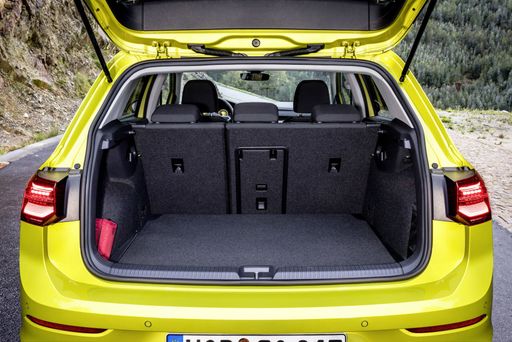
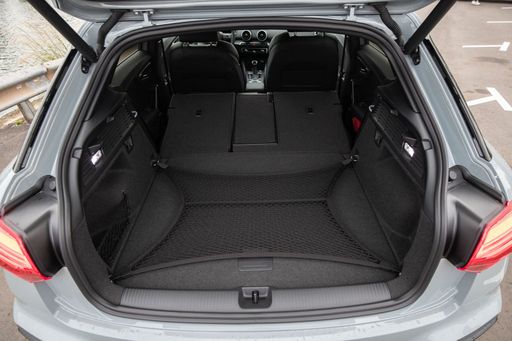
Looking at boot space, the Audi Q2 offers only slightly more boot space – 405 L compared to 381 L. That’s a difference of about 24 L.

When it comes to payload, the Audi Q2 carries very slightly more – 510 kg compared to 508 kg. That’s a difference of about 2 kg.

Who wins the race in the data check?

The VW Golf is decisively ahead in the objective data comparison.
This result only shows which model scores more points on paper – not which of the two cars feels right for you.

from £25,200
Golf

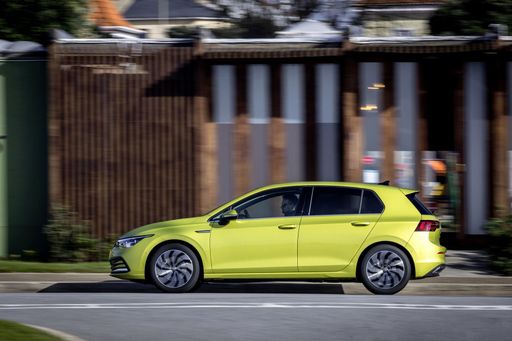
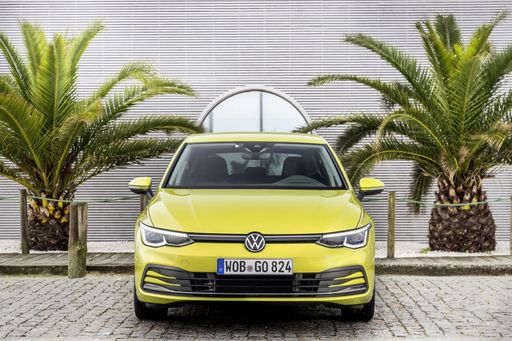
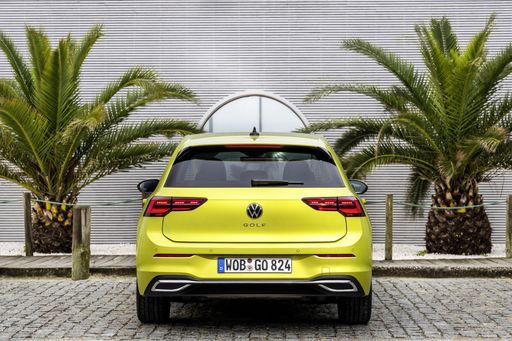
VW Golf

  • Engine Type : Petrol MHEV, Petrol, Diesel, Plugin Hybrid
  • Transmission : Automatic, Manuel
  • Drive Type : Front-Wheel Drive, All-Wheel Drive
  • Power HP : 116 - 333 HP
  • Consumption L/100km : 1.1 - 8.1 L/100km
  • Electric Range : 131 - 143 km
VW Golf
Audi Q2

Costs and Consumption

View detailed analysis

Engine and Performance

View detailed analysis

Dimensions and Body

View detailed analysis

VW Golf

The VW Golf remains the everyman’s favourite — cleverly balanced, composed and just posh enough to feel grown-up without pretending to be something it’s not. It slips through town and eats up longer trips with a refined cabin, practical layout and a kindly, capable character that turns everyday driving into something a little bit special.

details

Audi Q2

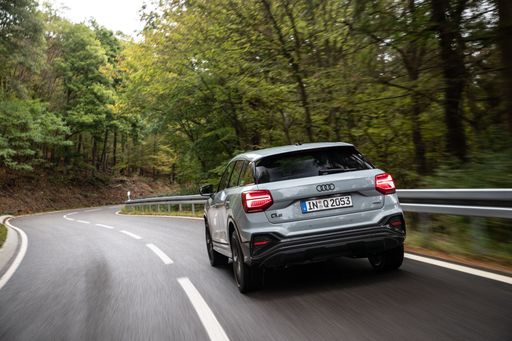
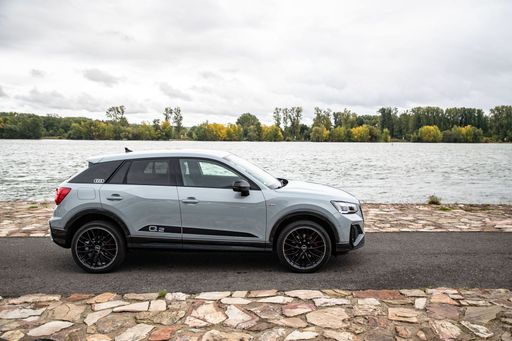
The Audi Q2 packs Audi’s premium attitude into a compact, cheeky package that turns city streets into a runway for tasteful design and clever practicality. It’s an easy car to live with thanks to an upscale cabin, composed manners and sprightly handling, and while it won’t satisfy someone chasing sports-car thrills, it’s a smart, stylish pick for buyers who want substance with a wink.

details
VW Golf
Audi Q2

Costs and Consumption

Price
25,200 - 47,600 £
Price
24,900 - 43,600 £
Consumption L/100km
1.1 - 8.1 L/100km
Consumption L/100km
4.8 - 8.1 L/100km
Consumption kWh/100km
-
Consumption kWh/100km
-
Electric Range
131 - 143 km
Electric Range
-
Battery Capacity
19.7 kWh
Battery Capacity
-
co2
25 - 184 g/km
co2
127 - 183 g/km
Fuel tank capacity
40 - 55 L
Fuel tank capacity
-

Dimensions and Body

Body Type
Hatchback
Body Type
SUV
Seats
5
Seats
5
Doors
5
Doors
-
Curb weight
1,307 - 1,662 kg
Curb weight
1,330 - 1,610 kg
Trunk capacity
273 - 381 L
Trunk capacity
355 - 405 L
Length
4,282 - 4,296 mm
Length
-
Width
1,789 mm
Width
1,794 - 1,802 mm
Height
1,454 - 1,483 mm
Height
-
Max trunk capacity
1,129 - 1,237 L
Max trunk capacity
-
Payload
438 - 508 kg
Payload
450 - 510 kg

Engine and Performance

Engine Type
Petrol MHEV, Petrol, Diesel, Plugin Hybrid
Engine Type
Petrol, Diesel
Transmission
Automatic, Manuel
Transmission
Manuel, Automatic
Transmission Detail
Dual-Clutch Automatic, Manual Gearbox
Transmission Detail
Manual Gearbox, Dual-Clutch Automatic
Drive Type
Front-Wheel Drive, All-Wheel Drive
Drive Type
Front-Wheel Drive, All-Wheel Drive
Power HP
116 - 333 HP
Power HP
116 - 300 HP
Acceleration 0-100km/h
4.6 - 10.2 s
Acceleration 0-100km/h
4.9 - 10.5 s
Max Speed
203 - 270 km/h
Max Speed
-
Torque
220 - 420 Nm
Torque
200 - 400 Nm
Number of Cylinders
4
Number of Cylinders
3 - 4
Power kW
85 - 245 kW
Power kW
85 - 221 kW
Engine capacity
1,498 - 1,984 cm3
Engine capacity
999 - 1,984 cm3

General

Model Year
2,024 - 2,025
Model Year
2,025
CO2 Efficiency Class
D, F, G, C, B
CO2 Efficiency Class
D, F, E, G
Brand
VW
Brand
Audi
DriveDuel uses data analysis and artificial intelligence to evaluate vehicle data and create content. Content is regularly reviewed and improved. The displayed prices are estimates based on German list prices, adjusted to the respective country’s VAT. Country-specific registration taxes are not included. This information is not legally binding.