VS

VW Golf vs CUPRA Formentor comparison

Compare performance (333 HP vs 390 HP), boot space and price (25,200 £ vs 35,200 £ ) at a glance. Find out which car is the better choice for you – VW Golf or CUPRA Formentor?

VW Golf vs CUPRA Formentor: Key differences

VW Golf

4.6 (1 Reviews)
rate
  • visibly cheaper
  • noticeably more efficient
  • moderately more electric range
  • very slightly lighter

CUPRA Formentor

4.9 (2 Reviews)
rate
  • somewhat more power
  • very slightly quicker 0–100 km/h
  • moderately more trunk space

All details on performance, efficiency, range and trunk space can be found in the technical comparison below – including user reviews for both models.

Golf

The Battle of Compact Excellence: CUPRA Formentor vs. VW Golf

In the world of compact cars, the choice between a sporty SUV and a well-established hatchback can be a conundrum. We pit the noteworthy CUPRA Formentor against the iconic VW Golf to see how they stack up in terms of design, performance, and innovations. Both hailed for their engineering prowess, let’s delve deeper to find out which car comes out on top.

Design and Dimensions: Aesthetic Appeal

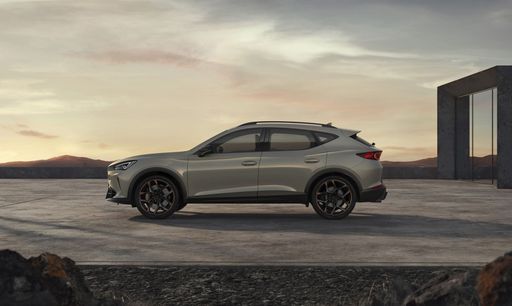
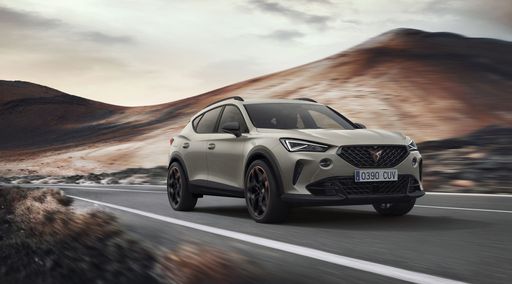
The CUPRA Formentor, with its bold and aggressive lines, boasts a distinct SUV profile with dimensions measuring 4451 mm in length, 1839 mm in width, and up to 1537 mm in height. Offering a more adventurous stance, the Formentor exudes a modern aesthetic that appeals to those seeking uniqueness.

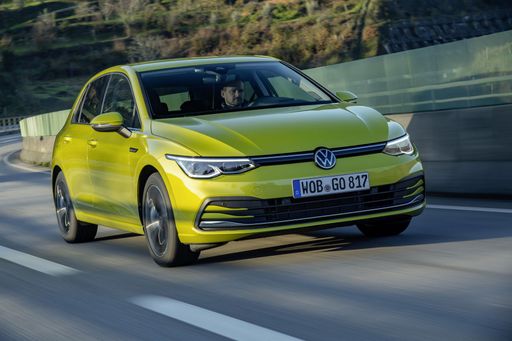
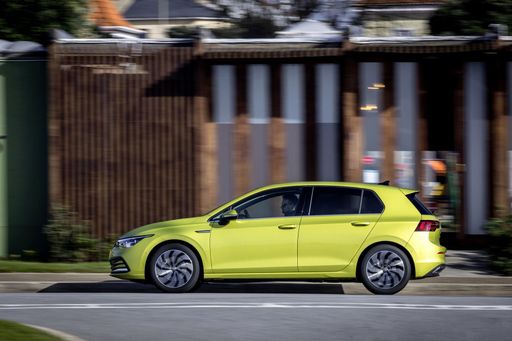
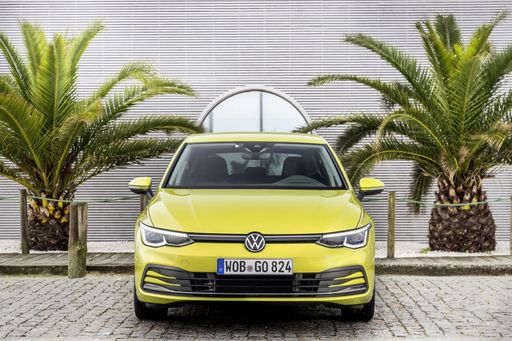
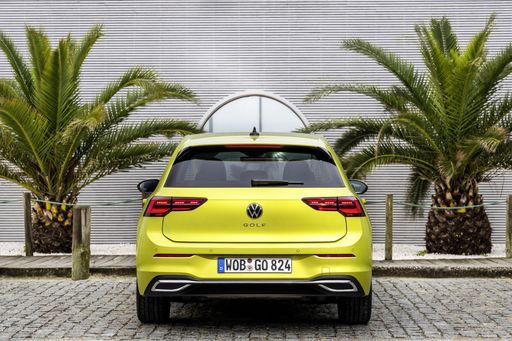
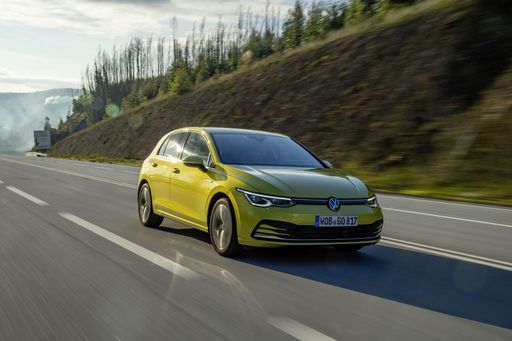
The VW Golf, on the other hand, continues its legacy with a refined hatchback design. More compact at 4292 mm in length and 1789 mm wide, the Golf maintains its iconic look with a touch of modern flair, making it a favorite among traditionalists.

Engine Variants and Performance: Power Meets Efficiency

The CUPRA Formentor is available in a variety of engine types, including Petrol, Diesel, and Plug-in Hybrid options. The standout performance features a 333 HP engine that propels the car from 0 to 100 km/h in a rapid 4.8 seconds, with a maximum speed of 250 km/h. This model ensures a thrilling driving experience, especially for those who opt for the dual-clutch automatic transmission and all-wheel drive setup.

Conversely, the VW Golf offers a diverse powertrains lineup, including petrol mild hybrids and plug-in hybrids. Its top-tier models deliver up to 333 HP, matching the Formentor in speed with a maximum capability of 270 km/h along with impressive acceleration. This, combined with its superior efficiency, makes the Golf a compelling choice for conscientious drivers.

Interior and Practicality: Comfort vs. Space

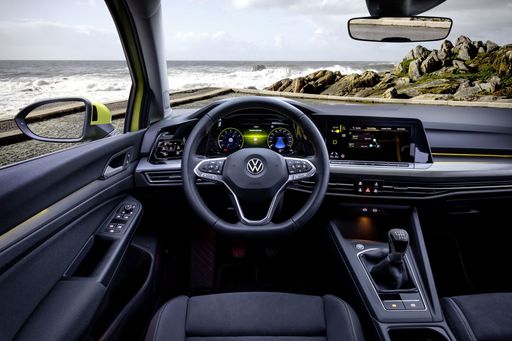
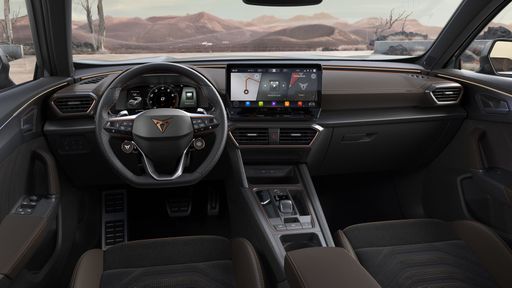
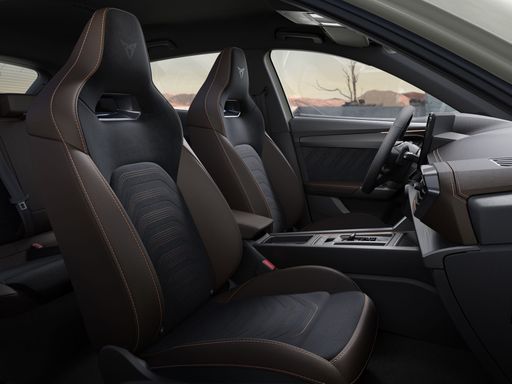
Inside, the CUPRA Formentor is spacious with seating for five and a generous trunk capacity of up to 450 liters, making it an ideal choice for those requiring extra cargo space. Its contemporary interior is designed to offer comfort and tech-savvy features, enhancing driving pleasure.

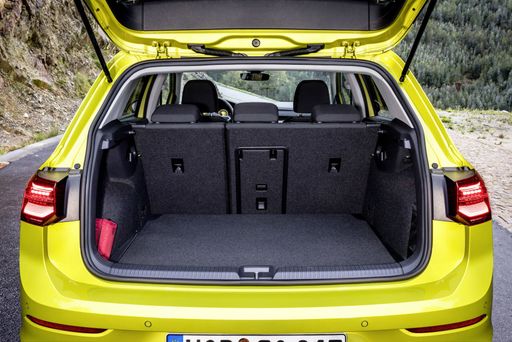
The VW Golf maintains its reputation for quality and practicality with a trunk space of up to 381 liters. While slightly smaller, it excels in providing a well-organized cabin space, maintaining high standards in terms of comfort with intelligent infotainment systems that enhance the user experience.

Innovations and Efficiency: Modern Touches

When it comes to innovations, the CUPRA Formentor’s plug-in hybrid variant stands out with an electric range of 125 km and a battery capacity of 19.7 kWh, showcasing a commitment to efficiency without sacrificing power. Its CO2 emissions are impressively low at just 9 g/km, making it an environmentally considerate option.

Similarly, the VW Golf’s plug-in hybrid offers an electric range of up to 143 km, which is slightly longer than the Formentor’s. Its thoughtful engineering enables a balance of performance with commendable fuel efficiency, boasting CO2 emissions as low as 6 g/km.

Conclusion: Choosing Between Icons

The CUPRA Formentor and VW Golf each hold their ground in the compact car arena. For those seeking a dynamic and sportier stance with SUV versatility, the Formentor is a prime candidate. While those preferring a blend of tradition and innovation would find the Golf a perfect match. Ultimately, the choice depends on individual preferences, practicality, and the driving experience one desires.
Here’s where it gets real: The technical differences in detail

Golf

Costs and Efficiency:

Looking at overall running costs, both models reveal some interesting differences in everyday economy.

VW Golf is visibly cheaper – starting at 25,200 £ , while the CUPRA Formentor costs 35,200 £ . That’s a price difference of around 10,046 £.

Fuel consumption also shows a difference: the VW Golf uses 1.1 L/100km and is noticeably more efficient than the CUPRA Formentor with 1.4 L/100km. The difference is about 0.3 L/100km.

As for electric range, the VW Golf offers moderately more range – reaching up to 143 km, about 17 km more than the CUPRA Formentor.

Formentor

Engine and Performance:

Power, torque and acceleration are the classic benchmarks for car enthusiasts – and here, some clear differences start to show.

When it comes to engine power, the CUPRA Formentor offers somewhat more power – delivering 390 HP compared to 333 HP. That’s roughly 57 HP more horsepower.

When accelerating from 0 to 100 km/h, the CUPRA Formentor is very slightly quicker – completing the sprint in 4.2 s, while the VW Golf takes 4.6 s. That’s about 0.4 s quicker.

Looking at top speed, the VW Golf is barely faster – reaching 270 km/h, while the CUPRA Formentor tops out at 250 km/h. The difference is around 20 km/h.

There’s also a difference in torque: the CUPRA Formentor delivers slightly more torque with 480 Nm compared to 420 Nm. That’s about 60 Nm more.

Golf

Space and Everyday Use:

Whether family car or daily driver – which one offers more room, flexibility and comfort?

Both vehicles offer seating for 5 people.

In terms of curb weight, VW Golf is very slightly lighter – 1,307 kg compared to 1,434 kg. The difference is around 127 kg.

Looking at boot space, the CUPRA Formentor offers moderately more boot space – 450 L compared to 381 L. That’s a difference of about 69 L.

For maximum load capacity, the CUPRA Formentor offers moderately more capacity – up to 1,505 L, about 268 L more than the VW Golf.

When it comes to payload, the CUPRA Formentor carries very slightly more – 526 kg compared to 508 kg. That’s a difference of about 18 kg.

Who wins the race in the data check?

The CUPRA Formentor sits just ahead overall in the objective data comparison.
This result only shows which model scores more points on paper – not which of the two cars feels right for you.

from £35,200
Formentor

CUPRA Formentor

  • Engine Type : Petrol, Petrol MHEV, Diesel, Plugin Hybrid
  • Transmission : Automatic, Manuel
  • Drive Type : All-Wheel Drive, Front-Wheel Drive
  • Power HP : 150 - 390 HP
  • Consumption L/100km : 1.4 - 10.1 L/100km
  • Electric Range : 117 - 126 km
VW Golf
CUPRA Formentor

Costs and Consumption

View detailed analysis

Engine and Performance

View detailed analysis

Dimensions and Body

View detailed analysis

VW Golf

The VW Golf remains the everyman’s favourite — cleverly balanced, composed and just posh enough to feel grown-up without pretending to be something it’s not. It slips through town and eats up longer trips with a refined cabin, practical layout and a kindly, capable character that turns everyday driving into something a little bit special.

details

CUPRA Formentor

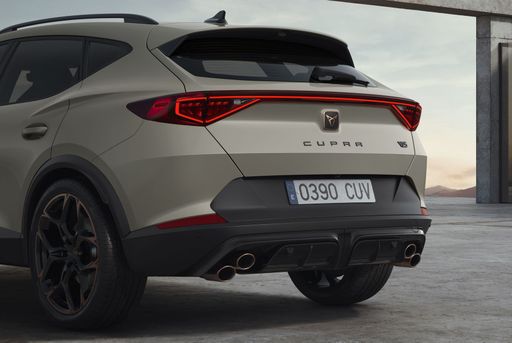
With coupe-like lines and a muscular stance the Cupra Formentor blends sporty drama with everyday sense, so it looks like it’s in motion even at a standstill. Inside and out it’s tuned for drivers who want engaging handling and a grown-up cabin — practical enough for daily life, playful enough to make the commute feel like a short track session.

details
VW Golf
CUPRA Formentor

Costs and Consumption

Price
25,200 - 47,600 £
Price
35,200 - 62,500 £
Consumption L/100km
1.1 - 8.1 L/100km
Consumption L/100km
1.4 - 10.1 L/100km
Consumption kWh/100km
-
Consumption kWh/100km
-
Electric Range
131 - 143 km
Electric Range
117 - 126 km
Battery Capacity
19.7 kWh
Battery Capacity
19.7 kWh
co2
25 - 184 g/km
co2
32 - 229 g/km
Fuel tank capacity
40 - 55 L
Fuel tank capacity
40 - 55 L

Dimensions and Body

Body Type
Hatchback
Body Type
SUV
Seats
5
Seats
5
Doors
5
Doors
5
Curb weight
1,307 - 1,662 kg
Curb weight
1,434 - 1,742 kg
Trunk capacity
273 - 381 L
Trunk capacity
345 - 450 L
Length
4,282 - 4,296 mm
Length
4,451 mm
Width
1,789 mm
Width
1,839 - 1,852 mm
Height
1,454 - 1,483 mm
Height
1,511 - 1,537 mm
Max trunk capacity
1,129 - 1,237 L
Max trunk capacity
1,415 - 1,505 L
Payload
438 - 508 kg
Payload
439 - 526 kg

Engine and Performance

Engine Type
Petrol MHEV, Petrol, Diesel, Plugin Hybrid
Engine Type
Petrol, Petrol MHEV, Diesel, Plugin Hybrid
Transmission
Automatic, Manuel
Transmission
Automatic, Manuel
Transmission Detail
Dual-Clutch Automatic, Manual Gearbox
Transmission Detail
Dual-Clutch Automatic, Manual Gearbox
Drive Type
Front-Wheel Drive, All-Wheel Drive
Drive Type
All-Wheel Drive, Front-Wheel Drive
Power HP
116 - 333 HP
Power HP
150 - 390 HP
Acceleration 0-100km/h
4.6 - 10.2 s
Acceleration 0-100km/h
4.2 - 9 s
Max Speed
203 - 270 km/h
Max Speed
210 - 250 km/h
Torque
220 - 420 Nm
Torque
250 - 480 Nm
Number of Cylinders
4
Number of Cylinders
4 - 5
Power kW
85 - 245 kW
Power kW
110 - 287 kW
Engine capacity
1,498 - 1,984 cm3
Engine capacity
1,498 - 2,480 cm3

General

Model Year
2,024 - 2,025
Model Year
2,024 - 2,026
CO2 Efficiency Class
D, F, G, C, B
CO2 Efficiency Class
G, E, D, F, B
Brand
VW
Brand
CUPRA
DriveDuel uses data analysis and artificial intelligence to evaluate vehicle data and create content. Content is regularly reviewed and improved. The displayed prices are estimates based on German list prices, adjusted to the respective country’s VAT. Country-specific registration taxes are not included. This information is not legally binding.