VS

VW Golf vs VW T-Cross comparison

Compare performance (325 HP vs 150 HP), boot space and price (28,300 £ vs 21,400 £ ) at a glance. Find out which car is the better choice for you – VW Golf or VW T-Cross?

VW Golf vs VW T-Cross: Key differences

VW Golf

4.6 (1 Reviews)
rate
  • clearly more power
  • considerably more efficient
  • clearly quicker 0–100 km/h
details

VW T-Cross

4 (5 Reviews)
rate
  • markedly cheaper
  • very slightly lighter
  • a bit more trunk space
details

All details on performance, efficiency, range and trunk space can be found in the technical comparison below – including user reviews for both models.

By Achim Sedelmaier

Golf

VW Golf VS VW T-Cross: an everyday matchup

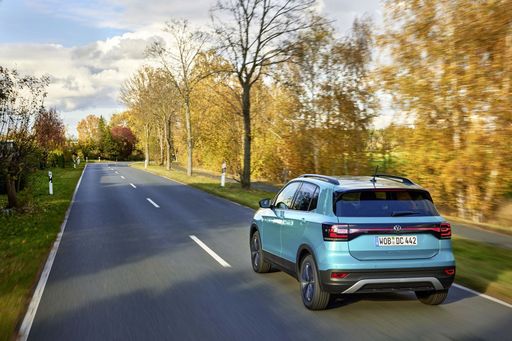
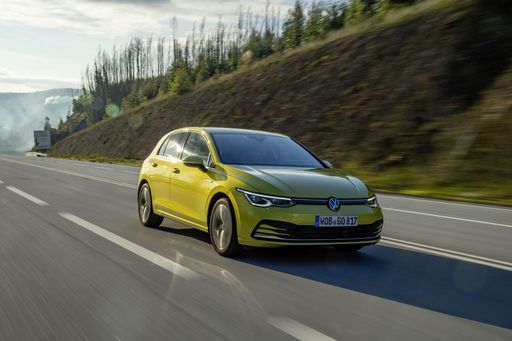
VW Golf VS VW T-Cross pits a composed, long‑distance‑focused hatch against a compact SUV built for visibility and interior flexibility. The Golf presents calm refinement, low cabin noise and a control layout tuned for longer journeys, while the T‑Cross trades some of that polish for higher seating and a rearrangeable interior. That means the decision is mostly about use case: motorway miles and measured comfort versus city adaptability and cargo cleverness. Below we unpack character, comfort, cabin feel, practicality and the buyer profiles each car naturally suits.
T-Cross

Character and driving feel

On the move the VW Golf and the VW T‑Cross feel deliberately different: the Golf aims for composure and communicative controls, the T‑Cross for predictable, upright usability. The Golf's chassis and steering bias toward precision and reassurance, so drivers who like a planted, confidence‑inspiring car will enjoy it. The T‑Cross rewards low‑speed manoeuvring, visibility and a calm, neutral ride but it never pretends to be sporty. In short, the Golf is for someone who values connectedness and control, the T‑Cross for someone who values comfort, confidence and simplicity in daily traffic.

Golf

Comfort and long-distance behavior

Long runs amplify the differences: the VW Golf is the quieter, less fatiguing companion for sustained motorway driving thanks to superior cabin isolation and a suspension setup that soaks up high‑speed imperfections. The VW T‑Cross provides supportive seats and an agreeable ride, but wind and tyre noise become more noticeable on long, fast stretches. Both cars offer sensible ergonomics and driver aids to ease fatigue, yet the Golf's quieter environment makes it the better choice if you regularly cover high mileages. Choose the T‑Cross if most of your miles are urban or mixed and you prize accessibility over absolute serenity.

T-Cross

City friendliness and everyday practicality

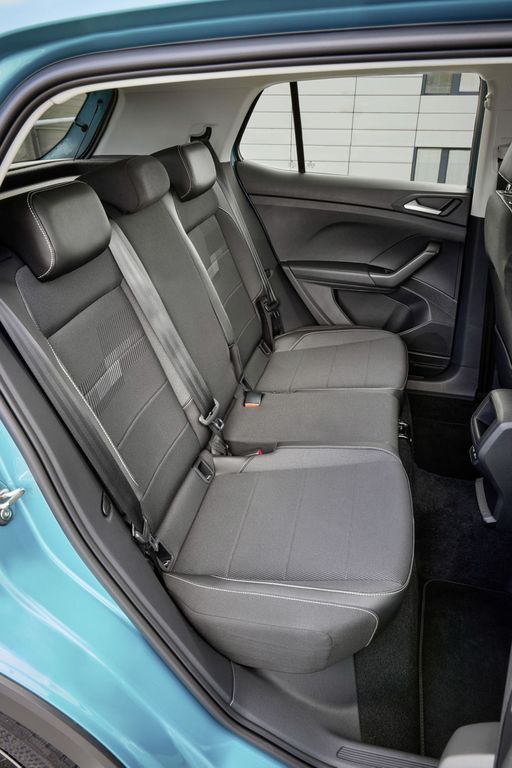
In tight streets and car parks the VW T‑Cross shows its strengths while the VW Golf leans on compact competence. The T‑Cross's higher seating position, easier entry and highly flexible sliding rear bench make it ideal for families who routinely reconfigure seats or carry bulky gear. The Golf is narrower, simpler to angle into tight bays and benefits from thoughtful cubbies and parking aids that smooth urban life. If you regularly load prams, bikes or odd‑shaped cargo the T‑Cross's layout is more forgiving; if you value easy parking and tidy everyday ergonomics the Golf will be the less trying companion.

Golf

Cabin feel and perceived quality

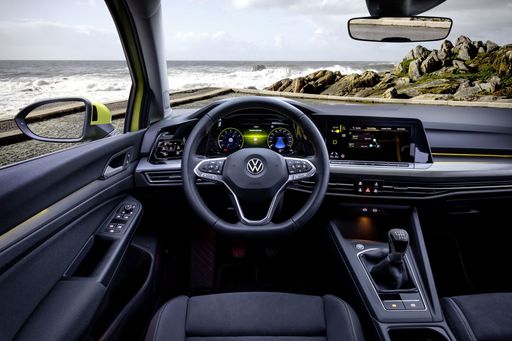
Interior character separates technical polish from tactile comfort: the VW Golf leans on a more restrained, refined cabin with an updated infotainment layout and physical controls where they matter, giving a sense of technical refinement. The VW T‑Cross, refreshed in key areas, offers softer surfaces and a pleasantly solid first impression that reads as approachable and modern. Both cars can feature touch‑dependent controls in certain trims, which may frustrate drivers who prefer haptic knobs, but the Golf tends to feel slightly more technically sophisticated. If perceived finish and low‑noise refinement are priorities the Golf nudges ahead; if you want immediate tactile warmth and SUV styling, the T‑Cross will feel more inviting.

T-Cross

Buyer fit and practical trade-offs

Choosing between the VW Golf and the VW T‑Cross is a matter of daily demands: the Golf suits commuters and small families who prioritise motorway comfort, low cabin noise and a tech‑polished feel. The T‑Cross is aimed at urban families, seniors or anyone who needs easy access, a high seating position and a reconfigurable interior more often than high‑speed serenity. Price, optional equipment and how you value load flexibility versus refined long‑distance manners will decide the balance for most buyers. Continue to the technical comparison to see how engines, luggage arrangements and running costs quantify these everyday differences and help you pick the car that fits your life.

Here’s where it gets real: The technical differences in detail

Golf

Costs and Efficiency:

Looking at overall running costs, both models reveal some interesting differences in everyday economy.

VW T-Cross is markedly cheaper – starting at 21,400 £ , while the VW Golf costs 28,300 £ . That’s a price difference of around 6,887 £.

Fuel consumption also shows a difference: the VW Golf uses 1.1 L/100km and is considerably more efficient than the VW T-Cross with 5.4 L/100km. The difference is about 4.3 L/100km.

T-Cross

Engine and Performance:

Power, torque and acceleration are the classic benchmarks for car enthusiasts – and here, some clear differences start to show.

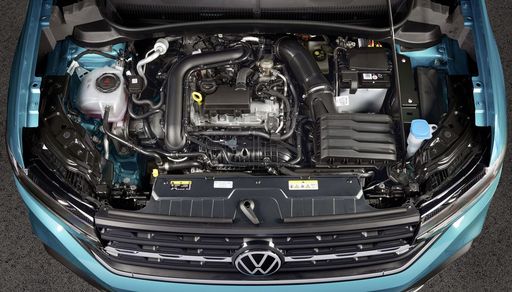
When it comes to engine power, the VW Golf offers clearly more power – delivering 325 HP compared to 150 HP. That’s roughly 175 HP more horsepower.

When accelerating from 0 to 100 km/h, the VW Golf is clearly quicker – completing the sprint in 5.3 s, while the VW T-Cross takes 8.4 s. That’s about 3.1 s quicker.

There’s also a difference in torque: the VW Golf delivers clearly more torque with 420 Nm compared to 250 Nm. That’s about 170 Nm more.

Golf

Space and Everyday Use:

Whether family car or daily driver – which one offers more room, flexibility and comfort?

Both vehicles offer seating for 5 people.

In terms of curb weight, VW T-Cross is very slightly lighter – 1,267 kg compared to 1,307 kg. The difference is around 40 kg.

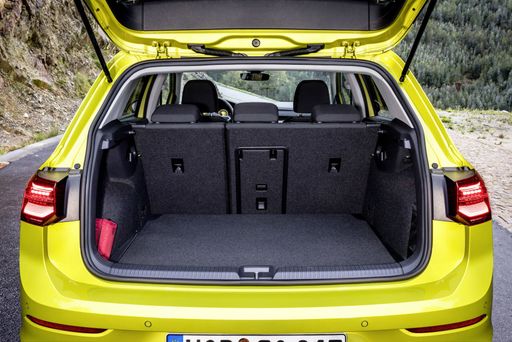
Looking at boot space, the VW T-Cross offers a bit more boot space – 455 L compared to 381 L. That’s a difference of about 74 L.

When it comes to payload, the VW Golf carries only slightly more – 508 kg compared to 480 kg. That’s a difference of about 28 kg.

Who wins the race in the data check?

The VW Golf is decisively ahead in the objective data comparison.
This result only shows which model scores more points on paper – not which of the two cars feels right for you.

from £28,300
Golf

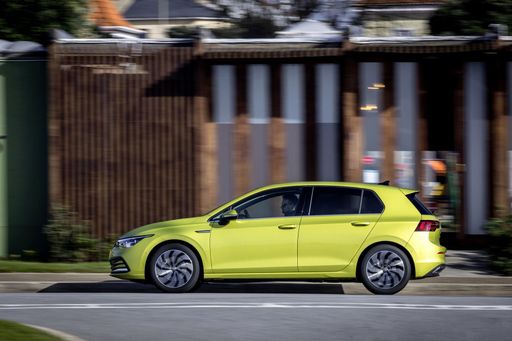
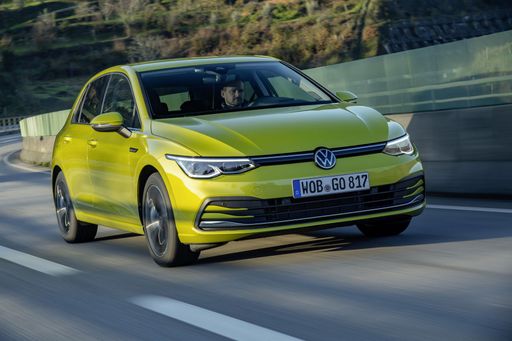
VW Golf

  • Engine Type Petrol, Petrol MHEV, Diesel, Plugin Hybrid
  • Transmission Manuel, Automatic
  • Drive Type Front-Wheel Drive, All-Wheel Drive
  • Power HP 116 - 325 HP
  • Consumption L/100km 1.1 - 7.6 L/100km
  • Electric Range 131 - 143 km
VW Golf
VW T-Cross

Costs and Consumption

View detailed analysis

Engine and Performance

View detailed analysis

Dimensions and Body

View detailed analysis

VW Golf

The Golf is a quietly accomplished compact that blends practicality, refinement and approachable driving manners into a very usable everyday package. It’s well built, comfortable and versatile, making it a smart choice whether you want sensible family transport or an enjoyable commuter.

details

VW T-Cross

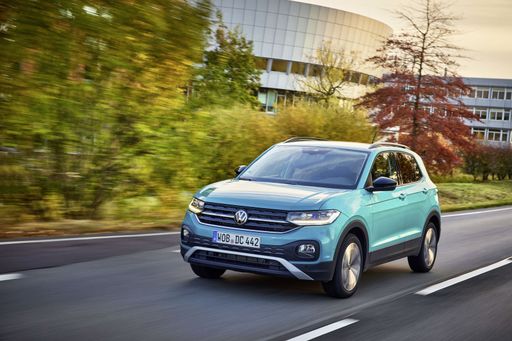
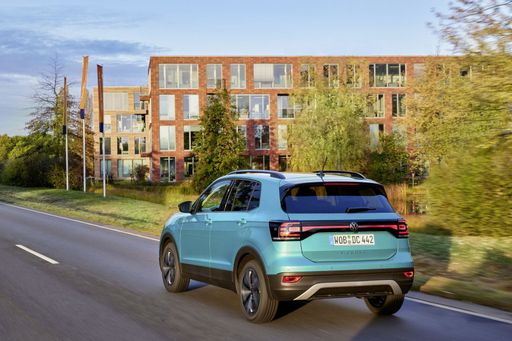
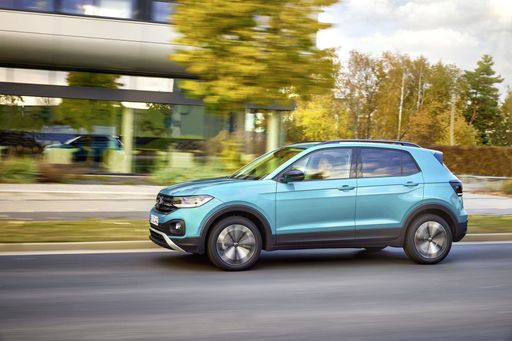
The VW T-Cross is a small, city-friendly crossover that blends practical packaging with easygoing driving manners and a high seating position for good visibility. It’s a sensible, comfortable choice for buyers who want the convenience and style of an SUV without big compromises.

details
VW Golf
VW T-Cross

Costs and Consumption

Price
28,300 - 46,700 £
Price
21,400 - 32,000 £
Consumption L/100km
1.1 - 7.6 L/100km
Consumption L/100km
5.4 - 6 L/100km
Consumption kWh/100km
-
Consumption kWh/100km
-
Electric Range
131 - 143 km
Electric Range
-
Battery Capacity
-
Battery Capacity
-
co2
25 - 173 g/km
co2
124 - 136 g/km
Fuel tank capacity
-
Fuel tank capacity
-

Dimensions and Body

Body Type
Hatchback
Body Type
SUV
Seats
5
Seats
5
Doors
-
Doors
-
Curb weight
1,307 - 1,662 kg
Curb weight
1,267 - 1,338 kg
Trunk capacity
273 - 381 L
Trunk capacity
455 L
Length
-
Length
-
Width
1,789 mm
Width
1,784 mm
Height
-
Height
-
Max trunk capacity
-
Max trunk capacity
-
Payload
438 - 508 kg
Payload
463 - 480 kg

Engine and Performance

Engine Type
Petrol, Petrol MHEV, Diesel, Plugin Hybrid
Engine Type
Petrol
Transmission
Manuel, Automatic
Transmission
Manuel, Automatic
Transmission Detail
Manual Gearbox, Dual-Clutch Automatic
Transmission Detail
Manual Gearbox, Dual-Clutch Automatic
Drive Type
Front-Wheel Drive, All-Wheel Drive
Drive Type
Front-Wheel Drive
Power HP
116 - 325 HP
Power HP
95 - 150 HP
Acceleration 0-100km/h
5.3 - 10.2 s
Acceleration 0-100km/h
8.4 - 11.3 s
Max Speed
-
Max Speed
-
Torque
220 - 420 Nm
Torque
175 - 250 Nm
Number of Cylinders
4
Number of Cylinders
3 - 4
Power kW
85 - 239 kW
Power kW
70 - 110 kW
Engine capacity
1,498 - 1,984 cm3
Engine capacity
999 - 1,498 cm3

General

Model Year
2025
Model Year
2,024 - 2,025
CO2 Efficiency Class
D, C, F, B
CO2 Efficiency Class
D, E
Brand
VW
Brand
VW
DriveDuel uses data analysis and artificial intelligence to evaluate vehicle data and create content. Content is regularly reviewed and improved. The displayed prices are estimates based on German list prices, adjusted to the respective country’s VAT. Country-specific registration taxes are not included. This information is not legally binding.