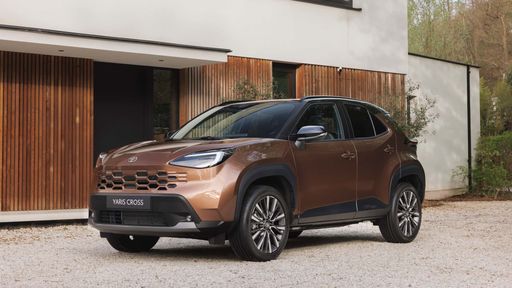
@ Toyota Motor Corporation
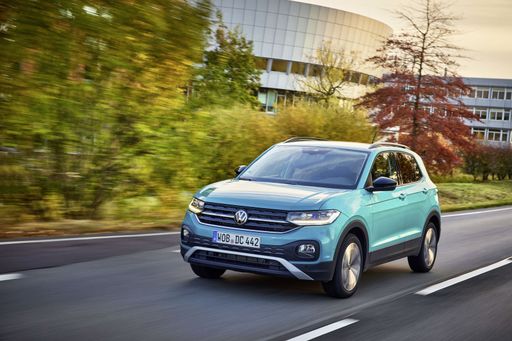
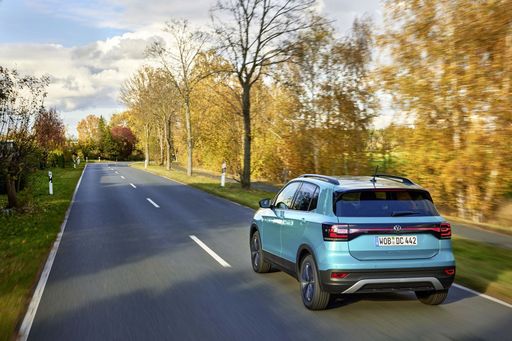
@ Volkswagen AG / VW Media
VS

Toyota Yaris Cross vs VW T-Cross - Differences and prices compared

Compare performance (130 HP vs 150 HP), boot space and price (23700 £ vs 21100 £) at a glance. Find out which car is the better choice for you – Toyota Yaris Cross or VW T-Cross?

Toyota Yaris Cross

5 (1 Reviews)
rate

VW T-Cross

4 (1 Reviews)
rate
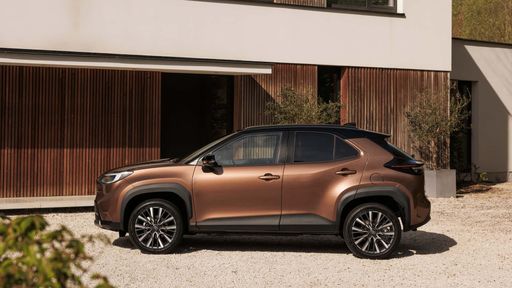
Yaris Cross @ Toyota Motor Corporation

The Battle of Compact SUVs: Toyota Yaris Cross vs. VW T-Cross

In the ever-evolving world of compact SUVs, two contenders have recently caught the spotlight: the Toyota Yaris Cross and the VW T-Cross. Both vehicles promise a blend of style, practicality, and the latest technology, making them serious contenders for urban drivers and families alike. This comparison will delve into the technical aspects and innovative features of both models to help you decide which SUV suits your needs best.

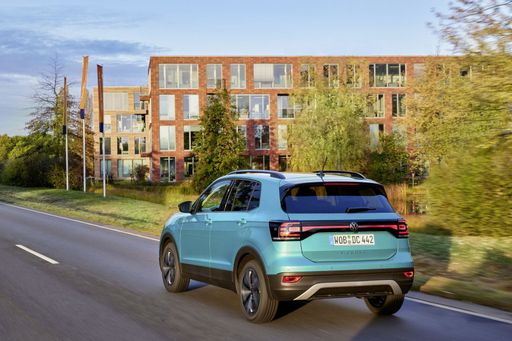
T-Cross @ Volkswagen AG / VW Media

Design and Dimensions

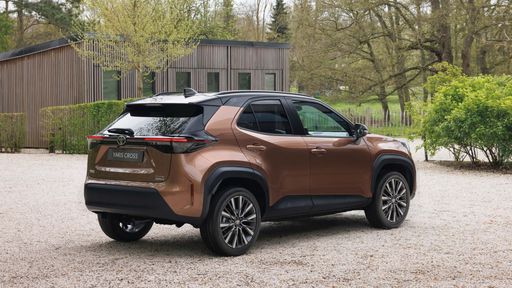
Starting with design, the Toyota Yaris Cross measures 4180 mm in length, 1765 mm in width, and has a height of 1595 mm. This gives it a commanding presence on the road while ensuring ample headroom within the cabin. In contrast, the VW T-Cross is slightly shorter at 4127 mm but wider at 1784 mm and stands at 1573 mm tall, offering a robust and sporty silhouette. Both vehicles maintain practical dimensions that make them agile in city driving.

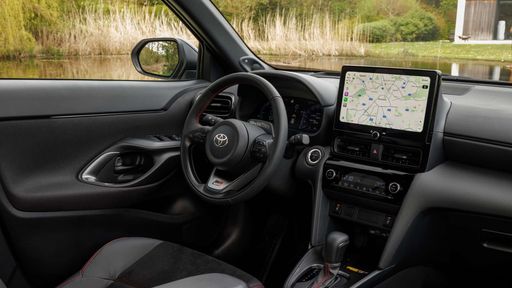
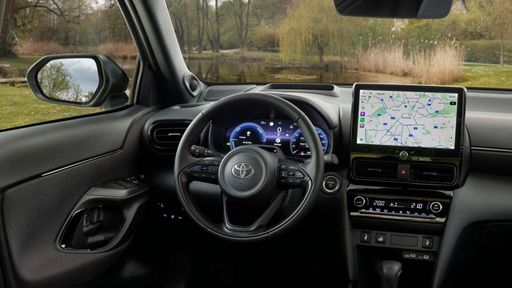
Yaris Cross @ Toyota Motor Corporation

Powertrains and Performance

When it comes to performance, the Yaris Cross is powered by a full hybrid engine, available in two outputs: 116 HP and 130 HP, reliant on a 3-cylinder structure. Its impressive fuel consumption figures range from 4.5 to 4.8 L/100km, and it achieves a 0-100 km/h time of 11.2 seconds. The Yaris Cross also features a CVT automatic transmission and has a top speed of 170 km/h.

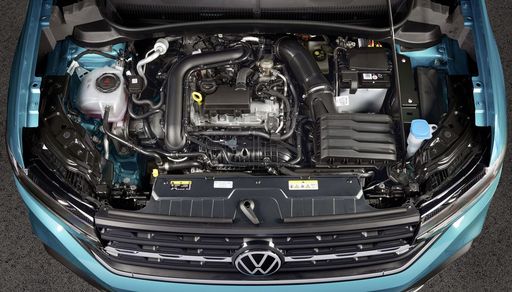
On the other hand, the VW T-Cross boasts a diverse lineup of petrol engines, ranging from 95 HP to 150 HP, with options for both manual and automatic transmissions. The T-Cross offers a spirited drive with acceleration figures ranging from 8.4 seconds for the 150 HP variant to 11.2 seconds for the base model. Its fuel consumption is slightly higher, ranging from 5.6 to 6 L/100km, and it has a top speed that peaks at 200 km/h for the most powerful variant, showcasing its performance-oriented design.

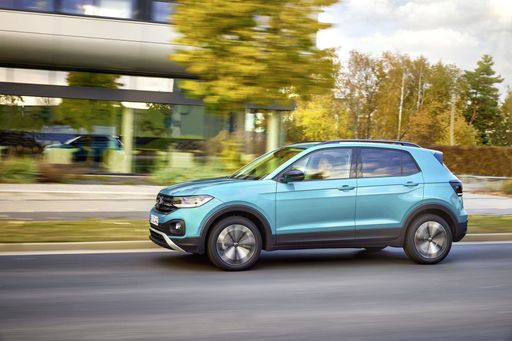
T-Cross @ Volkswagen AG / VW Media

Interior Comfort and Technology

Inside, the Yaris Cross offers a comfortable five-seat configuration with a trunk capacity of 397 liters, which is impressive for its size. The cabin is designed with the user in mind, incorporating Toyota’s latest infotainment system which includes smartphone integration and advanced safety features.

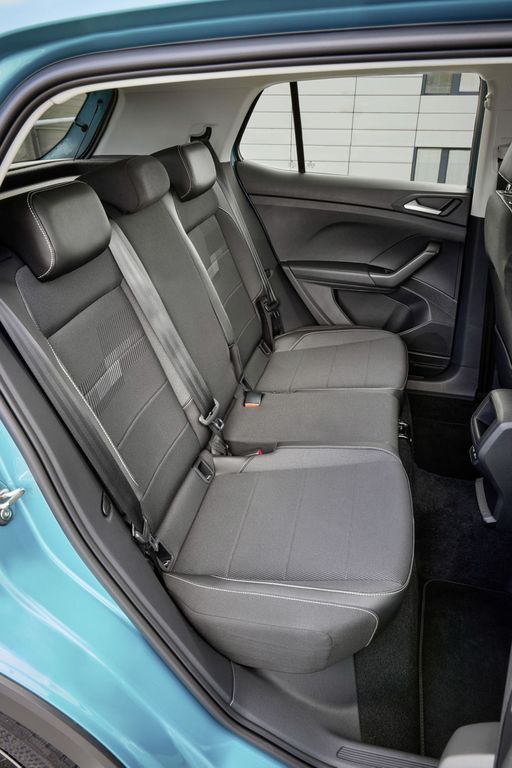
Meanwhile, the VW T-Cross not only provides a spacious five-seat layout but also boasts a larger trunk capacity of 455 liters, making it highly versatile for families or trips. Its interior technology includes an intuitive infotainment system with a focus on connectivity and driver-assistance features, promoting both comfort and safety.

Yaris Cross @ Toyota Motor Corporation

Efficiency and Environmental Considerations

Fuel efficiency is a significant factor for eco-conscious consumers. The Toyota Yaris Cross stands out with its hybrid technology, resulting in lower CO2 emissions, around 101 to 108 g/km. It falls into the CO2 efficiency class C, emphasizing its commitment to sustainability.

The VW T-Cross, while slightly less efficient with emissions ranging from 127 to 135 g/km, still caters to environmental concerns, registering in the efficiency class D. Its petrol engines offer a balance between performance and practical fuel usage.

T-Cross @ Volkswagen AG / VW Media

Final Verdict: Which SUV Wins?

Ultimately, choosing between the Toyota Yaris Cross and the VW T-Cross boils down to personal preference and priorities. If you are leaning toward sustainability, hybrid technology, and superior fuel efficiency, the Yaris Cross is the ideal option. In contrast, if you desire a sportier drive, more engine choices, and a roomier trunk, the T-Cross deserves your attention.

Both models are impressive in their rights, marrying technology, comfort, and performance—making this comparison a highlight of the compact SUV segment. Whichever you choose, you will be driving a vehicle that embodies the spirit of modern automotive design.

Here’s where it gets real: The technical differences in detail

Yaris Cross @ Toyota Motor Corporation

Costs and Efficiency:

Looking at overall running costs, both models reveal some interesting differences in everyday economy.

VW T-Cross has a a bit advantage in terms of price – it starts at 21100 £, while the Toyota Yaris Cross costs 23700 £. That’s a price difference of around 2614 £.

Fuel consumption also shows a difference: Toyota Yaris Cross manages with 4.50 L and is therefore evident more efficient than the VW T-Cross with 5.40 L. The difference is about 0.90 L per 100 km.

T-Cross @ Volkswagen AG / VW Media

Engine and Performance:

Power, torque and acceleration are the classic benchmarks for car enthusiasts – and here, some clear differences start to show.

When it comes to engine power, the VW T-Cross has a to a small extent edge – offering 150 HP compared to 130 HP. That’s roughly 20 HP more horsepower.

In acceleration from 0 to 100 km/h, the VW T-Cross is clearly perceptible quicker – completing the sprint in 8.40 s, while the Toyota Yaris Cross takes 10.70 s. That’s about 2.30 s faster.

In terms of top speed, the VW T-Cross performs somewhat better – reaching 200 km/h, while the Toyota Yaris Cross tops out at 170 km/h. The difference is around 30 km/h.

Yaris Cross @ Toyota Motor Corporation

Space and Everyday Use:

Cabin size, boot volume and payload all play a role in everyday practicality. Here, comfort and flexibility make the difference.

Seats: offers more seating capacity – vs .

In curb weight, Toyota Yaris Cross is minimal lighter – 1180 kg compared to 1267 kg. The difference is around 87 kg.

In terms of boot space, the VW T-Cross offers somewhat more room – 455 L compared to 397 L. That’s a difference of about 58 L.

In maximum load capacity, the VW T-Cross performs a bit better – up to 1281 L, which is about 184 L more than the Toyota Yaris Cross.

When it comes to payload, Toyota Yaris Cross hardly perceptible takes the win – 510 kg compared to 480 kg. That’s a difference of about 30 kg.

Who comes out on top?

Overall, the VW T-Cross shows itself to be dominates this comparison and secures the title of DriveDuel Champion.
It convinces with the more balanced overall package and proves to be the more versatile choice for everyday use.

from about £21,100
T-Cross @ Volkswagen AG / VW Media

VW T-Cross

  • Engine Type : Petrol
  • Transmission : Manuel, Automatic
  • Drive Type : Front-Wheel Drive
  • Power HP : 95 - 150 HP
  • Consumption L/100km : 5.4 - 6 L
Toyota Yaris Cross
VW T-Cross

Costs and Consumption

View detailed analysis

Engine and Performance

View detailed analysis

Dimensions and Body

View detailed analysis

Toyota Yaris Cross

5 (1 Reviews)
rate

The Toyota Yaris Cross takes the jaunty personality of the Yaris and gives it a taller stance and a bit more practicality, so you get city-friendly agility with added SUV presence. It’s easy to live with, economical on the daily grind, and smartly packaged — a sensible pick for buyers who want fuss-free transport with a touch of character.

details

VW T-Cross

4 (1 Reviews)
rate

The VW T-Cross turns everyday practicality into a style statement, offering a roomy-feeling cabin, clever storage and playful design that suits town life and family duties alike. On the road it's composed and relaxed, rewarding buyers who want the raised seating and confident presence of an SUV without the weighty compromises.

details
Toyota Yaris Cross
VW T-Cross
Yaris Cross @ Toyota Motor Corporation
T-Cross @ Volkswagen AG / VW Media

Costs and Consumption

Price
23700 - 34300 £
Price
21100 - 31500 £
Consumption L/100km
4.5 - 4.8 L
Consumption L/100km
5.4 - 6 L
Consumption kWh/100km
-
Consumption kWh/100km
-
Electric Range
-
Electric Range
-
Battery Capacity
-
Battery Capacity
-
co2
101 - 108 g/km
co2
124 - 136 g/km
Fuel tank capacity
36 L
Fuel tank capacity
40 L

Dimensions and Body

Body Type
SUV
Body Type
SUV
Seats
5
Seats
5
Doors
5
Doors
5
Curb weight
1180 - 1290 kg
Curb weight
1267 - 1338 kg
Trunk capacity
320 - 397 L
Trunk capacity
455 L
Length
4180 mm
Length
4127 mm
Width
1765 mm
Width
1784 mm
Height
1595 mm
Height
1573 mm
Max trunk capacity
1097 L
Max trunk capacity
1281 L
Payload
485 - 510 kg
Payload
463 - 480 kg

Engine and Performance

Engine Type
Full Hybrid
Engine Type
Petrol
Transmission
Automatic
Transmission
Manuel, Automatic
Transmission Detail
CVT
Transmission Detail
Manual Gearbox, Dual-Clutch Automatic
Drive Type
Front-Wheel Drive, All-Wheel Drive
Drive Type
Front-Wheel Drive
Power HP
116 - 130 HP
Power HP
95 - 150 HP
Acceleration 0-100km/h
10.7 - 11.3 s
Acceleration 0-100km/h
8.4 - 11.3 s
Max Speed
170 km/h
Max Speed
180 - 200 km/h
Torque
-
Torque
175 - 250 Nm
Number of Cylinders
3
Number of Cylinders
3 - 4
Power kW
85 - 96 kW
Power kW
70 - 110 kW
Engine capacity
1490 cm3
Engine capacity
999 - 1498 cm3

General

Model Year
2024 - 2025
Model Year
2024 - 2025
CO2 Efficiency Class
C
CO2 Efficiency Class
D, E
Brand
Toyota
Brand
VW
Is the Toyota Yaris Cross offered with different drivetrains?

Available configurations include Front-Wheel Drive or All-Wheel Drive.

The prices and data displayed are estimates based on German list prices and may vary by country. This information is not legally binding.