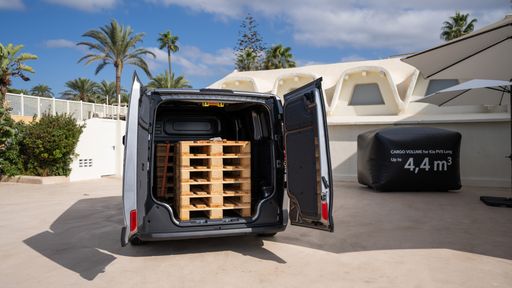
@ Volkswagen AG / VW Media
VS

VW ID. Buzz Bus vs Kia PV5 – Performance, range & efficiency compared

Both models have their strengths – but which one suits you more?
Compare performance, efficiency, price and space directly: VW ID. Buzz Bus or Kia PV5?

ID. Buzz Bus @ Volkswagen AG / VW Media

Volkswagen ID. Buzz Bus vs. Kia PV5: The Ultimate Electric Van Showdown

As the world moves towards sustainable transportation, electric vehicles (EVs) are at the forefront of this revolution. The Volkswagen ID. Buzz Bus and the Kia PV5 both exemplify the wave of innovation driving the electric van segment. While both offer eco-friendly credentials, they cater to different needs and preferences. Let's take a closer look into their technical aspects and innovations.
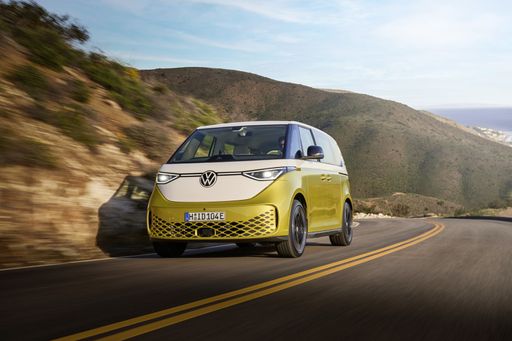
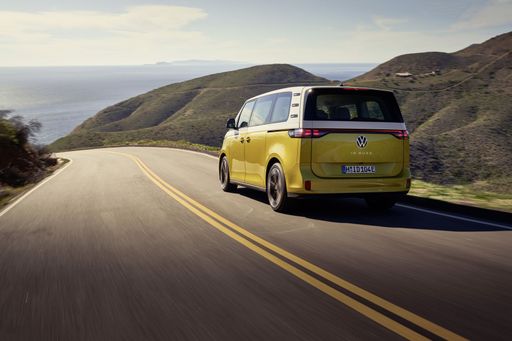
ID. Buzz Bus @ Volkswagen AG / VW Media

Design and Body Type

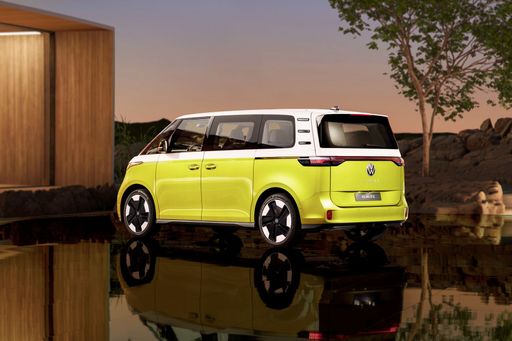
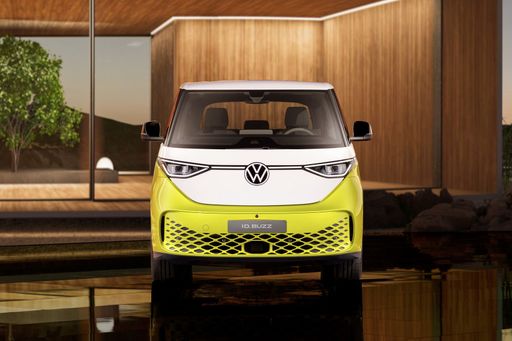
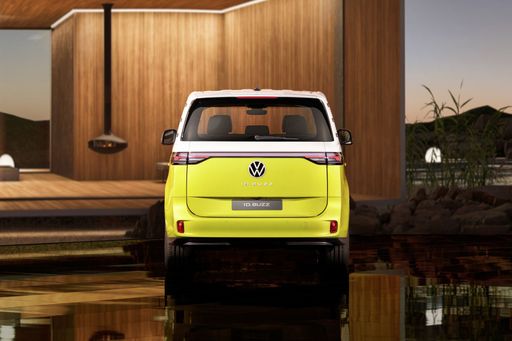
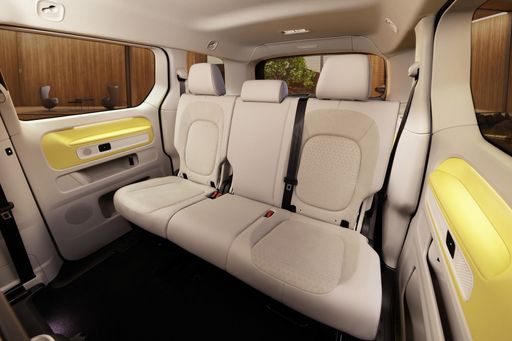
The Volkswagen ID. Buzz Bus takes inspiration from the iconic VW microbus, recast for the electric age. This bus features a spacious design with a contemporary twist, providing accommodation for up to five passengers. Measuring between 4712 mm and 4962 mm in length, it is slightly larger than traditional vans, supporting its versatility for both family transport and cargo.

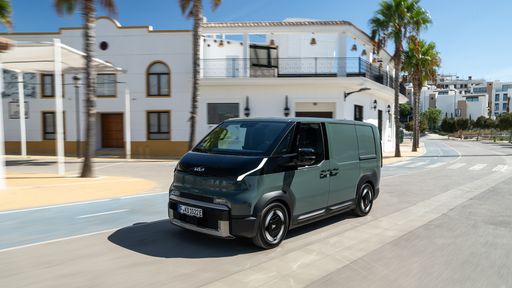
The Kia PV5, on the other hand, is a more utilitarian cargo van designed with practicality in mind. With a length of 4695 mm and a width of 1850 mm, it is more compact than the ID. Buzz. The PV5 is perfect for businesses needing a reliable, eco-friendly cargo solution, with seats limited to two for maximum storage efficiency.

ID. Buzz Bus @ Volkswagen AG / VW Media

Power and Performance

When it comes to power, the VW ID. Buzz bus is available in several configurations with power outputs ranging from 170 HP to 340 HP, and a variety of torque options extending up to 679 Nm. This rear-wheel or all-wheel drive provides a more dynamic driving experience, with acceleration from 0 to 100 km/h as quick as 6.1 seconds in its most potent form.

The Kia PV5 is no slouch in its domain, offering 121 HP and a torque of 250 Nm channelled through its front-wheel-drive system. While its 0-100 km/h time of 16.3 seconds is slower compared to the ID. Buzz, it perfectly matches the van's intended use as a reliable cargo transport.

ID. Buzz Bus @ Volkswagen AG / VW Media

Range and Efficiency

On the range front, Volkswagen's ID. Buzz excels with an impressive battery capacity ranging from 59 kWh to 86 kWh, depending on the variant. This accommodates an electric range spanning from 329 km to 485 km on a single charge, making it ideal for long-distance traveling.

Conversely, the Kia PV5 offers a more modest 51.5 kWh battery, which supports an electric range of 291 km. While suitable for shorter trips or urban deliveries, the PV5's range caters to a different set of operational requirements.

ID. Buzz Bus @ Volkswagen AG / VW Media

Technical Innovations

Both vehicles boast the latest in EV technology, catering to different user needs. The ID. Buzz Bus features VW's innovative tech suite, including multiple drive options and efficiency modes to optimize energy consumption depending on driving conditions.

The Kia PV5 employs a reduction gearbox transmission detail, emphasizing simplicity and efficiency—a perfect choice for urban and suburban routes. Both vehicles maintain a rigorously efficient CO2 footprint, achieving an A-classification in electric efficiency.

ID. Buzz Bus @ Volkswagen AG / VW Media

Final Verdict

Deciding between the Volkswagen ID. Buzz Bus and the Kia PV5 largely depends on the intended usage. For those seeking a versatile family vehicle or a multi-purpose transporter, the ID. Buzz with its multiple power options and larger seating capacity shines. Meanwhile, businesses seeking a dedicated cargo van will find the Kia PV5's efficient and compact design perfectly aligned with their needs.

Both vehicles represent significant strides toward sustainable transportation, each crafted meticulously to serve its unique market, ensuring there is an electric option for all preferences and needs.

Here’s where it gets real: The technical differences in detail

ID. Buzz Bus @ Volkswagen AG / VW Media

Costs and Efficiency:

Price and efficiency are often the first things buyers look at. Here it becomes clear which model has the long-term edge – whether at the pump, the plug, or in purchase price.

Kia PV5 has a distinct advantage in terms of price – it starts at 32800 £, while the VW ID. Buzz Bus costs 42900 £. That’s a price difference of around 10035 £.

In terms of energy consumption, the advantage goes to the VW ID. Buzz Bus: with 19 kWh per 100 km, it’s barely noticeable more efficient than the Kia PV5 with 19.80 kWh. That’s a difference of about 0.80 kWh.

As for range, the VW ID. Buzz Bus performs slightly better – achieving up to 485 km, about 85 km more than the Kia PV5.

ID. Buzz Bus @ Volkswagen AG / VW Media

Engine and Performance:

Power, torque and acceleration are the classic benchmarks for car enthusiasts – and here, some clear differences start to show.

When it comes to engine power, the VW ID. Buzz Bus has a decisively edge – offering 340 HP compared to 163 HP. That’s roughly 177 HP more horsepower.

In acceleration from 0 to 100 km/h, the VW ID. Buzz Bus is convincingly quicker – completing the sprint in 6.10 s, while the Kia PV5 takes 10.70 s. That’s about 4.60 s faster.

In terms of top speed, the VW ID. Buzz Bus performs somewhat better – reaching 160 km/h, while the Kia PV5 tops out at 135 km/h. The difference is around 25 km/h.

There’s also a difference in torque: VW ID. Buzz Bus pulls decisively stronger with 679 Nm compared to 250 Nm. That’s about 429 Nm difference.

ID. Buzz Bus @ Volkswagen AG / VW Media

Space and Everyday Use:

Cabin size, boot volume and payload all play a role in everyday practicality. Here, comfort and flexibility make the difference.

Both vehicles offer seating for 5 people.

In curb weight, Kia PV5 is noticeable lighter – 1860 kg compared to 2400 kg. The difference is around 540 kg.

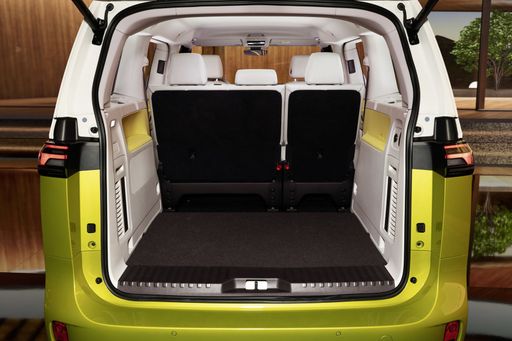
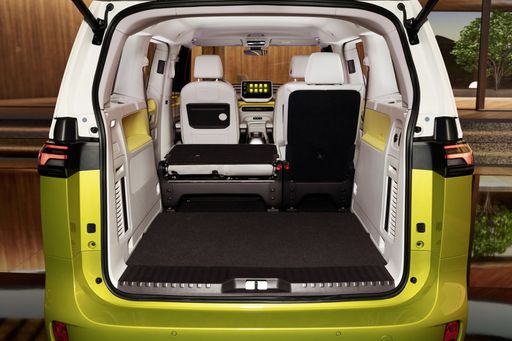
In terms of boot space, the VW ID. Buzz Bus offers minimal more room – 1340 L compared to 1320 L. That’s a difference of about 20 L.

In maximum load capacity, the Kia PV5 performs convincingly better – up to 4420 L, which is about 2215 L more than the VW ID. Buzz Bus.

When it comes to payload, Kia PV5 clearly perceptible takes the win – 790 kg compared to 600 kg. That’s a difference of about 190 kg.

Who comes out on top?

Overall, the VW ID. Buzz Bus shows itself to be outperforms in nearly all aspects and secures the title of DriveDuel Champion.
It convinces with the more balanced overall package and proves to be the more versatile choice for everyday use.

from about £42,900
ID. Buzz Bus @ Volkswagen AG / VW Media

VW ID. Buzz Bus

  • Engine Type : Electric
  • Transmission : Automatic
  • Drive Type : Rear-Wheel Drive, All-Wheel Drive
  • Power HP : 170 - 340 HP
  • Consumption kWh/100km : 19 - 20.6 kWh
  • Electric Range : 329 - 485 km

VW ID. Buzz Bus

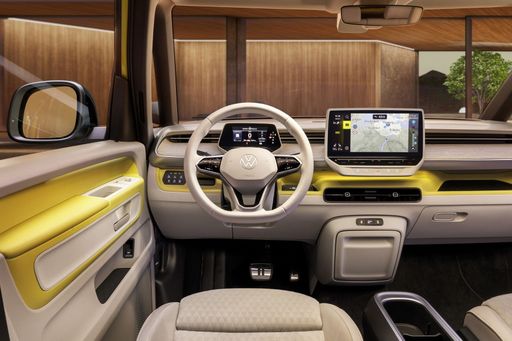
The VW ID. Buzz revives the classic camper van vibe with a modern electric twist, offering plush space and a friendly, futuristic face that stops traffic. It’s clearly built for weekend escapes and city runs alike, with clever interior details that make it as practical as it is charming.

details

Kia PV5

The Kia EV5 is an exciting new entrant in the landscape of electric SUVs, promising a blend of style and innovation that captures attention. It boasts a sleek and modern design that aligns with Kia's evolving aesthetic identity, blending practicality with eye-catching details. With its foray into the electric vehicle segment, the EV5 is set to offer a highly competitive option for those looking to embrace sustainable mobility without compromising on comfort or tech features.

details
VW ID. Buzz Bus
Kia PV5
ID. Buzz Bus @ Volkswagen AG / VW Media

Costs and Consumption

Price
42900 - 64200 £
Price
32800 - 38900 £
Consumption L/100km
-
Consumption L/100km
-
Consumption kWh/100km
19 - 20.6 kWh
Consumption kWh/100km
19.8 - 20.3 kWh
Electric Range
329 - 485 km
Electric Range
288 - 400 km
Battery Capacity
59 - 86 kWh
Battery Capacity
51.5 - 71.2 kWh
co2
0 g/km
co2
0 g/km
Fuel tank capacity
-
Fuel tank capacity
-

Dimensions and Body

Body Type
Bus
Body Type
Cargo Van, Bus
Seats
5
Seats
2 - 5
Doors
5
Doors
4 - 5
Curb weight
2400 - 2780 kg
Curb weight
1860 - 2145 kg
Trunk capacity
1121 - 1340 L
Trunk capacity
1320 L
Length
4712 - 4962 mm
Length
4695 mm
Width
1985 mm
Width
1850 - 1895 mm
Height
1924 - 1927 mm
Height
1923 mm
Max trunk capacity
2205 L
Max trunk capacity
2300 - 4420 L
Payload
462 - 600 kg
Payload
505 - 790 kg

Engine and Performance

Engine Type
Electric
Engine Type
Electric
Transmission
Automatic
Transmission
Automatic
Transmission Detail
-
Transmission Detail
Reduction Gearbox
Drive Type
Rear-Wheel Drive, All-Wheel Drive
Drive Type
Front-Wheel Drive
Power HP
170 - 340 HP
Power HP
121 - 163 HP
Acceleration 0-100km/h
6.1 - 10.7 s
Acceleration 0-100km/h
10.7 - 16.3 s
Max Speed
145 - 160 km/h
Max Speed
135 km/h
Torque
310 - 679 Nm
Torque
250 Nm
Number of Cylinders
-
Number of Cylinders
-
Power kW
125 - 250 kW
Power kW
89 - 120 kW
Engine capacity
-
Engine capacity
-

General

Model Year
2024
Model Year
2025
CO2 Efficiency Class
A
CO2 Efficiency Class
A
Brand
VW
Brand
Kia
Is the VW ID. Buzz Bus offered with different drivetrains?

The VW ID. Buzz Bus is available as Rear-Wheel Drive or All-Wheel Drive.

The prices and data displayed are estimates based on German list prices and may vary by country. This information is not legally binding.