VS

VW Tiguan vs Vauxhall Grandland comparison

Compare performance (272 HP vs 325 HP), boot space and price (33,600 £ vs 32,600 £ ) at a glance. Find out which car is the better choice for you – VW Tiguan or Vauxhall Grandland?

VW Tiguan vs Vauxhall Grandland: Key differences

VW Tiguan

4.1 (8 Reviews)
rate
  • considerably more efficient
  • only slightly quicker 0–100 km/h
  • marginally lighter
  • a bit more trunk space

Vauxhall Grandland

5 (1 Reviews)
rate
  • marginally cheaper
  • slightly more power
  • substantially more electric range

All details on performance, efficiency, range and trunk space can be found in the technical comparison below – including user reviews for both models.

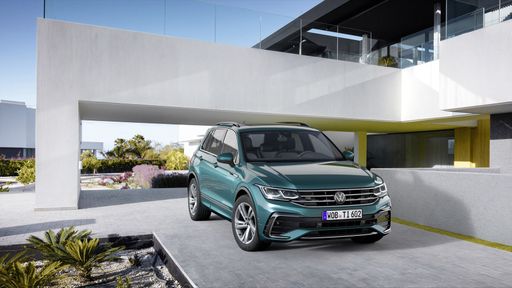
Tiguan

Engines at a Glance: Which SUV Packs More Power?

When it comes to engine options, both the Vauxhall Grandland and VW Tiguan offer a diverse range of powertrains, aimed at satisfying both the eco-conscious driver and the power enthusiast.

The Grandland presents a choice between petrol MHEV, plug-in hybrid, and purely electric variants. Its power ranges from 136 HP to a robust 213 HP, delivering swift acceleration, with 0-100 km/h times between 7.8 and 10.2 seconds. The vehicle comfortably hits a top speed of 220 km/h offered by its hybrid counterparts. Notably, the Grandland boasts an all-electric range up to 585 km, a testament to its green credentials.

In contrast, the Tiguan gives a wider selection under its hood, encompassing petrol MHEV, plug-in hybrid, diesel, and petrol engines. The Tiguan's power spectrum spans from 130 HP to a potent 272 HP, achieving 0-100 km/h in as little as 5.9 seconds with its highest spec. Its maximum speed reaches up to an exhilarating 242 km/h, showcasing the impressive power VW has packed into this SUV.
Grandland

Fuel Efficiency: Saving the Environment One Drive at a Time

Fuel consumption is a critical consideration for any potential car buyer, and both the Grandland and Tiguan deliver noteworthy performance in this area. The Grandland offers consumption figures of 6.4 L/100km for its petrol engines and an impressive 0.8 L/100km for its plug-in hybrid, alongside electricity consumption between 16.9 and 17.7 kWh/100km.

The Tiguan, meanwhile, returns commendable figures as well, with its plug-in hybrid achieving as low as 0.4 L/100km and an electric range of about 113 km. Depending on your selected variant, its combustion engines offer consumption between 5.3 and 8.5 L/100km.

Tiguan

Interior Sophistication and Practicality: Which Provides More Comfort?

Both models feature a 5-seat configuration, ensuring comfort for passengers. Regarding space, the VW Tiguan wins the battle of the boot with a maximum trunk capacity running at 652 liters, compared to the Grandland’s 550 liters. Thus, the Tiguan can better accommodate the needs of larger families or those who require more cargo space.

Grandland

Dimensions and Design: Size Up the Competition

While both are classified as SUVs, subtle variances in their dimensions set them apart. The Grandland is slightly longer at 4650 mm, compared to the Tiguan's 4539 mm length. Furthermore, with a width of 1934 mm and a height of 1665 mm, the Grandland flexes a more dominating presence on the road, promising roomier interior ergonomics.

Tiguan

Tech Innovations and Safety: A Modern Driving Experience

Both vehicles are packed with cutting-edge technology and safety features. They come equipped with modern infotainment systems, driving aids, and connectivity solutions. Each offers top-notch safety features; however, the Grandland takes a slight edge with its adaptive cruise control and lane-keep assist in all models, whereas these are optional in some Tiguan variants.

Grandland

Price and Value: Weighing the Costs

Though specifics on pricing vary by region and options selected, historically, the Vauxhall Grandland offers a competitive entry point against the VW Tiguan. However, as options and premium features are added, each offers an impressive array of value, depending more so on personal preference and intended use.

In conclusion, the choice between the Vauxhall Grandland and VW Tiguan is one of nuance. Buyers seeking a mix of cutting-edge electric efficiency might lean towards the Grandland. In contrast, the Tiguan offers broader powertrain options and a spacious interior, arguably giving it a slight edge for those needing maximum versatility.

Here’s where it gets real: The technical differences in detail

Tiguan

Costs and Efficiency:

Looking at overall running costs, both models reveal some interesting differences in everyday economy.

Vauxhall Grandland is marginally cheaper – starting at 32,600 £ , while the VW Tiguan costs 33,600 £ . That’s a price difference of around 1,016 £.

Fuel consumption also shows a difference: the VW Tiguan uses 1.4 L/100km and is considerably more efficient than the Vauxhall Grandland with 2.6 L/100km. The difference is about 1.2 L/100km.

As for electric range, the Vauxhall Grandland offers substantially more range – reaching up to 694 km, about 568 km more than the VW Tiguan.

Grandland

Engine and Performance:

Under the bonnet, it becomes clear which model is tuned for sportiness and which one takes the lead when you hit the accelerator.

When it comes to engine power, the Vauxhall Grandland offers slightly more power – delivering 325 HP compared to 272 HP. That’s roughly 53 HP more horsepower.

When accelerating from 0 to 100 km/h, the VW Tiguan is only slightly quicker – completing the sprint in 5.9 s, while the Vauxhall Grandland takes 6.1 s. That’s about 0.2 s quicker.

Looking at top speed, the VW Tiguan is marginally faster – reaching 215 km/h, while the Vauxhall Grandland tops out at 202 km/h. The difference is around 13 km/h.

There’s also a difference in torque: the Vauxhall Grandland delivers noticeably more torque with 509 Nm compared to 400 Nm. That’s about 109 Nm more.

Tiguan

Space and Everyday Use:

Cabin size, boot volume and payload all play a role in everyday practicality. Here, comfort and flexibility make the difference.

Both vehicles offer seating for 5 people.

In terms of curb weight, VW Tiguan is marginally lighter – 1,599 kg compared to 1,675 kg. The difference is around 76 kg.

Looking at boot space, the VW Tiguan offers a bit more boot space – 652 L compared to 550 L. That’s a difference of about 102 L.

For maximum load capacity, the Vauxhall Grandland offers barely more capacity – up to 1,645 L, about 159 L more than the VW Tiguan.

When it comes to payload, the VW Tiguan carries only slightly more – 533 kg compared to 495 kg. That’s a difference of about 38 kg.

Who wins the race in the data check?

The Vauxhall Grandland holds a decisive overall lead in the objective data comparison.
This result only shows which model scores more points on paper – not which of the two cars feels right for you.

from £32,600
Grandland

Vauxhall Grandland

  • Engine Type : Electric, Petrol MHEV, Plugin Hybrid
  • Transmission : Automatic
  • Drive Type : Front-Wheel Drive, All-Wheel Drive
  • Power HP : 145 - 325 HP
  • Consumption L/100km : 2.6 - 5.6 L/100km
  • Consumption kWh/100km : 17.8 - 18.6 kWh/100km
  • Electric Range : 82 - 694 km
VW Tiguan
Vauxhall Grandland

Costs and Consumption

View detailed analysis

Engine and Performance

View detailed analysis

Dimensions and Body

View detailed analysis

VW Tiguan

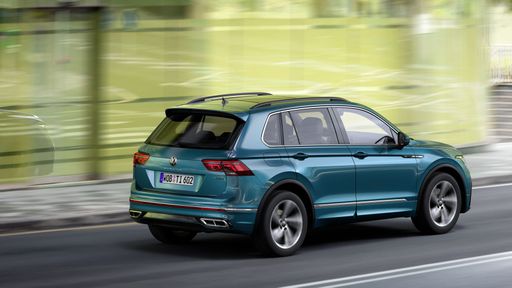
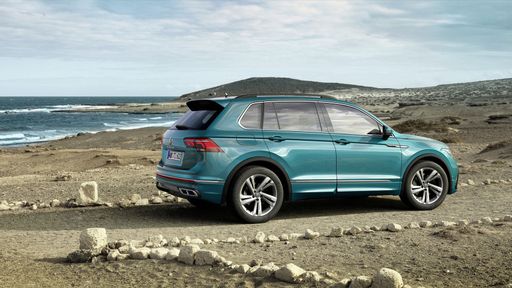
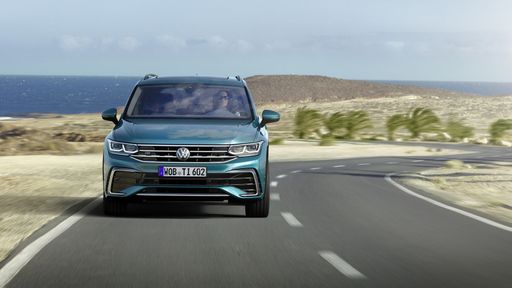
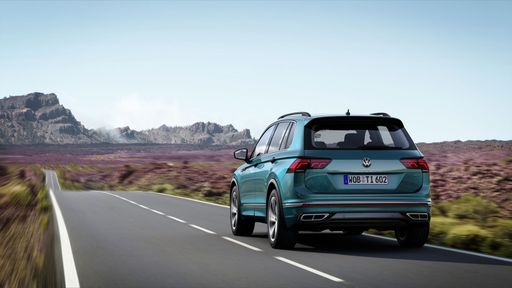
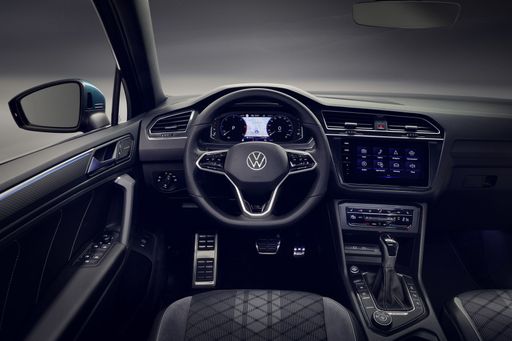
The VW Tiguan blends sensible family practicality with a dash of German polish, delivering a calm, reassuring ride and a cabin that never feels like an afterthought. For buyers who want an SUV that’s easy to live with yet still nicely dressed, the Tiguan is the grown‑up choice that keeps a cheeky wink in reserve.

details

Vauxhall Grandland

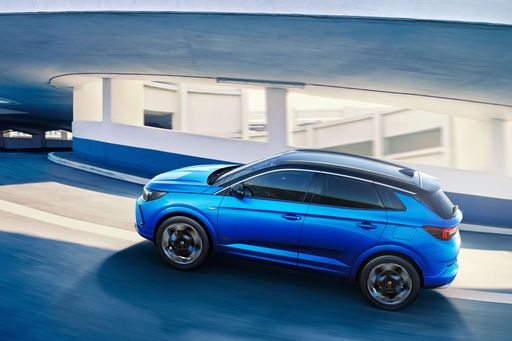
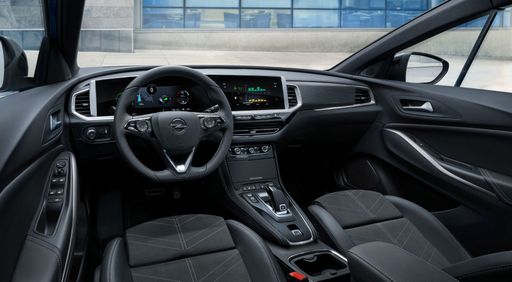
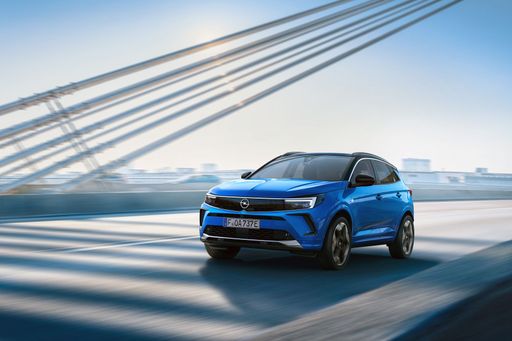
The Opel Grandland feels like a sensible, well-rounded SUV — neat styling, a spacious cabin and a composed ride that turns daily driving into a quietly pleasant experience. It’s a smart choice for buyers who want modern tech, good economy and a dash of German practicality without shouting for attention.

details
VW Tiguan
Vauxhall Grandland

Costs and Consumption

Price
33,600 - 54,600 £
Price
32,600 - 51,400 £
Consumption L/100km
1.4 - 8.4 L/100km
Consumption L/100km
2.6 - 5.6 L/100km
Consumption kWh/100km
-
Consumption kWh/100km
17.8 - 18.6 kWh/100km
Electric Range
118 - 126 km
Electric Range
82 - 694 km
Battery Capacity
19.7 kWh
Battery Capacity
-
co2
32 - 190 g/km
co2
0 - 126 g/km
Fuel tank capacity
45 L
Fuel tank capacity
55 L

Dimensions and Body

Body Type
SUV
Body Type
SUV
Seats
5
Seats
5
Doors
5
Doors
5
Curb weight
1,599 - 1,879 kg
Curb weight
1,675 - 2,325 kg
Trunk capacity
490 - 652 L
Trunk capacity
485 - 550 L
Length
4,539 mm
Length
4,650 mm
Width
1,842 - 1,859 mm
Width
1,905 mm
Height
1,658 mm
Height
1,665 mm
Max trunk capacity
1,486 L
Max trunk capacity
1,580 - 1,645 L
Payload
460 - 533 kg
Payload
425 - 495 kg

Engine and Performance

Engine Type
Petrol MHEV, Petrol, Diesel, Plugin Hybrid
Engine Type
Electric, Petrol MHEV, Plugin Hybrid
Transmission
Automatic
Transmission
Automatic
Transmission Detail
Dual-Clutch Automatic
Transmission Detail
Reduction Gearbox, Dual-Clutch Automatic
Drive Type
Front-Wheel Drive, All-Wheel Drive
Drive Type
Front-Wheel Drive, All-Wheel Drive
Power HP
130 - 272 HP
Power HP
145 - 325 HP
Acceleration 0-100km/h
5.9 - 10.6 s
Acceleration 0-100km/h
6.1 - 10.2 s
Max Speed
210 - 215 km/h
Max Speed
170 - 202 km/h
Torque
220 - 400 Nm
Torque
230 - 509 Nm
Number of Cylinders
4
Number of Cylinders
3 - 4
Power kW
96 - 200 kW
Power kW
107 - 239 kW
Engine capacity
1,498 - 1,984 cm3
Engine capacity
1,199 - 1,598 cm3

General

Model Year
2,024 - 2,026
Model Year
2,024 - 2,025
CO2 Efficiency Class
D, E, F, B, G
CO2 Efficiency Class
A, D, B
Brand
VW
Brand
Vauxhall
DriveDuel uses data analysis and artificial intelligence to evaluate vehicle data and create content. Content is regularly reviewed and improved. The displayed prices are estimates based on German list prices, adjusted to the respective country’s VAT. Country-specific registration taxes are not included. This information is not legally binding.