VS

VW Transporter Bus vs Ford Transit Transporter comparison

Compare performance (286 HP vs 269 HP), boot space and price (41,500 £ vs 67,300 £ ) at a glance. Find out which car is the better choice for you – VW Transporter Bus or Ford Transit Transporter?

VW Transporter Bus vs Ford Transit Transporter: Key differences

VW Transporter Bus

  • significantly cheaper
  • marginally more power
details

Ford Transit Transporter

  • a bit more electric range
details

By Achim Sedelmaier

Transporter Bus

The Ultimate Transporter Showdown: Ford Transit Transporter vs. VW Transporter Bus

In the realm of multi-functional vehicles, the Ford Transit Transporter and the VW Transporter Bus set the benchmark for versatility, innovation, and performance. As these two giants go head-to-head, let's explore their technical specifications and unveil what sets them apart.

Transit Transporter

Diverse Powertrains and Performance Capabilities

The Ford Transit Transporter boasts a broad range of powertrains to suit various needs, from traditional diesel engines offering between 105 to 269 HP, to the eco-friendly electric variant. The diesel engines provide a robust 310 to 430 Nm of torque, ensuring ample power whether for city drives or heavy-duty tasks. The electric version, with a battery capacity of 68 kWh, offers an impressive range of up to 317 km, making it a strong contender for environmentally conscious drivers.

In contrast, the VW Transporter Bus offers a dynamic selection of engines, ranging from diesel, petrol, to plug-in hybrid and electric options. The power output spans from 110 to 286 HP, with torque figures maxing out at 415 Nm. Notably, the VW’s electric variant features a maximum range of 324 km, slightly edging out its Ford counterpart on the sustainability front.


Transmission and Drive Options: Flexibility Personified

Both vehicles provide manual and automatic transmission options. The Ford Transit’s transmission lineup emphasizes versatility with manual, automatic, and reduction gearboxes. It further offers front-wheel, rear-wheel, and all-wheel-drive configurations, accommodating diverse driving conditions and preferences.

The VW Transporter Bus also offers flexibility with manual, automatic, and dual-clutch automatic transmissions. Drive type options include front-wheel, all-wheel, and rear-wheel-drive, allowing drivers to tailor their choice to their specific needs, from urban commuting to rugged terrain navigation.

Dimensions, Payload, and Practicality

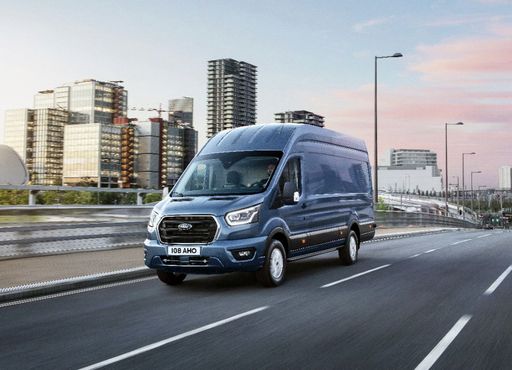
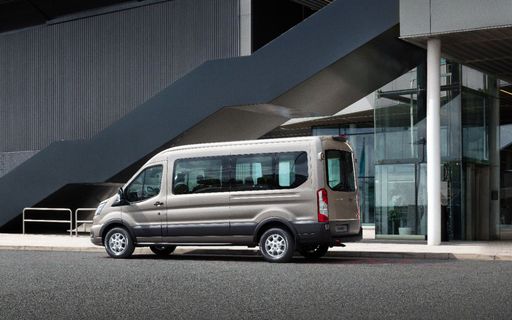
While both models come with distinct body types, the Ford Transit focuses on a cargo van design, targeting those with substantial load requirements. Its payload capacity is exceptional, reaching up to 2,607 kg, with length options stretching up to 6,704 mm, accommodating the most demanding transport needs.

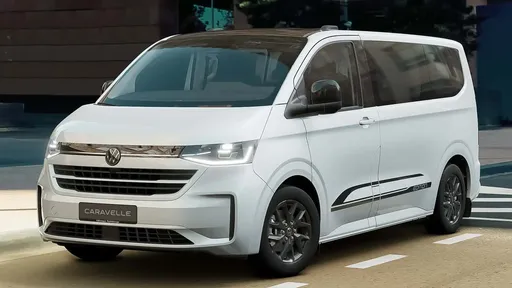
The VW Transporter Bus, mainly focusing on passenger comfort, embodies a streamlined bus design with seating for up to eight passengers. Its payload capacities max out at 1,143 kg and its dimensions are designed for urban functionality, with lengths ranging from 4,973 to 5,450 mm, combining passenger practicality with nimble maneuverability.

Interior Comfort and Capacity

Inside, the Ford Transit offers seating for either three or six occupants, depending on the layout, focusing on maximized cargo space for commercial use. Its interior is crafted for durability, ensuring it meets the rigorous demands of everyday work environments.

In contrast, the VW Transporter Bus accommodates between four to eight passengers and emphasizes passenger comfort and convenience, ideal for families or group transport scenarios. Its ergonomic design and quality materials ensure that every journey is comfortable and enjoyable for all occupants.

Technological Innovations and Environmental Impact

Both vehicles incorporate cutting-edge technology to enhance performance and efficiency. The Ford Transit Transporter pushes the envelope with advanced energy recovery systems in its electric models, striving for minimal CO2 emissions, reflected in its CO2 efficiency classes ranging from A to G.

The VW Transporter Bus matches Ford's commitment to eco-friendliness with an impressive CO2 efficiency class range. The inclusion of plug-in hybrid technology further reduces emissions by offering combined petrol and electric propulsion, thus optimizing energy consumption and environmental impact.

The Verdict: Choosing Your Perfect Transporter

Ultimately, the choice between the Ford Transit Transporter and the VW Transporter Bus boils down to individual needs and preferences. Ford shines when it comes to payload and versatility for cargo-centric tasks, while VW excels in passenger comfort and technological sophistication, appealing to those who prioritize an eco-friendly and innovative driving experience.

Both models represent the pinnacle of their class, ensuring that whichever you choose, you are guaranteed power, reliability, and a touch of sophistication for any journey.

Here’s where it gets real: The technical differences in detail

Transporter Bus

Costs and Efficiency:

When it comes to price and running costs, the biggest differences usually appear. This is often where you see which car fits your budget better in the long run.

VW Transporter Bus is significantly cheaper – starting at 41,500 £ , while the Ford Transit Transporter costs 67,300 £ . That’s a price difference of around 25,831 £.

As for electric range, the Ford Transit Transporter offers a bit more range – reaching up to 402 km, about 78 km more than the VW Transporter Bus.

Transit Transporter

Engine and Performance:

Under the bonnet, it becomes clear which model is tuned for sportiness and which one takes the lead when you hit the accelerator.

When it comes to engine power, the VW Transporter Bus offers marginally more power – delivering 286 HP compared to 269 HP. That’s roughly 17 HP more horsepower.

There’s also a difference in torque: the Ford Transit Transporter delivers barely more torque with 430 Nm compared to 415 Nm. That’s about 15 Nm more.

Space and Everyday Use:

Whether family car or daily driver – which one offers more room, flexibility and comfort?

Seats: VW Transporter Bus offers more seats – 8 vs 6.

Who wins the race in the data check?

The VW Transporter Bus is decisively ahead in the objective data comparison.
This result only shows which model scores more points on paper – not which of the two cars feels right for you.

from £41,500
Transporter Bus

VW Transporter Bus

  • Engine Type : Diesel, Petrol, Plugin Hybrid, Electric
  • Transmission : Manuel, Automatic
  • Drive Type : Front-Wheel Drive, All-Wheel Drive, Rear-Wheel Drive
  • Power HP : 110 - 286 HP
  • Consumption L/100km : 0.8 - 9.2 L/100km
  • Consumption kWh/100km : 22.4 - 24.9 kWh/100km
  • Electric Range : 87 - 324 km
VW Transporter Bus
Ford Transit Transporter

Costs and Consumption

View detailed analysis

Engine and Performance

View detailed analysis

Dimensions and Body

View detailed analysis

VW Transporter Bus

The VW Transporter is the Swiss Army knife of vans — rugged, practical and surprisingly civilized on the road, whether you’re hauling kit for a job or converting it into a weekend camper. It isn’t trying to be glamorous, but its blend of durability, clever packaging and familiar VW charm makes it a sensible choice for buyers who need space without sacrificing driveability.

details

Ford Transit Transporter

The Ford Transit is the no-nonsense workhorse that turns heavy-duty hauling into a surprisingly civilized experience, with a cabin that favors practicality over pretense. It’s the go-to for tradespeople and fleet managers who want reliability, adaptability and low running headaches — not showy gimmicks.

details
VW Transporter Bus
Ford Transit Transporter

Costs and Consumption

Price
41,500 - 85,100 £
Price
67,300 - 73,000 £
Consumption L/100km
0.8 - 9.2 L/100km
Consumption L/100km
-
Consumption kWh/100km
22.4 - 24.9 kWh/100km
Consumption kWh/100km
-
Electric Range
87 - 324 km
Electric Range
341 - 402 km
Battery Capacity
11.8 - 63.8 kWh
Battery Capacity
-
co2
0 - 229 g/km
co2
0 g/km
Fuel tank capacity
45 - 60 L
Fuel tank capacity
-

Dimensions and Body

Body Type
Bus
Body Type
Cargo Van
Seats
4 - 8
Seats
3 - 6
Doors
4 - 5
Doors
-
Curb weight
1,998 - 2,620 kg
Curb weight
-
Trunk capacity
0 - 763 L
Trunk capacity
-
Length
4,973 - 5,450 mm
Length
-
Width
1,941 - 2,032 mm
Width
2,059 mm
Height
1,907 - 1,997 mm
Height
-
Max trunk capacity
3,672 - 4,005 L
Max trunk capacity
-
Payload
330 - 1,143 kg
Payload
-

Engine and Performance

Engine Type
Diesel, Petrol, Plugin Hybrid, Electric
Engine Type
Electric
Transmission
Manuel, Automatic
Transmission
Automatic
Transmission Detail
Manual Gearbox, Automatic Gearbox, Dual-Clutch Automatic
Transmission Detail
Reduction Gearbox
Drive Type
Front-Wheel Drive, All-Wheel Drive, Rear-Wheel Drive
Drive Type
Rear-Wheel Drive
Power HP
110 - 286 HP
Power HP
184 - 269 HP
Acceleration 0-100km/h
7.4 - 16.9 s
Acceleration 0-100km/h
-
Max Speed
112 - 200 km/h
Max Speed
-
Torque
310 - 415 Nm
Torque
430 Nm
Number of Cylinders
4
Number of Cylinders
-
Power kW
81 - 210 kW
Power kW
135 - 198 kW
Engine capacity
1,498 - 2,488 cm3
Engine capacity
-

General

Model Year
2,024 - 2,025
Model Year
2024
CO2 Efficiency Class
G, F, B, A
CO2 Efficiency Class
A
Brand
VW
Brand
Ford
DriveDuel uses data analysis and artificial intelligence to evaluate vehicle data and create content. Content is regularly reviewed and improved. The displayed prices are estimates based on German list prices, adjusted to the respective country’s VAT. Country-specific registration taxes are not included. This information is not legally binding.