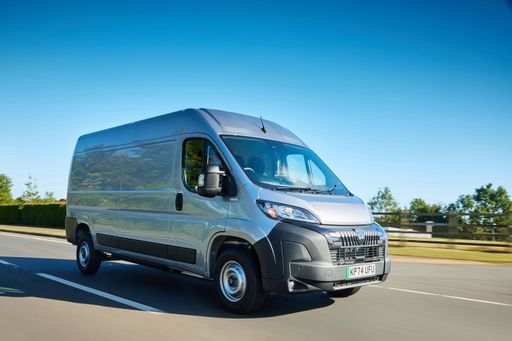
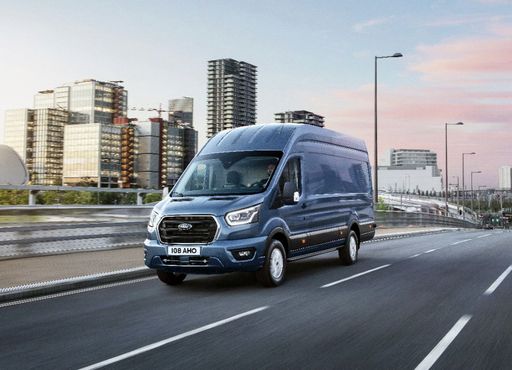
@ Ford Motor Company / Ford Media Center
VS

Ford Transit Transporter vs Peugeot Boxer – Performance, range & efficiency compared

Both models have their strengths – but which one suits you more?
Compare performance, efficiency, price and space directly: Ford Transit Transporter or Peugeot Boxer?

Transit Transporter @ Ford Motor Company / Ford Media Center

The Ultimate Showdown: Ford Transit Transporter vs. Peugeot Boxer

In the competitive world of cargo vans, two names stand out for their innovation, versatility, and reliability: the Ford Transit Transporter and the Peugeot Boxer. Both vans cater to the needs of businesses and individuals who require efficient transport solutions. This article delves into the technical intricacies, innovations, and unique features of these two heavyweights in the cargo van segment.

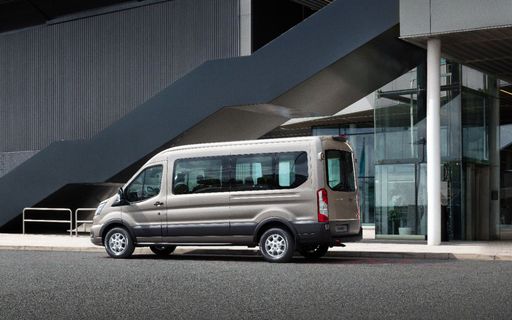
Transit Transporter @ Ford Motor Company / Ford Media Center

Performance and Powertrain Options

The Ford Transit Transporter offers a diverse range of powertrain options to suit every driver's needs. With choices between diesel and electric engines, it caters to both traditional and eco-conscious consumers. Diesel power outputs range from 105 HP to a robust 184 HP with associated torque specifications from 310 Nm to 430 Nm, while electric versions stretch up to 269 HP with various consumption rates from 21.3 to 32 kWh/100 km. The transmission options — manual, automatic, and reduction gearboxes — and drive configurations spanning front-wheel drive, rear-wheel drive, and all-wheel drive provide abundant versatility.

Peugeot Boxer, on the other hand, emphasizes simplicity with its front-wheel-drive system across the board. Like its rival, it comes in both diesel and electric versions. Diesel models offer power outputs from 120 HP to 180 HP, paired with torque figures peaking at 450 Nm. Its electric variant delivers a competitive 279 HP with consumption at 26.2 kWh/100 km. Peugeot also offers a choice between manual and automatic transmissions, prioritizing user-friendliness and reliability.


Transit Transporter @ Ford Motor Company / Ford Media Center

Efficiency and Range

For the environmentally astute, both models present compelling electric options. The Ford Transit Transporter's electric variant impresses with a maximum range of 317 km, backed by a 68 kWh battery. Conversely, the Peugeot Boxer's electric model boasts a longer range of up to 424 km due to its substantial 97.8 kWh battery, making it a strong contender for long distances without frequent recharges.

In terms of fuel consumption, Ford's diesel models range from 7.9 to 10.3 L/100 km whereas Peugeot's are slightly more frugal, ranging between 7.5 and 9 L/100 km. This difference offers a marginal advantage to the Peugeot Boxer for budget-conscious operators over long-term use.

Dimensions, Capacity, and Practicality

Size matters significantly when selecting a cargo van. The Ford Transit Transporter's length varies from 5,531 mm to a substantial 6,704 mm with a height of up to 2,778 mm, presenting extensive loading flexibility. The Peugeot Boxer is a compact alternative with lengths between 4,963 mm and 6,363 mm and a height reaching up to 2,850 mm. Despite its relatively shorter body, the Peugeot maximizes internal space efficiently.

Payload capacities are crucial for businesses, and Ford's versatile payload range from 735 kg to an impressive 2,607 kg underscores its adaptability for different loads. Peugeot Boxer also shines in this area, with a range from 560 kg to 2,080 kg, offering competitive utility across various industries.

Technological Innovations

Ford and Peugeot have integrated cutting-edge technology into their vans to enhance comfort, safety, and performance. The Ford Transit Transporter features advanced driver assistance systems, connectivity options, and adaptive cruise control, elevating its standing as a modern workhorse.

Peugeot's Boxer similarly prioritizes driver comfort and safety with features such as assisted navigation, lane departure warnings, and state-of-the-art infotainment systems. During long hauls, these technologies significantly reduce stress and increase productivity, positioning the Boxer as a thoughtful choice for tech-savvy drivers.

Conclusion: Choosing Your Ideal Van

The choice between the Ford Transit Transporter and the Peugeot Boxer hinges on personal and professional priorities. Ford's vast array of configurations, coupled with superior payload capacity, provides excellent adaptability. Meanwhile, Peugeot's Boxer delivers an impressive electric range alongside efficient fuel consumption, offering an edge in eco-friendliness and long-haul capabilities.

Ultimately, both vehicles stand as benchmarks in their field, catering to diversified needs through technological innovation and robust engineering. Whether your focus is on sustainable transportation or maximum load flexibility, both the Transit Transporter and Boxer deliver comprehensive solutions tailored to modern logistical challenges.

Here’s where it gets real: The technical differences in detail

Costs and Efficiency:

Price and efficiency are key factors when choosing a car – and this is often where the real differences emerge.

Peugeot Boxer has a to a small extent advantage in terms of price – it starts at 33500 £, while the Ford Transit Transporter costs 39900 £. That’s a price difference of around 6477 £.

Fuel consumption also shows a difference: Peugeot Boxer manages with 7.50 L and is therefore minimal more efficient than the Ford Transit Transporter with 7.90 L. The difference is about 0.40 L per 100 km.

In terms of energy consumption, the advantage goes to the Ford Transit Transporter: with 21.30 kWh per 100 km, it’s clearly perceptible more efficient than the Peugeot Boxer with 26.20 kWh. That’s a difference of about 4.90 kWh.

As for range, the Peugeot Boxer performs distinct better – achieving up to 424 km, about 107 km more than the Ford Transit Transporter.

Engine and Performance:

Power, torque and acceleration are the classic benchmarks for car enthusiasts – and here, some clear differences start to show.

When it comes to engine power, the Peugeot Boxer has a minimal edge – offering 279 HP compared to 269 HP. That’s roughly 10 HP more horsepower.

In terms of top speed, the Peugeot Boxer performs clearly perceptible better – reaching 170 km/h, while the Ford Transit Transporter tops out at 120 km/h. The difference is around 50 km/h.

There’s also a difference in torque: Peugeot Boxer pulls minimal stronger with 450 Nm compared to 430 Nm. That’s about 20 Nm difference.

Space and Everyday Use:

Whether family car or daily driver – which one offers more room, flexibility and comfort?

Seats: Peugeot Boxer offers a bit more seating capacity – 7 vs 6.

In curb weight, Ford Transit Transporter is minimal lighter – 2074 kg compared to 2075 kg. The difference is around 1 kg.

In maximum load capacity, the Peugeot Boxer performs somewhat better – up to 17000 L, which is about 2900 L more than the Ford Transit Transporter.

When it comes to payload, Ford Transit Transporter evident takes the win – 2607 kg compared to 2080 kg. That’s a difference of about 527 kg.

Who comes out on top?

Overall, the Peugeot Boxer shows itself to be is largely superior and secures the title of DriveDuel Champion.
It convinces with the more balanced overall package and proves to be the more versatile choice for everyday use.

from about £33,500
default

Peugeot Boxer

  • Engine Type : Diesel, Electric
  • Transmission : Manuel, Automatic
  • Drive Type : Front-Wheel Drive
  • Power HP : 120 - 279 HP
  • Consumption L/100km : 7.5 - 9 L
  • Consumption kWh/100km : 26.20 kWh
  • Electric Range : 424 km

Ford Transit Transporter

The Ford Transit Transporter has long been a staple in the commercial vehicle sector, renowned for its reliability and versatility. It offers a comfortable cabin with a modern design that enhances the driving experience, making long journeys more enjoyable. With a focus on practicality, the Transit provides ample cargo space, meeting the demands of businesses and individual users alike.

details

Peugeot Boxer

The Peugeot Boxer stands out in the commercial vehicle market with its robust design and spacious interior, making it an ideal choice for businesses in need of a reliable transport solution. Its efficiency and versatility are complemented by a range of advanced features aimed at enhancing driver comfort and safety. Whether navigating urban streets or long-distance routes, the Peugeot Boxer delivers a smooth and dependable driving experience.

details
Ford Transit Transporter
Peugeot Boxer
Transit Transporter @ Ford Motor Company / Ford Media Center

Costs and Consumption

Price
39900 - 69100 £
Price
33500 - 57800 £
Consumption L/100km
7.9 - 10.3 L
Consumption L/100km
7.5 - 9 L
Consumption kWh/100km
21.3 - 32 kWh
Consumption kWh/100km
26.20 kWh
Electric Range
247 - 317 km
Electric Range
424 km
Battery Capacity
68 kWh
Battery Capacity
97.80 kWh
co2
0 - 270 g/km
co2
0 - 233 g/km
Fuel tank capacity
70 L
Fuel tank capacity
90 L

Dimensions and Body

Body Type
Cargo Van
Body Type
Cargo Van
Seats
3 - 6
Seats
3 - 7
Doors
4
Doors
4
Curb weight
2074 - 2765 kg
Curb weight
2075 - 2940 kg
Trunk capacity
-
Trunk capacity
-
Length
5531 - 6704 mm
Length
5413 - 6363 mm
Width
2059 mm
Width
2050 mm
Height
2530 - 2778 mm
Height
2254 - 2850 mm
Max trunk capacity
9300 - 14100 L
Max trunk capacity
10000 - 17000 L
Payload
735 - 2607 kg
Payload
560 - 2080 kg

Engine and Performance

Engine Type
Diesel, Electric
Engine Type
Diesel, Electric
Transmission
Manuel, Automatic
Transmission
Manuel, Automatic
Transmission Detail
Manual Gearbox, Automatic Gearbox, Reduction Gearbox
Transmission Detail
Manual Gearbox, Automatic Gearbox, Reduction Gearbox
Drive Type
Front-Wheel Drive, Rear-Wheel Drive, All-Wheel Drive
Drive Type
Front-Wheel Drive
Power HP
105 - 269 HP
Power HP
120 - 279 HP
Acceleration 0-100km/h
-
Acceleration 0-100km/h
-
Max Speed
120 km/h
Max Speed
90 - 170 km/h
Torque
310 - 430 Nm
Torque
320 - 450 Nm
Number of Cylinders
4
Number of Cylinders
4
Power kW
77 - 198 kW
Power kW
88 - 205 kW
Engine capacity
1996 cm3
Engine capacity
2184 cm3

General

Model Year
2019 - 2024
Model Year
2024 - 2025
CO2 Efficiency Class
G, A
CO2 Efficiency Class
G, A
Brand
Ford
Brand
Peugeot
What drivetrain options does the Ford Transit Transporter have?

Available configurations include Front-Wheel Drive, Rear-Wheel Drive or All-Wheel Drive.

The prices and data displayed are estimates based on German list prices and may vary by country. This information is not legally binding.