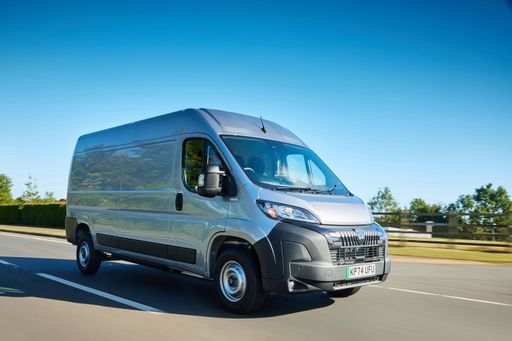
Peugeot Boxer Cargo Van, starting at 35,500 £

The Peugeot Boxer wears its workmanlike practicality with a surprising amount of style, offering an interior that’s easy to live with for tradespeople and small businesses. It’s a sensible, no-nonsense choice if you need reliable load space and low running costs, with clever details that make daily life easier and an exterior that won’t embarrass when you arrive on site.

Reviews & community

All real reviews and experiences about the Peugeot Boxer in one place.

To community

Technical data, trims & prices

All technical data, dimensions and equipment details of this model at a glance.

To technical data

Alternative car models

Discover similar models and possible alternatives to this vehicle.

To alternatives

from £35,500
Boxer

Peugeot Boxer

  • Engine Type Diesel, Electric
  • Transmission Manuel, Automatic
  • Drive Type Front-Wheel Drive
  • Power HP 120 - 279 HP
  • Consumption L/100km 7.5 - 9 L/100km
  • Consumption kWh/100km 26.2 kWh/100km
  • Electric Range 424 km

Street Cred and Practical Looks

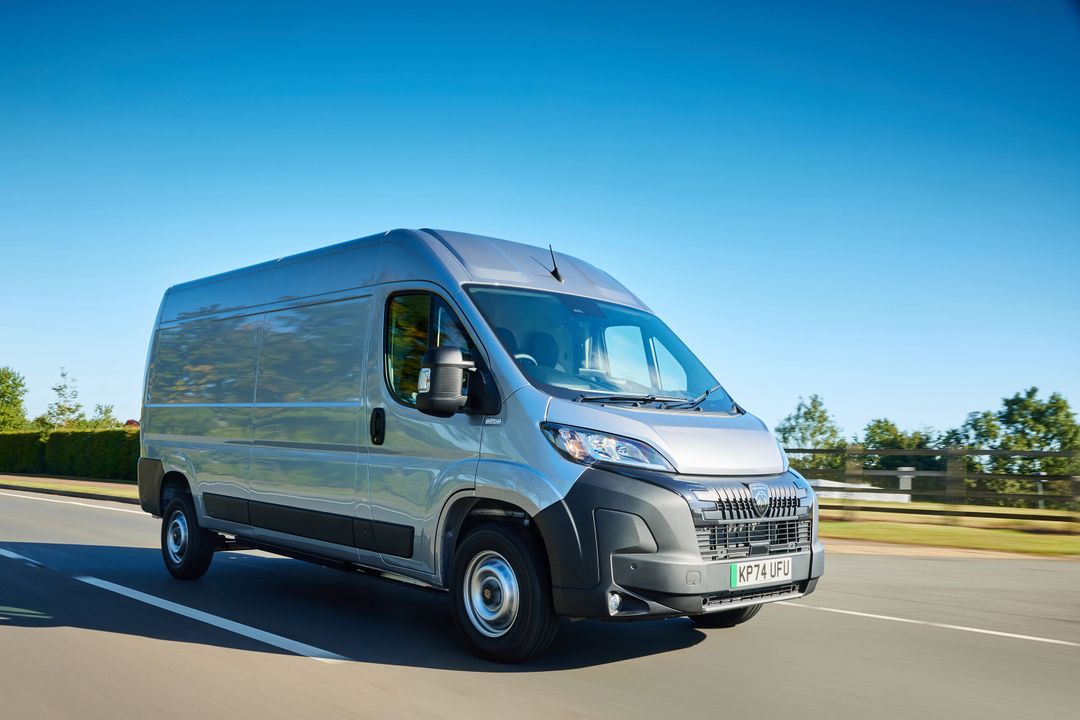
The Peugeot Boxer wears its workaday purpose with confidence: a boxy silhouette, a bold front end lifted from Peugeot’s van family, and clean panels that make signwriting straightforward. Sizes stretch from compact city-friendly lengths to full-length L4 versions, with overall lengths quoted up to about 6.36 m, so presence on the road ranges from unobtrusive to impossible to miss. Practical details such as wide-opening rear doors and low load sills underline that this is a tool designed for loading, not for showing off.
Cabin: Built to Be Touched

The interior is honest and durable, with hard-wearing plastics where they matter and practical storage cubbies for invoices, tools and coffee cups; quality is functional rather than premium. Seating configurations include crewcab options up to 7 seats or a standard 3-seat workbench, and the driving position is upright with good visibility — useful in traffic and when threading through construction sites. Ergonomics aim at simplicity: controls are clear, the steering column and mirrors are adjustable, and everything that gets used daily is within easy reach.

Loadspace That Actually Carries the Job

Space is the Boxer’s headline act: cargo volumes run from compact to cavernous, with maximum trunk capacities quoted as high as roughly 17,000 litres depending on wheelbase and roof height, and payloads that can approach 2,080 kg in heavier-duty spec. In everyday terms that means multiple Euro pallets, ladders and a full kit of tools fit without acrobatics, and higher roofs in the H2/H3 variants free up standing room for loading and unloading. For fleet buyers and converters the modularity of lengths (L2–L4) and heights (H1–H3) makes the Boxer easy to spec for a specific business need.

On the Road: Steady and Predictable

Front-wheel drive underpins a driving feel that’s unsurprisingly truck-like: the Boxer steers light at low speed and feels solid on highways, although body roll and pitching are noticeable when empty or heavily laden. Diesel powertrains cover a useful spread from 120 to 180 hp with torques in the mid-hundreds of Nm, so real-world performance is adequate for motorway overtakes and hill climbs, while the optional automatic gearbox smooths city driving at the cost of slightly higher consumption. Handling prioritises load stability over agility, and for urban use the Boxer proves competent for tight deliveries and multi-stop routes when fitted with parking sensors and a rear camera.

Fuel, Electrons and How Far They Take You

Diesel consumption for the BlueHDi units sits in the region of about 7.5–9.0 L/100 km, which translates to a practical driving range of roughly 1,000–1,200 km on its 90-litre tank under mixed conditions — a big plus for long-haul jobs where refuelling stops eat time. For operators pushing zero-emission running, the e‑Boxer jumps to the front with a claimed electric range of about 424 km and an energy use near 26.2 kWh/100 km, though real-world range will depend heavily on payload, temperature and driving style. Choosing diesel or electric comes down to route profile: long interstate runs still favour diesel for refuelling speed, while dense urban cycles and emission-zone rules make the e-Boxer an attractive alternative.

Gadgets That Matter, Not Gimmicks

Technology on the Boxer focuses on functional assistance rather than flashy extras: expect adaptive cruise, lane-keeping aids, automatic emergency braking and parking aids to be available depending on trim and options. Infotainment is purposeful with touchscreen systems that support smartphone mirroring and Bluetooth, while physical buttons remain for frequently used functions to avoid fumbling when on the clock. For fleet managers, telematics and driver-assistance packs are the real value-adds — they reduce downtime and help control fuel and maintenance costs.

Who Should Consider the Boxer?

The Boxer suits tradespeople, delivery firms and fleets that need robust cargo capacity and a wide choice of body lengths and heights to match specific jobs — from builders and plumbers to last-mile logistics operators. Diesel variants remain the most practical choice when range, payload and refuelling speed are priorities, while the e‑Boxer targets urban operators keen to meet low-emission zones or corporate sustainability targets. In short: the Boxer is a sensible, work-focused van that puts practicality and total cost of operation ahead of luxury pretence.

Costs and Consumption

Price
35,500 - 57,800 £
Consumption L/100km
7.5 - 9 L/100km
Consumption kWh/100km
26.2 kWh/100km
Electric Range
424 km
Battery Capacity
-
co2
0 - 233 g/km
Fuel tank capacity
-

Dimensions and Body

Body Type
Cargo Van
Seats
3 - 7
Doors
-
Curb weight
2,075 - 2,940 kg
Trunk capacity
-
Length
-
Width
2,050 mm
Height
-
Max trunk capacity
-
Payload
560 - 2,080 kg

Engine and Performance

Engine Type
Diesel, Electric
Transmission
Manuel, Automatic
Transmission Detail
Manual Gearbox, Automatic Gearbox, Reduction Gearbox
Drive Type
Front-Wheel Drive
Power HP
120 - 279 HP
Acceleration 0-100km/h
-
Max Speed
-
Torque
320 - 450 Nm
Number of Cylinders
4
Power kW
88 - 205 kW
Engine capacity
2,184 cm3

General

Model Year
2,024 - 2,025
CO2 Efficiency Class
G, A
Brand
Peugeot
What drive types are available for the Peugeot Boxer?

Available configurations include Front-Wheel Drive.

DriveDuel uses data analysis and artificial intelligence to evaluate vehicle data and create content. Content is regularly reviewed and improved. The displayed prices are estimates based on German list prices, adjusted to the respective country’s VAT. Country-specific registration taxes are not included. This information is not legally binding.