
VS

Mercedes Sprinter Bus vs Peugeot Boxer comparison

Compare performance (190 HP vs 279 HP), boot space and price (41,400 £ vs 35,500 £ ) at a glance. Find out which car is the better choice for you – Mercedes Sprinter Bus or Peugeot Boxer?

Mercedes Sprinter Bus vs Peugeot Boxer: Key differences

Mercedes Sprinter Bus

Peugeot Boxer

  • slightly cheaper
  • noticeably more power
  • noticeably more efficient
  • moderately lighter
Sprinter Bus

The Battle of the Commercial Titans: Mercedes Sprinter Bus vs. Peugeot Boxer

In the realm of commercial vehicles, two names stand out for their versatility and functionality: the Mercedes Sprinter Bus and the Peugeot Boxer. While both vehicles cater to similar needs, their technical specifications and innovative features set them apart. Let's delve into what makes these commercial titans unique.
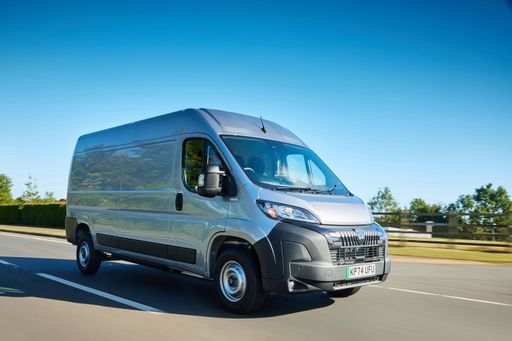
Boxer

Performance and Power

The Mercedes Sprinter Bus and the Peugeot Boxer bring robust powertrains to the table, ensuring they meet the demanding needs of commercial use. The 2024 Mercedes Sprinter Bus is available with multiple diesel engine variants with power ranging from 114 HP to a formidable 190 HP. This is complemented by a torque range of 300 Nm to 450 Nm, providing ample pulling power for various applications.

On the other hand, the Peugeot Boxer offers a broader power spectrum due to its diesel and electric variants. The diesel models range from 120 HP to 180 HP, boasting torque between 310 Nm and 450 Nm. Its electric variant provides a powerful alternative with up to 279 HP and an impressive shock of instant torque, ideal for city logistics.

Fuel Efficiency and Environmental Impact

Fuel efficiency is a critical factor in commercial vehicles, impacting operational costs. The Sprinter Bus offers a diesel consumption range of 9.3 to 12.3 L/100km, an acceptable range given its capabilities. Its CO2 emissions stand at higher figures, aligning with heavy-duty diesel engines at 244 to 322 g/km, placing it in the 'G' efficiency class.

The Peugeot Boxer excels in efficiency, with its diesel variants offering consumption as low as 7.5 L/100km and CO2 emissions ranging from 198 to 233 g/km, spanning both 'G' and more environmentally friendly 'A' classes. Its electric models promise emissions-free driving with a consumption of 26.2 to 36.2 kWh/100km and ranges up to 424 km on a single charge.

Dimensions and Capacity

Space and capacity are crucial in the commercial bus and van market. The Mercedes Sprinter Bus, a true behemoth, stretches from 5932 mm to 6967 mm in length, offering substantial cargo space. Its curb weight varies significantly, providing flexibility in payload capacity ranging from 865 kg to 1249 kg.

Meanwhile, the Peugeot Boxer comes in several lengths between 4963 mm and 6363 mm, with a more compact design facilitating maneuverability in urban environments. Despite its smaller stature, it maximizes payload capacity between 560 kg and a substantial 2080 kg, catering to a wide range of commercial needs.

Innovative Technologies

Both vehicles embrace technological advancements to enhance safety and efficiency. The Mercedes Sprinter Bus offers customizable options with a variety of transmission choices, including both manual and automatic, and rear-wheel or all-wheel drive systems to tackle different terrains effectively.

The Peugeot Boxer shines with its electric variant, featuring a significant battery capacity of up to 97.8 kWh, ensuring a substantial range while limiting emissions. This move towards electrification showcases Peugeot's commitment to sustainable, innovative solutions.

Conclusion

Choosing between the Mercedes Sprinter Bus and the Peugeot Boxer boils down to specific business needs. For those seeking a robust, traditional diesel workhorse, the Sprinter Bus provides power and transportation capacity. In contrast, the Boxer offers a more modern approach with an option for users looking towards an electric future while maintaining versatility and efficiency.

Both the Mercedes Sprinter Bus and the Peugeot Boxer push the envelope in commercial vehicle innovation, ensuring businesses remain productive while addressing the growing demands for sustainability and efficiency.

Here’s where it gets real: The technical differences in detail

Sprinter Bus

Costs and Efficiency:

Price and efficiency are often the first things buyers look at. Here it becomes clear which model has the long-term edge – whether at the pump, the plug, or in purchase price.

Peugeot Boxer is slightly cheaper – starting at 35,500 £ , while the Mercedes Sprinter Bus costs 41,400 £ . That’s a price difference of around 5,836 £.

Fuel consumption also shows a difference: the Peugeot Boxer uses 7.5 L/100km and is noticeably more efficient than the Mercedes Sprinter Bus with 9.3 L/100km. The difference is about 1.8 L/100km.

Boxer

Engine and Performance:

Power, torque and acceleration are the classic benchmarks for car enthusiasts – and here, some clear differences start to show.

When it comes to engine power, the Peugeot Boxer offers noticeably more power – delivering 279 HP compared to 190 HP. That’s roughly 89 HP more horsepower.

Both models offer the same torque – 450 Nm.

Space and Everyday Use:

Beyond pure performance, interior space and usability matter most in daily life. This is where you see which car is more practical and versatile.

Seats: Peugeot Boxer offers more seats – 7 vs 2.

In terms of curb weight, Peugeot Boxer is moderately lighter – 2,075 kg compared to 2,356 kg. The difference is around 281 kg.

When it comes to payload, the Peugeot Boxer carries considerably more – 2,080 kg compared to 1,144 kg. That’s a difference of about 936 kg.

Who wins the race in the data check?

The Peugeot Boxer holds a decisive overall lead in the objective data comparison.
This result only shows which model scores more points on paper – not which of the two cars feels right for you.

from £35,500
Boxer

Peugeot Boxer

  • Engine Type : Diesel, Electric
  • Transmission : Manuel, Automatic
  • Drive Type : Front-Wheel Drive
  • Power HP : 120 - 279 HP
  • Consumption L/100km : 7.5 - 9 L/100km
  • Consumption kWh/100km : 26.2 kWh/100km
  • Electric Range : 424 km
Mercedes Sprinter Bus
Peugeot Boxer

Costs and Consumption

View detailed analysis

Engine and Performance

View detailed analysis

Dimensions and Body

View detailed analysis

Mercedes Sprinter Bus

The Mercedes Sprinter is the go-to people-mover for operators and families who want robust practicality wrapped in a premium feel, with a flexible interior that can be tailored from shuttle to mobile office without breaking a sweat. Sporting the three-pointed star and the driving manners of a tall estate, the Sprinter Bus is comfortable, dependable and refreshingly easy to live with day after day.

details

Peugeot Boxer

The Peugeot Boxer wears its workmanlike practicality with a surprising amount of style, offering an interior that’s easy to live with for tradespeople and small businesses. It’s a sensible, no-nonsense choice if you need reliable load space and low running costs, with clever details that make daily life easier and an exterior that won’t embarrass when you arrive on site.

details
Mercedes Sprinter Bus
Peugeot Boxer

Costs and Consumption

Price
41,400 - 55,900 £
Price
35,500 - 57,800 £
Consumption L/100km
9.3 - 12.3 L/100km
Consumption L/100km
7.5 - 9 L/100km
Consumption kWh/100km
-
Consumption kWh/100km
26.2 kWh/100km
Electric Range
-
Electric Range
424 km
Battery Capacity
-
Battery Capacity
-
co2
244 - 322 g/km
co2
0 - 233 g/km
Fuel tank capacity
71 L
Fuel tank capacity
-

Dimensions and Body

Body Type
Bus
Body Type
Cargo Van
Seats
2
Seats
3 - 7
Doors
4
Doors
-
Curb weight
2,356 - 2,559 kg
Curb weight
2,075 - 2,940 kg
Trunk capacity
-
Trunk capacity
-
Length
5,932 - 6,967 mm
Length
-
Width
1,993 mm
Width
2,050 mm
Height
2,633 - 2,659 mm
Height
-
Max trunk capacity
-
Max trunk capacity
-
Payload
814 - 1,144 kg
Payload
560 - 2,080 kg

Engine and Performance

Engine Type
Diesel
Engine Type
Diesel, Electric
Transmission
Manuel, Automatic
Transmission
Manuel, Automatic
Transmission Detail
Manual Gearbox, Automatic Gearbox
Transmission Detail
Manual Gearbox, Automatic Gearbox, Reduction Gearbox
Drive Type
Rear-Wheel Drive, All-Wheel Drive
Drive Type
Front-Wheel Drive
Power HP
114 - 190 HP
Power HP
120 - 279 HP
Acceleration 0-100km/h
-
Acceleration 0-100km/h
-
Max Speed
150 - 159 km/h
Max Speed
-
Torque
300 - 450 Nm
Torque
320 - 450 Nm
Number of Cylinders
4
Number of Cylinders
4
Power kW
84 - 140 kW
Power kW
88 - 205 kW
Engine capacity
1,950 cm3
Engine capacity
2,184 cm3

General

Model Year
2,024 - 2,025
Model Year
2,024 - 2,025
CO2 Efficiency Class
G
CO2 Efficiency Class
G, A
Brand
Mercedes-Benz
Brand
Peugeot
DriveDuel uses data analysis and artificial intelligence to evaluate vehicle data and create content. Content is regularly reviewed and improved. The displayed prices are estimates based on German list prices, adjusted to the respective country’s VAT. Country-specific registration taxes are not included. This information is not legally binding.








