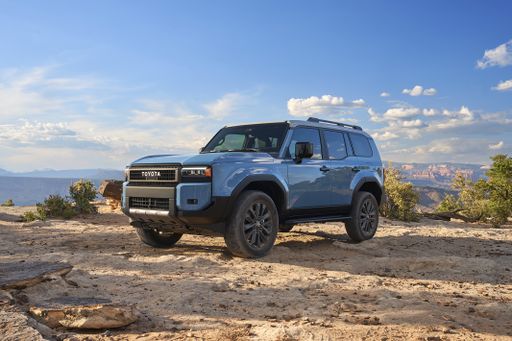
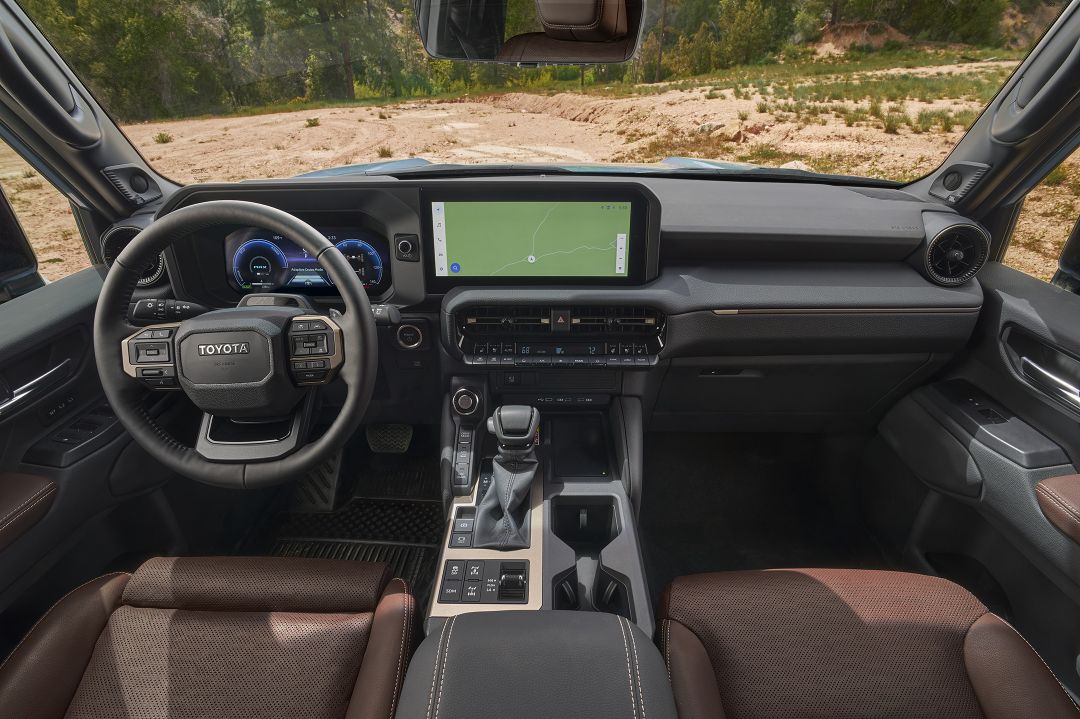
Toyota Land Cruiser Off-Roader, starting at 70700 £

The Toyota Land Cruiser Off-Roader impresses with 205 HP and an attractive starting price of 70700 £ . Here are all the details at a glance.

from about £70,700
Land Cruiser

Toyota Land Cruiser

  • Engine Type : Diesel
  • Transmission : Automatic
  • Drive Type : All-Wheel Drive
  • Power HP : 205 HP
  • Consumption L/100km : 10.6 - 10.8 L

Presence That Still Commands Attention

The Land Cruiser keeps the boxy, purposeful silhouette that defined the name for decades, with muscular wheel arches, high ground clearance and a face that says "go anywhere" without shouting. At 4,925 mm long and 1,980 mm wide it has real road presence and a width that can feel imposing in tight city parking but invaluable on rough tracks. The height of 1,935 mm and its weight (around 2,610 kg curb) underline the tough underpinnings rather than sporty pretensions. Current lineup centres on the 2.8 D‑4D diesel automatic all‑wheel drive offering 205 hp and fuel consumption roughly between 10.6 and 10.8 L/100 km.
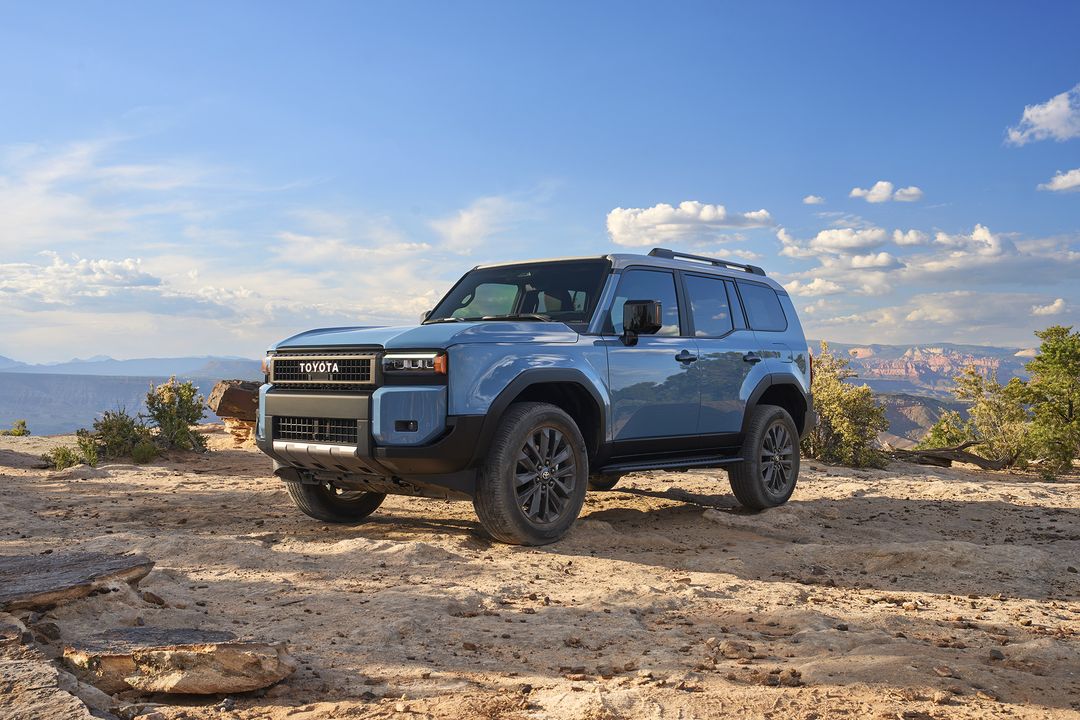
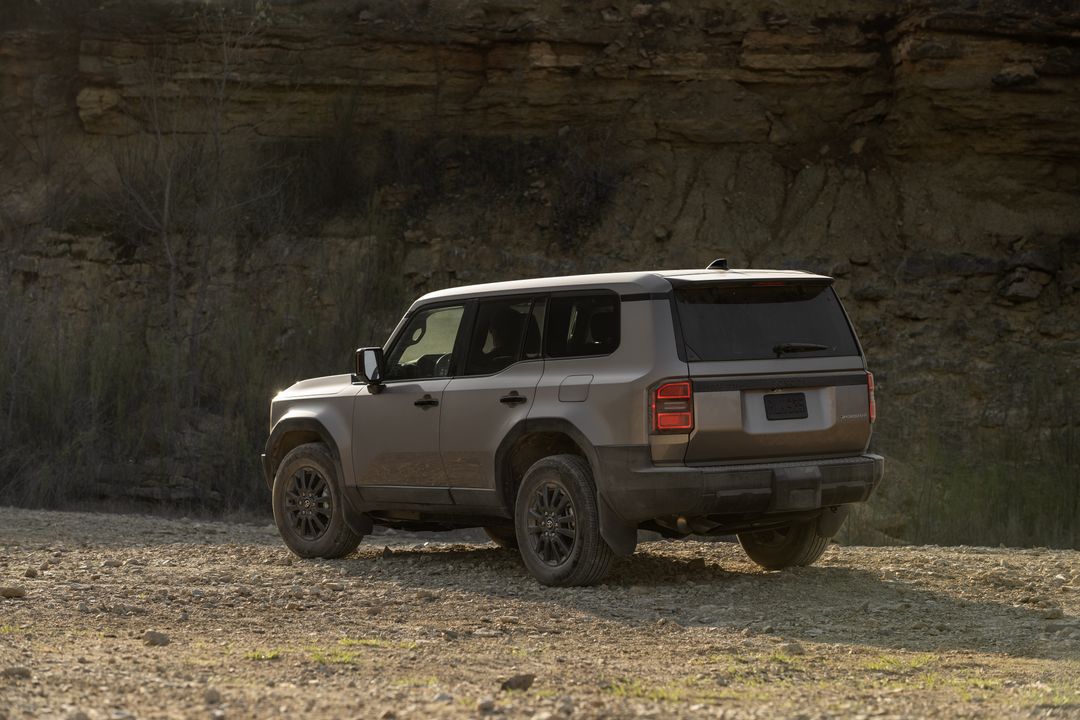
Cabin That Trades Buzzwords for Practical Luxury

Inside the cabin, Toyota aims for durable luxury rather than fragile flair, with hard-wearing plastics where needed and soft surfaces where drivers expect them. Fit and finish are solid, ergonomics are straightforward and the seating position is commanding, while optional leather and wood trim lift the ambience without feeling delicate. Infotainment screens are responsive and logical, though the system lags behind the most modern interfaces in terms of graphics and smartphone mirroring speed.

A Real-World Layout: Seats, Cargo and Useful Details

Space is a core strength: the Land Cruiser is offered in 5- and 7-seat layouts and a boot of about 742 L with rear seats up, expanding to roughly 1,829–1,895 L with seats folded for real weekend-or-works-van practicality. The generous 80 L fuel tank and a payload around 540 kg make it suited for long trips or towing equipment, while the tall roofline and wide doors ease child seats and cargo loading. At nearly 4.9 metres length, city parking requires planning but the van-like practicality repays the compromise on tight urban streets.

Long-Haul Comfort Without Pretending to Be a Sports Car

On long runs the Land Cruiser soaks up big bumps and ruts with composure, its mass and suspension tuning preferring comfort over sharp responses. Noise insulation is good for a ladder-frame SUV, keeping diesel clatter and wind reasonably subdued at motorway speeds up to the 170 km/h top speed. The hefty curb weight helps stability but contributes to a floaty feel in quick direction changes, which is acceptable for a vehicle designed for endurance rather than sport.

Capable Where It Matters: On Road and Off

The 2.8-litre four-cylinder diesel produces 205 hp and a hefty 500 Nm of torque, which arrives in the low rev range and makes towing, hill starts and off-road crawling straightforward. Acceleration to 100 km/h takes about 12.3 seconds, signalling that the Land Cruiser is not quick but perfectly adequate for overtakes and highway merging when urgency is measured. All‑wheel drive, a capable traction control suite and traditional low-range gearing mean this SUV will handle mud, sand and steep trails with confidence. On tarmac the steering is stable but deliberate, with body roll kept in check for a vehicle of this size but without sporting agility.

Fuel Use, Range and What It Means for Ownership

Fuel consumption sits around 10.6–10.8 L/100 km in official figures, which for a 2.6-tonne diesel off-roader is realistic rather than wasteful, but still significant for everyday budgets. With an 80 L tank, the realistic driving range stretches into the 700–750 km band between fill-ups, which is convenient for long-distance travelers and remote trips. Emissions are in the region of 278–284 g/km CO2 and the Land Cruiser carries a G efficiency class, a reminder that ownership costs include higher fuel and tax considerations compared with compact SUVs.

Assistance Systems That Help Without Getting in the Way

A full suite of driver aids is standard or available, including adaptive cruise, lane-centering assists and multiple camera views to aid off-road manoeuvres and tricky parking. Safety structure and active systems are tuned to protect occupants and manage heavy loads, while over-the-air software updates and connected services are present but not as cutting-edge as some rivals. The infotainment supports smartphone integration and offers sensible physical controls for common functions, keeping interaction predictable when concentration is needed on difficult terrain.

Who Should Consider a Land Cruiser?

The Land Cruiser is aimed at buyers who need a go-anywhere vehicle that combines rugged capability with family-carrying practicality, not those chasing sporty performance or city-sized footprints. Its strengths are reliability, towing and load-hauling, long-range ability and a cabin that balances hard-wearing materials with enough comfort for extended journeys. For operators who travel off-grid, tow frequently, or require a vehicle that will last under heavy use, the Land Cruiser remains an obvious, pragmatic choice.

Costs and Consumption

Price
70700 - 79300 £
Consumption L/100km
10.6 - 10.8 L
Consumption kWh/100km
-
Electric Range
-
Battery Capacity
-
co2
278 - 284 g/km
Fuel tank capacity
80 L

Dimensions and Body

Body Type
Off-Roader
Seats
5 - 7
Doors
5
Curb weight
2610 kg
Trunk capacity
143 - 742 L
Length
4925 mm
Width
1980 mm
Height
1935 mm
Max trunk capacity
1829 - 1895 L
Payload
540 kg

Engine and Performance

Engine Type
Diesel
Transmission
Automatic
Transmission Detail
Automatic Gearbox
Drive Type
All-Wheel Drive
Power HP
205 HP
Acceleration 0-100km/h
12.30 s
Max Speed
170 km/h
Torque
500 Nm
Number of Cylinders
4
Power kW
151 kW
Engine capacity
2755 cm3

General

Model Year
2025
CO2 Efficiency Class
G
Brand
Toyota
What drivetrain options does the Toyota Land Cruiser have?

The Toyota Land Cruiser is offered with All-Wheel Drive.

The prices shown are estimates based on German list prices, adjusted for local VAT. Local registration taxes (e.g. NoVA, BPM or CO2 malus) are not included. This information is not legally binding.