VS

Toyota Land Cruiser vs Toyota RAV4 comparison

Compare performance (205 HP vs 306 HP), boot space and price (70,700 £ vs 35,100 £ ) at a glance. Find out which car is the better choice for you – Toyota Land Cruiser or Toyota RAV4?

Toyota Land Cruiser vs Toyota RAV4: Key differences

Toyota Land Cruiser

  • markedly more trunk space

Toyota RAV4

4.8 (6 Reviews)
rate
  • significantly cheaper
  • markedly more power
  • clearly more efficient
  • significantly quicker 0–100 km/h
  • substantially lighter

All details on performance, efficiency, range and trunk space can be found in the technical comparison below – including user reviews for both models.

Land Cruiser

The Epic Toyota Showdown: Land Cruiser vs. RAV4

When it comes to Toyota, the brand that exemplifies reliability and innovation, the Land Cruiser and RAV4 are prominent contenders in their respective segments. These vehicles cater to different needs but share the Toyota ethos of durability and performance. Let’s dive into these machines' specifications and unique offerings to understand which might suit your driving style better.
RAV4

Body Style and Design

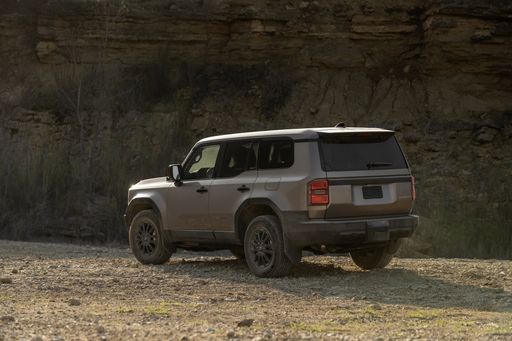
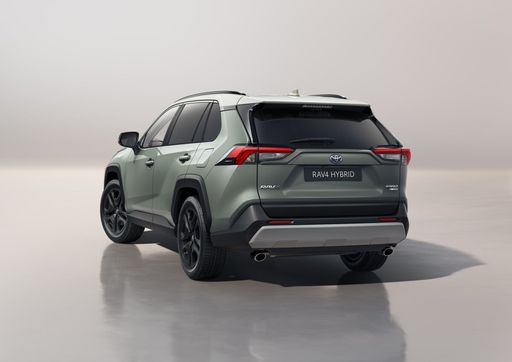
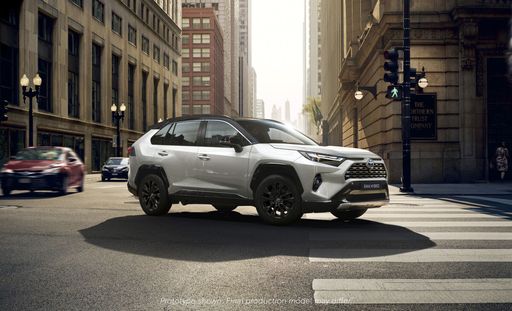
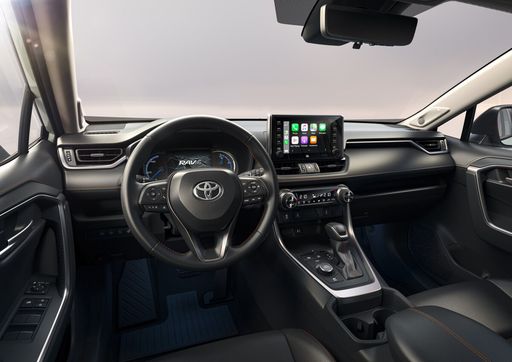
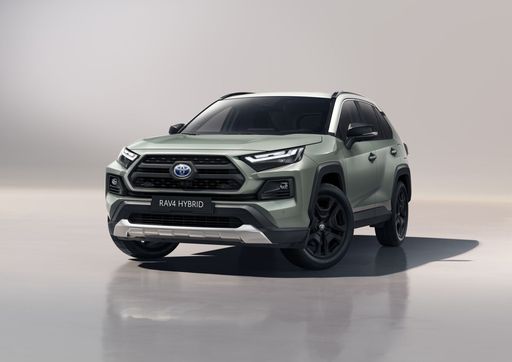
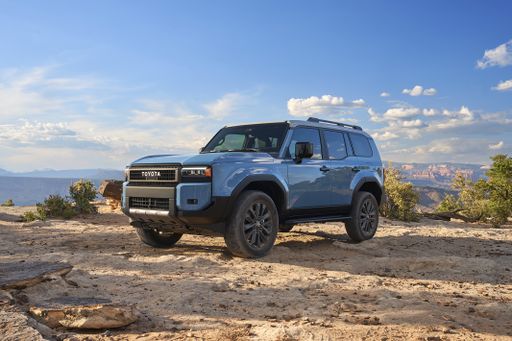
The Toyota Land Cruiser, an iconic figure in the realm of off-roaders, presents a formidable body structure suited for rugged terrains. Its imposing dimensions with a length of 4925 mm, width of 1980 mm, and height of 1935 mm ensure it stands tall and wide, ready to conquer any landscape. On the other hand, the Toyota RAV4, a versatile SUV, offers a more compact and urban-friendly design with a length of 4600 mm, width of 1855 mm, and height of 1685 mm, balancing style and practicality.

Land Cruiser

Performance and Engine

The heart of the Land Cruiser is its robust diesel engine, producing 205 HP with impressive torque of 500 Nm. Sporting a 2755 cm3 engine capacity, it ensures a dependable off-roading experience, further supported by an automatic gearbox and all-wheel drive. The RAV4 provides more variant engine configurations with full hybrid and plug-in hybrid options. It ranges up to 306 HP and delivers efficient energy use with a minimal consumption of 1L/100km, encompassing both all-wheel and front-wheel drive configurations.

RAV4

Transmission and Fuel Efficiency

Both vehicles utilize automatic transmissions; however, the Land Cruiser employs a traditional automatic transmission ideal for rugged driving conditions, offering stable power delivery. In contrast, the RAV4's CVT (Continuously Variable Transmission) allows for smoother transitions and enhances hybrid models' fuel efficiency. With consumption rates as low as 5.6L/100km and an electric range of up to 75 km in hybrid models, the RAV4 is fuel-conscious, contrasting with the Land Cruiser’s consumption of 10.3L/100km.

Land Cruiser

Interior Comfort and Features

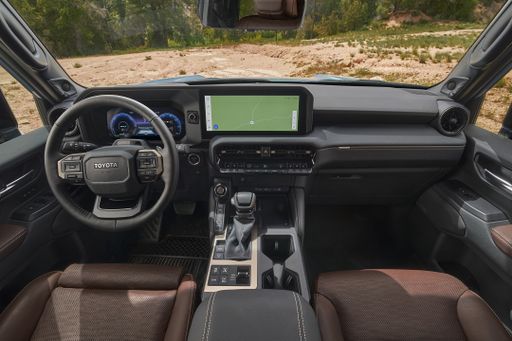
Inside, both vehicles accommodate five passengers comfortably. The Land Cruiser offers a significant trunk capacity of up to 742L, which can accommodate any adventure's cargo needs. Meanwhile, the RAV4, with its more compact trunk capacity of 580L, provides ample storage for everyday usage and weekend escapes. Both models deliver sophisticated interiors with the latest in infotainment options, ensuring a smooth journey whether on or off the road.

RAV4

Environmental Impact

In an era of growing environmental awareness, CO2 emissions are a critical aspect to consider. The Land Cruiser's emissions stand at 272 g/km, reflecting its large build and traditional diesel engine. The RAV4, however, excels in this domain with CO2 emissions as low as 22 g/km in its most efficient plug-in hybrid models, underscoring Toyota's commitment to ecological sustainability.

Final Remarks

Choosing between the Land Cruiser and the RAV4 depends primarily on your lifestyle and driving needs. For those seeking unparalleled off-road capability and traditional might, the Land Cruiser remains unmatched. However, for drivers looking for a modern, efficient, and city-friendly ride without forgoing SUV functionality, the RAV4 stands as a remarkable choice. Both vehicles embody Toyota's legacy of quality, ensuring whichever you choose is a testament to reliability and innovation.

Here’s where it gets real: The technical differences in detail

Land Cruiser

Costs and Efficiency:

Looking at overall running costs, both models reveal some interesting differences in everyday economy.

Toyota RAV4 is significantly cheaper – starting at 35,100 £ , while the Toyota Land Cruiser costs 70,700 £ . That’s a price difference of around 35,571 £.

Fuel consumption also shows a difference: the Toyota RAV4 uses 1 L/100km and is clearly more efficient than the Toyota Land Cruiser with 10.6 L/100km. The difference is about 9.6 L/100km.

RAV4

Engine and Performance:

Power, torque and acceleration say a lot about how a car feels on the road. This is where you see which model delivers more driving dynamics.

When it comes to engine power, the Toyota RAV4 offers markedly more power – delivering 306 HP compared to 205 HP. That’s roughly 101 HP more horsepower.

When accelerating from 0 to 100 km/h, the Toyota RAV4 is significantly quicker – completing the sprint in 6 s, while the Toyota Land Cruiser takes 12.3 s. That’s about 6.3 s quicker.

Looking at top speed, the Toyota RAV4 is only slightly faster – reaching 180 km/h, while the Toyota Land Cruiser tops out at 170 km/h. The difference is around 10 km/h.

Land Cruiser

Space and Everyday Use:

Beyond pure performance, interior space and usability matter most in daily life. This is where you see which car is more practical and versatile.

Seats: Toyota Land Cruiser offers more seats – 7 vs 5.

In terms of curb weight, Toyota RAV4 is substantially lighter – 1,745 kg compared to 2,610 kg. The difference is around 865 kg.

Looking at boot space, the Toyota Land Cruiser offers markedly more boot space – 742 L compared to 580 L. That’s a difference of about 162 L.

For maximum load capacity, the Toyota Land Cruiser offers a bit more capacity – up to 1,895 L, about 205 L more than the Toyota RAV4.

When it comes to payload, the Toyota RAV4 carries barely more – 600 kg compared to 540 kg. That’s a difference of about 60 kg.

Who wins the race in the data check?

The Toyota RAV4 stands well ahead of its rival in the objective data comparison.
This result only shows which model scores more points on paper – not which of the two cars feels right for you.

from £35,100
RAV4

Toyota RAV4

  • Engine Type : Full Hybrid, Plugin Hybrid
  • Transmission : Automatic
  • Drive Type : Front-Wheel Drive, All-Wheel Drive
  • Power HP : 218 - 306 HP
  • Consumption L/100km : 1 - 5.6 L/100km
  • Electric Range : 75 km
Toyota Land Cruiser
Toyota RAV4

Costs and Consumption

View detailed analysis

Engine and Performance

View detailed analysis

Dimensions and Body

View detailed analysis

Toyota Land Cruiser

The Toyota Land Cruiser is the kind of SUV that makes you feel ready to abandon the map and take the long way home, with legendary go-anywhere capability wrapped in reassuringly solid build quality. Inside it's surprisingly comfortable and grown-up — a practical luxury for buyers who want reliability and presence rather than fleeting flash.

details

Toyota RAV4

The Toyota RAV4 feels like a sensible friend on the road, marrying dependable practicality with a dash of SUV personality that keeps daily driving from turning dull. Comfortable and easy to live with, it looks tough without shouting and quietly gets the job done — a sensible pick for buyers who want versatility without drama.

details
Toyota Land Cruiser
Toyota RAV4

Costs and Consumption

Price
70,700 - 79,300 £
Price
35,100 - 55,700 £
Consumption L/100km
10.6 - 10.8 L/100km
Consumption L/100km
1 - 5.6 L/100km
Consumption kWh/100km
-
Consumption kWh/100km
-
Electric Range
-
Electric Range
75 km
Battery Capacity
-
Battery Capacity
-
co2
278 - 284 g/km
co2
22 - 128 g/km
Fuel tank capacity
80 L
Fuel tank capacity
55 L

Dimensions and Body

Body Type
Off-Roader
Body Type
SUV
Seats
5 - 7
Seats
5
Doors
5
Doors
5
Curb weight
2,610 kg
Curb weight
1,745 - 1,910 kg
Trunk capacity
143 - 742 L
Trunk capacity
520 - 580 L
Length
4,925 mm
Length
4,600 mm
Width
1,980 mm
Width
1,855 mm
Height
1,935 mm
Height
1,685 mm
Max trunk capacity
1,829 - 1,895 L
Max trunk capacity
1,604 - 1,690 L
Payload
540 kg
Payload
390 - 600 kg

Engine and Performance

Engine Type
Diesel
Engine Type
Full Hybrid, Plugin Hybrid
Transmission
Automatic
Transmission
Automatic
Transmission Detail
Automatic Gearbox
Transmission Detail
CVT
Drive Type
All-Wheel Drive
Drive Type
Front-Wheel Drive, All-Wheel Drive
Power HP
205 HP
Power HP
218 - 306 HP
Acceleration 0-100km/h
12.3 s
Acceleration 0-100km/h
6 - 8.4 s
Max Speed
170 km/h
Max Speed
180 km/h
Torque
500 Nm
Torque
-
Number of Cylinders
4
Number of Cylinders
4
Power kW
151 kW
Power kW
160 - 225 kW
Engine capacity
2,755 cm3
Engine capacity
2,487 cm3

General

Model Year
2,025
Model Year
2,024 - 2,025
CO2 Efficiency Class
G
CO2 Efficiency Class
D, B
Brand
Toyota
Brand
Toyota
DriveDuel uses data analysis and artificial intelligence to evaluate vehicle data and create content. Content is regularly reviewed and improved. The displayed prices are estimates based on German list prices, adjusted to the respective country’s VAT. Country-specific registration taxes are not included. This information is not legally binding.