Mazda MX-30 SUV, starting at 30,800 £

4.6 (1 Reviews)
rate

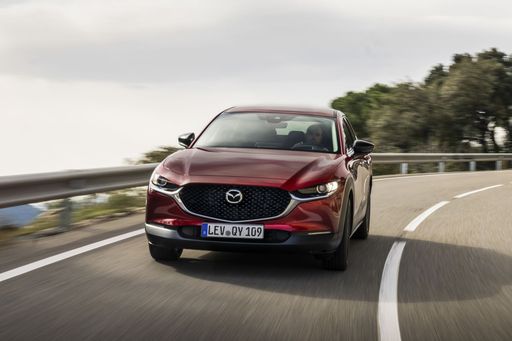
The Mazda MX-30 trades conventional EV practicality for a boutique vibe, wrapping easy urban agility and a stylish, artisan interior into a compact package that stands out in the crossover crowd. It’s ideal for city-minded buyers who value design and driving feel over long-distance trips, and its quirky details prove Mazda can be playful without losing its driver-focused soul.

Reviews & community

All real reviews and experiences about the Mazda MX-30 in one place.

To community

Technical data, trims & prices

All technical data, dimensions and equipment details of this model at a glance.

To technical data

Alternative car models

Discover similar models and possible alternatives to this vehicle.

To alternatives

from £30,800
MX-30

Mazda MX-30

  • Engine Type Plugin Hybrid
  • Transmission Automatic
  • Drive Type Front-Wheel Drive
  • Power HP 170 HP
  • Consumption kWh/100km 18.3 kWh/100km
  • Electric Range 85 km

Design & Presence

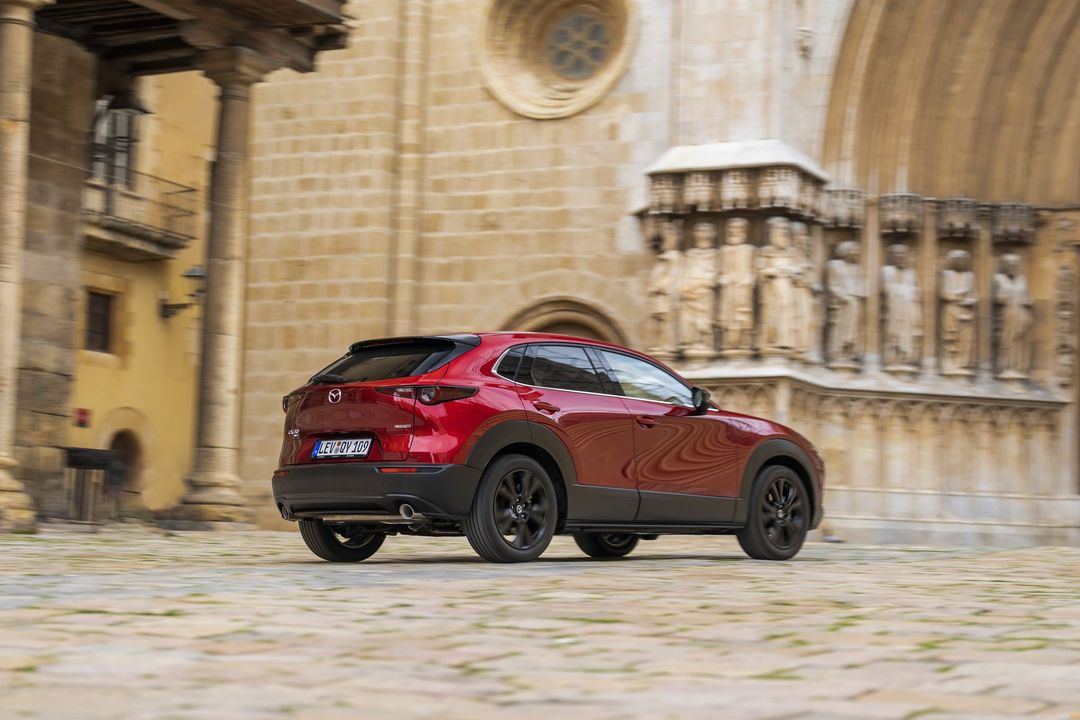
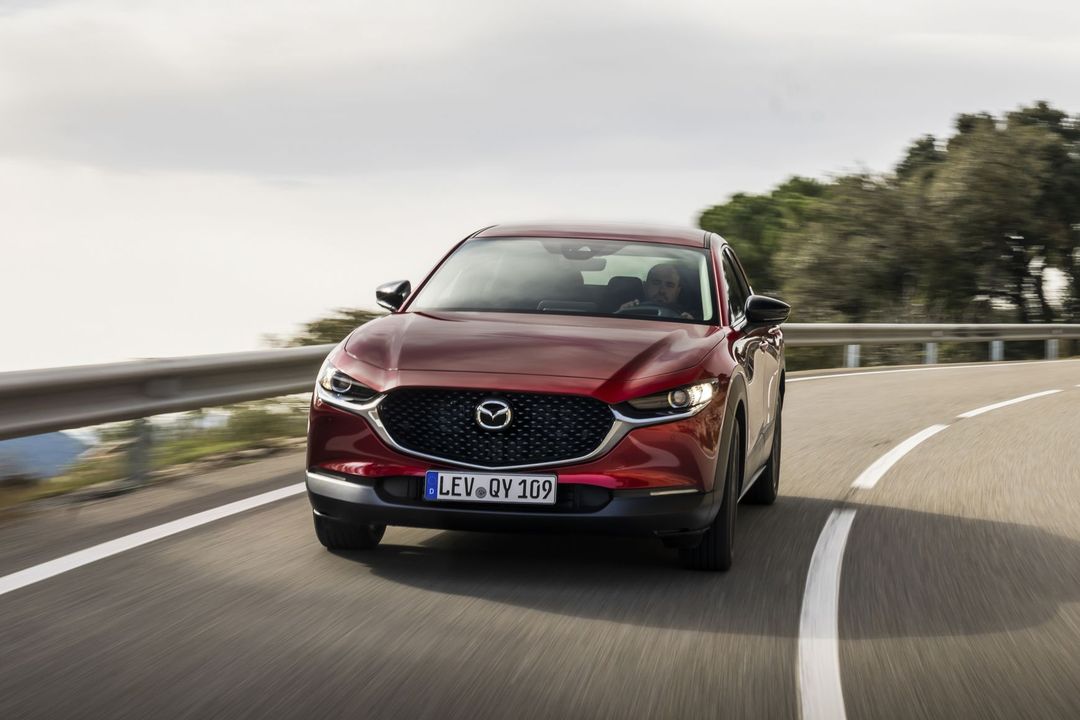
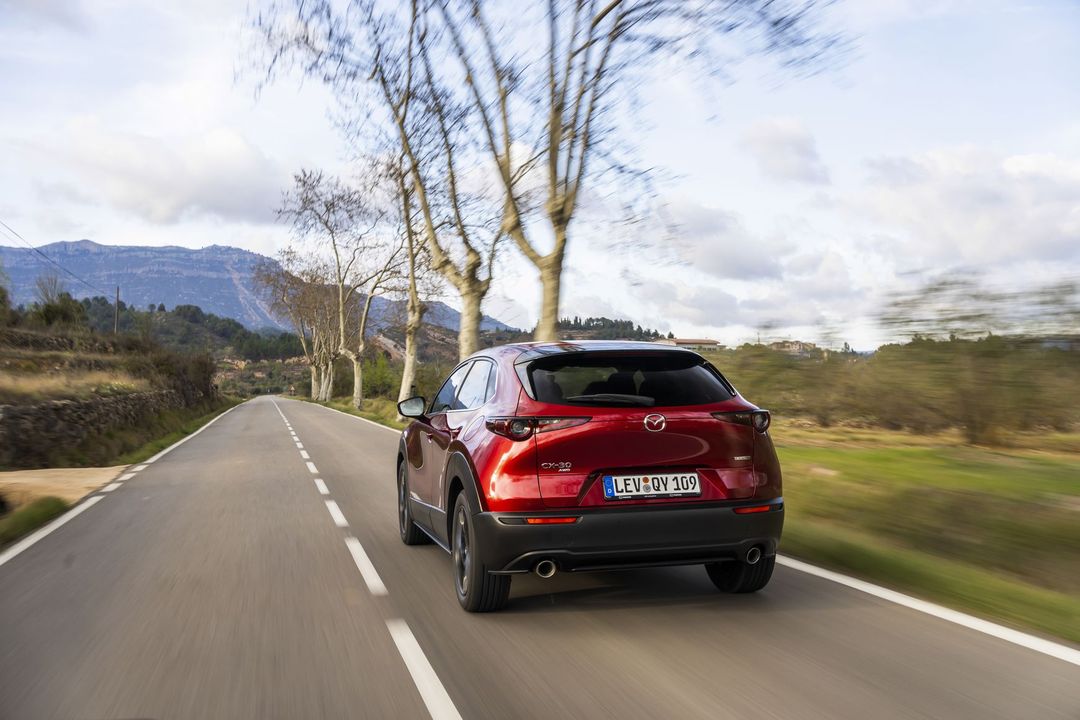
The Mazda MX-30 looks like a compact crossover that decided to wear evening wear to the grocery run, with taut Kodo lines, a floating roof and the signature rear-hinged “freestyle” doors that still attract attention at the kerb. At 4,395 mm long and 1,848 mm wide it feels smaller than many SUVs yet stands out among city traffic rather than shrinking into anonymity. Design choices favour character over purely practical styling, which gives the MX-30 personality but also modest rear headroom compared with boxier rivals. Current versions include the e‑SKYACTIV R‑EV plug‑in hybrid (front‑wheel drive, 170 hp, 18.3 kWh battery, 85 km electric range).
Interior & Usability

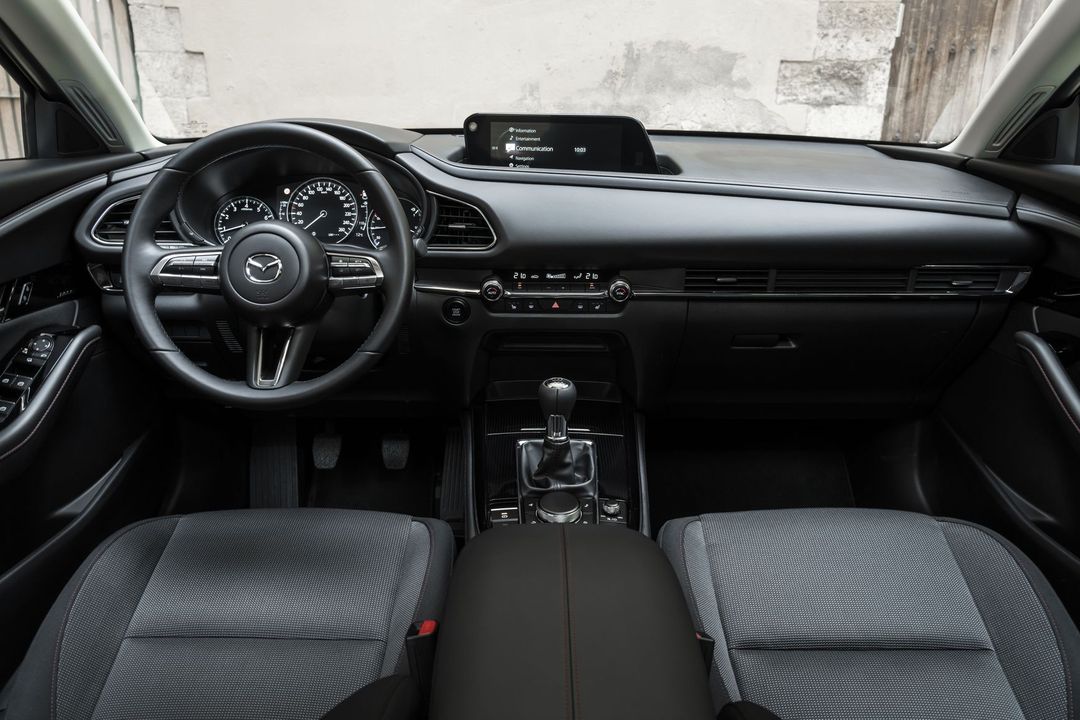
The cabin aims for a pared-back, Scandinavian-like calm with a sensible layout and soft-touch materials where it matters, while lower trim areas use harder plastics to keep costs and wear in check. Controls are driver-focused and easy to reach, blending a central screen with physical buttons and a rotary controller that reduces distractions on the move. Visibility is good up front thanks to a raised seating position, but the sloping roof and rear-hinged doors make rear-seat access feel a touch boutique rather than purely practical. Overall the interior feels more premium than its compact footprint suggests, but rivals still offer more storage cubbies and space flexibility.

Space & Everyday Practicality

The MX-30 seats five on paper, but the rear bench is best for two adults on shorter trips due to limited legroom and a slightly raised floor; payload is listed at 402 kg, so heavy luggage plus five adults will feel tight. Boot volume sits around 350 litres with the seats up and expands to about 1,155 litres with seats folded, which is adequate for weekly shopping and weekend bags but not for moving day tasks. At a curb weight of 1,849 kg the car feels substantial and that mass is evident when loading and in dynamic responses, so buyers who prioritise maximum practicality may prefer larger, lighter rivals. Clever door design helps access and adds flair, but long-term family life will expose the MX-30’s compact limits.

Driving & Handling

Driving character leans toward composed city and suburban manners rather than outright sportiness, with accurate steering, a comfortable suspension tune and predictable front‑wheel drive grip that suits everyday driving. The powertrain delivers 170 hp and a 0–100 km/h time of around 9.1 seconds, which feels brisk enough for motorway on‑ramps but not explosive; top speed is capped near 140 km/h, so motorway overtakes require sensible planning. The battery placement keeps the centre of gravity low, which helps cornering composure, yet the MX‑30’s weight blunts agility compared with lighter, more performance‑oriented crossovers. Noise insulation is good at low speeds in electric mode, and the transition to petrol assistance is smooth although the combustion engine becomes more audible at sustained high speed.

Efficiency, Consumption & Real-World Range

The plug‑in setup offers an official electric range of about 85 km, paired with an electric consumption figure near 18.3 kWh/100 km, which means a typical 40 km round commute will use roughly 7.3 kWh and leave plenty of battery to run errands without burning fuel. Once the battery is depleted the petrol engine handles long trips, producing a combined CO2 figure near 22 g/km in mixed use, but fuel economy will climb on highway runs where the engine carries the load. For drivers who can recharge daily, the MX‑30 acts like an electric city car with the safety net of a combustion engine for holidays; for those who rarely plug in the plug‑in hybrid benefits are reduced. Charging speeds and real charging times depend on home or public chargers, so buyers should match the car to their daily routine to maximise savings.

Assistance & Infotainment

Infotainment is Mazda’s familiar mix of a central display operated by a rotary controller and touchscreen inputs, with smartphone integration and clear graphics that avoid overcomplication while offering modern connectivity. Advanced driver assistance features are available and include adaptive cruise and lane‑keeping aids that make motorway stretches less tiring, though systems are tuned for comfort rather than aggressive intervention. The layout keeps key controls tactile and logical, limiting distraction in everyday use and reinforcing Mazda’s focus on driver engagement. Software updates and the exact bundle of assistance features vary by market and trim, so checking local spec sheets is advised.

Who is it for?

The MX‑30 suits buyers who want a stylish, compact crossover with genuine electric capability for day‑to‑day use yet still want the reassurance of a petrol engine for longer trips; urban professionals and small families who prioritise design and city efficiency will find it appealing. It is not the best choice for those needing maximum cargo volume, long high‑speed journeys on a regular basis, or a sports‑focused driving experience, but it shines where looks, comfort and short-range electric driving matter most. The combination of 170 hp and a usable 85 km electric range makes the MX‑30 a practical compromise for mixed commuting patterns. Buyers should weigh how often they can charge at home or work, because the car’s running costs and CO2 advantage depend heavily on electric usage.

Costs and Consumption

Price
30,800 - 37,100 £
Consumption L/100km
-
Consumption kWh/100km
18.3 kWh/100km
Electric Range
85 km
Battery Capacity
-
co2
22 g/km
Fuel tank capacity
-

Dimensions and Body

Body Type
SUV
Seats
5
Doors
5
Curb weight
1,849 kg
Trunk capacity
332 - 350 L
Length
4,395 mm
Width
1,848 mm
Height
1,555 mm
Max trunk capacity
1,137 - 1,155 L
Payload
402 kg

Engine and Performance

Engine Type
Plugin Hybrid
Transmission
Automatic
Transmission Detail
Reduction Gearbox
Drive Type
Front-Wheel Drive
Power HP
170 HP
Acceleration 0-100km/h
9.1 s
Max Speed
140 km/h
Torque
-
Number of Cylinders
-
Power kW
125 kW
Engine capacity
830 cm3

General

Model Year
2025
CO2 Efficiency Class
B
Brand
Mazda
What drivetrain options does the Mazda MX-30 have?

Available configurations include Front-Wheel Drive.

DriveDuel uses data analysis and artificial intelligence to evaluate vehicle data and create content. Content is regularly reviewed and improved. The displayed prices are estimates based on German list prices, adjusted to the respective country’s VAT. Country-specific registration taxes are not included. This information is not legally binding.