Why Fuel Prices Keep Rising in Europe – and What's Really Behind It

Paying over 2 euros per liter is not a coincidence. Rising fuel prices are driven by global crises, political decisions, and a clear shift in mobility. Understanding this leads to better choices.

Why Fuel Prices Keep Rising in Europe – and What's Really Behind It

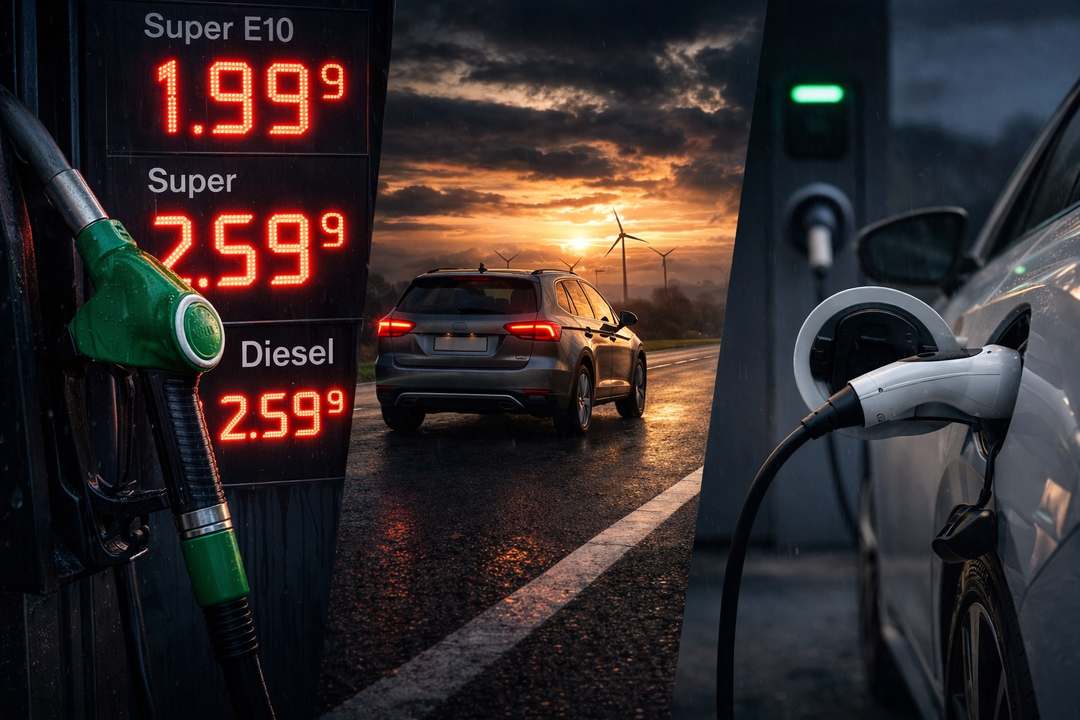
You're standing at the gas pump, looking at the price – and you feel like something isn't right anymore. Not just because it's gotten more expensive. But because it no longer feels understandable. Yesterday it was just under two euros, today it's significantly higher. And at the same time, you're hearing different numbers everywhere: Cheaper in Spain, capped in France, more expensive in Germany again. What used to be just a price suddenly feels like a system that is constantly changing – without it being clear why. And this is where the real problem begins: It's not just the price causing frustration. It's the uncertainty behind it.

👉 What's really driving this?

👉 Who decides this?

👉 And most importantly: Will it stay this way?
What's Really Happening – And Why Prices Aren't Rising Equally Across Europe

Anyone focusing only on the price at the gas station might quickly think that all of Europe is facing the same issue. The reality is more complicated. While fuel prices are rising in many countries, they are not increasing equally and not for the same reasons.

The most important point is: The oil price is just one part of the final price. What you actually pay is made up of several factors—crude oil, processing, transportation, and especially taxes and fees. That's why the same liter often costs more in Germany than in Spain or France.

How much price increases affect drivers depends a lot on the specific country. Tax policy, market structure, and government interventions determine whether prices are moderated or directly passed on. This might seem random to many but is usually the result of political decisions.

Additionally, an often underestimated factor is: Expectation and uncertainty. Prices rise not only when oil is scarce but even when markets anticipate it. Traders act early, companies hedge their bets, and prices rise before the actual situation changes.

This is particularly noticeable in Europe. Each country pursues its own energy policy. Some dampen prices, others consciously use them as controlling instruments. Thus, the fuel price becomes more than just a market value—it becomes a reflection of political priorities.

This leads to a central point: Fuel prices do not arise from a single cause. They are the result of the global market, national politics, and expectations.

And that is precisely why the simple explanation "oil has become more expensive" is no longer sufficient. To truly understand why refueling has changed, one must take a closer look at the biggest driver: the global oil market.

37E68518-E8C3-4440-AA92-1E87D0D64DD4

The Biggest Driver: Oil Market, Crises, and Global Uncertainty

If you want to understand why fuel prices suddenly rise, you need to move away from the gas pump and look at the global oil market. That's where the changes begin, which you feel later at the pump.

Oil is not a regular product. It's traded worldwide and reacts extremely sensitively to uncertainty. Prices often rise even when a shortage is only anticipated.

A central example is important transport routes like the Strait of Hormuz. As soon as political tensions arise there, the markets react immediately. Not because there's a lack of oil, but because no one can be sure if the supply remains stable.

This uncertainty drives prices up. Traders hedge, companies plan more cautiously, investors speculate. The oil price rises—often quicker than the real situation justifies.

The key point: On the oil market, the future is traded, not just the present. That's why prices can significantly rise within a few days—and this directly affects Europe since much of the oil is imported.

Additionally, transport and processing play a role. Disruptions in the supply chain increase costs further—and this also impacts consumers eventually.

What many underestimate: This most significant price driver is outside of Europe. National politics can intervene, but they don't control the global oil market.

This means: Not every price increase is politically driven—but almost every one is politically influenced.

And here's where it gets interesting: If the oil price is just the starting point—why does the same liter of gasoline cost so differently in Europe?

Why Germany (and Some Countries) Are Especially Expensive

When the oil price rises, it affects everyone. But how much you feel it at the pump depends on the country you're in.

Within Europe, the differences can often be big. The reason: The final price is largely determined by politics. Taxes, charges, and CO₂ prices dictate how expensive fuel really gets. In many countries, the actual fuel makes up only about half of the price – the rest is government charges.

Germany is a good example: high taxes and clear CO₂ pricing. The aim is to make fossil energy more expensive in the long run. For many drivers, however, this feels like a direct burden. Other countries like France or Spain intervene more, lowering taxes or cushioning prices. This provides short-term relief – but often shifts the costs to other areas.

This leads to a central conflict: Should prices provide relief – or change behavior? Germany focuses more on steering, while other countries prefer short-term relief.

Then there's the market structure. Competition and regional differences influence how quickly prices rise or fall. This isn't the main driver – but it's a factor.

For you, this means: The price isn't just “the market”. It's always also the result of political decisions. That's precisely why fueling up in Europe feels so different – even though everyone relies on the same oil.

And this raises the next question: Is this development being consciously directed?

Are oil companies just earning more right now, or is that too simplistic?

When fuel prices rise, the reaction is almost always the same: "The companies are just taking more money." And honestly – this thought doesn’t come from nowhere. During these times, large oil companies often report high profits. But it’s not that simple.

Oil companies earn not just at the pump, but along the entire chain: extraction, transport, refining, and trading. When the oil price rises, they benefit at several stages simultaneously. Profits can thus grow without anyone intentionally charging "extra."

There’s also an important point: In crises, prices react faster upwards than downwards. Companies mitigate risks, calculate more cautiously, and build in buffers. For consumers, this seems like exploitation – for companies, it's risk management.

However, not everything is neutral. The market is not perfectly competitive. A few large players, limited capacities, and regional differences create leeway – exactly where discussions about "windfall profits" arise.

Politicians regularly respond with demands for regulation or windfall taxes. But the problem remains: The most important lever is the global oil price – and that is hardly controllable nationally.

For drivers, this results in a mixed picture: Yes, companies often earn more. But they are not the main cause.

In the end, it’s a combination of raw material prices, uncertainty, market structure, and politics. This is exactly why refueling often feels unfair – even though there is no single cause.

And from this arises the next question: Is the high fuel price deliberately used to push people towards electric vehicles?

Is the government deliberately pushing us toward electric cars?

This is the point where many discussions take a turn. Because the feeling creeps in: This can't just be a coincidence anymore. Fuel is getting more expensive, electric cars are being promoted, and at the same time, climate goals are being talked about.

The obvious question: Is this being deliberately managed?

The honest answer is: Yes—but not in the way many think. There is no secret plan. What is happening is a clear political strategy: Prices are being used to change behavior.

CO₂ taxes, energy taxes, and regulations pursue a goal: To make fossil energy less attractive in the long term. Not abruptly—but gradually.

So, part of the price increase is intentional. Not as a punishment, but as a guidance.

The problem: In everyday life, it feels different. Those who rely on their cars often have no real alternative. Politics thinks long-term—people think in monthly costs.

This is exactly where frustration arises. Prices rise immediately, while alternatives are often missing or don't fit one's lifestyle.

However, it's also important to note: The current price increase is not primarily driven by politics. The biggest driver remains the oil market with its crises and uncertainties.

You could sum it up like this: The direction is politically desired—the pressure comes from the market.

And this is exactly what makes the situation so complex. Short-term price shocks meet long-term changes—and for car owners, this blurs into one feeling: It's getting more expensive.

Therefore, the crucial question is no longer just why prices are rising—but how it still fits into your everyday life.

60BCDF79-AC2D-4C83-9D81-29C1793AE4B3

The Real Conflict: Everyday Life vs. Transformation

The real conflict arises when political goals clash with everyday life. On one side, there's the transformation of mobility, while on the other side, there's a life that needs to work today. For many, the car isn't a statement but a necessity – that's why the debate is so emotional.

Politics think long-term. High prices on fossil fuels are part of the strategy. They aim to change markets and make alternatives more appealing. On paper, it makes sense, but in everyday life, it often feels like a burden.

Mobility doesn't happen in plans; it happens in real life. Those who commute, have families, or live in rural areas often don't have real alternatives. Rising prices therefore feel less like an incentive and more like pressure.

This is the heart of the problem: Costs rise immediately—alternatives come later. Some can adapt, many cannot, which creates a feeling of inequality.

There's also a psychological effect: When people feel pushed, they often respond with resistance. So, the discussion quickly shifts—not necessarily against electric cars, but against the feeling of having no real choice.

In the end, it's no longer just about the cost. It’s about planning, fairness, and the question of who will bear the change first.

Many don't want to go back—they just want to be sure their decisions fit their lives. That's the assurance often missing.

The real conflict is not technical, but temporal: The future is supposed to come faster than everyday life can keep up with.

What does this mean specifically for you?

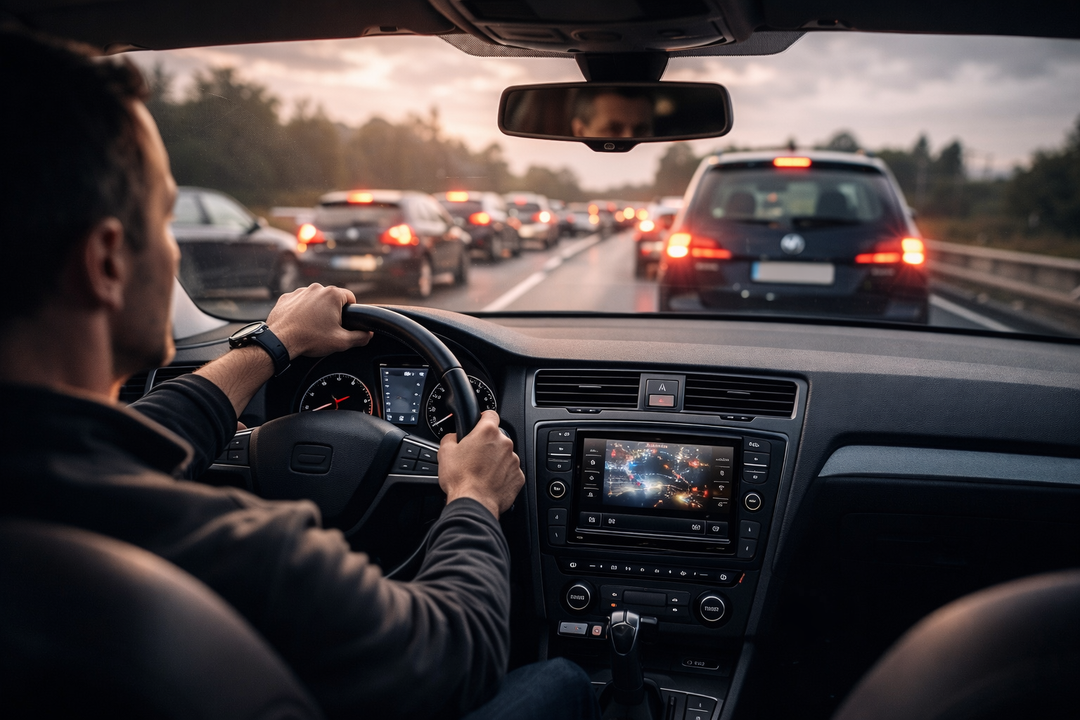
In the end, it all boils down to an uncomfortable reality: Mobility is getting more expensive – and at the same time, harder to plan. What used to be stable is now changing more rapidly. Prices fluctuate more, political decisions have a more noticeable impact, and long-term costs are harder to estimate.

For you, this means: Fuel isn't just a cost, it's an element of uncertainty. Expenses are harder to plan, price spikes often happen suddenly – without any change in your behavior.

At the same time, the basis for decisions is changing. It was once about purchase, consumption, and maintenance. Now, new variables are added: CO₂ taxes, incentives, energy prices. A decision that seems sensible today may feel different in a few years.

Therefore, it’s no longer enough to just look at the current price. The crucial question is: How stable is my decision over several years?

Many people react to this differently: Some wait and drive their cars longer, others feel compelled to act. Both reactions show: It's not just about technology anymore – it's about everyday security.

Furthermore: Comparisons are becoming more difficult. Consumption alone is not enough when energy prices develop differently. Decisions are becoming more complex – even for people who are deeply involved with cars.

Ultimately, it’s not just about what is currently cheap. It's about what feels right in the long run. And that's precisely what’s new.

The next question naturally arises: What options do you even have now – and which ones truly suit you?

What options do you really have now?

When fuel prices rise and the discussion around electric cars gets louder, you might quickly feel: I need to decide now. But that's not true. It's not about making a quick switch – it’s about assessing your options clearly.

Option 1: Stick with the combustion engine. For many, this is the most pragmatic solution. The car is there, works in daily life, and is predictable. The downside: You remain dependent on rising costs and external factors like oil prices and politics.

Option 2: The hybrid. An intermediate step that is often underestimated. It reduces uncertainty without a complete change. Efficient in daily use, flexible for long distances. But: a compromise – more complex and not suitable for every usage profile.

Option 3: The electric car. For some, already the most logical choice today. Those who can charge and have a suitable driving profile can benefit in the long term. At the same time, it is the biggest adjustment – and doesn’t automatically fit every daily routine.

That's why there is no simple answer. Not “electric or combustion” – but: What suits you?

Your daily life decides: commuters differ from frequent travelers, city differs from country, planning differs from flexibility. Decisions come not from trends, but from your life.

The crucial point: You don’t have to choose a system – but rather a solution that suits you. Conditions change, but your needs remain the most stable factor.

Those who understand this make better decisions – not because they know the future, but because they can clearly assess their own situation.

Conclusion: It's no longer just about the price

Rising fuel prices may seem like a straightforward problem at first glance: Filling up the tank is becoming more expensive. But there's more to it – global dependencies, political decisions, and a fundamental change in our mobility.

The price at the pump is just the most visible result. The oil market, taxes, and climate policies will continue to determine how costly and manageable driving will be.

That's why the question "Why is it becoming more expensive?" is no longer enough. The crucial question is: How do you deal with it?

Some stick to the familiar, others gradually transition, and some completely rethink mobility. None of these choices is universally right or wrong – what matters is whether it suits you.

What has changed: Decisions have become more strategic. It's no longer just about the current price, but about what feels right in the long run.

Those who understand why prices are changing make better decisions. Not because they know the future – but because they can clearly assess their own situation.

In the end, it's not about finding the one correct answer. It's about making the right decision for yourself.