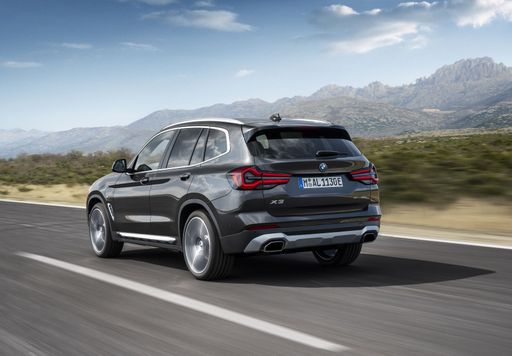
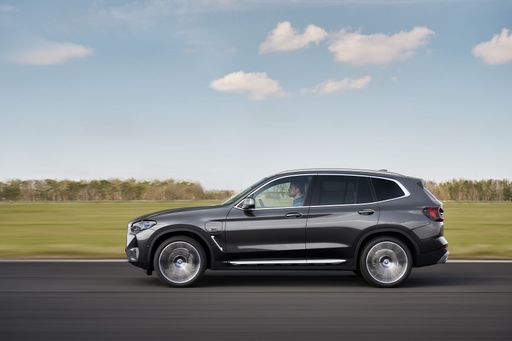
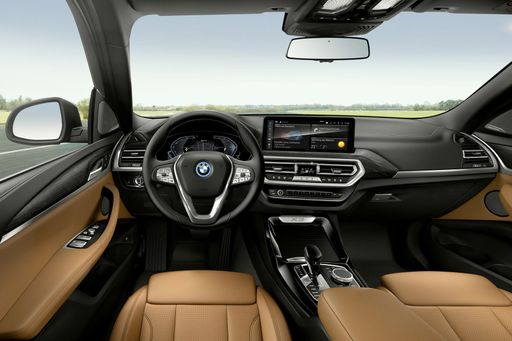
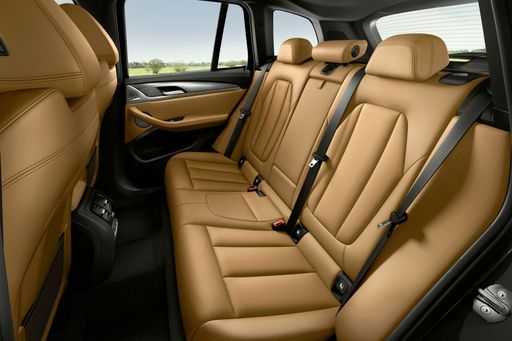
VS

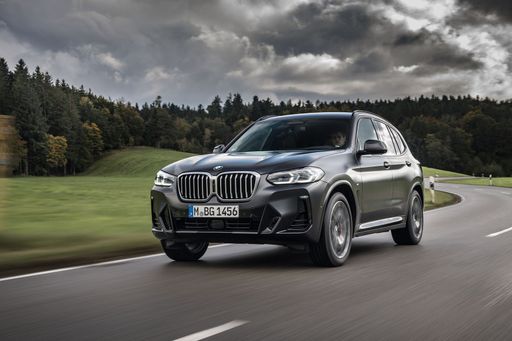
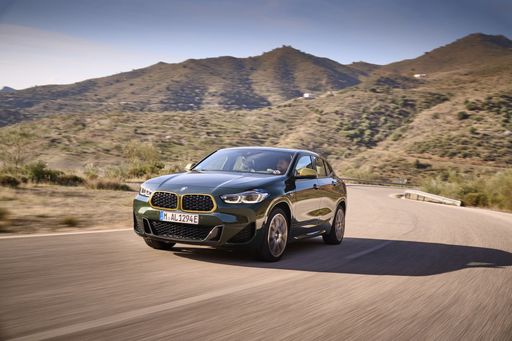
BMW X2 vs BMW X3 comparison

Compare performance (300 HP vs 398 HP), boot space and price (41,200 £ vs 51,300 £ ) at a glance. Find out which car is the better choice for you – BMW X2 or BMW X3?

BMW X2 vs BMW X3: Key differences

BMW X2

4.6 (1 Reviews)
rate
  • visibly cheaper
  • a bit lighter

BMW X3

4.6 (1 Reviews)
rate
  • noticeably more power
  • considerably more efficient
  • moderately quicker 0–100 km/h
  • marginally more trunk space

All details on performance, efficiency, range and trunk space can be found in the technical comparison below – including user reviews for both models.

X2

BMW X2 vs. BMW X3: A Battle of Bavarian Bulldogs

Choosing between the BMW X2 and the BMW X3 may seem daunting at first glance, but diving into the specifics reveals distinct personalities suited to different needs. Both embody the precision engineering and innovative flair that BMW is renowned for, but they cater to slightly different automotive desires. Let's break down the essentials to see which of these two SUVs fits your profile best.
X3

Engine & Performance: Power Meets Efficiency

The BMW X2 comes with a choice of diesel, diesel MHEV, petrol MHEV, and pure petrol engines. Its standout performer, a petrol engine with 300 HP, can accelerate from 0 to 100 km/h in a brisk 5.4 seconds, catering to those with a need for speed. The fuel consumption ranges from 4.6 to 7.9 L/100km, giving environmentally conscious drivers a solid selection of efficient options.

Conversely, the BMW X3 boasts a wider array of engine choices, including diesel MHEV, petrol MHEV, a plugin hybrid, and petrol options. The plugin hybrid offers an electric range of up to 90 km — ideal for those seeking reduced emissions for urban journeys. The most potent of the X3 range has an exhilarating 510 HP and can leap from 0 to 100 km/h in just 3.8 seconds.

X2

Design & Dimensions: Space and Urban Agility

The BMW X2’s compact dimensions (4,554 to 4,567 mm in length) provide urban agility and ease of parking, essential for city dwellers. Its sporty stance, coupled with a height of around 1,575 to 1,590 mm, makes it an attractive, dynamic silhouette on any road.

In contrast, the BMW X3 extends to lengths of up to 4,755 mm with a higher stance at around 1,669 mm, which translates to more generous cabin space. Its wider build (up to 1,920 mm) not only provides a spacious feel but also enhances stability on varied terrains. This, along with a greater payload capacity and larger fuel tank, makes the X3 an optimal choice for longer journeys and family trips.

X3

Interior & Cargo: Practicality vs. Flexibility

Both models have seating for five adults, but the BMW X3 offers a larger trunk capacity at up to 570 liters, tailoring it to those who frequently haul larger loads or partake in weekend adventures. The X2 offers up to 560 liters, sufficient for everyday tasks and occasional getaways.

X2

Technological Features: Harnessing Innovation

Both the BMW X2 and X3 embrace BMW's technological advancements, featuring state-of-the-art infotainment systems, connectivity options, and driver assistant systems. The X3, with its hybrid technology, highlights BMW's commitment to sustainable mobility without sacrificing performance, mapping out an exciting vision for the future.

X3

Conclusion: Needs Define Decision

Your decision between the BMW X2 and X3 should boil down to your personal needs. The X2 is perfect for urban dwellers with its compact package and spirited performance, ideal for those who value nimble handling and cutting-edge tech in a streamlined form.

Meanwhile, the BMW X3 calls out to adventurous souls and families who require more space, flexibility, and power - offering range-extending hybrid options and a more commanding road presence. Both are undeniable marvels of modern engineering and each a reflection of BMW's unwavering commitment to driving pleasure.

Here’s where it gets real: The technical differences in detail

X2

Costs and Efficiency:

When it comes to price and running costs, the biggest differences usually appear. This is often where you see which car fits your budget better in the long run.

BMW X2 is visibly cheaper – starting at 41,200 £ , while the BMW X3 costs 51,300 £ . That’s a price difference of around 10,029 £.

Fuel consumption also shows a difference: the BMW X3 uses 2.8 L/100km and is considerably more efficient than the BMW X2 with 4.5 L/100km. The difference is about 1.7 L/100km.

X3

Engine and Performance:

Under the bonnet, it becomes clear which model is tuned for sportiness and which one takes the lead when you hit the accelerator.

When it comes to engine power, the BMW X3 offers noticeably more power – delivering 398 HP compared to 300 HP. That’s roughly 98 HP more horsepower.

When accelerating from 0 to 100 km/h, the BMW X3 is moderately quicker – completing the sprint in 4.6 s, while the BMW X2 takes 5.4 s. That’s about 0.8 s quicker.

Looking at top speed, the BMW X3 is somewhat faster – reaching 250 km/h, while the BMW X2 tops out at 213 km/h. The difference is around 37 km/h.

There’s also a difference in torque: the BMW X3 delivers significantly more torque with 670 Nm compared to 400 Nm. That’s about 270 Nm more.

X2

Space and Everyday Use:

Cabin size, boot volume and payload all play a role in everyday practicality. Here, comfort and flexibility make the difference.

Both vehicles offer seating for 5 people.

In terms of curb weight, BMW X2 is a bit lighter – 1,645 kg compared to 1,930 kg. The difference is around 285 kg.

Looking at boot space, the BMW X3 offers marginally more boot space – 570 L compared to 560 L. That’s a difference of about 10 L.

For maximum load capacity, the BMW X3 offers moderately more capacity – up to 1,700 L, about 230 L more than the BMW X2.

When it comes to payload, the BMW X3 carries somewhat more – 570 kg compared to 510 kg. That’s a difference of about 60 kg.

Who wins the race in the data check?

The BMW X3 is decisively ahead in the objective data comparison.
This result only shows which model scores more points on paper – not which of the two cars feels right for you.

from £51,300
X3

BMW X3

  • Engine Type : Petrol MHEV, Diesel MHEV, Plugin Hybrid
  • Transmission : Automatic
  • Drive Type : All-Wheel Drive
  • Power HP : 197 - 398 HP
  • Consumption L/100km : 2.8 - 7.7 L/100km
  • Electric Range : 88 km
BMW X2
BMW X3

Costs and Consumption

View detailed analysis

Engine and Performance

View detailed analysis

Dimensions and Body

View detailed analysis

BMW X2

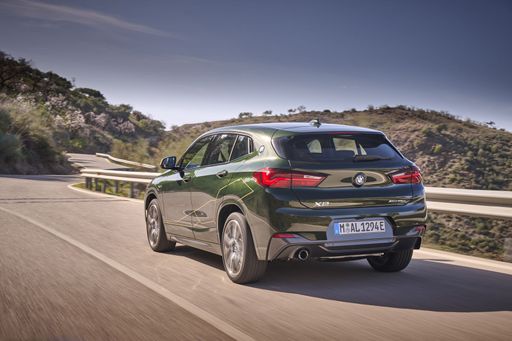
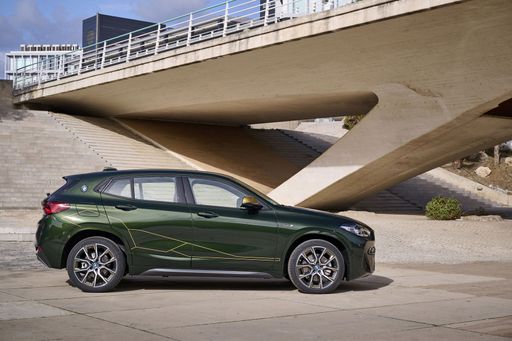
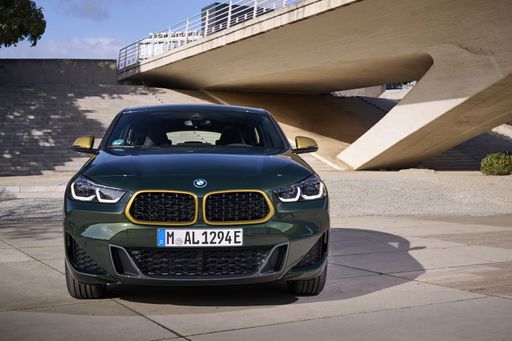
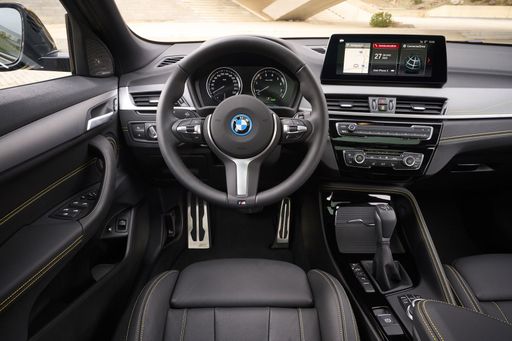
The BMW X2 feels like a sporty coupe dressed as an SUV, with sharp styling and a cheeky, youthful attitude that stands out in traffic. Inside it's driver-focused and compact but smartly packaged, perfect for city life and buyers who want BMW flair without the usual SUV bulk.

details

BMW X3

The BMW X3 mixes Bavarian poise with everyday practicality, delivering a composed ride and a cabin that feels both premium and lived-in. It’s the sort of SUV that lets you enjoy sporty handling without sacrificing family-friendly space, so you get fun and sense in one neat package.

details
BMW X2
BMW X3

Costs and Consumption

Price
41,200 - 59,600 £
Price
51,300 - 72,400 £
Consumption L/100km
4.5 - 7.7 L/100km
Consumption L/100km
2.8 - 7.7 L/100km
Consumption kWh/100km
-
Consumption kWh/100km
-
Electric Range
-
Electric Range
88 km
Battery Capacity
-
Battery Capacity
-
co2
118 - 174 g/km
co2
64 - 175 g/km
Fuel tank capacity
45 L
Fuel tank capacity
60 - 65 L

Dimensions and Body

Body Type
SUV
Body Type
SUV
Seats
5
Seats
5
Doors
5
Doors
5
Curb weight
1,645 - 1,780 kg
Curb weight
1,930 - 2,140 kg
Trunk capacity
515 - 560 L
Trunk capacity
460 - 570 L
Length
4,554 mm
Length
4,755 mm
Width
1,845 mm
Width
1,920 mm
Height
1,590 mm
Height
1,660 mm
Max trunk capacity
1,400 - 1,470 L
Max trunk capacity
1,700 L
Payload
495 - 510 kg
Payload
570 kg

Engine and Performance

Engine Type
Diesel MHEV, Petrol MHEV, Diesel, Petrol
Engine Type
Petrol MHEV, Diesel MHEV, Plugin Hybrid
Transmission
Automatic
Transmission
Automatic
Transmission Detail
Dual-Clutch Automatic
Transmission Detail
Automatic Gearbox
Drive Type
Front-Wheel Drive, All-Wheel Drive
Drive Type
All-Wheel Drive
Power HP
150 - 300 HP
Power HP
197 - 398 HP
Acceleration 0-100km/h
5.4 - 8.9 s
Acceleration 0-100km/h
4.6 - 7.8 s
Max Speed
207 - 213 km/h
Max Speed
215 - 250 km/h
Torque
280 - 400 Nm
Torque
330 - 670 Nm
Number of Cylinders
3 - 4
Number of Cylinders
4 - 6
Power kW
110 - 221 kW
Power kW
145 - 293 kW
Engine capacity
1,499 - 1,998 cm3
Engine capacity
1,995 - 2,998 cm3

General

Model Year
2,024
Model Year
2,024 - 2,025
CO2 Efficiency Class
D, F
CO2 Efficiency Class
F, E, B
Brand
BMW
Brand
BMW
DriveDuel uses data analysis and artificial intelligence to evaluate vehicle data and create content. Content is regularly reviewed and improved. The displayed prices are estimates based on German list prices, adjusted to the respective country’s VAT. Country-specific registration taxes are not included. This information is not legally binding.