VS

Alfa Romeo Junior vs Skoda Fabia comparison

Compare performance (280 HP vs 177 HP), boot space and price (26,100 £ vs 17,300 £ ) at a glance. Find out which car is the better choice for you – Alfa Romeo Junior or Skoda Fabia?

Alfa Romeo Junior vs Skoda Fabia: Key differences

Alfa Romeo Junior

4.9 (6 Reviews)
rate
  • visibly more power
  • barely more efficient
  • noticeably quicker 0–100 km/h
  • only slightly more trunk space
details

Skoda Fabia

4.9 (2 Reviews)
rate
  • significantly cheaper
  • markedly lighter
details

By Achim Sedelmaier

Junior

The Battle of the Compact Innovators: Alfa Romeo Junior VS Skoda Fabia

In the bustling arena of compact cars, two names have emerged to captivate car enthusiasts and everyday drivers alike: the Alfa Romeo Junior and the Skoda Fabia. Both vehicles bring their unique flair to the table, each with its distinctive charm, advanced technology, and a promise of reliability. Let's delve deeper into the technical nuances and innovations these two models epitomize.
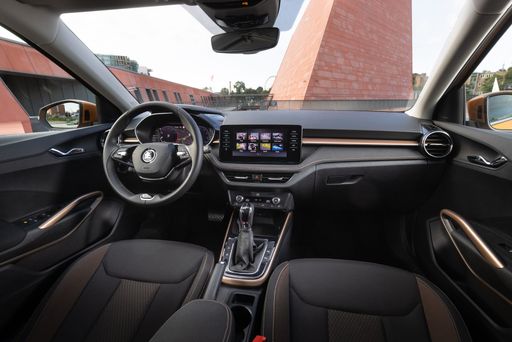
Fabia

Design and Dimensions

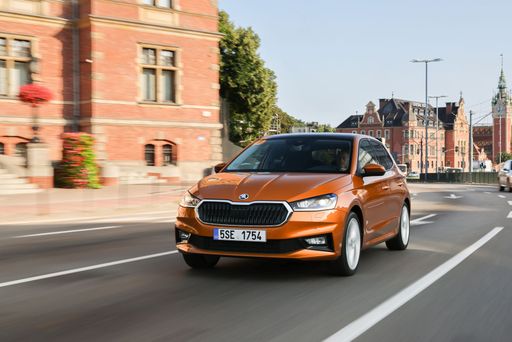
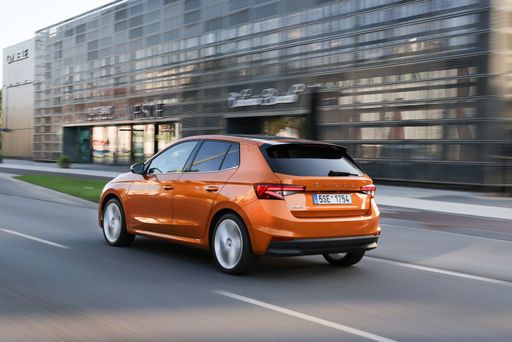
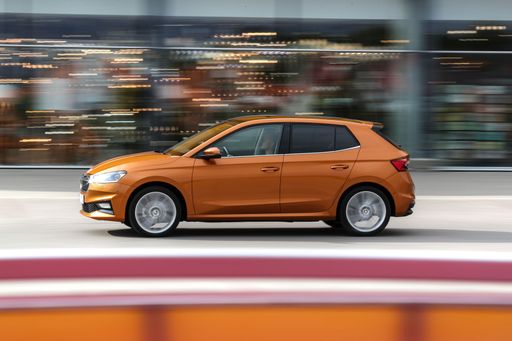
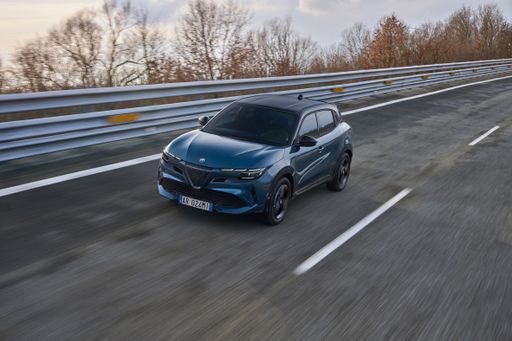
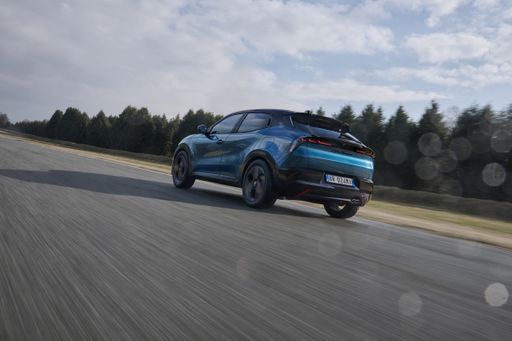
The Alfa Romeo Junior embraces the SUV style, embodying the sophistication and sportiness we've come to expect from the Italian brand. With dimensions measuring 4,173 mm in length, 1,781 mm in width, and a height variance from 1,505 to 1,538 mm, the Junior provides a spacious cabin without forsaking agility. On the other hand, the Skoda Fabia, a hallmark of hatchback design, measures 4,108 mm in length, a close competition in width at 1,780 mm, and a slightly more compact profile with heights ranging from 1,459 to 1,479 mm.

Junior

Powertrain and Performance

The Alfa Romeo Junior stands out with its versatile powertrain options, offering both electric and petrol MHEV engines. Ranging in power from 136 HP up to an exhilarating 280 HP, and torque between 230 to 345 Nm, the Junior caters to a spectrum of driving preferences. It features state-of-the-art automatic transmissions, including a dual-clutch automatic and a reduction gearbox, available in both front-wheel and all-wheel drive configurations. Acceleration ranges from 5.9 to 9.1 seconds from 0-100 km/h, enhancing the driving experience whether on curvy roads or urban landscapes.

Meanwhile, the Skoda Fabia sticks to traditional petrol engines but doesn't fall short on power, offering outputs from 80 HP up to a lively 150 HP with torque reaching up to 250 Nm. Fabia drivers can choose between manual transmission or a dual-clutch automatic option. While its acceleration ranges from 8 to 15.7 seconds from 0-100 km/h, what it might lack in outright speed, it compensates with a robust and reliable performance engineered for efficiency.

Fabia

Innovation and Efficiency

The Junior model promises innovation with its electric variant, offering an electric range from 315 to 410 km thanks to a battery capacity of 51 kWh. Its CO2 emissions are enviably low, starting at 0 g/km for the electric model and going up to 119 g/km for its petrol counterparts. It also boasts a thriving balance of consumption efficiency with a fuel use of 4.5 to 5.4 L/100km for the hybrid option.

Conversely, the Skoda Fabia is committed to efficiency in design, featuring a maximum torque of 250 Nm and maintaining CO2 emissions between 112 and 124 g/km. Fuel consumption ranges from 5 to 5.5 L/100km, making it a highly economical choice, especially for city dwellers mindful of daily commuting costs.

Junior

Practicality and Storage

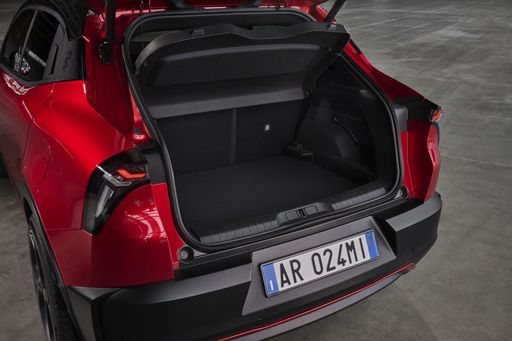
The Alfa Romeo Junior doesn't just focus on performance and style but also ensures practicality with a trunk capacity ranging from 340 to 415 liters, making it suitable for family outings or long journeys. Its curb weight oscillates between 1,380 to 1,635 kg, underlining its sturdy build without compromising agility.

In contrast, the Skoda Fabia maintains a trunk capacity of 380 liters, carving out a niche in practicality for a hatchback. With a lighter curb weight starting from 1,116 kg up to 1,238 kg, the Fabia offers a nimble drive while accommodating ample payload capacity.

Fabia

The Verdict

Choosing between the Alfa Romeo Junior and the Skoda Fabia boils down to lifestyle preferences and priorities. The Junior is an impressive choice for those who seek cutting-edge innovation and a mixture of electric efficiency with great performance variability in an SUV body. The Fabia, time-tested and reliable, continues to offer exceptional value, efficiency, and practicality with a hatchback design ideal for urban settings. Ultimately, both contenders prove that compact cars can deliver substantial performance without the price and size of grander luxury vehicles.

Here’s where it gets real: The technical differences in detail

Junior

Costs and Efficiency:

Looking at overall running costs, both models reveal some interesting differences in everyday economy.

Skoda Fabia is significantly cheaper – starting at 17,300 £ , while the Alfa Romeo Junior costs 26,100 £ . That’s a price difference of around 8,795 £.

Fuel consumption also shows a difference: the Alfa Romeo Junior uses 4.8 L/100km and is barely more efficient than the Skoda Fabia with 4.9 L/100km. The difference is about 0.1 L/100km.

Fabia

Engine and Performance:

Under the bonnet, it becomes clear which model is tuned for sportiness and which one takes the lead when you hit the accelerator.

When it comes to engine power, the Alfa Romeo Junior offers visibly more power – delivering 280 HP compared to 177 HP. That’s roughly 103 HP more horsepower.

When accelerating from 0 to 100 km/h, the Alfa Romeo Junior is noticeably quicker – completing the sprint in 5.9 s, while the Skoda Fabia takes 7.4 s. That’s about 1.5 s quicker.

There’s also a difference in torque: the Alfa Romeo Junior delivers noticeably more torque with 345 Nm compared to 250 Nm. That’s about 95 Nm more.

Junior

Space and Everyday Use:

Cabin size, boot volume and payload all play a role in everyday practicality. Here, comfort and flexibility make the difference.

Both vehicles offer seating for 5 people.

In terms of curb weight, Skoda Fabia is markedly lighter – 1,143 kg compared to 1,380 kg. The difference is around 237 kg.

Looking at boot space, the Alfa Romeo Junior offers only slightly more boot space – 415 L compared to 380 L. That’s a difference of about 35 L.

When it comes to payload, the Skoda Fabia carries barely more – 437 kg compared to 420 kg. That’s a difference of about 17 kg.

Who wins the race in the data check?

The Alfa Romeo Junior is clearly superior overall in the objective data comparison.
This result only shows which model scores more points on paper – not which of the two cars feels right for you.

from £26,100
Junior

Alfa Romeo Junior

  • Engine Type : Electric, Petrol MHEV
  • Transmission : Automatic
  • Drive Type : Front-Wheel Drive, All-Wheel Drive
  • Power HP : 136 - 280 HP
  • Consumption L/100km : 4.8 - 5.4 L/100km
  • Consumption kWh/100km : 15.1 - 17.5 kWh/100km
  • Electric Range : 344 - 410 km
Alfa Romeo Junior
Skoda Fabia

Costs and Consumption

View detailed analysis

Engine and Performance

View detailed analysis

Dimensions and Body

View detailed analysis

Alfa Romeo Junior

The Alfa Romeo Junior captures the essence of Italian design with its sleek lines and compact dimensions, making it an icon of elegance and performance. With a spirited driving experience and a charming retro aesthetic, it appeals to enthusiasts and casual drivers alike. This delightful car embodies the brand's rich heritage while remaining a fun and engaging option for those seeking a unique automotive experience.

details

Skoda Fabia

The Skoda Fabia is a clever, no-nonsense small car that turns everyday chores into a breeze thanks to smart packaging and a surprisingly roomy cabin. It won’t set your pulses racing, but it’s a consistently sensible choice — reliable, easy to live with and blessed with a few neat tricks that make city life less faff.

details
Alfa Romeo Junior
Skoda Fabia

Costs and Consumption

Price
26,100 - 41,600 £
Price
17,300 - 30,500 £
Consumption L/100km
4.8 - 5.4 L/100km
Consumption L/100km
4.9 - 5.6 L/100km
Consumption kWh/100km
15.1 - 17.5 kWh/100km
Consumption kWh/100km
-
Electric Range
344 - 410 km
Electric Range
-
Battery Capacity
51 kWh
Battery Capacity
-
co2
0 - 119 g/km
co2
112 - 126 g/km
Fuel tank capacity
-
Fuel tank capacity
-

Dimensions and Body

Body Type
SUV
Body Type
Hatchback
Seats
5
Seats
5
Doors
5
Doors
-
Curb weight
1,380 - 1,689 kg
Curb weight
1,143 - 1,278 kg
Trunk capacity
340 - 415 L
Trunk capacity
380 L
Length
4,173 mm
Length
-
Width
1,781 mm
Width
1,780 mm
Height
1,505 - 1,533 mm
Height
-
Max trunk capacity
1,265 L
Max trunk capacity
-
Payload
390 - 420 kg
Payload
402 - 437 kg

Engine and Performance

Engine Type
Electric, Petrol MHEV
Engine Type
Petrol
Transmission
Automatic
Transmission
Manuel, Automatic
Transmission Detail
Reduction Gearbox, Dual-Clutch Automatic
Transmission Detail
Manual Gearbox, Dual-Clutch Automatic
Drive Type
Front-Wheel Drive, All-Wheel Drive
Drive Type
Front-Wheel Drive
Power HP
136 - 280 HP
Power HP
80 - 177 HP
Acceleration 0-100km/h
5.9 - 9.1 s
Acceleration 0-100km/h
7.4 - 15.7 s
Max Speed
150 - 200 km/h
Max Speed
-
Torque
230 - 345 Nm
Torque
93 - 250 Nm
Number of Cylinders
3
Number of Cylinders
3 - 4
Power kW
107 - 207 kW
Power kW
59 - 130 kW
Engine capacity
1,199 cm3
Engine capacity
999 - 1,498 cm3

General

Model Year
2,024 - 2,025
Model Year
2025
CO2 Efficiency Class
A, C, D
CO2 Efficiency Class
D, C
Brand
Alfa Romeo
Brand
Skoda
DriveDuel uses data analysis and artificial intelligence to evaluate vehicle data and create content. Content is regularly reviewed and improved. The displayed prices are estimates based on German list prices, adjusted to the respective country’s VAT. Country-specific registration taxes are not included. This information is not legally binding.