VS

Alfa Romeo Stelvio vs Audi Q3 comparison

Compare performance (210 HP vs 272 HP), boot space and price (51,900 £ vs 38,200 £ ) at a glance. Find out which car is the better choice for you – Alfa Romeo Stelvio or Audi Q3?

Alfa Romeo Stelvio vs Audi Q3: Key differences

Alfa Romeo Stelvio

5 (1 Reviews)
rate
  • very slightly more trunk space

Audi Q3

5 (1 Reviews)
rate
  • clearly cheaper
  • visibly more power
  • considerably more efficient
  • moderately quicker 0–100 km/h
  • somewhat lighter

All details on performance, efficiency, range and trunk space can be found in the technical comparison below – including user reviews for both models.

Stelvio

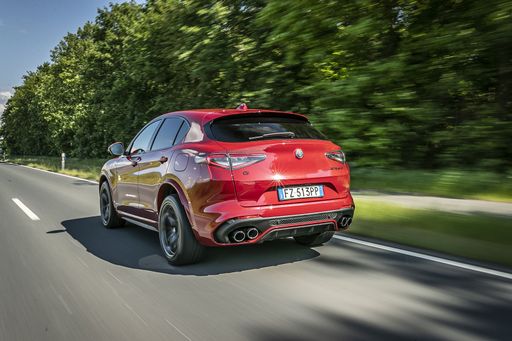
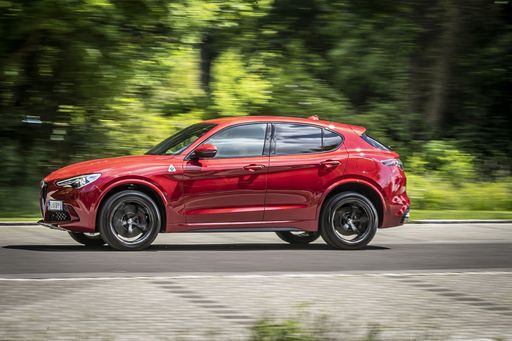
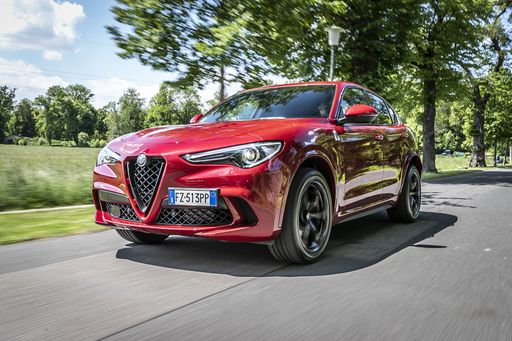
In the competitive SUV segment, two contenders stand tall and proud: the Alfa Romeo Stelvio and the Audi Q3. Both vehicles promise performance, luxury, and versatility, but they offer distinctly different driving experiences and technological advancements. In this comparison, we will delve into the technical specifications, innovations, and overall driving impressions of these two remarkable SUVs.
Q3

Performance and Powertrains

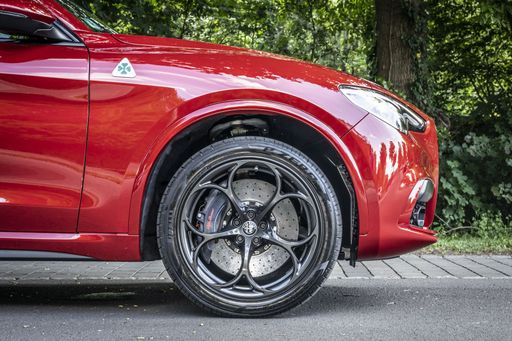
The Alfa Romeo Stelvio boasts an exhilarating range of engine options, including 2.0-liter petrol and 2.2-liter diesel engines, producing between 210 to 280 horsepower. The powerful 280 HP version allows the Stelvio to accelerate from 0 to 100 km/h in a striking 5.7 seconds and reach a top speed of 230 km/h. Additionally, it features an all-wheel-drive (AWD) system, ensuring optimal traction under various road conditions.

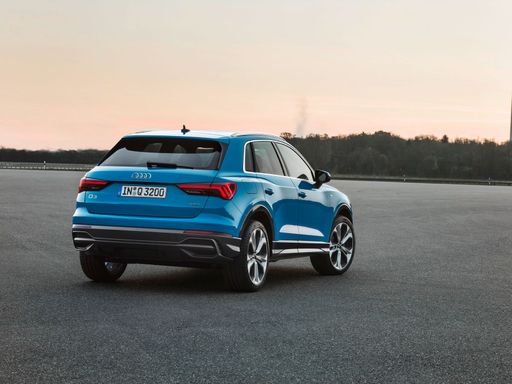
In comparison, the Audi Q3 offers a variety of engine configurations as well, with 1.5-liter and 2.0-liter petrol engines along with a 2.0-liter diesel option. The power output ranges from 150 HP to a robust 245 HP on the top-end model. The Q3 can achieve a 0-100 km/h sprint in as little as 5.8 seconds and has a top speed of 237 km/h. Both SUVs provide automatic transmission options, but the Q3 also includes a manual gearbox for those who enjoy a more engaged driving experience.

Stelvio

Fuel Economy and Emissions

In terms of fuel economy, the Stelvio performs competitively, with figures ranging from 6 to 11.8 L/100 km depending on the variant. The diesel variants are particularly efficient, offering an impressive consumption of approximately 6 L/100 km. However, it comes with higher emissions, scoring a CO2 efficiency class of G to F.

The Audi Q3, with a slightly smaller engine profile, offers noteworthy fuel efficiency, particularly with its 1.5-liter engine, achieving as low as 5.5 L/100 km. Its emissions also vary, with the best models recording around 143 g/km of CO2, which places it in a better efficiency class overall.

Q3

Interior and Technology Features

Step inside the Stelvio, and you are enveloped in a sporty and luxurious environment. The interior design reflects Italian craftsmanship with premium materials and an intuitive layout. Noteworthy tech features include a responsive infotainment system with navigation, a high-quality sound system, and advanced safety technologies to enhance the driving experience. The trunk capacity of 525 liters is also a practical advantage for weekend getaways or daily errands.

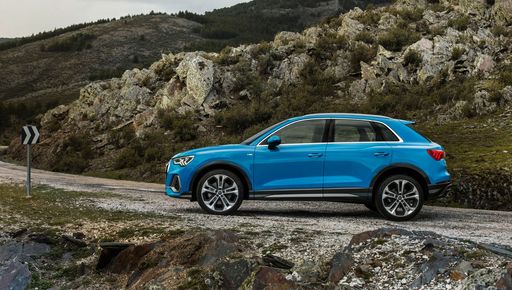
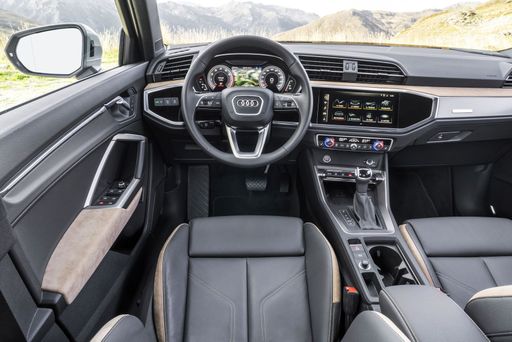
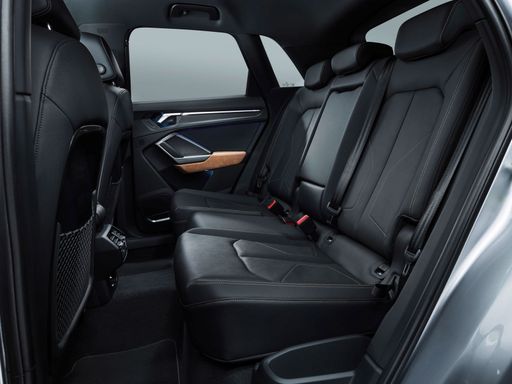
The Audi Q3, renowned for its high-quality interiors, showcases a modern, sleek cockpit. It incorporates Audi's Virtual Cockpit, which allows for customized digital displays that offer crucial driving information and entertainment options at a glance. The Q3 shines in practicality too, with a slightly larger trunk capacity of 530 liters, making it a suitable choice for families or buyers needing extra cargo space.

Stelvio

Safety and Assistance Technologies

Both SUVs prioritize safety with an array of advanced driver-assistance systems. The Stelvio features autonomous emergency braking, lane-keeping assist, and adaptive cruise control, all integrated to provide a safer driving experience. The sporty dynamics of the Alfa Romeo, coupled with these features, create an engaging yet secure environment for drivers and passengers alike.

Meanwhile, the Q3 is equipped with Audi’s renowned suite of safety technologies, including predictive pedestrian protection and traffic sign recognition. The Q3's additional features such as adaptive cruise control, blind-spot monitoring, and rear cross-traffic alerts elevate its safety credentials, making it a strong contender in this domain.

Q3

Conclusion

The choice between the Alfa Romeo Stelvio and the Audi Q3 ultimately comes down to personal preference. The Stelvio appeals to those who crave performance and an exhilarating driving experience wrapped in Italian style. Conversely, the Q3 caters to individuals who prioritize cutting-edge technology and practical day-to-day versatility. Both vehicles represent their brands well, ensuring that whether you choose the Stelvio or Q3, you embark on your journey together with luxury, style, and performance.

Here’s where it gets real: The technical differences in detail

Stelvio

Costs and Efficiency:

Looking at overall running costs, both models reveal some interesting differences in everyday economy.

Audi Q3 is clearly cheaper – starting at 38,200 £ , while the Alfa Romeo Stelvio costs 51,900 £ . That’s a price difference of around 13,714 £.

Fuel consumption also shows a difference: the Audi Q3 uses 1.7 L/100km and is considerably more efficient than the Alfa Romeo Stelvio with 6 L/100km. The difference is about 4.3 L/100km.

Q3

Engine and Performance:

Power, torque and acceleration are the classic benchmarks for car enthusiasts – and here, some clear differences start to show.

When it comes to engine power, the Audi Q3 offers visibly more power – delivering 272 HP compared to 210 HP. That’s roughly 62 HP more horsepower.

When accelerating from 0 to 100 km/h, the Audi Q3 is moderately quicker – completing the sprint in 5.7 s, while the Alfa Romeo Stelvio takes 6.6 s. That’s about 0.9 s quicker.

There’s also a difference in torque: the Alfa Romeo Stelvio delivers moderately more torque with 470 Nm compared to 400 Nm. That’s about 70 Nm more.

Stelvio

Space and Everyday Use:

Whether family car or daily driver – which one offers more room, flexibility and comfort?

Both vehicles offer seating for 5 people.

In terms of curb weight, Audi Q3 is somewhat lighter – 1,635 kg compared to 1,820 kg. The difference is around 185 kg.

Looking at boot space, the Alfa Romeo Stelvio offers very slightly more boot space – 525 L compared to 488 L. That’s a difference of about 37 L.

When it comes to payload, the Alfa Romeo Stelvio carries marginally more – 590 kg compared to 535 kg. That’s a difference of about 55 kg.

Who wins the race in the data check?

The Audi Q3 holds a decisive overall lead in the objective data comparison.
This result only shows which model scores more points on paper – not which of the two cars feels right for you.

from £38,200
Q3

Audi Q3

  • Engine Type : Petrol MHEV, Petrol, Plugin Hybrid, Diesel
  • Transmission : Automatic
  • Drive Type : Front-Wheel Drive, All-Wheel Drive
  • Power HP : 150 - 272 HP
  • Consumption L/100km : 1.7 - 8.6 L/100km
  • Electric Range : 118 - 119 km
Alfa Romeo Stelvio
Audi Q3

Costs and Consumption

View detailed analysis

Engine and Performance

View detailed analysis

Dimensions and Body

View detailed analysis

Alfa Romeo Stelvio

The Alfa Romeo Stelvio combines Italian artistry with sporty performance, making it a standout in the SUV market. Its dynamic design captures the essence of elegance and agility, while the interior offers a driver-focused experience that enhances every journey. With a perfect blend of luxury and power, the Stelvio is ideal for those seeking both style and substance on the road.

details

Audi Q3

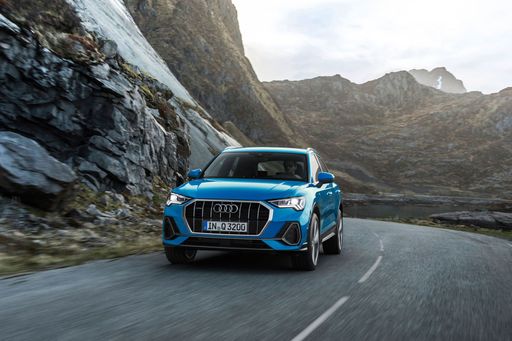
The Audi Q3 feels like a grown-up compact SUV with premium polish and city-friendly agility, the sort of car that makes weekend escapes and daily commutes equally satisfying. Inside, you get quality materials and smart packaging that keep things practical without skimping on style, so it’s an easy pick for buyers who want luxury without the drama.

details
Alfa Romeo Stelvio
Audi Q3

Costs and Consumption

Price
51,900 - 56,700 £
Price
38,200 - 52,900 £
Consumption L/100km
6 L/100km
Consumption L/100km
1.7 - 8.6 L/100km
Consumption kWh/100km
-
Consumption kWh/100km
-
Electric Range
-
Electric Range
118 - 119 km
Battery Capacity
-
Battery Capacity
-
co2
157 g/km
co2
39 - 195 g/km
Fuel tank capacity
-
Fuel tank capacity
-

Dimensions and Body

Body Type
SUV
Body Type
SUV
Seats
5
Seats
5
Doors
-
Doors
-
Curb weight
1,820 kg
Curb weight
1,635 - 1,900 kg
Trunk capacity
525 L
Trunk capacity
375 - 488 L
Length
-
Length
-
Width
1,903 mm
Width
1,859 mm
Height
-
Height
-
Max trunk capacity
-
Max trunk capacity
-
Payload
590 kg
Payload
505 - 535 kg

Engine and Performance

Engine Type
Diesel
Engine Type
Petrol MHEV, Petrol, Plugin Hybrid, Diesel
Transmission
Automatic
Transmission
Automatic
Transmission Detail
Automatic Gearbox
Transmission Detail
Dual-Clutch Automatic
Drive Type
All-Wheel Drive
Drive Type
Front-Wheel Drive, All-Wheel Drive
Power HP
210 HP
Power HP
150 - 272 HP
Acceleration 0-100km/h
6.6 s
Acceleration 0-100km/h
5.7 - 9.2 s
Max Speed
-
Max Speed
-
Torque
470 Nm
Torque
250 - 400 Nm
Number of Cylinders
4
Number of Cylinders
4
Power kW
154 kW
Power kW
110 - 200 kW
Engine capacity
2,143 cm3
Engine capacity
1,498 - 1,984 cm3

General

Model Year
2,025
Model Year
2,025
CO2 Efficiency Class
F
CO2 Efficiency Class
E, G, B
Brand
Alfa Romeo
Brand
Audi
DriveDuel uses data analysis and artificial intelligence to evaluate vehicle data and create content. Content is regularly reviewed and improved. The displayed prices are estimates based on German list prices, adjusted to the respective country’s VAT. Country-specific registration taxes are not included. This information is not legally binding.