VS

Audi Q3 vs Kia Sportage comparison

Compare performance (272 HP vs 288 HP), boot space and price (38,200 £ vs 29,100 £ ) at a glance. Find out which car is the better choice for you – Audi Q3 or Kia Sportage?

Audi Q3 vs Kia Sportage: Key differences

Audi Q3

4.3 (4 Reviews)
rate
  • clearly more efficient
  • considerably more electric range
  • clearly quicker 0–100 km/h
details

Kia Sportage

5 (4 Reviews)
rate
  • visibly cheaper
  • marginally more power
  • very slightly lighter
  • slightly more trunk space
details

All details on performance, efficiency, range and trunk space can be found in the technical comparison below – including user reviews for both models.

By Achim Sedelmaier

Q3

Quick take: Audi Q3 VS Kia Sportage — premium polish or roomy pragmatism?

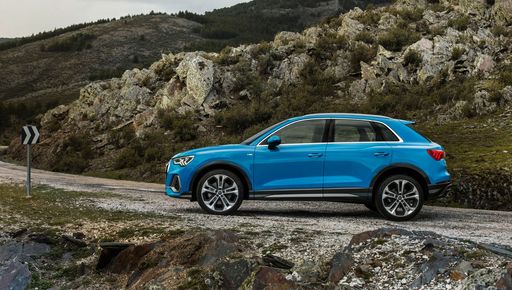
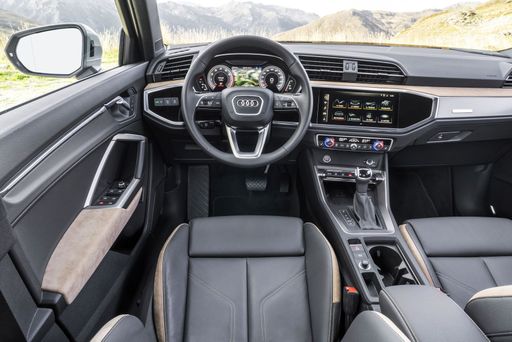
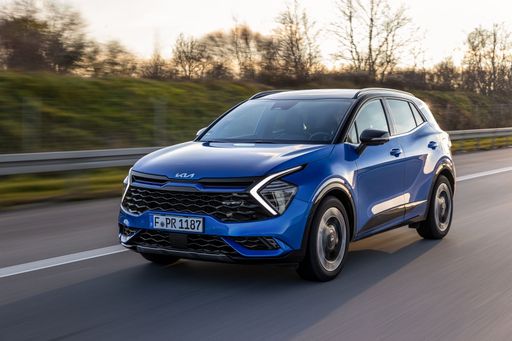
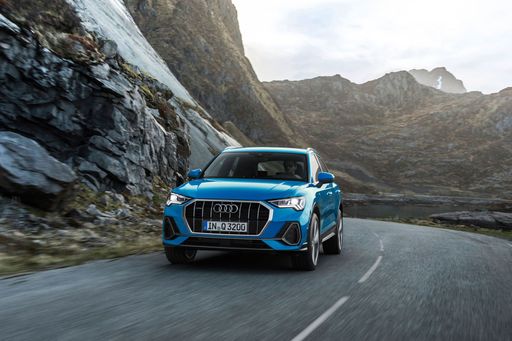
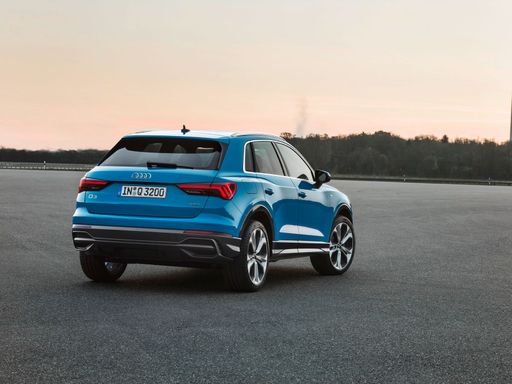
Audi Q3 VS Kia Sportage comes down to two different ideas of what a compact SUV should be: the Audi Q3 sells composure, tech and a near-luxury cabin, while the Kia Sportage trades a bit of gloss for noticeably more space and everyday value. The Q3 feels quieter, more finished and better suited to buyers who prize refinement and modern assist systems. The Sportage rewards families and long-term owners with clever packaging, a big boot and that reassuring multi-year warranty. If you care about perceived quality and a polished driving experience the Audi Q3 leans in that direction; if you need practical usability and lower up-front cost the Kia Sportage is the louder offer on features for the money.
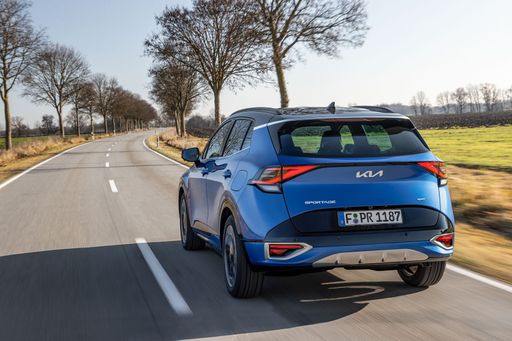
Sportage

Character and driving feel

The Audi Q3 presents itself as a calm, measured car — steering and suspension aim for precision over drama, so cornering is composed rather than exciting. The Kia Sportage is less about razor-sharp feedback and more about forgiving, predictable manners; it doesn’t engage the enthusiast but it won’t unsettle occupants either. On a long motorway run the Q3’s refinement and quieter running become obvious, especially in electrified or diesel variants, whereas the Sportage trades a touch of acoustic polish for sturdier ride comfort and more room inside. For buyers who want a car that feels grown-up and engineered to hush the road, the Audi Q3 is the leaning choice; for those who prefer a steady, unpretentious cruiser that prioritises space, the Sportage better matches that temperament.

Q3

Comfort and long-distance behaviour

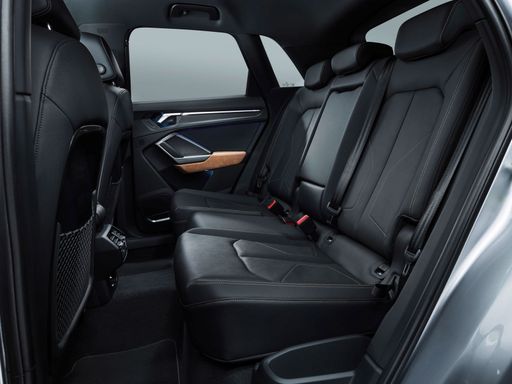
Inside the Audi Q3 small details like firmer damping choices or larger wheels can make it feel slightly taut, but selecting the adaptive suspension softens the ride into something long‑distance friendly and controlled. The Kia Sportage tends toward a softer baseline, with generous rear legroom and seat comfort that make hours on the motorway less tiring for passengers. Where the Q3 impresses is in its quieter, more insulated cabin and premium seating surfaces; where the Sportage wins is in usable space that swallows luggage and family kit with less compromise. If your day includes lots of highway miles and you value silence, the Audi Q3 leans ahead; if you and multiple passengers need space and low fatigue on every trip, the Kia Sportage is the more practical long-distance companion.

Sportage

Usability and practicality in daily life

The Audi Q3 brings clever touches — a sliding rear bench and split-fold flexibility that make daily loading and family logistics neater — but its cargo hold is noticeably less cavernous than some rivals. The Kia Sportage answers with a more generous boot and a practical double floor, plus remote-release conveniences that speed loading and unpacking for busy households. That difference means the Sportage accommodates bulk shopping, holiday gear and child seats more easily, while the Q3 asks you to be a bit smarter about how you pack. For parents and weekend warriors who prioritise straightforward loadspace, the Kia Sportage is the clear pragmatic choice; for those who want a more premium cabin with clever seat flexibility but can live with a smaller trunk, the Audi Q3 fits better.

Q3

Cabin feel, controls and everyday ergonomics

The Audi Q3 drives its premium image home with higher‑grade materials, a calmer dashboard and sharper display graphics that make the interior feel grown-up the minute you sit down. The Kia Sportage keeps things functional and well made, but some controls — notably the touch strip and compact icons — demand more attention and take time to master while driving. Both cabins are comfortable, yet the Q3’s polish and intuitive screen responsiveness create a sense of ownership that feels more expensive; the Sportage rewards you with smarter storage, more rear comfort and a layout built around practicality rather than theatre. If tactile quality and a modern digital ambience matter, the Audi Q3 pulls ahead; if straightforward usability, storage and long-term robustness top your list, the Kia Sportage will feel more useful day to day.

Sportage

Which buyer suits which car — the trade-offs that matter

Choose the Audi Q3 if you’re a commuter or small‑family buyer who charges regularly or values a quiet, tech-rich cabin and premium build more than maximum cargo volume. Choose the Kia Sportage if you need visible space advantages, a more generous warranty and better value on the options list for running a family life or long ownership. The trade-off is straightforward: the Q3 trades some luggage room and a bit of real-world bang‑for‑buck for refinement, while the Sportage returns tangible practicality and lower headline cost at the expense of the last degree of polish and gadgetry. Read the technical comparison next to see how those trade-offs play out in fuel/electric efficiency, power delivery and real-world luggage capacity so you can match the figures to the lifestyle described here.

Here’s where it gets real: The technical differences in detail

Q3

Costs and Efficiency:

Price and efficiency are often the first things buyers look at. Here it becomes clear which model has the long-term edge – whether at the pump, the plug, or in purchase price.

Kia Sportage is visibly cheaper – starting at 29,100 £ , while the Audi Q3 costs 38,200 £ . That’s a price difference of around 9,094 £.

Fuel consumption also shows a difference: the Audi Q3 uses 1.7 L/100km and is clearly more efficient than the Kia Sportage with 2.9 L/100km. The difference is about 1.2 L/100km.

As for electric range, the Audi Q3 offers considerably more range – reaching up to 119 km, about 53 km more than the Kia Sportage.

Sportage

Engine and Performance:

Under the bonnet, it becomes clear which model is tuned for sportiness and which one takes the lead when you hit the accelerator.

When it comes to engine power, the Kia Sportage offers marginally more power – delivering 288 HP compared to 272 HP. That’s roughly 16 HP more horsepower.

When accelerating from 0 to 100 km/h, the Audi Q3 is clearly quicker – completing the sprint in 5.7 s, while the Kia Sportage takes 7.5 s. That’s about 1.8 s quicker.

There’s also a difference in torque: the Audi Q3 delivers barely more torque with 400 Nm compared to 380 Nm. That’s about 20 Nm more.

Q3

Space and Everyday Use:

Cabin size, boot volume and payload all play a role in everyday practicality. Here, comfort and flexibility make the difference.

Both vehicles offer seating for 5 people.

In terms of curb weight, Kia Sportage is very slightly lighter – 1,552 kg compared to 1,635 kg. The difference is around 83 kg.

Looking at boot space, the Kia Sportage offers slightly more boot space – 587 L compared to 488 L. That’s a difference of about 99 L.

When it comes to payload, the Kia Sportage carries barely more – 580 kg compared to 535 kg. That’s a difference of about 45 kg.

Who wins the race in the data check?

The Audi Q3 is decisively ahead in the objective data comparison.
This result only shows which model scores more points on paper – not which of the two cars feels right for you.

from £38,200
Q3

Audi Q3

  • Engine Type Petrol MHEV, Petrol, Plugin Hybrid, Diesel
  • Transmission Automatic
  • Drive Type Front-Wheel Drive, All-Wheel Drive
  • Power HP 150 - 272 HP
  • Consumption L/100km 1.7 - 8.6 L/100km
  • Electric Range 118 - 119 km
Audi Q3
Kia Sportage

Costs and Consumption

View detailed analysis

Engine and Performance

View detailed analysis

Dimensions and Body

View detailed analysis

Audi Q3

The Audi Q3 is a compact premium crossover that blends sharp styling with a well-crafted interior, making it an appealing choice for urban drivers who want a touch of luxury. It delivers a composed ride, intuitive tech features and a practical cabin, so it works well as a comfortable daily driver with an upscale feel.

details

Kia Sportage

The Kia Sportage is a roomy, well-equipped compact SUV that balances comfort and practicality for daily driving. It delivers a modern interior, composed ride, and strong value for buyers who want versatility without fuss.

details
Audi Q3
Kia Sportage

Costs and Consumption

Price
38,200 - 52,900 £
Price
29,100 - 47,100 £
Consumption L/100km
1.7 - 8.6 L/100km
Consumption L/100km
2.9 - 7.8 L/100km
Consumption kWh/100km
-
Consumption kWh/100km
-
Electric Range
118 - 119 km
Electric Range
63 - 66 km
Battery Capacity
-
Battery Capacity
-
co2
39 - 195 g/km
co2
67 - 177 g/km
Fuel tank capacity
-
Fuel tank capacity
-

Dimensions and Body

Body Type
SUV
Body Type
SUV
Seats
5
Seats
5
Doors
-
Doors
-
Curb weight
1,635 - 1,900 kg
Curb weight
1,552 - 1,896 kg
Trunk capacity
375 - 488 L
Trunk capacity
526 - 587 L
Length
-
Length
-
Width
1,859 mm
Width
1,865 mm
Height
-
Height
-
Max trunk capacity
-
Max trunk capacity
-
Payload
505 - 535 kg
Payload
533 - 580 kg

Engine and Performance

Engine Type
Petrol MHEV, Petrol, Plugin Hybrid, Diesel
Engine Type
Petrol, Full Hybrid, Diesel MHEV, Plugin Hybrid
Transmission
Automatic
Transmission
Manuel, Automatic
Transmission Detail
Dual-Clutch Automatic
Transmission Detail
Manual Gearbox, Dual-Clutch Automatic, Automatic Gearbox
Drive Type
Front-Wheel Drive, All-Wheel Drive
Drive Type
Front-Wheel Drive, All-Wheel Drive
Power HP
150 - 272 HP
Power HP
136 - 288 HP
Acceleration 0-100km/h
5.7 - 9.2 s
Acceleration 0-100km/h
7.5 - 11.6 s
Max Speed
-
Max Speed
-
Torque
250 - 400 Nm
Torque
250 - 380 Nm
Number of Cylinders
4
Number of Cylinders
4
Power kW
110 - 200 kW
Power kW
100 - 212 kW
Engine capacity
1,498 - 1,984 cm3
Engine capacity
1,598 cm3

General

Model Year
2,025 - 2,026
Model Year
2,025 - 2,026
CO2 Efficiency Class
E, G, B, F
CO2 Efficiency Class
F, D, E, G, B
Brand
Audi
Brand
Kia
DriveDuel uses data analysis and artificial intelligence to evaluate vehicle data and create content. Content is regularly reviewed and improved. The displayed prices are estimates based on German list prices, adjusted to the respective country’s VAT. Country-specific registration taxes are not included. This information is not legally binding.