VS

Alpine A390 vs Renault Rafale comparison

Compare performance (470 HP vs 300 HP), boot space and price (57,900 £ vs 37,700 £ ) at a glance. Find out which car is the better choice for you – Alpine A390 or Renault Rafale?

Alpine A390 vs Renault Rafale: Key differences

Alpine A390

  • clearly more power
  • substantially more electric range
  • substantially quicker 0–100 km/h
details

Renault Rafale

4.8 (11 Reviews)
rate
  • clearly cheaper
  • clearly lighter
  • a bit more trunk space
details

All details on performance, efficiency, range and trunk space can be found in the technical comparison below – including user reviews for both models.

By Achim Sedelmaier

A390

Renault Rafale vs Alpine A390: which fits your life better?

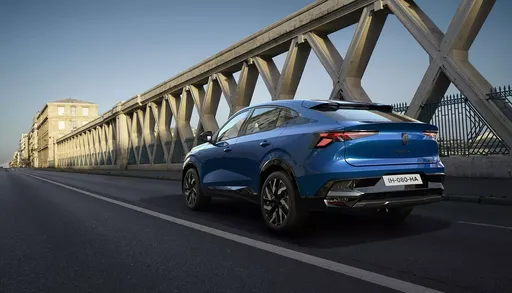
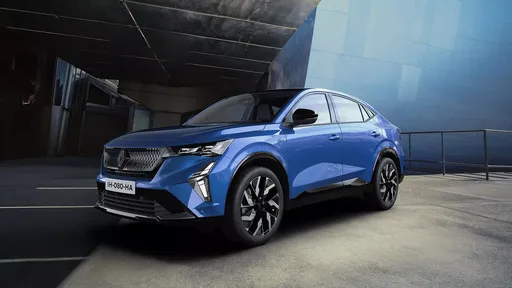
The Renault Rafale and Alpine A390 aim at very different instincts, and that makes the Renault Rafale VS Alpine A390 comparison especially useful. The Rafale is a style-forward SUV-coupé that leans on space, everyday ease, and strong value. The Alpine A390 is a driver‑focused electric fastback that trades some practicality for pace and precision. Both feel distinctly French, but one is about making family miles effortless while the other turns every commute into a back‑road detour. Choosing between them comes down to how often you need room and calm versus how often you want excitement and EV purity.
Rafale

Driving character: secure cruiser vs playful athlete

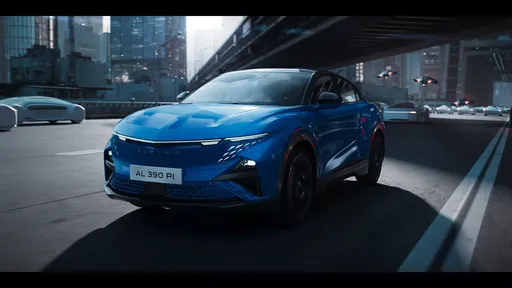
The Alpine A390 feels alive from the first steering input, with quick responses and the kind of traction that invites you to carry speed, helped by clever torque vectoring. It’s fast in a way that shrinks distances and keeps you engaged, yet still settles into an easy rhythm when the road smooths out. The Renault Rafale plays a different game: its four‑wheel steering makes tight streets simple, but at speed it prefers safe, tidy lines over thrills. Power delivery is ample rather than electrifying, and the steering trades feedback for effortlessness. If you want your crossover to entertain, the A390 is the one; if you want it to reassure, the Rafale does that well.

Ride comfort and long‑distance manners

On a clean motorway, the Alpine A390 takes on a relaxed GT tone, quiet and composed, though sharp joints can creep into the cabin with big wheels. The catch is road‑trip pacing: its all‑electric nature means more planning and more frequent stops on brisk autobahn runs. The Renault Rafale is stable and efficient at a cruise, but its suspension is on the firm side and its engine note becomes coarse when you ask for all it has. In mixed driving it often feels calmer overall, yet less plush on broken tarmac. For frequent long hauls, pick the A390 for serenity between stops, the Rafale for fewer compromises when the route mixes city, suburbs, and highway.

Cabin feel, seating and tech

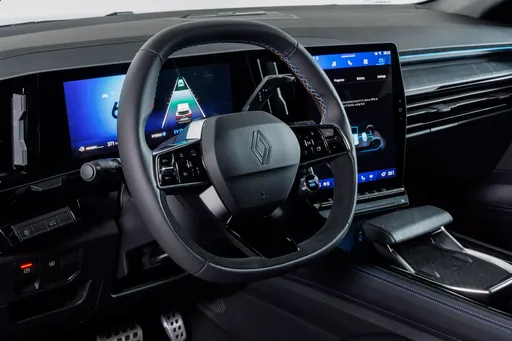
Both cars run polished Google infotainment, so navigation, voice control and apps feel modern and intuitive. The Alpine A390 pairs that with physical climate controls and a sporty driving position up front, but the rear bench sits low with knees high, which taller passengers notice quickly. The Renault Rafale counters with a warmer, more lounge‑like vibe and notably better rear space, plus a versatile 40:20:40 backrest that makes life with kids, skis or dogs simpler. Material richness in the A390 doesn’t always match its price tag, while the Rafale feels smart and special without chasing full luxury. If you carry people often, the Rafale’s rear quarters simply work better.

Everyday usability and city friendliness

The Alpine A390 is easy to place and light to steer in town, but its rear view is tight and some controls for regen and gear selection feel fiddly when parking. Its boot floor is broad and useful for weekly shops or weekend bags, just not quite as deep as you might hope. The Renault Rafale feels made for daily duty: its rear‑steer system shrinks car parks, and the generous boot and split‑folding seats handle pushchairs, bikes and flat‑packs with less compromise. Visibility backwards is a weak spot in both, so you’ll rely on cameras either way. If urban errands and family logistics dominate, the Rafale demands less thought per task.

Costs, efficiency and the right buyer

The Alpine A390 commands a clear price premium, but you’re buying serious performance, all‑electric running and a distinctive badge. Its real‑world efficiency and charging tempo are decent rather than standout, suiting owners who can charge at home and value spirited driving over the fewest stops. The Renault Rafale undercuts it meaningfully, returning strong everyday economy and lower tax exposure in hybrid or plug‑in form without feeling bare or basic. It’s the safer pick for mixed‑use families who prize space and predictable running costs over outright speed. In short, the Alpine A390 suits the enthusiast with a driveway charger, while the Renault Rafale fits style‑minded households wanting maximum usability—now head into the specs to see which set of trade‑offs matches your routine.

Here’s where it gets real: The technical differences in detail

A390

Costs and Efficiency:

Price and efficiency are often the first things buyers look at. Here it becomes clear which model has the long-term edge – whether at the pump, the plug, or in purchase price.

Renault Rafale is clearly cheaper – starting at 37,700 £ , while the Alpine A390 costs 57,900 £ . That’s a price difference of around 20,143 £.

As for electric range, the Alpine A390 offers substantially more range – reaching up to 551 km, about 454 km more than the Renault Rafale.

Rafale

Engine and Performance:

Power, torque and acceleration are the classic benchmarks for car enthusiasts – and here, some clear differences start to show.

When it comes to engine power, the Alpine A390 offers clearly more power – delivering 470 HP compared to 300 HP. That’s roughly 170 HP more horsepower.

When accelerating from 0 to 100 km/h, the Alpine A390 is substantially quicker – completing the sprint in 3.9 s, while the Renault Rafale takes 6.4 s. That’s about 2.5 s quicker.

Space and Everyday Use:

Cabin size, boot volume and payload all play a role in everyday practicality. Here, comfort and flexibility make the difference.

Both vehicles offer seating for 5 people.

In terms of curb weight, Renault Rafale is clearly lighter – 1,734 kg compared to 2,121 kg. The difference is around 387 kg.

Looking at boot space, the Renault Rafale offers a bit more boot space – 627 L compared to 532 L. That’s a difference of about 95 L.

When it comes to payload, the Alpine A390 carries marginally more – 484 kg compared to 444 kg. That’s a difference of about 40 kg.

Who wins the race in the data check?

The Alpine A390 holds a decisive overall lead in the objective data comparison.
This result only shows which model scores more points on paper – not which of the two cars feels right for you.

from £57,900
A390

Alpine A390

  • Engine Type Electric
  • Transmission Automatic
  • Drive Type All-Wheel Drive
  • Power HP 400 - 470 HP
  • Consumption kWh/100km 18.7 - 20.4 kWh/100km
  • Electric Range 497 - 551 km
Alpine A390
Renault Rafale

Costs and Consumption

View detailed analysis

Engine and Performance

View detailed analysis

Dimensions and Body

View detailed analysis

Alpine A390

The Alpine A390 is the brand’s leap into the fast electric crossover arena, wrapping Dieppe’s lightweight ethos in a sleek, coupe-ish body with real everyday usability. If the steering and chassis feel echo the A110, this could be the enthusiast’s family EV—subtle, sharp, and très chic, with enough theatre to make the school run feel like a pit lane exit.

details

Renault Rafale

The Renault Rafale dresses bold coupé-inspired lines around a practical crossover body, turning heads without trying too hard. Inside it serves up a comfortable, well-equipped cabin and engaging driving manners, making it a clever choice for buyers who want a bit of panache with their daily commute.

details
Alpine A390
Renault Rafale

Costs and Consumption

Price
57,900 - 66,900 £
Price
37,700 - 49,700 £
Consumption L/100km
-
Consumption L/100km
2 - 5 L/100km
Consumption kWh/100km
18.7 - 20.4 kWh/100km
Consumption kWh/100km
-
Electric Range
497 - 551 km
Electric Range
97 km
Battery Capacity
-
Battery Capacity
-
co2
0 g/km
co2
43 - 108 g/km
Fuel tank capacity
-
Fuel tank capacity
-

Dimensions and Body

Body Type
SUV
Body Type
SUV
Seats
5
Seats
5
Doors
-
Doors
-
Curb weight
2,121 - 2,124 kg
Curb weight
1,734 - 2,025 kg
Trunk capacity
532 L
Trunk capacity
539 - 627 L
Length
-
Length
-
Width
1,885 mm
Width
1,886 mm
Height
-
Height
-
Max trunk capacity
-
Max trunk capacity
-
Payload
481 - 484 kg
Payload
415 - 444 kg

Engine and Performance

Engine Type
Electric
Engine Type
Full Hybrid, Plugin Hybrid
Transmission
Automatic
Transmission
Automatic
Transmission Detail
Reduction Gearbox
Transmission Detail
Automatic Gearbox
Drive Type
All-Wheel Drive
Drive Type
Front-Wheel Drive, All-Wheel Drive
Power HP
400 - 470 HP
Power HP
200 - 300 HP
Acceleration 0-100km/h
3.9 - 4.8 s
Acceleration 0-100km/h
6.4 - 8.9 s
Max Speed
-
Max Speed
-
Torque
661 - 824 Nm
Torque
-
Number of Cylinders
-
Number of Cylinders
3
Power kW
295 - 345 kW
Power kW
147 - 221 kW
Engine capacity
-
Engine capacity
1,199 cm3

General

Model Year
2026
Model Year
2025
CO2 Efficiency Class
A
CO2 Efficiency Class
C, B
Brand
Alpine
Brand
Renault
DriveDuel uses data analysis and artificial intelligence to evaluate vehicle data and create content. Content is regularly reviewed and improved. The displayed prices are estimates based on German list prices, adjusted to the respective country’s VAT. Country-specific registration taxes are not included. This information is not legally binding.