VS

Aston Martin DB12 vs Porsche 911 Convertible comparison

Compare performance (680 HP vs 711 HP), boot space and price (192,900 £ vs 122,400 £ ) at a glance. Find out which car is the better choice for you – Aston Martin DB12 or Porsche 911 Convertible?

Aston Martin DB12 vs Porsche 911 Convertible: Key differences

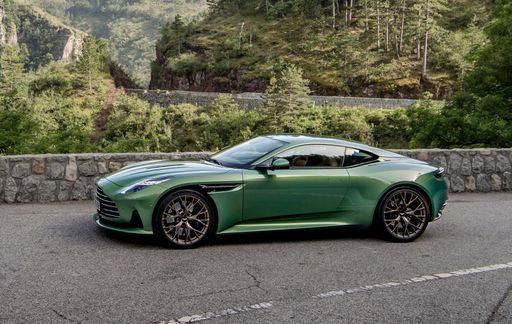
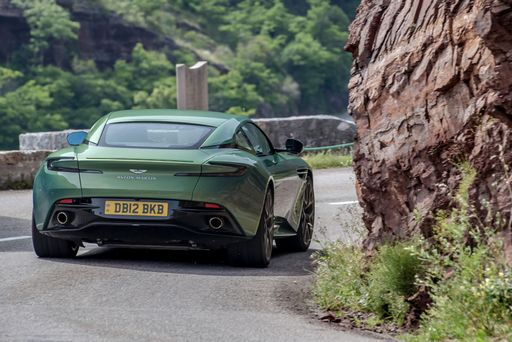
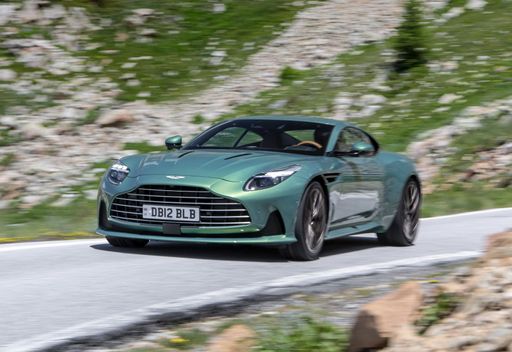
Aston Martin DB12

  • markedly more trunk space
details

Porsche 911 Convertible

  • significantly cheaper
  • very slightly more power
  • somewhat more efficient
  • noticeably quicker 0–100 km/h
  • barely lighter
details

By Achim Sedelmaier

DB12

The Clash of Elegance and Performance: Aston Martin DB12 vs. Porsche 911 Cabriolet

In the realm of luxurious convertibles, two titans stand above the rest - the Aston Martin DB12 and the Porsche 911 Cabriolet. Both vehicles are a testament to superior engineering and design, offering distinct features and exhilarating driving experiences. In this head-to-head comparison, we dive into the technical aspects and innovations that set these incredible cars apart.
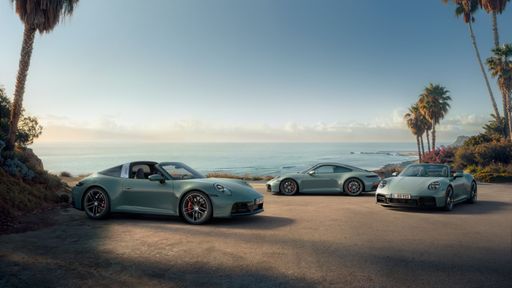
911 Convertible

Power and Performance

The heart of any sports car is its engine, and both the DB12 and the 911 Cabriolet offer impressive options. The Aston Martin DB12 is propelled by a formidable 4.0-liter V8 engine producing an astounding 680 HP and 800 Nm of torque. This powerhouse enables the DB12 to sprint from 0 to 100 km/h in just 3.6 to 3.7 seconds, reaching a remarkable top speed of 325 km/h.

On the other hand, the Porsche 911 Cabriolet presents a range of engine options. At its pinnacle, a 3.6-liter engine delivers 541 HP and 610 Nm of torque. Its acceleration is equally brisk, achieving a 0-100 km/h time of just 3.1 seconds, with a top speed of up to 312 km/h. Additionally, the 911 offers a Hybrid option, showcasing Porsche's commitment to integrating performance with sustainability.

DB12

Design and Dimensions

The distinct design philosophies of Aston Martin and Porsche are evident in their respective models. The DB12 is slightly larger, with a length of up to 4750 mm and a width of 1950 mm, emphasizing its commanding presence on the road. By contrast, the sleeker 911 Cabriolet measures a length of approximately 4553 mm and a width of 1852 mm, sporting a more compact and agile silhouette.

Both vehicles offer convertible options that enhance the driving experience, allowing enthusiasts to enjoy the open road with the top down. The DB12 can comfortably seat four passengers, bringing a blend of luxury and sportiness, while the 911 Cabriolet also accommodates four, leaning slightly toward practical elegance.

Technological Innovations

The Aston Martin DB12 features cutting-edge technology, including an automatic gearbox that enhances driving smoothness and efficiency. It showcases a commitment to luxurious interiors, complete with state-of-the-art infotainment and connectivity options, catering to tech-savvy drivers.

Similarly, the Porsche 911 Cabriolet introduces its own suite of innovations, with a dual-clutch automatic transmission available for seamless gear changes. Porsche's dedication to innovation is also seen in their hybrid technology, providing an option for those prioritizing efficiency alongside performance. Moreover, an intuitive infotainment system and advanced driver-assistance features make every journey more engaging and secure.

Fuel Efficiency and Environmental Considerations

While power is paramount, fuel efficiency and environmental impact cannot be overlooked. The Aston Martin DB12 consumes approximately 12.2 L/100km, with CO2 emissions of 276-278 g/km. Its CO2 efficiency class is rated G, reflecting the trade-off between power and environmental considerations.

The Porsche 911 Cabriolet offers slightly better fuel economy, ranging from 10.3 to 10.8 L/100km, with CO2 emissions between 234 and 244 g/km. It shares a CO2 efficiency class of G, but the inclusion of a hybrid model illustrates Porsche's efforts in reducing the carbon footprint of their vehicles.

The Verdict

Ultimately, the choice between the Aston Martin DB12 and the Porsche 911 Cabriolet depends on the individual's preferences. The DB12 will appeal to those who prioritize raw power and a commanding road presence, while the 911 Cabriolet attracts drivers seeking a perfect blend of performance, efficiency, and innovative technology. Both models are exquisite examples of luxury convertibles, promising unforgettable driving experiences for any enthusiast.

Here’s where it gets real: The technical differences in detail

DB12

Costs and Efficiency:

When it comes to price and running costs, the biggest differences usually appear. This is often where you see which car fits your budget better in the long run.

Porsche 911 Convertible is significantly cheaper – starting at 122,400 £ , while the Aston Martin DB12 costs 192,900 £ . That’s a price difference of around 70,457 £.

Fuel consumption also shows a difference: the Porsche 911 Convertible uses 10.3 L/100km and is somewhat more efficient than the Aston Martin DB12 with 12.2 L/100km. The difference is about 1.9 L/100km.

911 Convertible

Engine and Performance:

Power, torque and acceleration are the classic benchmarks for car enthusiasts – and here, some clear differences start to show.

When it comes to engine power, the Porsche 911 Convertible offers very slightly more power – delivering 711 HP compared to 680 HP. That’s roughly 31 HP more horsepower.

When accelerating from 0 to 100 km/h, the Porsche 911 Convertible is noticeably quicker – completing the sprint in 2.6 s, while the Aston Martin DB12 takes 3.6 s. That’s about 1 s quicker.

Looking at top speed, the Aston Martin DB12 is marginally faster – reaching 325 km/h, while the Porsche 911 Convertible tops out at 312 km/h. The difference is around 13 km/h.

Both models offer the same torque – 800 Nm.

DB12

Space and Everyday Use:

Cabin size, boot volume and payload all play a role in everyday practicality. Here, comfort and flexibility make the difference.

Both vehicles offer seating for 4 people.

In terms of curb weight, Porsche 911 Convertible is barely lighter – 1,655 kg compared to 1,788 kg. The difference is around 133 kg.

Looking at boot space, the Aston Martin DB12 offers markedly more boot space – 262 L compared to 163 L. That’s a difference of about 99 L.

Who wins the race in the data check?

The Porsche 911 Convertible comes out clearly ahead in the objective data comparison.
This result only shows which model scores more points on paper – not which of the two cars feels right for you.

from £122,400
911 Convertible

Porsche 911 Convertible

  • Engine Type : Petrol, Full Hybrid
  • Transmission : Automatic, Manuel
  • Drive Type : Rear-Wheel Drive, All-Wheel Drive
  • Power HP : 394 - 711 HP
  • Consumption L/100km : 10.3 - 11.7 L/100km
Aston Martin DB12
Porsche 911 Convertible

Costs and Consumption

View detailed analysis

Engine and Performance

View detailed analysis

Dimensions and Body

View detailed analysis

Aston Martin DB12

The Aston Martin DB12 is a gorgeously styled grand tourer that fuses beguiling elegance with a fiercely driver-focused personality while wrapping occupants in luxury. If you want a car that turns heads on the street and makes long journeys feel like an event, the DB12 provides effortless poise and an intoxicating soundtrack—perfect for buyers who prefer their drama tailored rather than shouty.

details

Porsche 911 Convertible

The Porsche 911 Cabriolet transforms the iconic silhouette into an open‑air weapon, offering roof-down glamour and razor-sharp handling that still feels perfectly composed on normal roads. It’s the kind of car that serves daily duties with surprising ease while delivering intoxicating engine music and a grin factor that makes every trip feel like a small victory.

details
Aston Martin DB12
Porsche 911 Convertible

Costs and Consumption

Price
192,900 - 207,900 £
Price
122,400 - 244,500 £
Consumption L/100km
12.2 L/100km
Consumption L/100km
10.3 - 11.7 L/100km
Consumption kWh/100km
-
Consumption kWh/100km
-
Electric Range
-
Electric Range
-
Battery Capacity
-
Battery Capacity
-
co2
276 - 278 g/km
co2
234 - 265 g/km
Fuel tank capacity
78 L
Fuel tank capacity
63 L

Dimensions and Body

Body Type
Coupe, Convertible
Body Type
Convertible
Seats
4
Seats
4
Doors
2 - 3
Doors
2
Curb weight
1,788 - 1,898 kg
Curb weight
1,655 - 1,900 kg
Trunk capacity
206 - 262 L
Trunk capacity
163 L
Length
4,725 mm
Length
4,542 - 4,553 mm
Width
1,980 mm
Width
1,852 - 1,900 mm
Height
1,295 mm
Height
1,292 - 1,298 mm
Max trunk capacity
-
Max trunk capacity
-
Payload
-
Payload
275 - 345 kg

Engine and Performance

Engine Type
Petrol
Engine Type
Petrol, Full Hybrid
Transmission
Automatic
Transmission
Automatic, Manuel
Transmission Detail
Automatic Gearbox
Transmission Detail
Dual-Clutch Automatic, Manual Gearbox
Drive Type
Rear-Wheel Drive
Drive Type
Rear-Wheel Drive, All-Wheel Drive
Power HP
680 HP
Power HP
394 - 711 HP
Acceleration 0-100km/h
3.6 - 3.7 s
Acceleration 0-100km/h
2.6 - 4.7 s
Max Speed
325 km/h
Max Speed
291 - 312 km/h
Torque
800 Nm
Torque
450 - 800 Nm
Number of Cylinders
8
Number of Cylinders
6
Power kW
500 kW
Power kW
290 - 523 kW
Engine capacity
3,982 cm3
Engine capacity
2,981 - 3,591 cm3

General

Model Year
2,023 - 2,024
Model Year
2,024 - 2,026
CO2 Efficiency Class
G
CO2 Efficiency Class
G
Brand
Aston Martin
Brand
Porsche
DriveDuel uses data analysis and artificial intelligence to evaluate vehicle data and create content. Content is regularly reviewed and improved. The displayed prices are estimates based on German list prices, adjusted to the respective country’s VAT. Country-specific registration taxes are not included. This information is not legally binding.