
 Deutschland
 France
 Nederland
 Great Britain
 Sverige
 Norge
Norge Danmark
 Suomi
Suomi Italia
 Polska
 España
VS
Audi A3 Sportback vs Hyundai IONIQ 5 - Differences and prices compared
Compare performance (400 HP vs 650 HP), boot space and price (27000 £ vs 38500 £) at a glance. Find out which car is the better choice for you – Audi A3 Sportback or Hyundai IONIQ 5?
A3 Sportback
Costs and Efficiency:
Price and efficiency are often the first things buyers look at. Here it becomes clear which model has the long-term edge – whether at the pump, the plug, or in purchase price.
Audi A3 Sportback has a clearly advantage in terms of price – it starts at 27000 £, while the Hyundai IONIQ 5 costs 38500 £. That’s a price difference of around 11485 £.
As for range, the Hyundai IONIQ 5 performs decisively better – achieving up to 570 km, about 429 km more than the Audi A3 Sportback.
IONIQ 5
Engine and Performance:
Power, torque and acceleration are the classic benchmarks for car enthusiasts – and here, some clear differences start to show.
When it comes to engine power, the Hyundai IONIQ 5 has a clearly perceptible edge – offering 650 HP compared to 400 HP. That’s roughly 250 HP more horsepower.
In acceleration from 0 to 100 km/h, the Hyundai IONIQ 5 is minimal quicker – completing the sprint in 3.50 s, while the Audi A3 Sportback takes 3.80 s. That’s about 0.30 s faster.
In terms of top speed, the Hyundai IONIQ 5 performs hardly perceptible better – reaching 260 km/h, while the Audi A3 Sportback tops out at 237 km/h. The difference is around 23 km/h.
There’s also a difference in torque: Hyundai IONIQ 5 pulls clearly perceptible stronger with 770 Nm compared to 500 Nm. That’s about 270 Nm difference.
Ad · Affiliate
As an Amazon Associate, we earn from qualifying purchases.
A3 Sportback
Space and Everyday Use:
Cabin size, boot volume and payload all play a role in everyday practicality. Here, comfort and flexibility make the difference.
Both vehicles offer seating for 5 people.
In curb weight, Audi A3 Sportback is clearly lighter – 1360 kg compared to 1955 kg. The difference is around 595 kg.
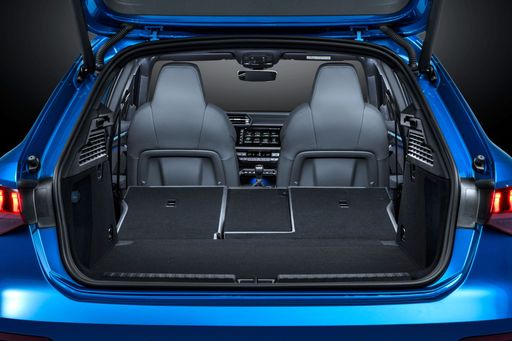
In terms of boot space, the Hyundai IONIQ 5 offers distinct more room – 520 L compared to 380 L. That’s a difference of about 140 L.
In maximum load capacity, the Hyundai IONIQ 5 performs distinct better – up to 1580 L, which is about 480 L more than the Audi A3 Sportback.
When it comes to payload, Hyundai IONIQ 5 hardly perceptible takes the win – 530 kg compared to 480 kg. That’s a difference of about 50 kg.
Who wins the race?
The Hyundai IONIQ 5 proves to be wins the duel decisively and therefore becomes our DriveDuel Champion!
Hyundai IONIQ 5 is the better all-rounder in this comparison.
from about £38,500
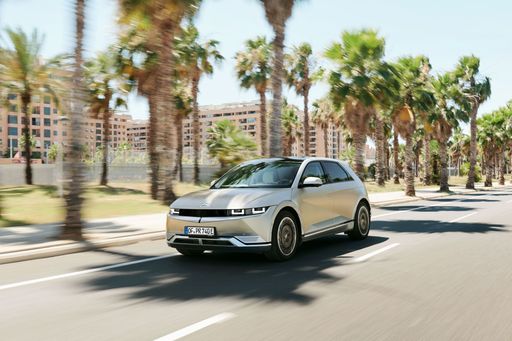
Hyundai IONIQ 5
Audi A3 Sportback
Hyundai IONIQ 5
Costs and Consumption
View detailed analysis
View detailed analysis
Engine and Performance
View detailed analysis
View detailed analysis
Dimensions and Body
View detailed analysis
View detailed analysis
Audi A3 Sportback
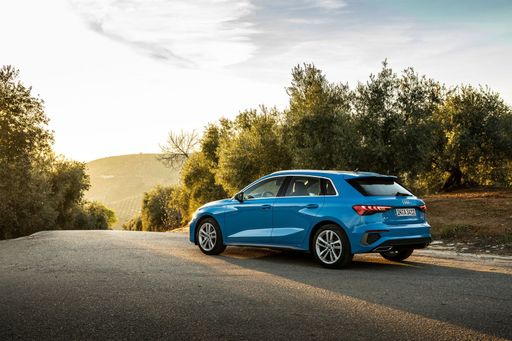
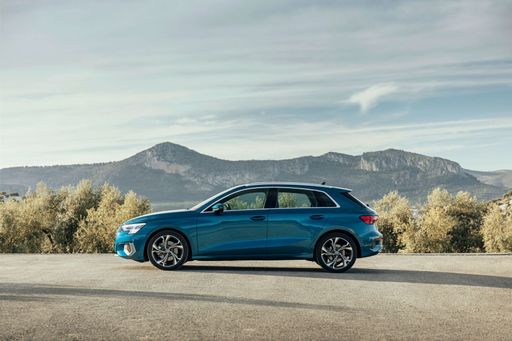
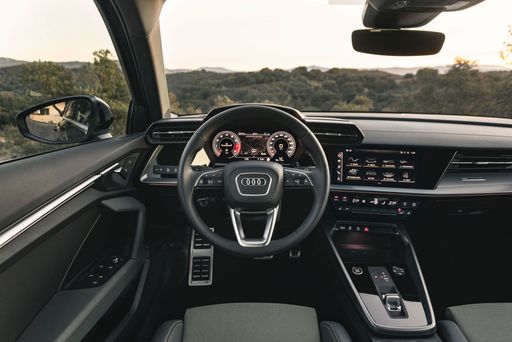
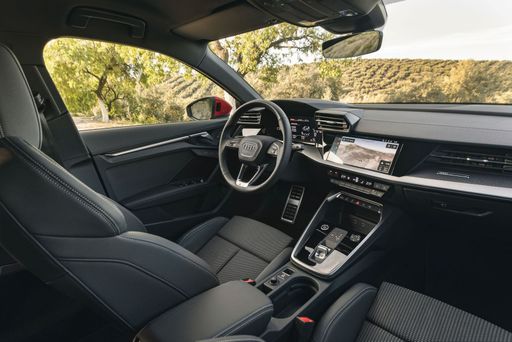
The Audi A3 Sportback wraps premium materials and crisp German design into a practical hatchback package that makes daily driving feel smart rather than showy. It’s nimble in the city, composed on longer trips, and carries just enough swagger to satisfy buyers who want quality without shouting about it.
details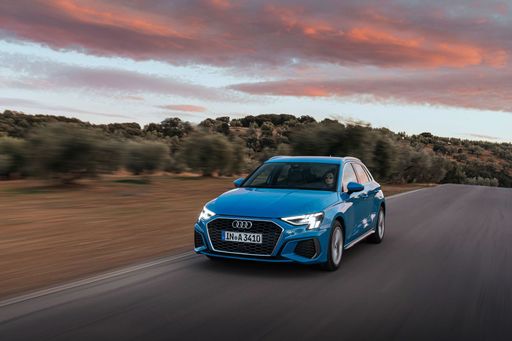
Hyundai IONIQ 5
5 (2 Reviews)
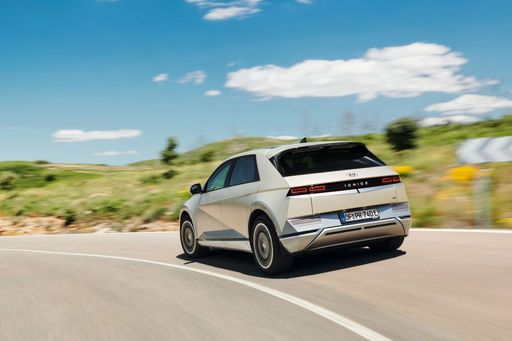
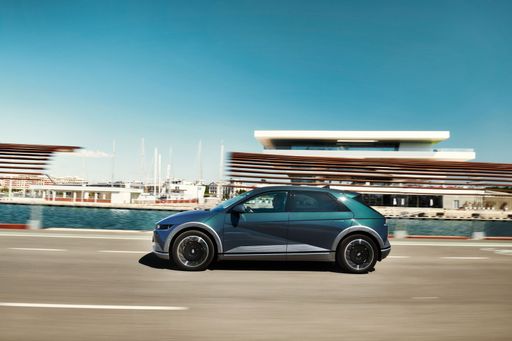
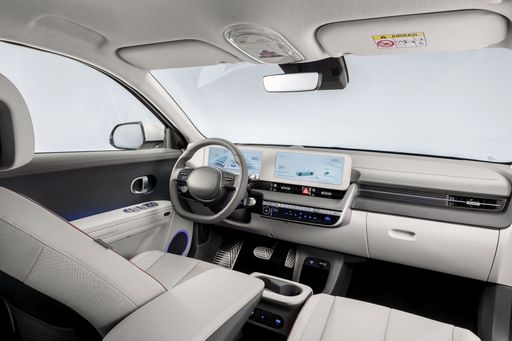
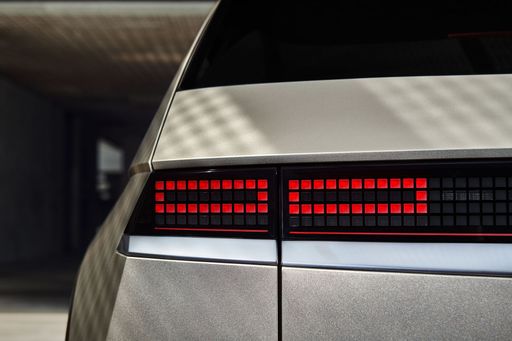
The Hyundai IONIQ 5 looks like a spaceship that moved into suburbia, pairing bold retro‑futuristic styling with a roomy, cleverly laid-out cabin that makes long trips surprisingly comfortable. Its electric character delivers instant, silky acceleration and low running costs, making it a smart, slightly cheeky pick for buyers who want tech, practicality and personality without the drama.
details
Audi A3 Sportback
Hyundai IONIQ 5
Costs and Consumption |
|
|---|---|
|
Price
27000 - 56600 £
|
Price
38500 - 64200 £
|
|
Consumption L/100km
1.1 - 9.3 L
|
Consumption L/100km
-
|
|
Consumption kWh/100km
-
|
Consumption kWh/100km
15.6 - 21.2 kWh
|
|
Electric Range
134 - 141 km
|
Electric Range
440 - 570 km
|
|
Battery Capacity
19.70 kWh
|
Battery Capacity
63 - 84 kWh
|
|
co2
25 - 211 g/km
|
co2
0 g/km
|
|
Fuel tank capacity
40 L
|
Fuel tank capacity
-
|
Dimensions and Body |
|
|---|---|
|
Body Type
Hatchback
|
Body Type
SUV
|
|
Seats
5
|
Seats
5
|
|
Doors
5
|
Doors
5
|
|
Curb weight
1360 - 1685 kg
|
Curb weight
1955 - 2275 kg
|
|
Trunk capacity
280 - 380 L
|
Trunk capacity
480 - 520 L
|
|
Length
4352 - 4353 mm
|
Length
4655 - 4715 mm
|
|
Width
1816 - 1851 mm
|
Width
1890 - 1940 mm
|
|
Height
1441 - 1470 mm
|
Height
1585 - 1605 mm
|
|
Max trunk capacity
1100 L
|
Max trunk capacity
1540 - 1580 L
|
|
Payload
410 - 480 kg
|
Payload
385 - 530 kg
|
Engine and Performance |
|
|---|---|
|
Engine Type
Petrol, Petrol MHEV, Diesel, Plugin Hybrid
|
Engine Type
Electric
|
|
Transmission
Manuel, Automatic
|
Transmission
Automatic
|
|
Transmission Detail
Manual Gearbox, Dual-Clutch Automatic
|
Transmission Detail
Reduction Gearbox
|
|
Drive Type
Front-Wheel Drive, All-Wheel Drive
|
Drive Type
Rear-Wheel Drive, All-Wheel Drive
|
|
Power HP
116 - 400 HP
|
Power HP
170 - 650 HP
|
|
Acceleration 0-100km/h
3.8 - 10.1 s
|
Acceleration 0-100km/h
3.5 - 8.5 s
|
|
Max Speed
225 - 237 km/h
|
Max Speed
185 - 260 km/h
|
|
Torque
220 - 500 Nm
|
Torque
350 - 770 Nm
|
|
Number of Cylinders
4 - 5
|
Number of Cylinders
-
|
|
Power kW
85 - 294 kW
|
Power kW
125 - 478 kW
|
|
Engine capacity
1498 - 2480 cm3
|
Engine capacity
-
|
General |
|
|---|---|
|
Model Year
2025
|
Model Year
2024 - 2025
|
|
CO2 Efficiency Class
D, F, E, G, B
|
CO2 Efficiency Class
A
|
|
Brand
Audi
|
Brand
Hyundai
|
What drive types are available for the Audi A3 Sportback?
The Audi A3 Sportback is offered with Front-Wheel Drive or All-Wheel Drive.
The prices and data displayed are estimates based on German list prices and may vary by country. This information is not legally binding.