@ Hyundai Motor Company
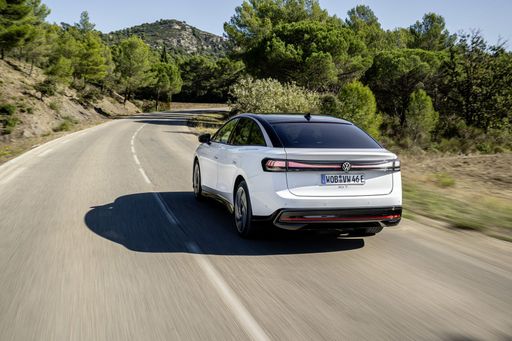
@ Volkswagen AG / VW Media
VS

Hyundai IONIQ 5 vs VW ID.7 – Which car suits you better?

Everyday use, family trips or long-distance drives – here’s where the differences show.
Discover whether Hyundai IONIQ 5 or VW ID.7 fits your lifestyle better.

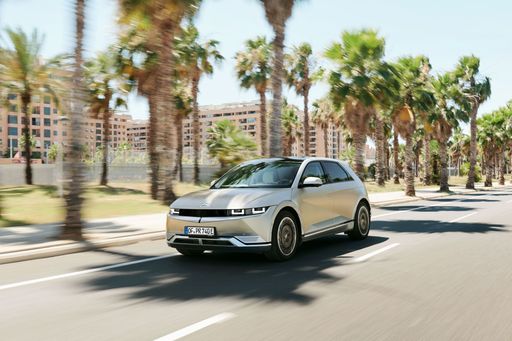
IONIQ 5 @ Hyundai Motor Company

Introduction: A Clash of Electric Titans

As the electric vehicle market continues to expand, automakers are pushing boundaries with innovative technologies and compelling designs. Two such contenders making waves are the Hyundai IONIQ 5 and the VW ID.7. These vehicles represent the pinnacle of engineering from their respective brands, offering a blend of performance, efficiency, and style. In this detailed comparison, we will explore the technical aspects and novel features that set these two electric cars apart.
ID.7 @ Volkswagen AG / VW Media

Power and Performance

When it comes to powertrain options, the Hyundai IONIQ 5 offers a more diverse lineup. With power ranging from 170 HP up to a staggering 609 HP, it provides flexibility for drivers looking for various levels of performance. Acceleration figures are impressive, with the top variant accelerating from 0 to 100 km/h in just 3.5 seconds.

In contrast, the VW ID.7, available in power outputs of 286 HP and 340 HP, strikes a balance between performance and efficiency. Its quickest variant achieves 0-100 km/h in 5.4 seconds, catering to those who desire a brisk but not overwhelming sprint.

IONIQ 5 @ Hyundai Motor Company

Electric Range and Efficiency

The VW ID.7 takes the lead in terms of electric range, with its most efficient model achieving up to 709 km on a single charge. This is partly due to its lower power consumption, sitting at 13.6 kWh/100 km for the most efficient variants.

On the other hand, the IONIQ 5 offers an electric range of up to 570 km. Although slightly less than the ID.7, its diverse power and range options make it a versatile choice for various driving needs.

ID.7 @ Volkswagen AG / VW Media

Interior and Comfort

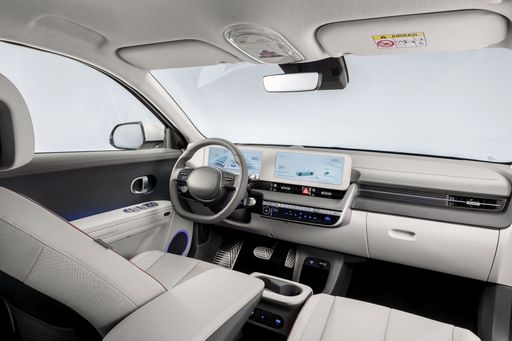
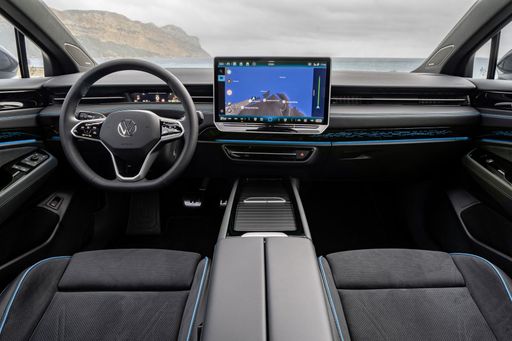
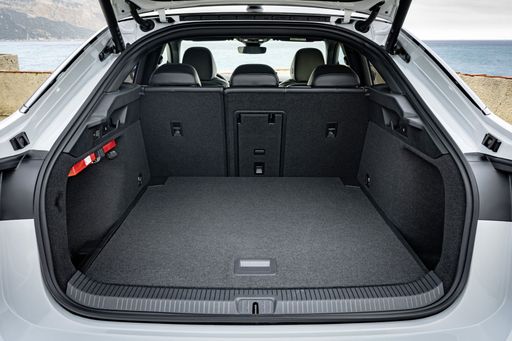
Inside, both vehicles accommodate up to five passengers. The Volkswagen ID.7 boasts a generous trunk capacity of 532 liters, offering ample storage for long journeys. Its interior is tailored for comfort with premium materials and advanced infotainment options.

The Hyundai IONIQ 5, with trunk volumes ranging from 480 to 520 liters, provides versatility and flexibility in its interior layout. It matches its German rival with state-of-the-art technology and comfort features, making long journeys a delight.

IONIQ 5 @ Hyundai Motor Company

Dimensions and Design

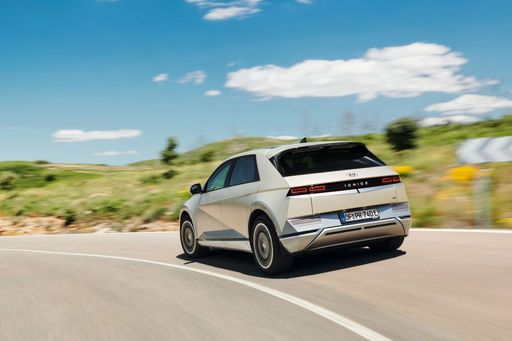
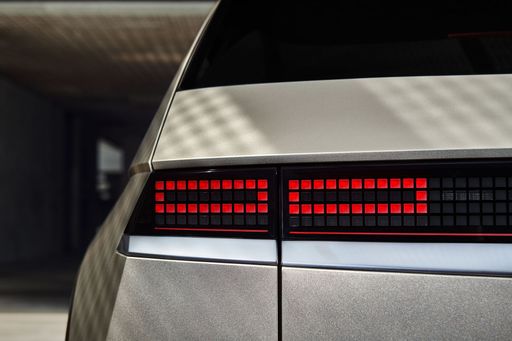
The IONIQ 5's futuristic and bold design features dimensions of up to 4715 mm in length and a width of 1940 mm. Its SUV stance gives it a commanding presence on the road, paired with a height of 1585 mm enhancing its aerodynamic silhouette.

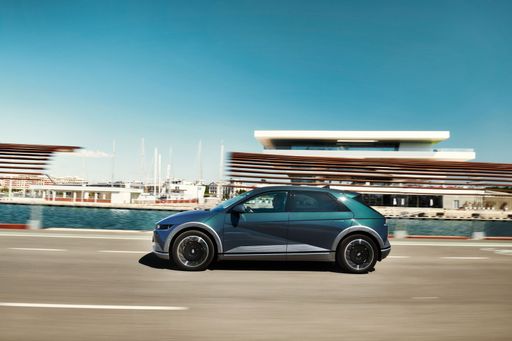
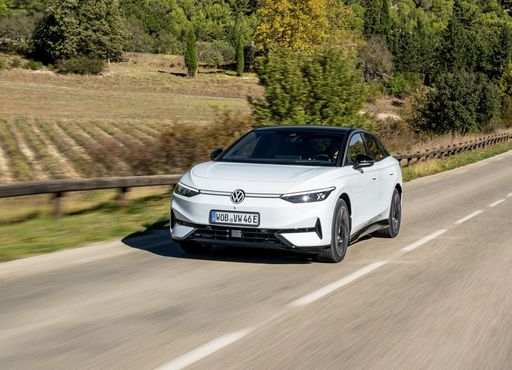
The VW ID.7, on the other hand, is a sleek hatchback that stretches 4961 mm in length and 1862 mm in width. Its lower height of 1536 mm complements its elegant and aerodynamic form, making it a sophisticated choice for discerning drivers.

ID.7 @ Volkswagen AG / VW Media

Conclusion: Choosing Your Electric Champion

Both the Hyundai IONIQ 5 and the VW ID.7 have carved a niche for themselves in the competitive electric vehicle landscape. The choice between them ultimately boils down to your priorities. The IONIQ 5 offers a diverse range of performance options and an SUV's versatility, while the ID.7 excels in electric range and hatchback practicality.

As each brand continues to innovate, these models stand as a testament to the rapidly evolving world of electric vehicles, promising excitement and efficiency in equal measure. Whether you prefer Hyundai's dynamic flair or VW's blend of elegance and range, both vehicles represent the future of mobility — clean, efficient, and exhilarating.

Here’s where it gets real: The technical differences in detail

IONIQ 5 @ Hyundai Motor Company

Costs and Efficiency:

Price and efficiency are key factors when choosing a car – and this is often where the real differences emerge.

Hyundai IONIQ 5 has a noticeable advantage in terms of price – it starts at 38500 £, while the VW ID.7 costs 46400 £. That’s a price difference of around 7890 £.

In terms of energy consumption, the advantage goes to the VW ID.7: with 13.60 kWh per 100 km, it’s slightly more efficient than the Hyundai IONIQ 5 with 15.60 kWh. That’s a difference of about 2 kWh.

As for range, the VW ID.7 performs a bit better – achieving up to 708 km, about 138 km more than the Hyundai IONIQ 5.

ID.7 @ Volkswagen AG / VW Media

Engine and Performance:

Power, torque and acceleration say a lot about how a car feels on the road. This is where you see which model delivers more driving dynamics.

When it comes to engine power, the Hyundai IONIQ 5 has a clearly edge – offering 650 HP compared to 340 HP. That’s roughly 310 HP more horsepower.

In acceleration from 0 to 100 km/h, the Hyundai IONIQ 5 is significantly quicker – completing the sprint in 3.50 s, while the VW ID.7 takes 5.40 s. That’s about 1.90 s faster.

In terms of top speed, the Hyundai IONIQ 5 performs clearly perceptible better – reaching 260 km/h, while the VW ID.7 tops out at 180 km/h. The difference is around 80 km/h.

There’s also a difference in torque: Hyundai IONIQ 5 pulls somewhat stronger with 770 Nm compared to 679 Nm. That’s about 91 Nm difference.

IONIQ 5 @ Hyundai Motor Company

Space and Everyday Use:

Whether family car or daily driver – which one offers more room, flexibility and comfort?

Both vehicles offer seating for 5 people.

In curb weight, Hyundai IONIQ 5 is to a small extent lighter – 1955 kg compared to 2180 kg. The difference is around 225 kg.

In terms of boot space, the VW ID.7 offers slight more room – 532 L compared to 520 L. That’s a difference of about 12 L.

In maximum load capacity, the VW ID.7 performs minimal better – up to 1586 L, which is about 6 L more than the Hyundai IONIQ 5.

When it comes to payload, Hyundai IONIQ 5 slightly takes the win – 530 kg compared to 465 kg. That’s a difference of about 65 kg.

Who wins the race?

The Hyundai IONIQ 5 proves to be dominates this comparison and therefore becomes our DriveDuel Champion!
Hyundai IONIQ 5 is the better all-rounder in this comparison.

from about £38,500
IONIQ 5 @ Hyundai Motor Company

Hyundai IONIQ 5

  • Engine Type : Electric
  • Transmission : Automatic
  • Drive Type : Rear-Wheel Drive, All-Wheel Drive
  • Power HP : 170 - 650 HP
  • Consumption kWh/100km : 15.6 - 21.2 kWh
  • Electric Range : 440 - 570 km

Hyundai IONIQ 5

The Hyundai IONIQ 5 showcases a bold and futuristic design that captures attention with its striking facade and sharp lines. This electric vehicle offers an impressive blend of performance and efficiency, making it a compelling choice for environmentally conscious drivers. Inside, the spacious and tech-forward interior provides a comfortable and engaging driving experience for both driver and passengers.

details

VW ID.7

4 (2)
rate

VW ID.7 arrives as Volkswagen's electric grand tourer, pairing a low-slung, aerodynamic silhouette with a calm, understated interior that prioritizes comfort and space. It’s a sensible choice for buyers who want a relaxed, high-tech cruiser that covers motorway miles with poise rather than bravado.

details
Hyundai IONIQ 5
VW ID.7
IONIQ 5 @ Hyundai Motor Company
ID.7 @ Volkswagen AG / VW Media

Costs and Consumption

Price
38500 - 64200 £
Price
46400 - 54200 £
Consumption L/100km
-
Consumption L/100km
-
Consumption kWh/100km
15.6 - 21.2 kWh
Consumption kWh/100km
13.6 - 16.2 kWh
Electric Range
440 - 570 km
Electric Range
594 - 708 km
Battery Capacity
63 - 84 kWh
Battery Capacity
77 - 86 kWh
co2
0 g/km
co2
0 g/km
Fuel tank capacity
-
Fuel tank capacity
-

Dimensions and Body

Body Type
SUV
Body Type
Hatchback
Seats
5
Seats
5
Doors
5
Doors
5
Curb weight
1955 - 2275 kg
Curb weight
2180 - 2325 kg
Trunk capacity
480 - 520 L
Trunk capacity
532 L
Length
4655 - 4715 mm
Length
4961 mm
Width
1890 - 1940 mm
Width
1862 mm
Height
1585 - 1605 mm
Height
1535 - 1536 mm
Max trunk capacity
1540 - 1580 L
Max trunk capacity
1586 L
Payload
385 - 530 kg
Payload
460 - 465 kg

Engine and Performance

Engine Type
Electric
Engine Type
Electric
Transmission
Automatic
Transmission
Automatic
Transmission Detail
Reduction Gearbox
Transmission Detail
Reduction Gearbox
Drive Type
Rear-Wheel Drive, All-Wheel Drive
Drive Type
Rear-Wheel Drive, All-Wheel Drive
Power HP
170 - 650 HP
Power HP
286 - 340 HP
Acceleration 0-100km/h
3.5 - 8.5 s
Acceleration 0-100km/h
5.4 - 6.6 s
Max Speed
185 - 260 km/h
Max Speed
180 km/h
Torque
350 - 770 Nm
Torque
545 - 679 Nm
Number of Cylinders
-
Number of Cylinders
-
Power kW
125 - 478 kW
Power kW
210 - 250 kW
Engine capacity
-
Engine capacity
-

General

Model Year
2024 - 2025
Model Year
2023 - 2024
CO2 Efficiency Class
A
CO2 Efficiency Class
A
Brand
Hyundai
Brand
VW
What drive types are available for the Hyundai IONIQ 5?

The Hyundai IONIQ 5 is available as Rear-Wheel Drive or All-Wheel Drive.

The prices and data displayed are estimates based on German list prices and may vary by country. This information is not legally binding.