@ CUPRA / SEAT S.A.
@ Hyundai Motor Company
VS

CUPRA Tavascan vs Hyundai IONIQ 5 – Differences & prices compared

Compare performance, boot capacity, efficiency and price at a glance.
Find out which car is the better choice for you – CUPRA Tavascan or Hyundai IONIQ 5?

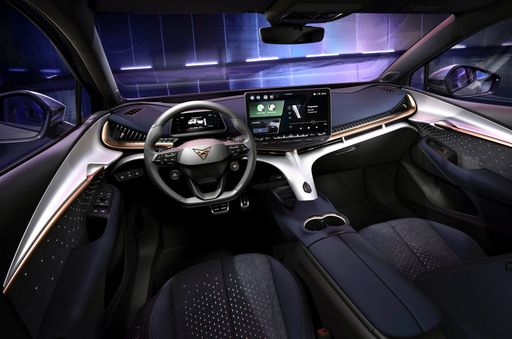
Tavascan @ CUPRA / SEAT S.A.

In the electrifying world of SUVs, two models are making waves: the CUPRA Tavascan and the Hyundai IONIQ 5. Both vehicles are brimming with innovation, performance, and advanced technology, yet they cater to different audiences. In this article, we’ll delve into the technical aspects, design features, and innovations that set these two electric SUVs apart, helping you decide which one might suit your needs best.
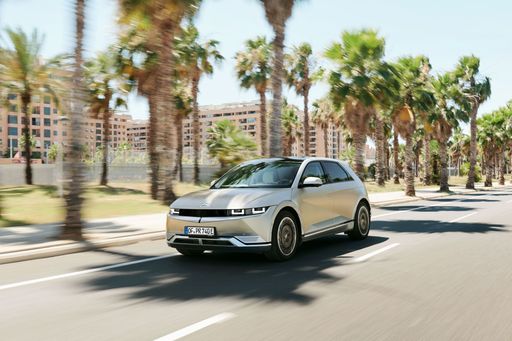
IONIQ 5 @ Hyundai Motor Company

Design and Dimensions

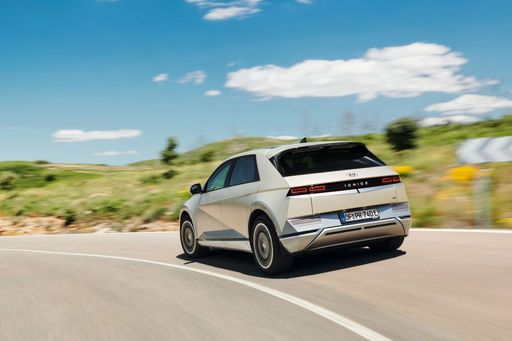
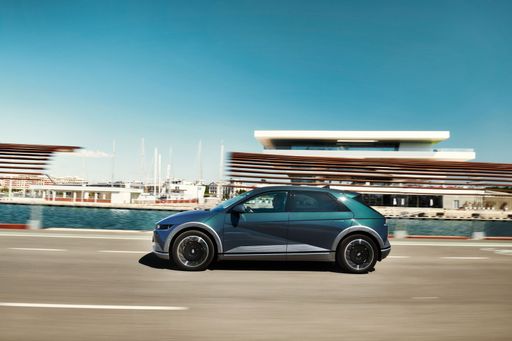
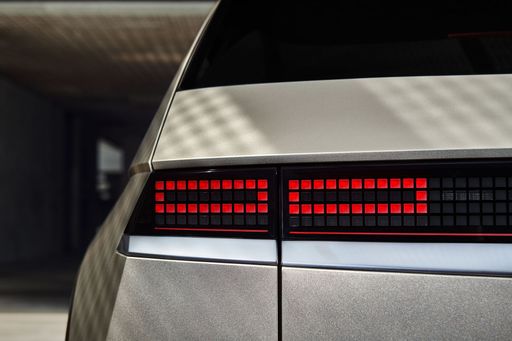
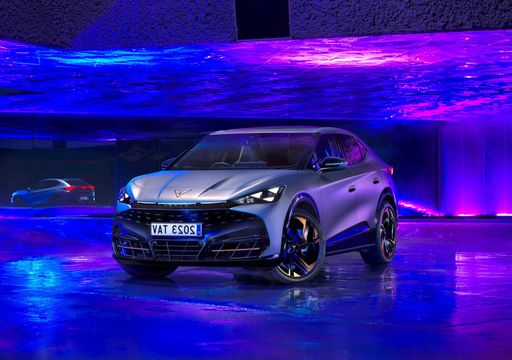
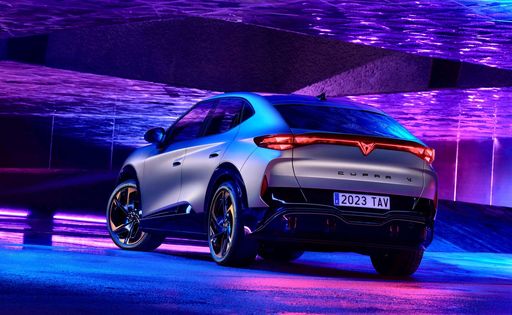
The CUPRA Tavascan boasts an athletic stance with its sporty design. Measuring 4,644 mm in length, 1,861 mm in width, and 1,597 mm in height, it provides a robust yet sleek appearance. The IONIQ 5, on the other hand, takes a more avant-garde approach with its futuristic aesthetics. At 4,655 mm long, 1,890 mm wide, and 1,605 mm high, the IONIQ 5 is slightly larger and displays a unique angular silhouette.

Tavascan @ CUPRA / SEAT S.A.

Powertrain and Performance

Both SUVs offer a variety of powertrain options. The CUPRA Tavascan presents two power outputs: 286 HP in the rear-wheel-drive variant and an exhilarating 340 HP in the all-wheel-drive configuration. It features a robust torque output of up to 679 Nm, allowing for acceleration from 0 to 100 km/h in just 5.5 seconds.

In comparison, the Hyundai IONIQ 5 offers an even broader range of power options, starting from 170 HP and escalating to a staggering 609 HP in its high-performance version. This model can sprint from 0 to 100 km/h in a mere 3.5 seconds, thanks to a torque figure peaking at 740 Nm. With this level of performance, the IONIQ 5 caters to those looking for ultimate electric driving excitement.

IONIQ 5 @ Hyundai Motor Company

Battery and Electric Range

Battery capacity is crucial in electric vehicles, and both models deliver impressive specifications. The CUPRA Tavascan is equipped with a 77 kWh battery, offering an electric range of up to 569 km, making it suitable for longer journeys. In contrast, the Hyundai IONIQ 5 provides options between a 63 kWh and an 84 kWh battery. The higher capacity version can achieve a range of up to 570 km, giving it a slight edge in terms of versatility.

Tavascan @ CUPRA / SEAT S.A.

Charging and Efficiency

Charging capabilities are also a significant consideration for electric vehicle buyers. The CUPRA Tavascan consumes between 15.1 to 16.5 kWh/100 km, while the Hyundai IONIQ 5 records consumption figures between 15.6 to 21.2 kWh/100 km, depending on the variant. These numbers reflect the two models' efficiency in their respective powertrain setups.

Notably, both vehicles support rapid charging, allowing owners to plug in for significant range replenishments in a matter of minutes. This feature enhances their practicality for everyday use and long-distance travel.

IONIQ 5 @ Hyundai Motor Company

Interior Space and Technology

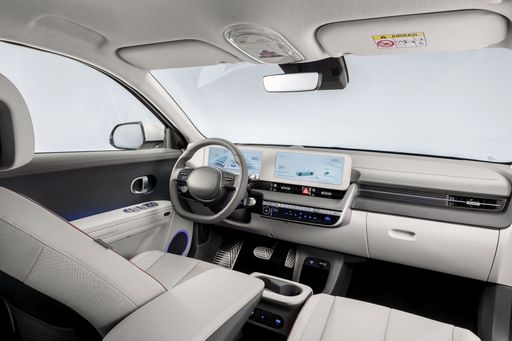
Both the Tavascan and IONIQ 5 offer seating for five passengers, but the interior layouts cater to different tastes. The Tavascan comes with a minimalist yet sporty cabin, embracing the CUPRA aesthetic with quality materials and advanced infotainment technology. The trunk capacity of 540 liters ensures ample space for luggage or shopping.

The IONIQ 5 focuses on space and comfort, featuring a contemporary interior with generous legroom and headroom. Its trunk capacity stands at 520 liters, which is slightly less than the Tavascan but compensates with additional innovative features, such as a dual-screen setup that seamlessly integrates infotainment with digital instrument displays.

Conclusion: Which One to Choose?

Choosing between the CUPRA Tavascan and the Hyundai IONIQ 5 ultimately hinges on individual preferences. If you prefer dynamic performance, sporty design, and impressive range, the Tavascan stands out as an attractive option. However, if cutting-edge technology, a spacious interior, and multiple power options are your priorities, the IONIQ 5 emerges as a strong contender.

Regardless of your choice, both vehicles represent the future of electric mobility, pushing boundaries and setting new standards in the SUV segment. Whether you're a thrill-seeker or a tech-savvy driver, these electric SUVs are ready to redefine your driving experience.

Here’s where it gets real: The technical differences in detail

Costs and Efficiency:

Price and efficiency are often the first things buyers look at. Here it becomes clear which model has the long-term edge – whether at the pump, the plug, or in purchase price.

Hyundai IONIQ 5 has a to a small extent advantage in terms of price – it starts at 38500 £, while the CUPRA Tavascan costs 45700 £. That’s a price difference of around 7235 £.

In terms of energy consumption, the advantage goes to the Hyundai IONIQ 5: with 15.60 kWh per 100 km, it’s barely noticeable more efficient than the CUPRA Tavascan with 15.90 kWh. That’s a difference of about 0.30 kWh.

As for range, the Hyundai IONIQ 5 performs minimal better – achieving up to 570 km, about 17 km more than the CUPRA Tavascan.

Engine and Performance:

Power, torque and acceleration say a lot about how a car feels on the road. This is where you see which model delivers more driving dynamics.

When it comes to engine power, the Hyundai IONIQ 5 has a clearly edge – offering 650 HP compared to 340 HP. That’s roughly 310 HP more horsepower.

In acceleration from 0 to 100 km/h, the Hyundai IONIQ 5 is convincingly quicker – completing the sprint in 3.50 s, while the CUPRA Tavascan takes 5.50 s. That’s about 2 s faster.

In terms of top speed, the Hyundai IONIQ 5 performs noticeable better – reaching 260 km/h, while the CUPRA Tavascan tops out at 180 km/h. The difference is around 80 km/h.

There’s also a difference in torque: Hyundai IONIQ 5 pulls somewhat stronger with 770 Nm compared to 679 Nm. That’s about 91 Nm difference.

Space and Everyday Use:

Cabin size, boot volume and payload all play a role in everyday practicality. Here, comfort and flexibility make the difference.

Both vehicles offer seating for 5 people.

In curb weight, Hyundai IONIQ 5 is a bit lighter – 1955 kg compared to 2178 kg. The difference is around 223 kg.

In terms of boot space, the CUPRA Tavascan offers minimal more room – 540 L compared to 520 L. That’s a difference of about 20 L.

When it comes to payload, Hyundai IONIQ 5 hardly perceptible takes the win – 530 kg compared to 522 kg. That’s a difference of about 8 kg.

Who comes out on top?

Overall, the Hyundai IONIQ 5 shows itself to be dominates this comparison and secures the title of DriveDuel Champion.
It convinces with the more balanced overall package and proves to be the more versatile choice for everyday use.

from about £38,500
IONIQ 5 @ Hyundai Motor Company

Hyundai IONIQ 5

  • Engine Type : Electric
  • Transmission : Automatic
  • Drive Type : Rear-Wheel Drive, All-Wheel Drive
  • Power HP : 170 - 650 HP
  • Consumption kWh/100km : 15.6 - 21.2 kWh
  • Electric Range : 440 - 570 km

CUPRA Tavascan

The CUPRA Tavascan is a striking electric crossover that blends aggressive, sporty design with surprising everyday practicality, pairing a coupe-like silhouette with SUV versatility. It feels lively and engaging on the road while offering premium touches inside, making it a compelling choice for buyers who want attitude without sacrificing comfort.

details

Hyundai IONIQ 5

The Hyundai IONIQ 5 looks like a spaceship that moved into suburbia, pairing bold retro‑futuristic styling with a roomy, cleverly laid-out cabin that makes long trips surprisingly comfortable. Its electric character delivers instant, silky acceleration and low running costs, making it a smart, slightly cheeky pick for buyers who want tech, practicality and personality without the drama.

details
CUPRA Tavascan
Hyundai IONIQ 5
Tavascan @ CUPRA / SEAT S.A.
IONIQ 5 @ Hyundai Motor Company

Costs and Consumption

Price
45700 - 49600 £
Price
38500 - 64200 £
Consumption L/100km
-
Consumption L/100km
-
Consumption kWh/100km
15.9 - 17.1 kWh
Consumption kWh/100km
15.6 - 21.2 kWh
Electric Range
513 - 553 km
Electric Range
440 - 570 km
Battery Capacity
77 kWh
Battery Capacity
63 - 84 kWh
co2
0 g/km
co2
0 g/km
Fuel tank capacity
-
Fuel tank capacity
-

Dimensions and Body

Body Type
SUV
Body Type
SUV
Seats
5
Seats
5
Doors
5
Doors
5
Curb weight
2178 - 2273 kg
Curb weight
1955 - 2275 kg
Trunk capacity
540 L
Trunk capacity
480 - 520 L
Length
4644 mm
Length
4655 - 4715 mm
Width
1861 mm
Width
1890 - 1940 mm
Height
1597 mm
Height
1585 - 1605 mm
Max trunk capacity
-
Max trunk capacity
1540 - 1580 L
Payload
507 - 522 kg
Payload
385 - 530 kg

Engine and Performance

Engine Type
Electric
Engine Type
Electric
Transmission
Automatic
Transmission
Automatic
Transmission Detail
Reduction Gearbox
Transmission Detail
Reduction Gearbox
Drive Type
Rear-Wheel Drive, All-Wheel Drive
Drive Type
Rear-Wheel Drive, All-Wheel Drive
Power HP
286 - 340 HP
Power HP
170 - 650 HP
Acceleration 0-100km/h
5.5 - 6.8 s
Acceleration 0-100km/h
3.5 - 8.5 s
Max Speed
180 km/h
Max Speed
185 - 260 km/h
Torque
545 - 679 Nm
Torque
350 - 770 Nm
Number of Cylinders
-
Number of Cylinders
-
Power kW
210 - 250 kW
Power kW
125 - 478 kW
Engine capacity
-
Engine capacity
-

General

Model Year
2024
Model Year
2024 - 2025
CO2 Efficiency Class
A
CO2 Efficiency Class
A
Brand
CUPRA
Brand
Hyundai
What drivetrain options does the CUPRA Tavascan have?

Available configurations include Rear-Wheel Drive or All-Wheel Drive.

The prices and data displayed are estimates based on German list prices and may vary by country. This information is not legally binding.