VS

Audi A5 Avant vs VW Tiguan comparison

Compare performance (639 HP vs 272 HP), boot space and price (41,600 £ vs 33,600 £ ) at a glance. Find out which car is the better choice for you – Audi A5 Avant or VW Tiguan?

Audi A5 Avant vs VW Tiguan: Key differences

Audi A5 Avant

  • considerably more power
  • significantly quicker 0–100 km/h

VW Tiguan

4.1 (8 Reviews)
rate
  • visibly cheaper
  • significantly more efficient
  • somewhat more electric range
  • slightly lighter
  • significantly more trunk space

All details on performance, efficiency, range and trunk space can be found in the technical comparison below – including user reviews for both models.

A5 Avant

Comparing the Audi A5 Avant and VW Tiguan: Style Meets Versatility

The automotive segment is rife with options, but few combinations of style, functionality, and technology stand out quite like the Audi A5 Avant and the VW Tiguan. Both models bring their own unique attributes to the table, with the A5 Avant focusing more on luxury and performance, while the Tiguan excels in practicality and family-friendly features. In this article, we delve into the technical aspects and innovative features of these two vehicles to provide a comprehensive comparison for potential buyers.
Tiguan

Design and Body Type: Sophistication vs. Practicality

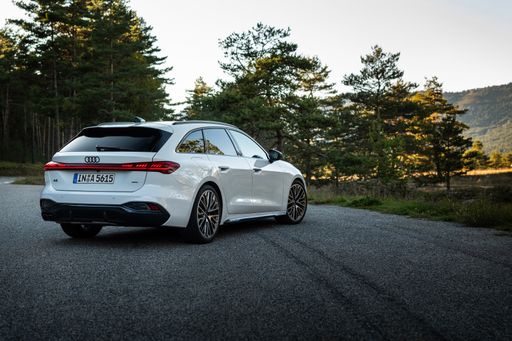
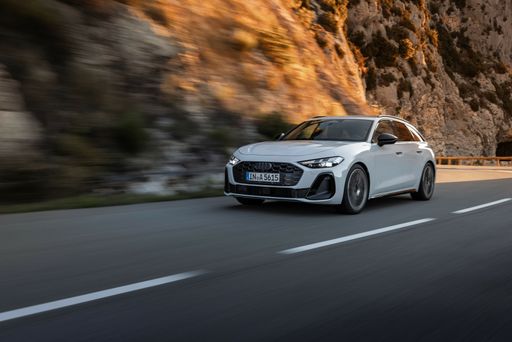
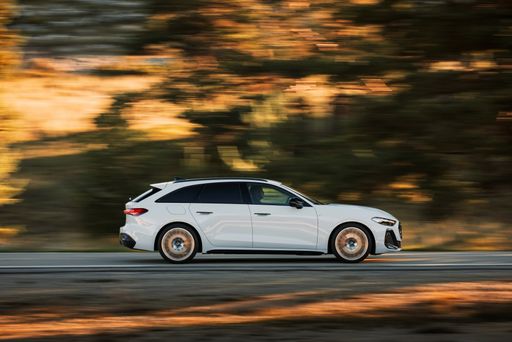
The Audi A5 Avant is a wagon that seamlessly blends sportiness with elegance. Its sharp lines, sloping roofline, and prominent grille command attention on the road. With a length of 4,829 mm and a width of 1,860 mm, the A5 Avant boasts a sophisticated stance that elevates its aesthetics. The trunk capacity of 448 liters supports practicality without sacrificing style.

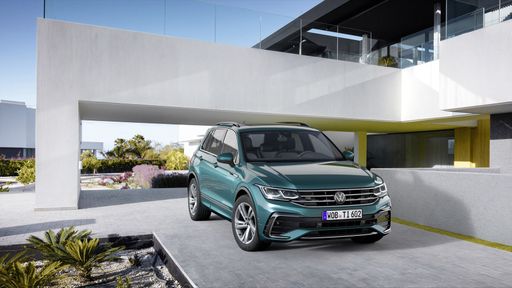
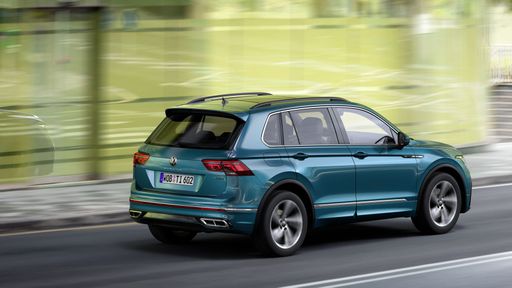
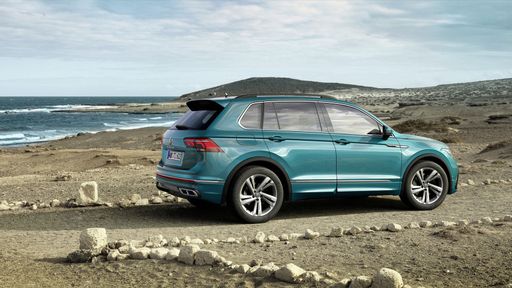
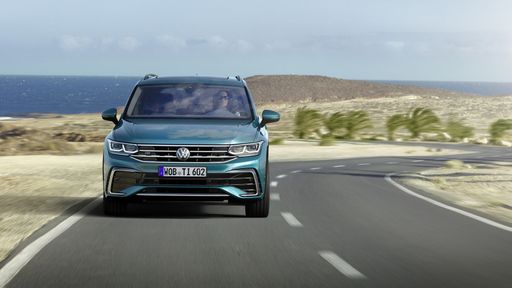
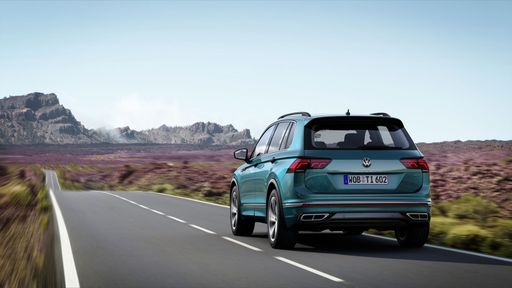
On the other hand, the VW Tiguan is an SUV that prioritizes versatility and comfort. Measuring 4,539 mm in length and featuring a tall, robust design, the Tiguan offers a spacious interior suitable for families. Its trunk capacity, rated at an impressive 652 liters, makes it an ideal choice for those who require both storage and passenger space.

A5 Avant

Engine and Performance: Power Dynamics

When it comes to engine options, the Audi A5 Avant offers various configurations, including Diesel and Petrol engines, with power outputs ranging from 150 HP to a robust 367 HP. With a maximum torque of up to 550 Nm and acceleration from 0-100 km/h accomplished in as little as 4.5 seconds, the A5 Avant is engineered for driving enthusiasts. The availability of both All-Wheel Drive and Front-Wheel Drive systems enhances its performance in diverse driving conditions.

In comparison, the VW Tiguan presents a well-rounded line-up of engines, spanning Petrol and Diesel variants, as well as hybrid options. Power ranges from 130 HP to 272 HP, with a respectable maximum torque of 400 Nm. The Tiguan also achieves competitive acceleration, with the fastest variant reaching 0-100 km/h in just 5.9 seconds. While the Tiguan primarily offers Front-Wheel Drive, All-Wheel Drive configurations are also available, making it adaptable for various driving environments.

Tiguan

Fuel Efficiency and Emissions: Eco-Friendly Innovations

The Audi A5 Avant showcases commendable fuel efficiency, with consumption figures ranging from 4.8 to 7.1 L/100km depending on the engine choice. The CO2 emissions fall within the range of 127 to 169 g/km, placing it in an efficient category for a luxury vehicle.

The VW Tiguan, with its variety of hybrid models, showcases impressive fuel figures, especially the plug-in hybrid variants, which report an incredibly low consumption rate of just 0.4 to 0.5 L/100km. Additionally, depending on the configuration, it emits between 9 to 193 g/km of CO2, showcasing an environmentally friendly approach in its design.

A5 Avant

Interior and Technology: The Comfort Factor

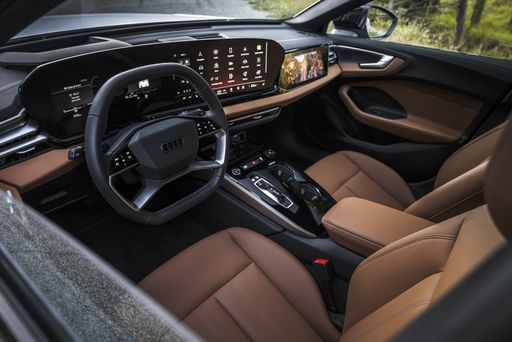
Inside the Audi A5 Avant, luxury takes center stage with high-quality materials, plush seating for four, and an array of the latest technology features. The dual-clutch automatic transmission provides a seamless driving experience, while advanced infotainment systems and driver assistance technologies elevate the driving experience to a level befitting its premium status.

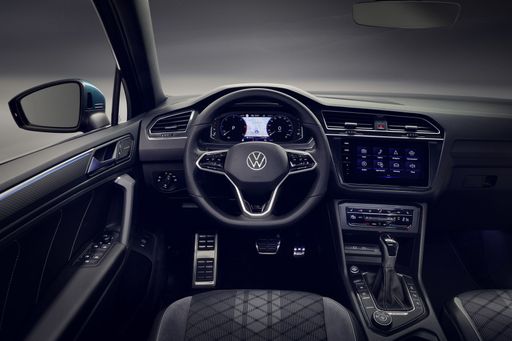
The Tiguan, offering seating for five, excels in practicality with ample cargo space and user-friendly technology. Its interior is equipped with intuitive infotainment systems, enhancing connectivity and convenience. The dual-clutch automatic transmission also ensures smooth shifting, catering to modern-day driving needs.

Tiguan

Conclusion: A Choice of Personal Preference

The Audi A5 Avant and VW Tiguan represent two distinct philosophies in automotive design and performance. The A5 Avant stands out for those who seek luxury and driving pleasure, while the Tiguan caters to families and those who prioritize versatility and space. Ultimately, the choice between these two vehicles will depend on personal preferences, lifestyle requirements, and the kind of driving experience one desires.

Here’s where it gets real: The technical differences in detail

A5 Avant

Costs and Efficiency:

Looking at overall running costs, both models reveal some interesting differences in everyday economy.

VW Tiguan is visibly cheaper – starting at 33,600 £ , while the Audi A5 Avant costs 41,600 £ . That’s a price difference of around 8,036 £.

Fuel consumption also shows a difference: the VW Tiguan uses 1.4 L/100km and is significantly more efficient than the Audi A5 Avant with 2.1 L/100km. The difference is about 0.7 L/100km.

As for electric range, the VW Tiguan offers somewhat more range – reaching up to 126 km, about 18 km more than the Audi A5 Avant.

Tiguan

Engine and Performance:

Power, torque and acceleration are the classic benchmarks for car enthusiasts – and here, some clear differences start to show.

When it comes to engine power, the Audi A5 Avant offers considerably more power – delivering 639 HP compared to 272 HP. That’s roughly 367 HP more horsepower.

When accelerating from 0 to 100 km/h, the Audi A5 Avant is significantly quicker – completing the sprint in 3.7 s, while the VW Tiguan takes 5.9 s. That’s about 2.2 s quicker.

Looking at top speed, the Audi A5 Avant is somewhat faster – reaching 250 km/h, while the VW Tiguan tops out at 215 km/h. The difference is around 35 km/h.

There’s also a difference in torque: the Audi A5 Avant delivers substantially more torque with 825 Nm compared to 400 Nm. That’s about 425 Nm more.

A5 Avant

Space and Everyday Use:

Cabin size, boot volume and payload all play a role in everyday practicality. Here, comfort and flexibility make the difference.

Both vehicles offer seating for 5 people.

In terms of curb weight, VW Tiguan is slightly lighter – 1,599 kg compared to 1,785 kg. The difference is around 186 kg.

Looking at boot space, the VW Tiguan offers significantly more boot space – 652 L compared to 361 L. That’s a difference of about 291 L.

For maximum load capacity, the VW Tiguan offers moderately more capacity – up to 1,486 L, about 180 L more than the Audi A5 Avant.

When it comes to payload, the Audi A5 Avant carries only slightly more – 535 kg compared to 533 kg. That’s a difference of about 2 kg.

Who wins the race in the data check?

The Audi A5 Avant is decisively ahead in the objective data comparison.
This result only shows which model scores more points on paper – not which of the two cars feels right for you.

from £41,600
A5 Avant

Audi A5 Avant

  • Engine Type : Plugin Hybrid, Petrol, Diesel MHEV, Petrol MHEV
  • Transmission : Automatic
  • Drive Type : All-Wheel Drive, Front-Wheel Drive
  • Power HP : 150 - 639 HP
  • Consumption L/100km : 2.1 - 7.7 L/100km
  • Electric Range : 83 - 108 km
Audi A5 Avant
VW Tiguan

Costs and Consumption

View detailed analysis

Engine and Performance

View detailed analysis

Dimensions and Body

View detailed analysis

Audi A5 Avant

The Audi A5 Avant dresses like a sleek coupe but carries like a sensible estate, offering buyers a rare blend of glamour and everyday practicality. Inside, the cabin feels beautifully sorted and the drive is composed and engaging, making routine errands feel a touch more enjoyable than they have any right to be.

details

VW Tiguan

The VW Tiguan blends sensible family practicality with a dash of German polish, delivering a calm, reassuring ride and a cabin that never feels like an afterthought. For buyers who want an SUV that’s easy to live with yet still nicely dressed, the Tiguan is the grown‑up choice that keeps a cheeky wink in reserve.

details
Audi A5 Avant
VW Tiguan

Costs and Consumption

Price
41,600 - 92,400 £
Price
33,600 - 54,600 £
Consumption L/100km
2.1 - 7.7 L/100km
Consumption L/100km
1.4 - 8.4 L/100km
Consumption kWh/100km
-
Consumption kWh/100km
-
Electric Range
83 - 108 km
Electric Range
118 - 126 km
Battery Capacity
20.7 kWh
Battery Capacity
19.7 kWh
co2
47 - 175 g/km
co2
32 - 190 g/km
Fuel tank capacity
46 L
Fuel tank capacity
45 L

Dimensions and Body

Body Type
Estate
Body Type
SUV
Seats
4 - 5
Seats
5
Doors
5
Doors
5
Curb weight
1,785 - 2,445 kg
Curb weight
1,599 - 1,879 kg
Trunk capacity
361 L
Trunk capacity
490 - 652 L
Length
4,829 mm
Length
4,539 mm
Width
1,860 - 1,952 mm
Width
1,842 - 1,859 mm
Height
1,460 mm
Height
1,658 mm
Max trunk capacity
1,306 L
Max trunk capacity
1,486 L
Payload
480 - 535 kg
Payload
460 - 533 kg

Engine and Performance

Engine Type
Plugin Hybrid, Petrol, Diesel MHEV, Petrol MHEV
Engine Type
Petrol MHEV, Petrol, Diesel, Plugin Hybrid
Transmission
Automatic
Transmission
Automatic
Transmission Detail
Dual-Clutch Automatic, Automatic Gearbox
Transmission Detail
Dual-Clutch Automatic
Drive Type
All-Wheel Drive, Front-Wheel Drive
Drive Type
Front-Wheel Drive, All-Wheel Drive
Power HP
150 - 639 HP
Power HP
130 - 272 HP
Acceleration 0-100km/h
3.7 - 9.8 s
Acceleration 0-100km/h
5.9 - 10.6 s
Max Speed
250 km/h
Max Speed
210 - 215 km/h
Torque
280 - 825 Nm
Torque
220 - 400 Nm
Number of Cylinders
4 - 6
Number of Cylinders
4
Power kW
110 - 470 kW
Power kW
96 - 200 kW
Engine capacity
1,968 - 2,995 cm3
Engine capacity
1,498 - 1,984 cm3

General

Model Year
2,025 - 2,026
Model Year
2,024 - 2,026
CO2 Efficiency Class
B, E, F, D
CO2 Efficiency Class
D, E, F, B, G
Brand
Audi
Brand
VW
DriveDuel uses data analysis and artificial intelligence to evaluate vehicle data and create content. Content is regularly reviewed and improved. The displayed prices are estimates based on German list prices, adjusted to the respective country’s VAT. Country-specific registration taxes are not included. This information is not legally binding.