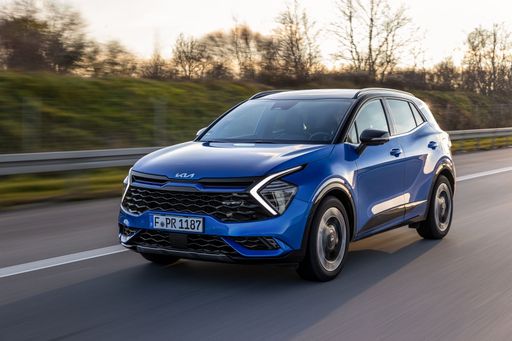
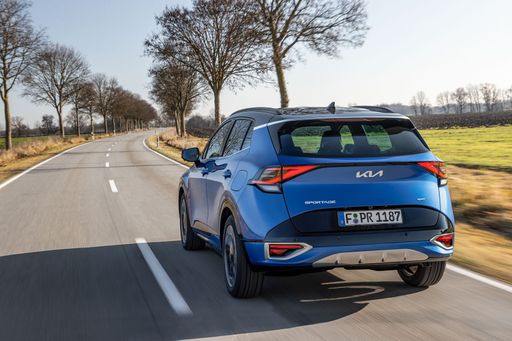
@ Kia Corporation
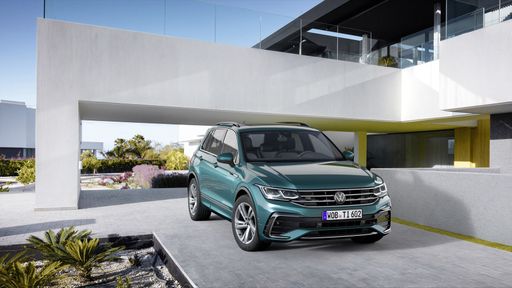
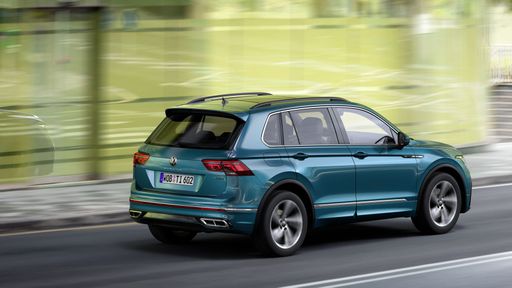
@ Volkswagen AG / VW Media
VS

Kia Sportage vs VW Tiguan – Which one offers the better deal?

Two cars, one duel: Kia Sportage meets VW Tiguan.
Which one wins in performance, efficiency and value for money? Find out now!

Sportage @ Kia Corporation

An In-depth Comparison: Kia Sportage vs. VW Tiguan

In the ever-evolving world of compact SUVs, two names stand out for 2024: the Kia Sportage and the VW Tiguan. Both vehicles bring a balanced blend of performance, technology, and style to the table, offering consumers distinct choices within their class. Let’s delve deeper into the nuts and bolts of these two automotive contenders.

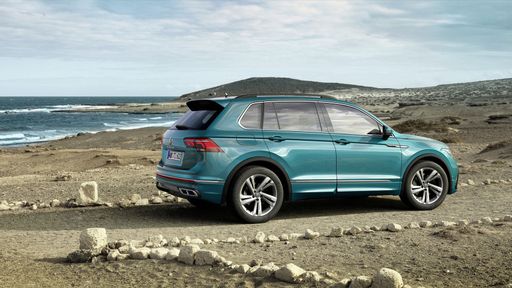
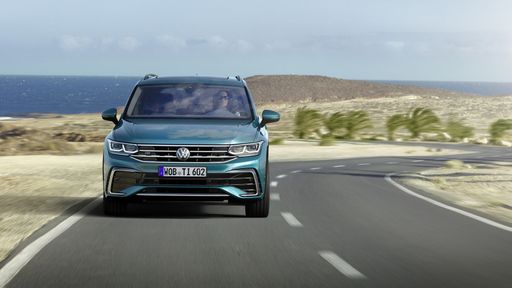
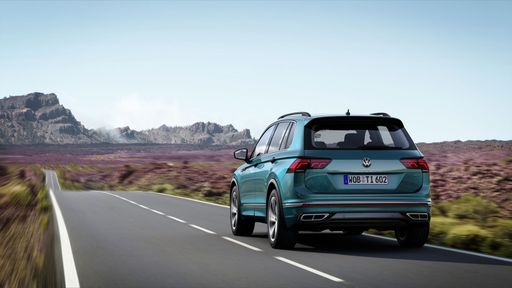
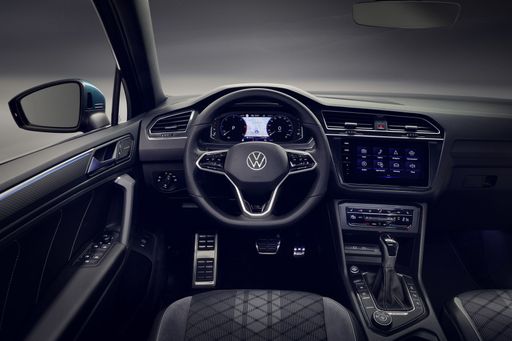
Tiguan @ Volkswagen AG / VW Media

Performance and Engine Specifications

The Kia Sportage comes with a versatile range of engine options, including Diesel MHEV, Petrol MHEV, Full Hybrid, Petrol, and Plugin Hybrid. Power outputs range from 136 HP to a robust 252 HP, depending on your preferred configuration. For the VW Tiguan, choices include Petrol MHEV, Plugin Hybrid, Diesel, and Petrol engines, with power ranging from 130 HP to a spirited 272 HP.

For everyday driving, both SUVs offer ample power and efficiency. The Sportage features a top speed of up to 194 km/h and an acceleration from 0-100 km/h in as quick as 8.3 seconds. The Tiguan, on the other hand, reaches a max speed of 242 km/h, with its quickest sprint to 100 km/h in a brisk 5.9 seconds.

Sportage @ Kia Corporation

Eco-Friendliness and Fuel Efficiency

Environmental concerns and fuel efficiency remain at the forefront of consumer priorities, and both these SUVs make strides in this area. The Kia Sportage offers a CO2 efficiency class ranging from B to F, while consumption rates range from a modest 1.2 L/100km for its plugin hybrid variant to 7.2 L/100km for traditional petrol models.

The VW Tiguan excels in the plugin hybrid category, boasting an electric range of up to 113 km and fuel consumption as low as 0.4 L/100km. Its CO2 output varies widely, depending on the model, from as low as 8 g/km up to 193 g/km, providing a broad spectrum tailored to different ecological standards.

Tiguan @ Volkswagen AG / VW Media

Interior Design and Cargo Capacity

Inside, the Kia Sportage offers comfort with seating for five and a thoughtful inside array of features. The trunk capacity ranges from 526 to 587 liters, providing ample room for family and adventure gear. Its dimensions (4515 mm in length, 1865 mm in width, and 1650 mm in height) promise a snug yet spacious ride.

VW Tiguan does not fall short in interior capacity either, with up to 652 liters dedicated to the trunk, ensuring it meets versatility needs with ease. While similar in seating arrangements, Tiguan prioritizes utility through its marginally greater length (4539 mm) and height (up to 1658 mm), making it ideal for those seeking both comfort and spaciousness.

Sportage @ Kia Corporation

Driving Experience: Innovation and Technology

Both SUVs are equipped with modern technology and innovation. The Kia Sportage offers a variety of transmission options, including a manual gearbox, dual-clutch automatic, and automatic gearbox, providing consistency based on driving preference. Versatile drive types (Front-Wheel and All-Wheel Drive) cater to different driving conditions.

The Tiguan's embrace of technology is noticeable with its automatic dual-clutch transmission coupled with intelligent driving modes for either front-wheel or all-wheel adventures. It also prides itself on refined technology inside the cabin, enhancing the connectivity and intuitive driving experience.

Tiguan @ Volkswagen AG / VW Media

Conclusion

In summary, the 2024 Kia Sportage and VW Tiguan are remarkable SUVs that cater to varied audience preferences. The Sportage impresses with its broad range of engine options and plush interior, whereas the Tiguan appeals with its advanced hybrid technology and expansive cargo space. Whether your priority lies in eco-friendliness, speed, or cabin comfort, both vehicles rise to meet the challenge of modern driving expectations.

Ultimately, the choice may come down to brand loyalty, specific technical preferences, or even the tactile impression each car makes. Regardless of selection, drivers are ensured a vehicle that upholds the pillars of excellence in today's competitive SUV market.

Here’s where it gets real: The technical differences in detail

Sportage @ Kia Corporation

Costs and Efficiency:

Looking at overall running costs, both models reveal some interesting differences in everyday economy.

Kia Sportage has a barely noticeable advantage in terms of price – it starts at 30200 £, while the VW Tiguan costs 32800 £. That’s a price difference of around 2623 £.

Fuel consumption also shows a difference: VW Tiguan manages with 1.40 L and is therefore convincingly more efficient than the Kia Sportage with 5 L. The difference is about 3.60 L per 100 km.

Tiguan @ Volkswagen AG / VW Media

Engine and Performance:

Under the bonnet, it becomes clear which model is tuned for sportiness and which one takes the lead when you hit the accelerator.

When it comes to engine power, the VW Tiguan has a somewhat edge – offering 272 HP compared to 239 HP. That’s roughly 33 HP more horsepower.

In acceleration from 0 to 100 km/h, the VW Tiguan is noticeable quicker – completing the sprint in 5.90 s, while the Kia Sportage takes 7.90 s. That’s about 2 s faster.

In terms of top speed, the VW Tiguan performs a bit better – reaching 242 km/h, while the Kia Sportage tops out at 203 km/h. The difference is around 39 km/h.

There’s also a difference in torque: VW Tiguan pulls a bit stronger with 400 Nm compared to 320 Nm. That’s about 80 Nm difference.

Space and Everyday Use:

Cabin size, boot volume and payload all play a role in everyday practicality. Here, comfort and flexibility make the difference.

Both vehicles offer seating for 5 people.

In curb weight, Kia Sportage is slight lighter – 1552 kg compared to 1599 kg. The difference is around 47 kg.

In terms of boot space, the VW Tiguan offers minimal more room – 652 L compared to 587 L. That’s a difference of about 65 L.

In maximum load capacity, the Kia Sportage performs minimal better – up to 1776 L, which is about 126 L more than the VW Tiguan.

When it comes to payload, Kia Sportage barely noticeable takes the win – 580 kg compared to 533 kg. That’s a difference of about 47 kg.

Who comes out on top?

Overall, the VW Tiguan shows itself to be outperforms in nearly all aspects and secures the title of DriveDuel Champion.
It convinces with the more balanced overall package and proves to be the more versatile choice for everyday use.

from about £32,800
Tiguan @ Volkswagen AG / VW Media

VW Tiguan

  • Engine Type : Petrol, Petrol MHEV, Diesel, Plugin Hybrid
  • Transmission : Automatic
  • Drive Type : All-Wheel Drive, Front-Wheel Drive
  • Power HP : 130 - 272 HP
  • Consumption L/100km : 1.4 - 8.4 L
  • Electric Range : 118 - 126 km

Kia Sportage

5 (1)
rate

The Kia Sportage proves you don't have to choose between style and sensible family motoring, wrapping modern, confident looks around a roomy, well-equipped cabin. It's an easy car to live with — comfortable on daily runs, pleasantly engaging when you want a bit of fun, and kind to your wallet so you can keep smiling at the fuel pump.

details

VW Tiguan

3.3 (3)
rate

The VW Tiguan blends sensible family practicality with a dash of German polish, delivering a calm, reassuring ride and a cabin that never feels like an afterthought. For buyers who want an SUV that’s easy to live with yet still nicely dressed, the Tiguan is the grown‑up choice that keeps a cheeky wink in reserve.

details
Kia Sportage
VW Tiguan
Sportage @ Kia Corporation
Tiguan @ Volkswagen AG / VW Media

Costs and Consumption

Price
30200 - 43900 £
Price
32800 - 51900 £
Consumption L/100km
5 - 7.9 L
Consumption L/100km
1.4 - 8.4 L
Consumption kWh/100km
-
Consumption kWh/100km
-
Electric Range
-
Electric Range
118 - 126 km
Battery Capacity
-
Battery Capacity
19.70 kWh
co2
132 - 180 g/km
co2
32 - 190 g/km
Fuel tank capacity
52 - 54 L
Fuel tank capacity
45 - 58 L

Dimensions and Body

Body Type
SUV
Body Type
SUV
Seats
5
Seats
5
Doors
5
Doors
5
Curb weight
1552 - 1733 kg
Curb weight
1599 - 1890 kg
Trunk capacity
526 - 587 L
Trunk capacity
490 - 652 L
Length
4540 mm
Length
4539 mm
Width
1865 mm
Width
1842 - 1859 mm
Height
1645 mm
Height
1656 - 1658 mm
Max trunk capacity
1715 - 1776 L
Max trunk capacity
1486 - 1650 L
Payload
543 - 580 kg
Payload
460 - 533 kg

Engine and Performance

Engine Type
Petrol, Full Hybrid, Diesel MHEV
Engine Type
Petrol, Petrol MHEV, Diesel, Plugin Hybrid
Transmission
Manuel, Automatic
Transmission
Automatic
Transmission Detail
Manual Gearbox, Dual-Clutch Automatic, Automatic Gearbox
Transmission Detail
Dual-Clutch Automatic
Drive Type
Front-Wheel Drive, All-Wheel Drive
Drive Type
All-Wheel Drive, Front-Wheel Drive
Power HP
136 - 239 HP
Power HP
130 - 272 HP
Acceleration 0-100km/h
7.9 - 11.6 s
Acceleration 0-100km/h
5.9 - 10.6 s
Max Speed
180 - 203 km/h
Max Speed
198 - 242 km/h
Torque
250 - 320 Nm
Torque
220 - 400 Nm
Number of Cylinders
4
Number of Cylinders
4
Power kW
100 - 176 kW
Power kW
96 - 200 kW
Engine capacity
1598 cm3
Engine capacity
1498 - 1984 cm3

General

Model Year
2025
Model Year
2024 - 2025
CO2 Efficiency Class
F, D, E, G
CO2 Efficiency Class
G, D, E, F, B
Brand
Kia
Brand
VW
Is the Kia Sportage offered with different drivetrains?

The Kia Sportage is offered with Front-Wheel Drive or All-Wheel Drive.

The prices and data displayed are estimates based on German list prices and may vary by country. This information is not legally binding.