VS

Audi A6 Avant vs Hyundai Tucson comparison

Compare performance (367 HP vs 288 HP), boot space and price (49,700 £ vs 20,900 £ ) at a glance. Find out which car is the better choice for you – Audi A6 Avant or Hyundai Tucson?

Audi A6 Avant vs Hyundai Tucson: Key differences

Audi A6 Avant

  • visibly more power
  • slightly more efficient
  • clearly more electric range
  • significantly quicker 0–100 km/h
details

Hyundai Tucson

3.9 (5 Reviews)
rate
  • significantly cheaper
  • noticeably lighter
  • somewhat more trunk space
details

All details on performance, efficiency, range and trunk space can be found in the technical comparison below – including user reviews for both models.

By Achim Sedelmaier

A6 Avant

Comparing the Charismatic Audi A6 Avant and the Spirited Hyundai Tucson

When it comes to choosing a vehicle that merges practicality with performance, two contenders come to mind: the Audi A6 Avant and the Hyundai Tucson. Both models stand out in their segments, offering unique attributes tailored for different needs. Let's dive into the technical intricacies and innovations of these two modern marvels.

Tucson

Audi A6 Avant: Elegance Meets Power

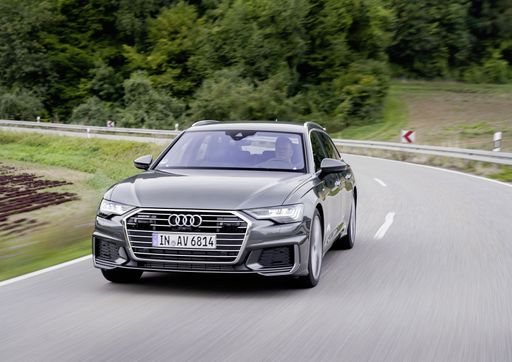
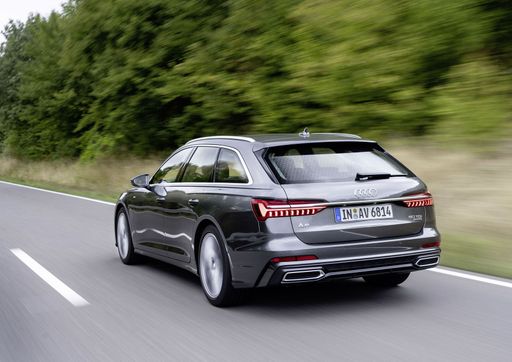
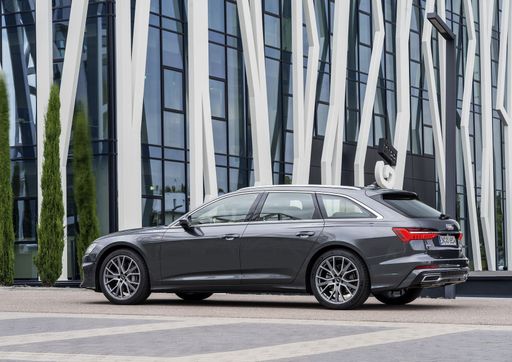
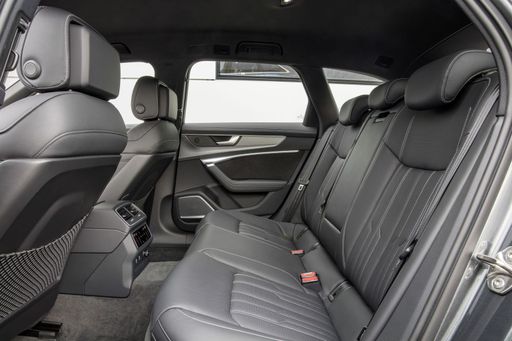
The Audi A6 Avant, recognizable for its sleek wagon body type, epitomizes a blend of sophistication and engineering prowess. With a variety of engine types to choose from—including Diesel MHEV, Petrol MHEV, and Plugin Hybrid—the A6 Avant caters to drivers who demand versatility in their ride.

Offering an impressive power range from 163 to 630 HP, the A6 Avant doesn't compromise on performance. All this power is transferred to the road through a choice of dual-clutch automatics or a standard automatic gearbox, adding to the convenience of driving this luxurious wagon. Additionally, the car can be fitted with either front-wheel drive or all-wheel drive, depending on your preference for handling dynamics.

The Audi A6 Avant doesn't skimp on practicality. With a trunk capacity peaking at 565 liters, it's perfectly suited for those weekend getaways or prolonged family trips. Fuel consumption figures stand competitively between 1.4 L/100km for the plugin hybrids and up to 12.3 L/100km for the performance-oriented variants, ensuring economic operation across the line-up.

In terms of innovation, the A6 Avant showcases Audi's commitment to reducing emissions, employing cutting-edge mild hybrid technology alongside a plugin hybrid option that offers an electric range of 65 km. Furthermore, with an acceleration capability as rapid as 3.3 seconds from 0 to 100 km/h and a top speed touching 305 km/h, there is no doubt about its thrilling potential.


A6 Avant

Hyundai Tucson: A Seismic Shift in the SUV Arena

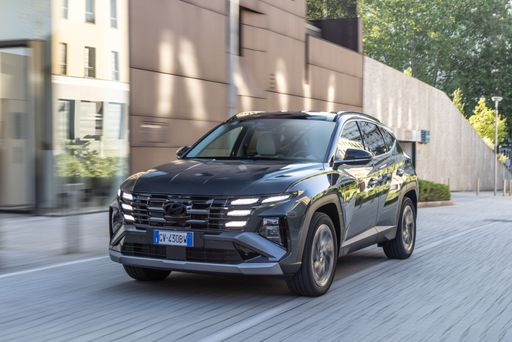
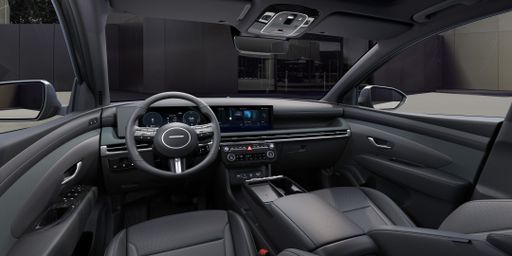
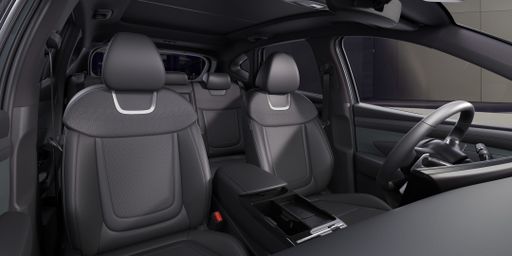
The Hyundai Tucson represents a bold play in the compact SUV category, excelling in its functionality and advanced technology. With power outputs ranging from 136 HP to 252 HP and engine options that include diesel MHEV, petrol MHEV, petrol, full hybrid, and plugin hybrid, the Tucson is tailored to access a broad audience.

This modern SUV offers a choice of automatic and manual transmissions, appealing to both traditionalists who enjoy the manual gearbox's tactile engagement and those who prefer the convenience of automatics. Drive choices include both front-wheel and all-wheel drive, giving the Tucson ample flexibility in varied driving situations.

The Tucson shines with a spacious trunk capacity of up to 620 liters, a noteworthy feature for those who prioritize cargo space. Coupled with a competitive fuel consumption rate starting from as low as 1.2 L/100km for plugin hybrid variants, it stands as an efficient companion for urban commutes and extended road trips alike.

Advanced features include an expanded electric range of up to 70 km, indicating Hyundai's commitment to greener driving solutions. The Tucson also boasts a robust acceleration time of 7.9 seconds from 0 to 100 km/h, paired with a top speed capping at 194 km/h, ensuring a mix of efficiency and thrill.

Tucson

Conclusion

In summary, the Audi A6 Avant and Hyundai Tucson both bring a suite of technical innovations and practical features making them stalwarts in their respective segments. The A6 Avant appeals to those seeking a luxurious, power-packed experience coupled with ample space, while the Tucson shines as a versatile, efficient compact SUV suited for a diverse range of lifestyles. Whether your preference is a refined wagon or a dynamic SUV, both models present compelling choices for the discerning driver.

Here’s where it gets real: The technical differences in detail

A6 Avant

Costs and Efficiency:

Looking at overall running costs, both models reveal some interesting differences in everyday economy.

Hyundai Tucson is significantly cheaper – starting at 20,900 £ , while the Audi A6 Avant costs 49,700 £ . That’s a price difference of around 28,817 £.

Fuel consumption also shows a difference: the Audi A6 Avant uses 2.3 L/100km and is slightly more efficient than the Hyundai Tucson with 2.7 L/100km. The difference is about 0.4 L/100km.

As for electric range, the Audi A6 Avant offers clearly more range – reaching up to 101 km, about 31 km more than the Hyundai Tucson.

Tucson

Engine and Performance:

Under the bonnet, it becomes clear which model is tuned for sportiness and which one takes the lead when you hit the accelerator.

When it comes to engine power, the Audi A6 Avant offers visibly more power – delivering 367 HP compared to 288 HP. That’s roughly 79 HP more horsepower.

When accelerating from 0 to 100 km/h, the Audi A6 Avant is significantly quicker – completing the sprint in 4.7 s, while the Hyundai Tucson takes 7.5 s. That’s about 2.8 s quicker.

There’s also a difference in torque: the Audi A6 Avant delivers clearly more torque with 580 Nm compared to 379 Nm. That’s about 201 Nm more.

A6 Avant

Space and Everyday Use:

Beyond pure performance, interior space and usability matter most in daily life. This is where you see which car is more practical and versatile.

Both vehicles offer seating for 5 people.

In terms of curb weight, Hyundai Tucson is noticeably lighter – 1,542 kg compared to 1,865 kg. The difference is around 323 kg.

Looking at boot space, the Hyundai Tucson offers somewhat more boot space – 620 L compared to 503 L. That’s a difference of about 117 L.

When it comes to payload, the Audi A6 Avant carries barely more – 570 kg compared to 545 kg. That’s a difference of about 25 kg.

Who wins the race in the data check?

The Audi A6 Avant holds a decisive overall lead in the objective data comparison.
This result only shows which model scores more points on paper – not which of the two cars feels right for you.

from £49,700
A6 Avant

Audi A6 Avant

  • Engine Type : Petrol, Petrol MHEV, Diesel MHEV, Plugin Hybrid
  • Transmission : Automatic
  • Drive Type : Front-Wheel Drive, All-Wheel Drive
  • Power HP : 204 - 367 HP
  • Consumption L/100km : 2.3 - 7.5 L/100km
  • Electric Range : 94 - 101 km
Audi A6 Avant
Hyundai Tucson

Costs and Consumption

View detailed analysis

Engine and Performance

View detailed analysis

Dimensions and Body

View detailed analysis

Audi A6 Avant

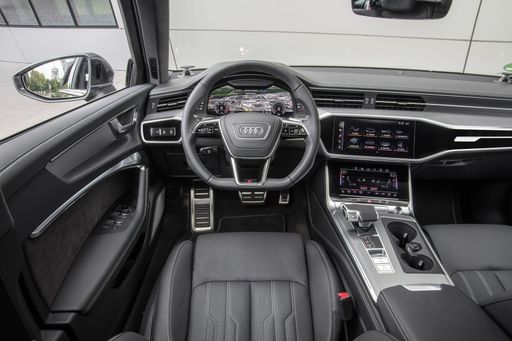
The Audi A6 Avant wraps executive poise and usable practicality into an impeccably finished estate that makes everyday driving feel noticeably more grown-up. It serves up a calm, composed ride and clever packaging for buyers who want space and refinement without ostentation — the sensible choice that still manages to impress.

details

Hyundai Tucson

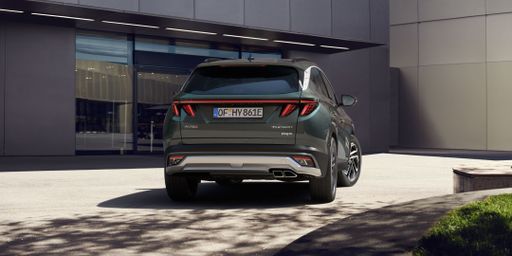
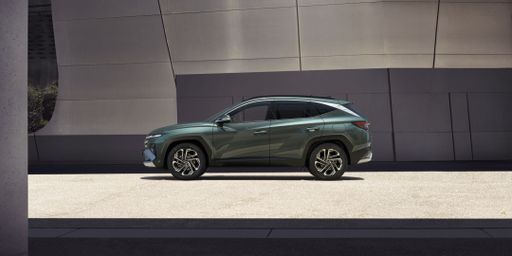
Hyundai Tucson marries bold, sculpted looks with a clever, roomy cabin that feels smarter than its price tag suggests. It's composed on the road, easy to live with day-to-day, and a sensible choice for buyers who want SUV style without the showroom theatrics.

details
Audi A6 Avant
Hyundai Tucson

Costs and Consumption

Price
49,700 - 70,200 £
Price
20,900 - 47,900 £
Consumption L/100km
2.3 - 7.5 L/100km
Consumption L/100km
2.7 - 7.6 L/100km
Consumption kWh/100km
-
Consumption kWh/100km
-
Electric Range
94 - 101 km
Electric Range
63 - 70 km
Battery Capacity
-
Battery Capacity
-
co2
53 - 170 g/km
co2
62 - 172 g/km
Fuel tank capacity
-
Fuel tank capacity
-

Dimensions and Body

Body Type
Estate
Body Type
SUV
Seats
5
Seats
5
Doors
-
Doors
-
Curb weight
1,865 - 2,240 kg
Curb weight
1,542 - 1,893 kg
Trunk capacity
404 - 503 L
Trunk capacity
546 - 620 L
Length
-
Length
-
Width
1,875 mm
Width
1,865 mm
Height
-
Height
-
Max trunk capacity
-
Max trunk capacity
-
Payload
535 - 570 kg
Payload
518 - 545 kg

Engine and Performance

Engine Type
Petrol, Petrol MHEV, Diesel MHEV, Plugin Hybrid
Engine Type
Petrol, Full Hybrid, Plugin Hybrid, Diesel MHEV
Transmission
Automatic
Transmission
Manuel, Automatic
Transmission Detail
Dual-Clutch Automatic
Transmission Detail
Manual Gearbox, Dual-Clutch Automatic, Automatic Gearbox
Drive Type
Front-Wheel Drive, All-Wheel Drive
Drive Type
Front-Wheel Drive, All-Wheel Drive
Power HP
204 - 367 HP
Power HP
136 - 288 HP
Acceleration 0-100km/h
4.7 - 8.3 s
Acceleration 0-100km/h
7.5 - 11.6 s
Max Speed
-
Max Speed
-
Torque
340 - 580 Nm
Torque
250 - 379 Nm
Number of Cylinders
4 - 6
Number of Cylinders
4
Power kW
150 - 270 kW
Power kW
100 - 212 kW
Engine capacity
1,968 - 2,995 cm3
Engine capacity
1,598 cm3

General

Model Year
2025
Model Year
2025
CO2 Efficiency Class
F, D, E, B
CO2 Efficiency Class
F, D, E, B
Brand
Audi
Brand
Hyundai
DriveDuel uses data analysis and artificial intelligence to evaluate vehicle data and create content. Content is regularly reviewed and improved. The displayed prices are estimates based on German list prices, adjusted to the respective country’s VAT. Country-specific registration taxes are not included. This information is not legally binding.