VS

Audi A6 Avant vs VW Passat comparison

Compare performance (367 HP vs 272 HP), boot space and price (49,700 £ vs 36,500 £ ) at a glance. Find out which car is the better choice for you – Audi A6 Avant or VW Passat?

Audi A6 Avant vs VW Passat: Key differences

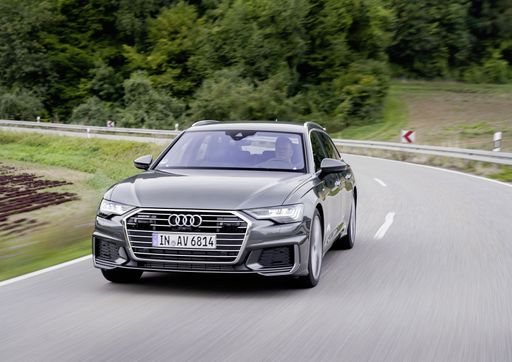
Audi A6 Avant

  • visibly more power
  • visibly quicker 0–100 km/h
details

VW Passat

5 (3 Reviews)
rate
  • noticeably cheaper
  • substantially more efficient
  • visibly more electric range
  • moderately lighter
  • noticeably more trunk space
details

All details on performance, efficiency, range and trunk space can be found in the technical comparison below – including user reviews for both models.

By Achim Sedelmaier

A6 Avant

The Battle of the Wagons: Audi A6 Avant vs VW Passat

Wagons have always been a favorite for those who crave practicality without compromising on style and performance. The Audi A6 Avant and the VW Passat remain top contenders in this segment, offering a blend of sophisticated design, advanced technology, and impressive sustainability credentials. But how do these two standout models stack up against each other? Let's dive into a detailed comparison.

Passat

Power, Performance, and Efficiency

When it comes to powertrains, the Audi A6 Avant comes equipped with a variety of engines, including diesel mild-hybrid (MHEV), petrol MHEV, and plug-in hybrid options. Power outputs range from 163 to an astonishing 630 HP, allowing buyers to choose between efficient daily drivers and high-performance machines. The plug-in hybrid boasts an electric range of 65 km, ideal for short local commutes. Meanwhile, fuel consumption varies between 1.4 and 12.3 L/100km, depending on the model chosen.

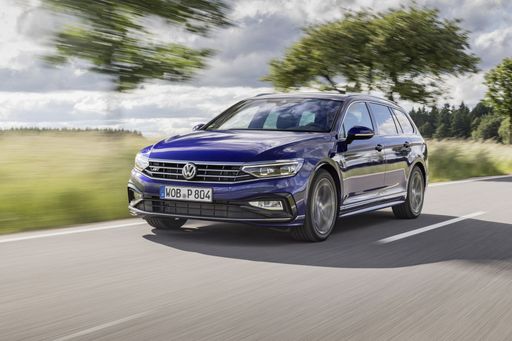
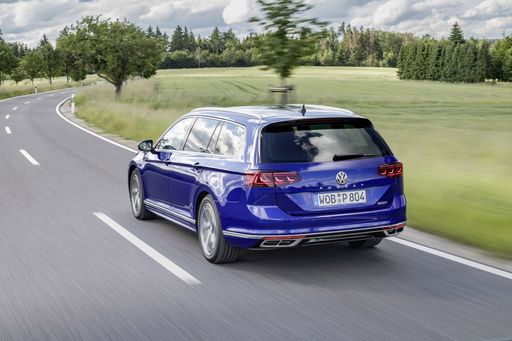
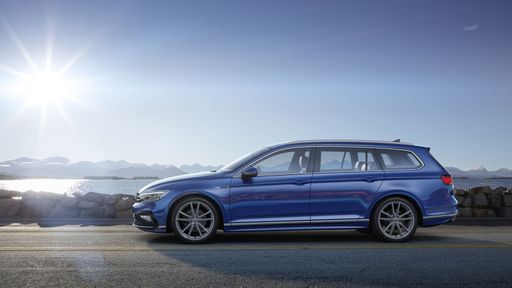
Conversely, the VW Passat offers a simpler engine lineup but includes a notable plug-in hybrid variant with an impressive electric range of up to 126 km, significantly outlasting the Audi's electric capability. Power for the Passat spans from 122 to 272 HP, and fuel consumption is incredibly efficient, with the plug-in hybrid using as little as 0.4 L/100km. This efficiency will appeal strongly to the eco-conscious driver.

A6 Avant

Transmission and Driving Dynamics

Both models favor an automatic transmission set-up, with Audi introducing either a dual-clutch automatic or a standard automatic gearbox. The Passat solely features a dual-clutch automatic transmission, emphasizing smooth and responsive gear changes. Audi's offering varies between front-wheel and all-wheel drive, enhancing versatility across conditions. Likewise, the Passat gives a similar choice, accommodating varying driver preferences.

Passat

Interior Design and Practicality

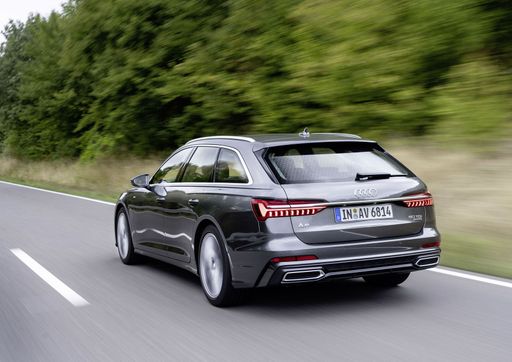
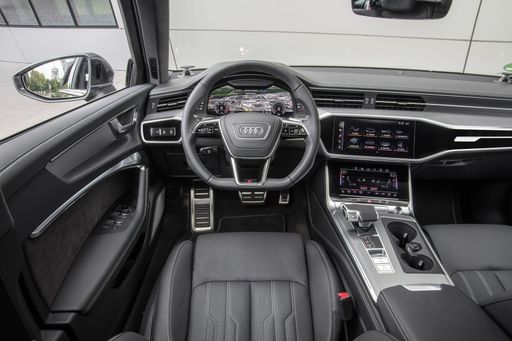
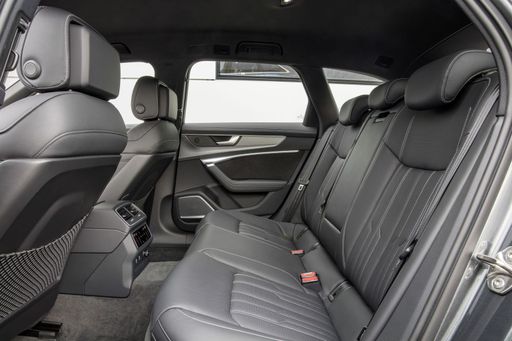
The interior design of the Audi A6 Avant is synonymous with luxury, offering a sophisticated cabin experience with high-quality materials and spacious seating for five. Its trunk capacity ranges between 405 and 565 liters, enough to prioritize both passenger comfort and cargo flexibility.

The VW Passat, while slightly smaller in dimensions, intelligently designs its space to offer 510 to 690 liters of trunk space, surpassing the Audi in practicality. The Passat prioritizes function with a utilitarian yet refined cabin, appealing to those who need extra cargo space without upscale opulence.

A6 Avant

Technology and Innovations

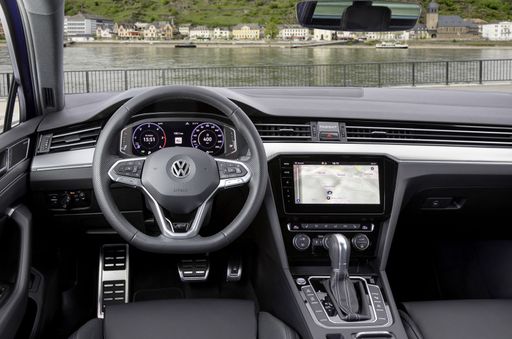
Both wagons are tech-rich environments, built with modern-day innovations in mind. Audi's infotainment suite is advanced, with options for virtual cockpit and superb connectivity. Similarly, the Passat features an intuitive infotainment system, offering seamless smartphone integration and driver assistance technologies. Both brands emphasize safety, integrating active and passive measures to protect occupants.

Passat

Conclusion: The Ideal Wagon for You?

The choice between the Audi A6 Avant and the VW Passat largely depends on what you prioritize in a vehicle. If sheer power, luxury, and a diverse range of engine options captivate you, the A6 Avant stands as a compelling choice. It's perfect for those who want a high-end experience with performance to match.

On the other hand, if daily efficiency, extended electric range, and superior cargo space are more aligned with your criteria, then the VW Passat emerges as an incredibly practical and economical option. It combines functionality with impressive sustainability credentials, suitable for the eco-conscious driver.

In the ever-evolving landscape of automotive choices, both these wagons offer distinct advantages, allowing buyers to align their choice with personal driving needs and lifestyle desires.

Here’s where it gets real: The technical differences in detail

A6 Avant

Costs and Efficiency:

When it comes to price and running costs, the biggest differences usually appear. This is often where you see which car fits your budget better in the long run.

VW Passat is noticeably cheaper – starting at 36,500 £ , while the Audi A6 Avant costs 49,700 £ . That’s a price difference of around 13,252 £.

Fuel consumption also shows a difference: the VW Passat uses 1.2 L/100km and is substantially more efficient than the Audi A6 Avant with 2.3 L/100km. The difference is about 1.1 L/100km.

As for electric range, the VW Passat offers visibly more range – reaching up to 135 km, about 34 km more than the Audi A6 Avant.

Passat

Engine and Performance:

Power, torque and acceleration say a lot about how a car feels on the road. This is where you see which model delivers more driving dynamics.

When it comes to engine power, the Audi A6 Avant offers visibly more power – delivering 367 HP compared to 272 HP. That’s roughly 95 HP more horsepower.

When accelerating from 0 to 100 km/h, the Audi A6 Avant is visibly quicker – completing the sprint in 4.7 s, while the VW Passat takes 5.8 s. That’s about 1.1 s quicker.

There’s no difference in top speed – both reach 250 km/h.

There’s also a difference in torque: the Audi A6 Avant delivers markedly more torque with 580 Nm compared to 400 Nm. That’s about 180 Nm more.

A6 Avant

Space and Everyday Use:

Cabin size, boot volume and payload all play a role in everyday practicality. Here, comfort and flexibility make the difference.

Both vehicles offer seating for 5 people.

In terms of curb weight, VW Passat is moderately lighter – 1,573 kg compared to 1,865 kg. The difference is around 292 kg.

Looking at boot space, the VW Passat offers noticeably more boot space – 690 L compared to 503 L. That’s a difference of about 187 L.

For maximum load capacity, the VW Passat offers moderately more capacity – up to 1,770 L, about 236 L more than the Audi A6 Avant.

When it comes to payload, the VW Passat carries very slightly more – 577 kg compared to 570 kg. That’s a difference of about 7 kg.

Who wins the race in the data check?

The VW Passat stands well ahead of its rival in the objective data comparison.
This result only shows which model scores more points on paper – not which of the two cars feels right for you.

from £36,500
Passat

VW Passat

  • Engine Type : Petrol, Petrol MHEV, Diesel, Plugin Hybrid
  • Transmission : Automatic
  • Drive Type : All-Wheel Drive, Front-Wheel Drive
  • Power HP : 122 - 272 HP
  • Consumption L/100km : 1.2 - 8 L/100km
  • Electric Range : 124 - 135 km
Audi A6 Avant
VW Passat

Costs and Consumption

View detailed analysis

Engine and Performance

View detailed analysis

Dimensions and Body

View detailed analysis

Audi A6 Avant

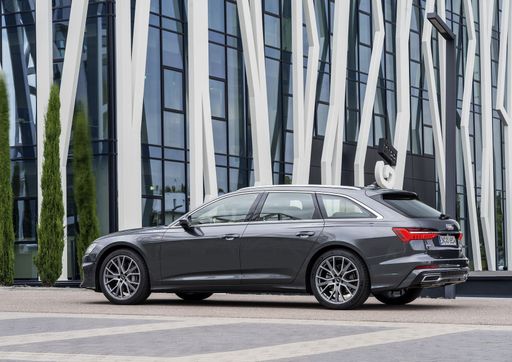
The Audi A6 Avant wraps executive poise and usable practicality into an impeccably finished estate that makes everyday driving feel noticeably more grown-up. It serves up a calm, composed ride and clever packaging for buyers who want space and refinement without ostentation — the sensible choice that still manages to impress.

details

VW Passat

The VW Passat is the grown-up family car that gets the basics absolutely right — roomy, comfortable and built to handle weekday commutes and weekend getaways without fuss. It won't set your pulse racing, but its calm composure and sensible packaging make it boring in the best possible way: a dependable, no‑drama choice for buyers who value practicality over flash.

details
Audi A6 Avant
VW Passat

Costs and Consumption

Price
49,700 - 70,200 £
Price
36,500 - 58,500 £
Consumption L/100km
2.3 - 7.5 L/100km
Consumption L/100km
1.2 - 8 L/100km
Consumption kWh/100km
-
Consumption kWh/100km
-
Electric Range
94 - 101 km
Electric Range
124 - 135 km
Battery Capacity
-
Battery Capacity
19.7 kWh
co2
53 - 170 g/km
co2
28 - 181 g/km
Fuel tank capacity
56 - 60 L
Fuel tank capacity
45 - 66 L

Dimensions and Body

Body Type
Estate
Body Type
Estate
Seats
5
Seats
5
Doors
5
Doors
5
Curb weight
1,865 - 2,240 kg
Curb weight
1,573 - 1,858 kg
Trunk capacity
404 - 503 L
Trunk capacity
510 - 690 L
Length
4,999 mm
Length
4,917 mm
Width
1,875 mm
Width
1,849 mm
Height
1,472 mm
Height
1,521 mm
Max trunk capacity
1,497 - 1,534 L
Max trunk capacity
1,770 L
Payload
535 - 570 kg
Payload
501 - 577 kg

Engine and Performance

Engine Type
Petrol, Petrol MHEV, Diesel MHEV, Plugin Hybrid
Engine Type
Petrol, Petrol MHEV, Diesel, Plugin Hybrid
Transmission
Automatic
Transmission
Automatic
Transmission Detail
Dual-Clutch Automatic
Transmission Detail
Dual-Clutch Automatic
Drive Type
Front-Wheel Drive, All-Wheel Drive
Drive Type
All-Wheel Drive, Front-Wheel Drive
Power HP
204 - 367 HP
Power HP
122 - 272 HP
Acceleration 0-100km/h
4.7 - 8.3 s
Acceleration 0-100km/h
5.8 - 10.7 s
Max Speed
238 - 250 km/h
Max Speed
220 - 250 km/h
Torque
340 - 580 Nm
Torque
250 - 400 Nm
Number of Cylinders
4 - 6
Number of Cylinders
4
Power kW
150 - 270 kW
Power kW
90 - 200 kW
Engine capacity
1,968 - 2,995 cm3
Engine capacity
1,498 - 1,984 cm3

General

Model Year
2025
Model Year
2,024 - 2,025
CO2 Efficiency Class
F, D, E, B
CO2 Efficiency Class
G, D, E, B
Brand
Audi
Brand
VW
DriveDuel uses data analysis and artificial intelligence to evaluate vehicle data and create content. Content is regularly reviewed and improved. The displayed prices are estimates based on German list prices, adjusted to the respective country’s VAT. Country-specific registration taxes are not included. This information is not legally binding.