VS

VW Tiguan vs VW Passat comparison

Compare performance (272 HP vs 272 HP), boot space and price (33,600 £ vs 36,500 £ ) at a glance. Find out which car is the better choice for you – VW Tiguan or VW Passat?

VW Tiguan vs VW Passat: Key differences

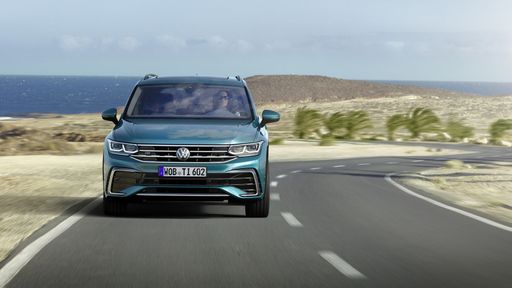
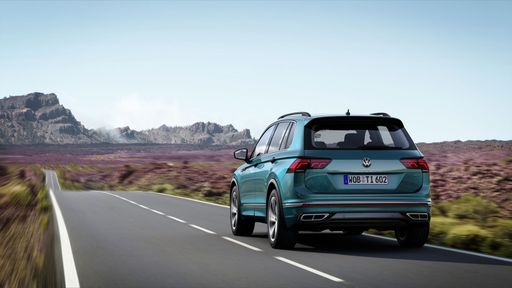
VW Tiguan

4.1 (8 Reviews)
rate
  • only slightly cheaper

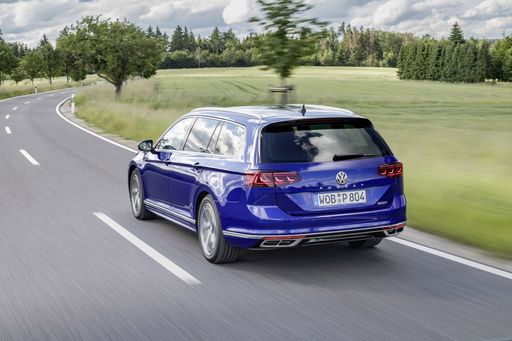
VW Passat

5 (3 Reviews)
rate
  • somewhat more efficient
  • only slightly more electric range
  • very slightly quicker 0–100 km/h
  • marginally lighter
  • very slightly more trunk space

All details on performance, efficiency, range and trunk space can be found in the technical comparison below – including user reviews for both models.

Tiguan

The Battle of the Best: VW Tiguan vs. VW Passat

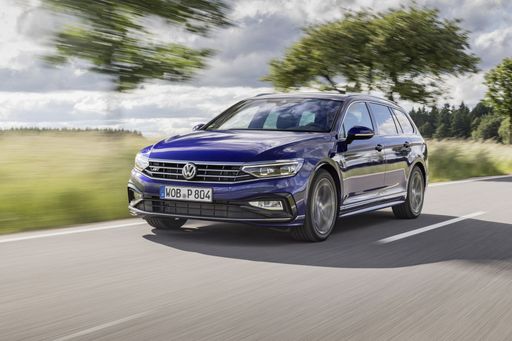
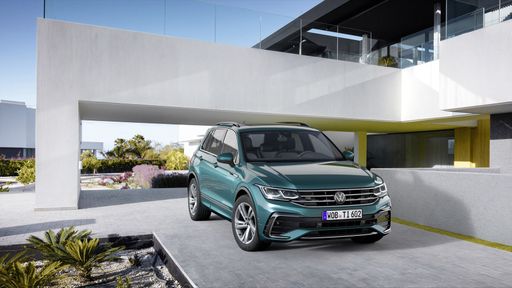
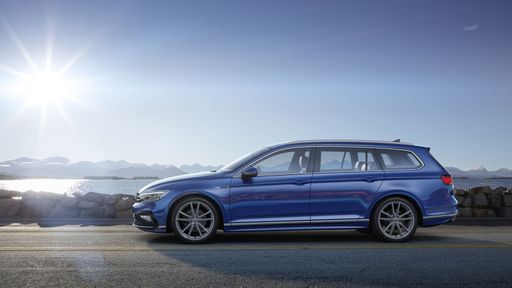
When it comes to the Volkswagen lineup, both the VW Tiguan and VW Passat are standout models, each offering unique attributes for different driving preferences. While the Tiguan is an SUV that promises space and versatility, the Passat, in its distinctly wagon form, is synonymous with comfort and style. Let’s delve into the technical aspects and innovations of these two contenders.

Passat

Engine Range and Performance

The VW Tiguan comes with a range of engine options, including the Petrol MHEV, Plugin Hybrid, Diesel, and Petrol variants. The most powerful of the lineup offers an impressive 272 HP, coupled with a top speed of 242 km/h. The dual-clutch automatic transmission ensures a seamless driving experience whether you choose the front-wheel or all-wheel drive options.

On the other hand, the VW Passat presents a similar variety of engine choices. It peaks with a robust 272 HP like its SUV sibling but offers an even better top speed of 250 km/h. Its dual-clutch automatic transmission and multiple drive options make it a versatile choice.

Tiguan

Fuel Efficiency and Electric Capabilities

Volkswagen has integrated advanced hybrid technology into both models. The Tiguan's plugin hybrid variant boasts an electric range of up to 113 km, supported by a 19.7 kWh battery, marking it as a strategic choice for eco-conscious drivers. Notably, its CO2 efficiency stands commendably within classes B to F, promising as low as 8 g/km in emissions for the most efficient variant.

The Passat doesn't fall short in terms of efficiency. With up to 126 km in electric-only range, this wagon optimizes fuel consumption with a noteworthy 0.4 L/100 km in its plugin hybrid edition. Emission rates start as low as 8 g/km, solidifying it as a leader in the low-emission vehicle market.

Passat

Dimensions and Practicality

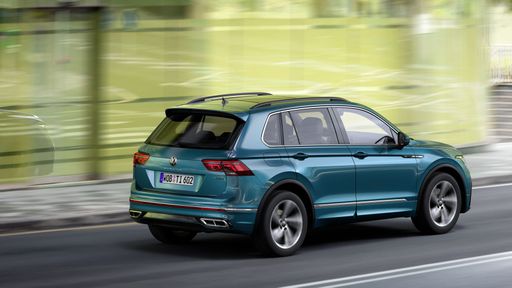
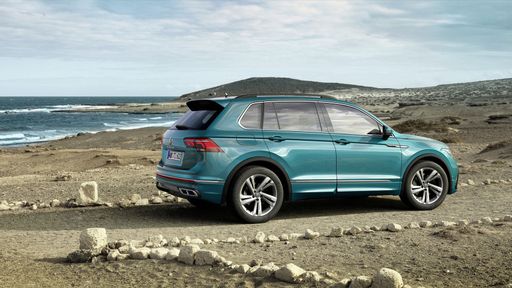
For those who prioritize space, the Tiguan offers ample room, suitable for both families and adventurous outings. Its 4529 mm length and a trunk capacity of 652 L make it highly practical. It comfortably seats five, ensuring all passengers enjoy sufficient legroom and comfort.

The Passat, meanwhile, stretches out to a generous 4917 mm in length. This not only translates to an expansive interior but also a capacious trunk that can hold up to 690 L. Despite being a wagon, it maintains a balanced drive and superior handling, making it suitable for long-distance cruises and daily commutes.

Tiguan

Innovation and Comfort

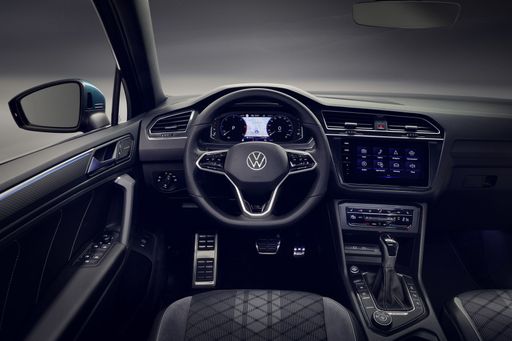
Both models reflect VW's commitment to innovation. The Tiguan comes equipped with the latest in infotainment and driver-assistance technology, ensuring a safe and enjoyable driving experience. Its adaptive cruise control and lane-keeping systems are ideal for highway journeys.

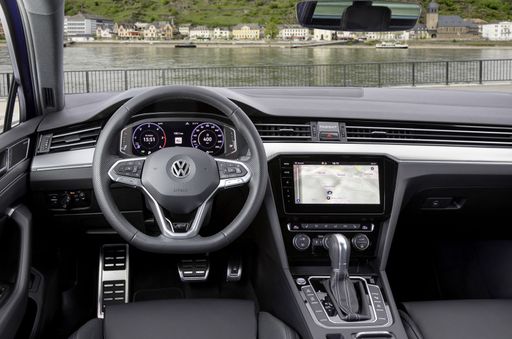
The Passat elevates the driving experience with its elegant interior and state-of-the-art technology. It features the latest infotainment and connectivity options, along with advanced driver-assistance features for enhanced safety and comfort.

Passat

Conclusion

Choosing between the VW Tiguan and VW Passat ultimately boils down to lifestyle needs. The Tiguan offers the versatility and ruggedness of an SUV, ideal for those who lead active lives. Meanwhile, the Passat stands out with its elegant styling and efficient versatility, perfect for those who appreciate the finer details in a practical package. Either way, Volkswagen ensures both choices come loaded with cutting-edge technology and performance capabilities, capable of satisfying even the most discerning driver.

Here’s where it gets real: The technical differences in detail

Tiguan

Costs and Efficiency:

Price and efficiency are key factors when choosing a car – and this is often where the real differences emerge.

VW Tiguan is only slightly cheaper – starting at 33,600 £ , while the VW Passat costs 36,500 £ . That’s a price difference of around 2,884 £.

Fuel consumption also shows a difference: the VW Passat uses 1.2 L/100km and is somewhat more efficient than the VW Tiguan with 1.4 L/100km. The difference is about 0.2 L/100km.

As for electric range, the VW Passat offers only slightly more range – reaching up to 135 km, about 9 km more than the VW Tiguan.

Passat

Engine and Performance:

Under the bonnet, it becomes clear which model is tuned for sportiness and which one takes the lead when you hit the accelerator.

Both models deliver identical power – 272 HP each.

When accelerating from 0 to 100 km/h, the VW Passat is very slightly quicker – completing the sprint in 5.8 s, while the VW Tiguan takes 5.9 s. That’s about 0.1 s quicker.

Looking at top speed, the VW Passat is moderately faster – reaching 250 km/h, while the VW Tiguan tops out at 215 km/h. The difference is around 35 km/h.

Both models offer the same torque – 400 Nm.

Tiguan

Space and Everyday Use:

Beyond pure performance, interior space and usability matter most in daily life. This is where you see which car is more practical and versatile.

Both vehicles offer seating for 5 people.

In terms of curb weight, VW Passat is marginally lighter – 1,573 kg compared to 1,599 kg. The difference is around 26 kg.

Looking at boot space, the VW Passat offers very slightly more boot space – 690 L compared to 652 L. That’s a difference of about 38 L.

For maximum load capacity, the VW Passat offers a bit more capacity – up to 1,770 L, about 284 L more than the VW Tiguan.

When it comes to payload, the VW Passat carries marginally more – 577 kg compared to 533 kg. That’s a difference of about 44 kg.

Who wins the race in the data check?

The VW Passat is far ahead overall in the objective data comparison.
This result only shows which model scores more points on paper – not which of the two cars feels right for you.

from £36,500
Passat

VW Passat

  • Engine Type : Petrol, Petrol MHEV, Diesel, Plugin Hybrid
  • Transmission : Automatic
  • Drive Type : All-Wheel Drive, Front-Wheel Drive
  • Power HP : 122 - 272 HP
  • Consumption L/100km : 1.2 - 8 L/100km
  • Electric Range : 124 - 135 km
VW Tiguan
VW Passat

Costs and Consumption

View detailed analysis

Engine and Performance

View detailed analysis

Dimensions and Body

View detailed analysis

VW Tiguan

The VW Tiguan blends sensible family practicality with a dash of German polish, delivering a calm, reassuring ride and a cabin that never feels like an afterthought. For buyers who want an SUV that’s easy to live with yet still nicely dressed, the Tiguan is the grown‑up choice that keeps a cheeky wink in reserve.

details

VW Passat

The VW Passat is the grown-up family car that gets the basics absolutely right — roomy, comfortable and built to handle weekday commutes and weekend getaways without fuss. It won't set your pulse racing, but its calm composure and sensible packaging make it boring in the best possible way: a dependable, no‑drama choice for buyers who value practicality over flash.

details
VW Tiguan
VW Passat

Costs and Consumption

Price
33,600 - 54,600 £
Price
36,500 - 58,500 £
Consumption L/100km
1.4 - 8.4 L/100km
Consumption L/100km
1.2 - 8 L/100km
Consumption kWh/100km
-
Consumption kWh/100km
-
Electric Range
118 - 126 km
Electric Range
124 - 135 km
Battery Capacity
19.7 kWh
Battery Capacity
19.7 kWh
co2
32 - 190 g/km
co2
28 - 181 g/km
Fuel tank capacity
45 L
Fuel tank capacity
45 - 66 L

Dimensions and Body

Body Type
SUV
Body Type
Estate
Seats
5
Seats
5
Doors
5
Doors
5
Curb weight
1,599 - 1,879 kg
Curb weight
1,573 - 1,858 kg
Trunk capacity
490 - 652 L
Trunk capacity
510 - 690 L
Length
4,539 mm
Length
4,917 mm
Width
1,842 - 1,859 mm
Width
1,849 mm
Height
1,658 mm
Height
1,521 mm
Max trunk capacity
1,486 L
Max trunk capacity
1,770 L
Payload
460 - 533 kg
Payload
501 - 577 kg

Engine and Performance

Engine Type
Petrol MHEV, Petrol, Diesel, Plugin Hybrid
Engine Type
Petrol, Petrol MHEV, Diesel, Plugin Hybrid
Transmission
Automatic
Transmission
Automatic
Transmission Detail
Dual-Clutch Automatic
Transmission Detail
Dual-Clutch Automatic
Drive Type
Front-Wheel Drive, All-Wheel Drive
Drive Type
All-Wheel Drive, Front-Wheel Drive
Power HP
130 - 272 HP
Power HP
122 - 272 HP
Acceleration 0-100km/h
5.9 - 10.6 s
Acceleration 0-100km/h
5.8 - 10.7 s
Max Speed
210 - 215 km/h
Max Speed
220 - 250 km/h
Torque
220 - 400 Nm
Torque
250 - 400 Nm
Number of Cylinders
4
Number of Cylinders
4
Power kW
96 - 200 kW
Power kW
90 - 200 kW
Engine capacity
1,498 - 1,984 cm3
Engine capacity
1,498 - 1,984 cm3

General

Model Year
2,024 - 2,026
Model Year
2,024 - 2,025
CO2 Efficiency Class
D, E, F, B, G
CO2 Efficiency Class
G, D, E, B
Brand
VW
Brand
VW
DriveDuel uses data analysis and artificial intelligence to evaluate vehicle data and create content. Content is regularly reviewed and improved. The displayed prices are estimates based on German list prices, adjusted to the respective country’s VAT. Country-specific registration taxes are not included. This information is not legally binding.