VS

VW Tiguan vs Skoda Elroq comparison

Compare performance (272 HP vs 340 HP), boot space and price (33,600 £ vs 37,900 £ ) at a glance. Find out which car is the better choice for you – VW Tiguan or Skoda Elroq?

VW Tiguan vs Skoda Elroq: Key differences

VW Tiguan

4.1 (8 Reviews)
rate
  • slightly cheaper
  • noticeably lighter
  • clearly more trunk space

Skoda Elroq

4.5 (4 Reviews)
rate
  • a bit more power
  • significantly more electric range
  • very slightly quicker 0–100 km/h

All details on performance, efficiency, range and trunk space can be found in the technical comparison below – including user reviews for both models.

By Achim Sedelmaier

Tiguan

The automotive market is constantly evolving, with manufacturers striving to bring the best innovations and technologies to their vehicle lineups. In this head-to-head comparison, we take a closer look at two prominent contenders in the compact SUV category: the Volkswagen Tiguan and the Skoda Elroq. Each offers a unique blend of performance, comfort, and technology, making them appealing choices for different types of drivers.

Elroq

Design and Dimensions

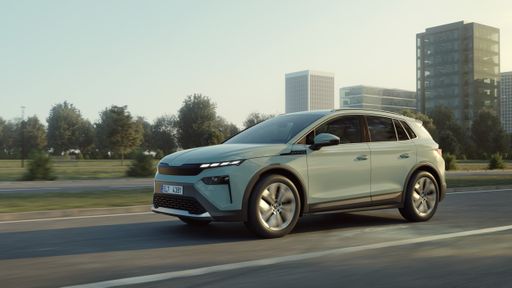
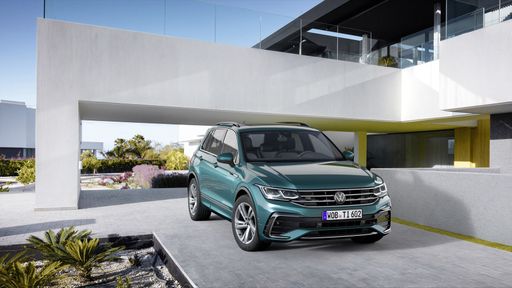
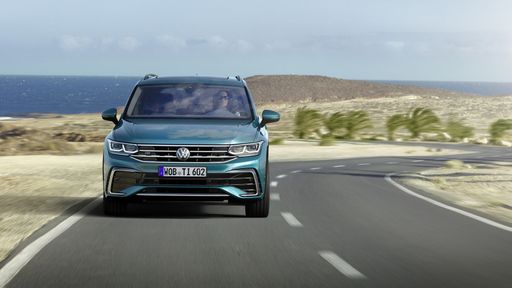
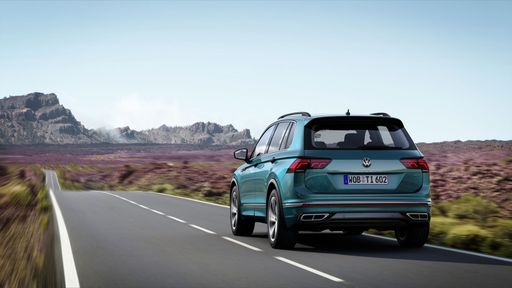
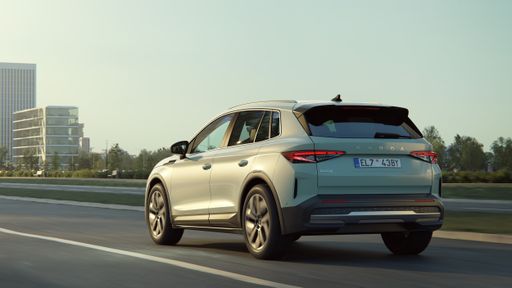
Starting with the overall dimensions, the VW Tiguan measures 4539 mm in length, 1842 mm in width, and 1658 mm in height, while the Skoda Elroq is slightly smaller at 4488 mm long, 1884 mm wide, and 1625 mm high. This difference provides a marginally more robust stance for the Elroq, but the Tiguan's distinctive design features add to its aesthetic appeal.

Both vehicles have a five-door configuration and comfortably seat five passengers, although the Tiguan boasts a slightly larger trunk capacity at 652 liters compared to the Elroq's 470 liters, offering more space for cargo.

Tiguan

Engine Options and Performance

The Volkswagen Tiguan provides a versatile range of powertrains, including petrol MHEV, plug-in hybrid, and diesel options, with power outputs ranging from 130 HP to a robust 272 HP. Its fuel consumption varies with the engine, achieving as low as 5.3 L/100 km for the more efficient models, while also giving an electric range of up to 112 km with its hybrid variants.

In contrast, the Skoda Elroq is fully electric, offering two power outputs of 170 HP and 285 HP. Its electric range is impressive, with variants achieving up to 580 km. The consumption for the Elroq varies around 15.2 to 16.4 kWh/100 km, illustrating its efficiency as an electric vehicle.

Elroq

Transmission and Drive

Both vehicles feature automatic transmissions, with the Tiguan utilizing a dual-clutch system, ideal for a responsive driving experience. It offers front-wheel and all-wheel drive configurations, enhancing its versatility on different terrains.

The Skoda Elroq employs a reduction gearbox and operates on rear-wheel drive, which is a typical configuration in electric vehicles, providing an engaging driving experience and good road handling.

Tiguan

Acceleration and Speed

When it comes to acceleration, the Tiguan presents options that allow it to sprint from 0-100 km/h in as little as 5.9 seconds for its performance variant. This adaptive performance showcases its sporty side, particularly for a compact SUV.

The Elroq demonstrates a commendable acceleration as well, reaching 0-100 km/h in just 6.6 seconds for its higher output variant, substantiating its capability to compete in terms of performance while remaining entirely electric.

Elroq

Technological Innovations

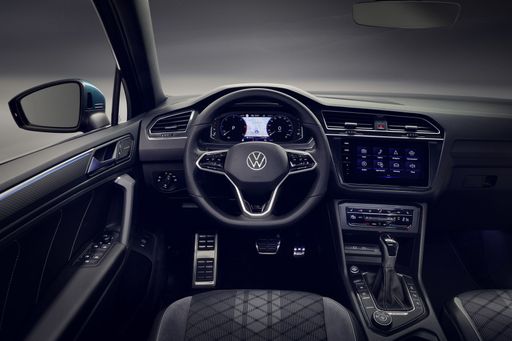
Volkswagen has equipped the Tiguan with numerous technological advancements, including an intuitive infotainment system, advanced driver assistance features, and various connectivity options to keep passengers entertained and safe during their journeys.

Skoda’s Elroq also matches these innovations with a fully digital cockpit, integrating multiple driver assistance technologies, and offering seamless connectivity through its advanced infotainment system. Moreover, its clean energy approach contributes positively to environmental efforts, appealing to eco-conscious consumers.

Tiguan

Comfort and Features

The Tiguan emphasizes comfort with high-quality materials, ergonomic seating, and a host of adjustable features tailored for a pleasurable ride. The cabin is spacious and well-designed, promoting an overall sense of quality.

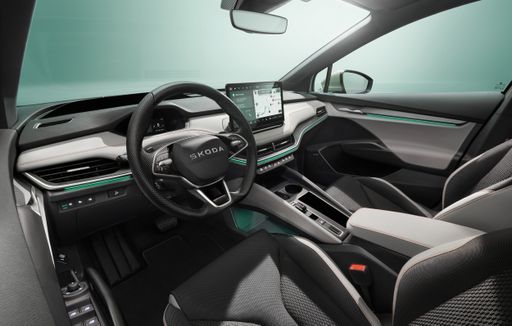
On the other hand, the Elroq’s design philosophy aligns with generating a practical environment. Its interior features reflect a focus on functionality without sacrificing comfort, ensuring passengers enjoy both utility and ease during their travels.

Conclusion

In conclusion, choosing between the Volkswagen Tiguan and Skoda Elroq ultimately depends on consumer preferences and priorities. The Tiguan stands out for its diverse engine options and sporty performance while ensuring comfort and sophisticated features. Conversely, the Skoda Elroq is a strong contender in the electric vehicle market, showcasing impressive range, efficiency, and modern technology.

Both SUVs present compelling packages, but potential buyers should consider their driving needs, environmental responsibilities, and personal preferences in design and functionality when making their decision.

Video - Skoda Elroq

Video Thumbnail

Here’s where it gets real: The technical differences in detail

Tiguan

Costs and Efficiency:

Price and efficiency are key factors when choosing a car – and this is often where the real differences emerge.

VW Tiguan is slightly cheaper – starting at 33,600 £ , while the Skoda Elroq costs 37,900 £ . That’s a price difference of around 4,290 £.

As for electric range, the Skoda Elroq offers significantly more range – reaching up to 573 km, about 447 km more than the VW Tiguan.

Elroq

Engine and Performance:

Under the bonnet, it becomes clear which model is tuned for sportiness and which one takes the lead when you hit the accelerator.

When it comes to engine power, the Skoda Elroq offers a bit more power – delivering 340 HP compared to 272 HP. That’s roughly 68 HP more horsepower.

When accelerating from 0 to 100 km/h, the Skoda Elroq is very slightly quicker – completing the sprint in 5.4 s, while the VW Tiguan takes 5.9 s. That’s about 0.5 s quicker.

Looking at top speed, the VW Tiguan is somewhat faster – reaching 215 km/h, while the Skoda Elroq tops out at 180 km/h. The difference is around 35 km/h.

There’s also a difference in torque: the Skoda Elroq delivers significantly more torque with 679 Nm compared to 400 Nm. That’s about 279 Nm more.

Tiguan

Space and Everyday Use:

Cabin size, boot volume and payload all play a role in everyday practicality. Here, comfort and flexibility make the difference.

Both vehicles offer seating for 5 people.

In terms of curb weight, VW Tiguan is noticeably lighter – 1,599 kg compared to 2,133 kg. The difference is around 534 kg.

Looking at boot space, the VW Tiguan offers clearly more boot space – 652 L compared to 470 L. That’s a difference of about 182 L.

For maximum load capacity, the Skoda Elroq offers barely more capacity – up to 1,580 L, about 94 L more than the VW Tiguan.

When it comes to payload, the VW Tiguan carries marginally more – 533 kg compared to 517 kg. That’s a difference of about 16 kg.

Who wins the race in the data check?

The Skoda Elroq is decisively ahead in the objective data comparison.
This result only shows which model scores more points on paper – not which of the two cars feels right for you.

from £37,900
Elroq

Skoda Elroq

  • Engine Type : Electric
  • Transmission : Automatic
  • Drive Type : Rear-Wheel Drive, All-Wheel Drive
  • Power HP : 286 - 340 HP
  • Consumption kWh/100km : 15.2 - 16.5 kWh/100km
  • Electric Range : 529 - 573 km
VW Tiguan
Skoda Elroq

Costs and Consumption

View detailed analysis

Engine and Performance

View detailed analysis

Dimensions and Body

View detailed analysis

VW Tiguan

The VW Tiguan blends sensible family practicality with a dash of German polish, delivering a calm, reassuring ride and a cabin that never feels like an afterthought. For buyers who want an SUV that’s easy to live with yet still nicely dressed, the Tiguan is the grown‑up choice that keeps a cheeky wink in reserve.

details

Skoda Elroq

The Skoda Elroq is a cleverly packaged family SUV that mixes roomy practicality with sharp, modern looks, making it an easy pick for buyers who prefer common sense over flash. On the road it's composed and user-friendly, with thoughtful interior details that turn everyday driving into something pleasantly efficient — a sensible companion with a wink.

details
VW Tiguan
Skoda Elroq

Costs and Consumption

Price
33,600 - 54,600 £
Price
37,900 - 45,500 £
Consumption L/100km
1.4 - 8.4 L/100km
Consumption L/100km
-
Consumption kWh/100km
-
Consumption kWh/100km
15.2 - 16.5 kWh/100km
Electric Range
118 - 126 km
Electric Range
529 - 573 km
Battery Capacity
19.7 kWh
Battery Capacity
77 - 79 kWh
co2
32 - 190 g/km
co2
0 g/km
Fuel tank capacity
45 L
Fuel tank capacity
-

Dimensions and Body

Body Type
SUV
Body Type
SUV
Seats
5
Seats
5
Doors
5
Doors
5
Curb weight
1,599 - 1,879 kg
Curb weight
2,133 - 2,268 kg
Trunk capacity
490 - 652 L
Trunk capacity
470 L
Length
4,539 mm
Length
4,488 mm
Width
1,842 - 1,859 mm
Width
1,884 mm
Height
1,658 mm
Height
1,608 - 1,625 mm
Max trunk capacity
1,486 L
Max trunk capacity
1,580 L
Payload
460 - 533 kg
Payload
470 - 517 kg

Engine and Performance

Engine Type
Petrol MHEV, Petrol, Diesel, Plugin Hybrid
Engine Type
Electric
Transmission
Automatic
Transmission
Automatic
Transmission Detail
Dual-Clutch Automatic
Transmission Detail
Reduction Gearbox
Drive Type
Front-Wheel Drive, All-Wheel Drive
Drive Type
Rear-Wheel Drive, All-Wheel Drive
Power HP
130 - 272 HP
Power HP
286 - 340 HP
Acceleration 0-100km/h
5.9 - 10.6 s
Acceleration 0-100km/h
5.4 - 6.6 s
Max Speed
210 - 215 km/h
Max Speed
180 km/h
Torque
220 - 400 Nm
Torque
545 - 679 Nm
Number of Cylinders
4
Number of Cylinders
-
Power kW
96 - 200 kW
Power kW
210 - 250 kW
Engine capacity
1,498 - 1,984 cm3
Engine capacity
-

General

Model Year
2,024 - 2,026
Model Year
2,025
CO2 Efficiency Class
D, E, F, B, G
CO2 Efficiency Class
A
Brand
VW
Brand
Skoda
DriveDuel uses data analysis and artificial intelligence to evaluate vehicle data and create content. Content is regularly reviewed and improved. The displayed prices are estimates based on German list prices, adjusted to the respective country’s VAT. Country-specific registration taxes are not included. This information is not legally binding.