VS

Audi Q5 vs Mercedes AMG GT comparison

Compare performance (367 HP vs 816 HP), boot space and price (46,400 £ vs 102,500 £ ) at a glance. Find out which car is the better choice for you – Audi Q5 or Mercedes AMG GT?

Audi Q5 vs Mercedes AMG GT: Key differences

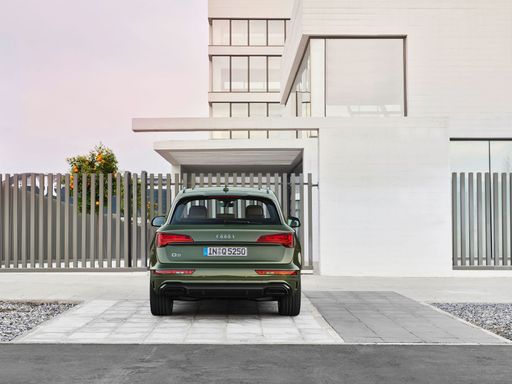
Audi Q5

4.4 (6 Reviews)
rate
  • clearly cheaper
  • significantly more efficient
  • substantially more electric range
details

Mercedes AMG GT

  • significantly more power
  • clearly quicker 0–100 km/h
  • barely lighter
details

All details on performance, efficiency, range and trunk space can be found in the technical comparison below – including user reviews for both models.

By Achim Sedelmaier

Q5

Unveiling the Titans: Audi Q5 vs. Mercedes AMG GT

In the realm of luxury automobiles, few names evoke as much respect as Audi and Mercedes-Benz. Today, we juxtapose the Audi Q5, a robust SUV, against the sporty elegance of the Mercedes AMG GT Coupe. Each model boasts its own set of innovations and technological marvels, reflecting the unique identities crafted by their brands. This comparison delves into their technical nuances and innovative offerings.
AMG GT

Engine and Power: Strength vs. Speed

The Audi Q5 provides a wide range of engine choices, making it versatile for different driver preferences. With options ranging from a Diesel Mild Hybrid Electric Vehicle (MHEV) to a Plugin Hybrid, the Q5 covers power outputs between 163 HP and 367 HP. Its versatility extends to its drive types, offering both all-wheel and front-wheel configurations, enhancing its adaptability to diverse driving conditions.

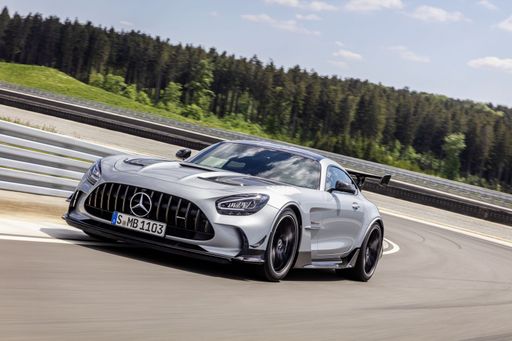
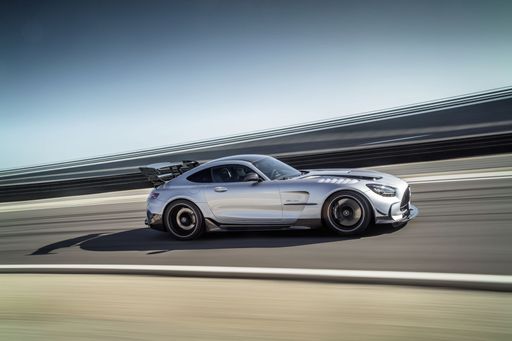
On the other hand, the Mercedes AMG GT is a powerhouse of performance, especially for enthusiasts seeking adrenaline-pumping rides. Sporting engines that deliver between 476 HP to a mind-boggling 816 HP, primarily due to its Petrol and Plugin Hybrid systems, this coupe doesn't just drive, it races. Rear-wheel and all-wheel drive options give it unparalleled agility and handling precision.

Q5

Performance Metrics: Acceleration and Top Speed

The Audi Q5 comfortably balances power and efficiency with an acceleration of 0-100 km/h ranging from 5.1 to 9 seconds, depending on the engine variant chosen. The maximum speeds span from 213 km/h to a remarkable 250 km/h, showcasing its capability to merge efficiency with vigor.

Meanwhile, the AMG GT is a born sprinter, capable of hitting 100 km/h from standstill in as little as 2.8 seconds, with top speeds pushing an exhilarating 320 km/h. This model resonates with those who prioritize thrill and top-tier performance.

AMG GT

Innovative Features and Efficiency

In terms of fuel efficiency, the Audi Q5 exhibits commendable averages for an SUV with consumption as low as 5.6 L/100 km, courtesy of its advanced hybrid technology, and an electric range of up to 62 km on its hybrid models. This contributes to its more favorable CO2 efficiency ratings, tackling environmental concerns more effectively.

Conversely, the AMG GT, while robust in its performance, embodies a higher fuel consumption with figures reaching up to 14.1 L/100 km, reflecting its focus on performance over efficiency. The All-new AMG GT's electric range is limited to 13 km, leaning heavily into pure power and less on sustainability.

Q5

Design and Capacity: Form and Function

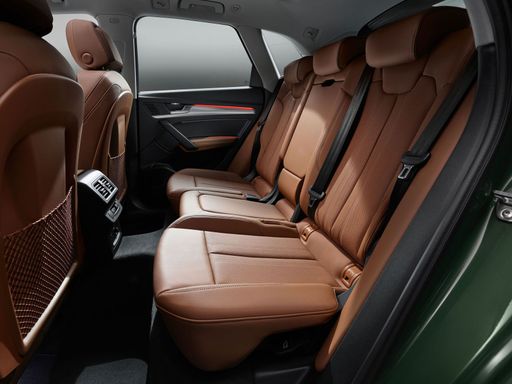
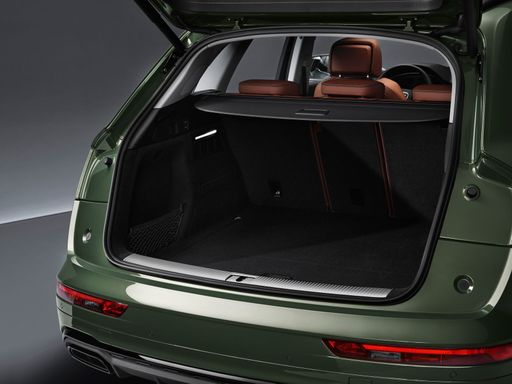
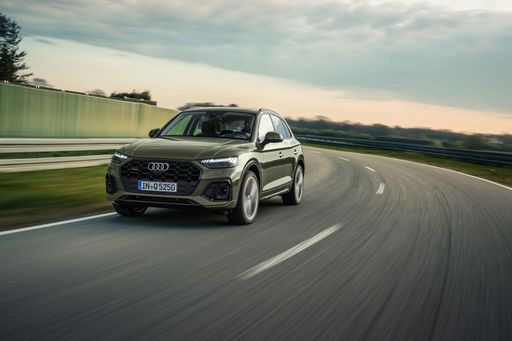
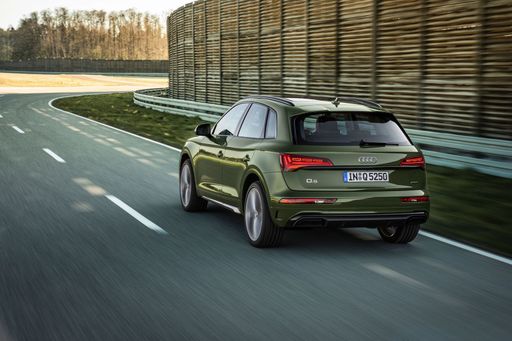
For the Audi Q5, practicality meets luxury with seating for five and a spacious trunk capacity that can hold up to 520 liters, making it ideal for family trips or extra luggage. Its dimensions reflect a perfect blend of functionality and contemporary design, optimized for comfort and space.

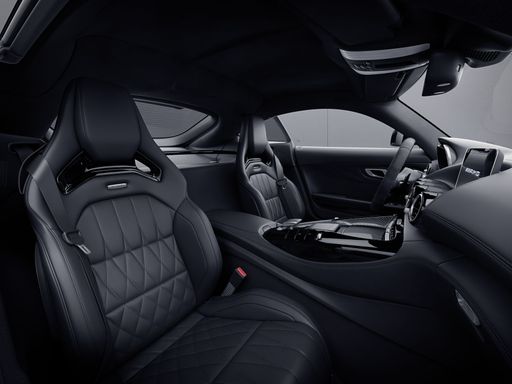
The AMG GT, true to its coupe form, is designed with two seats, focusing on a driver-oriented experience. With a smaller trunk capacity of 321 liters, it emphasizes its sporty nature, favoring aerodynamic form over utility.

AMG GT

Conclusion: Choice of Champions

The decision between the Audi Q5 and the Mercedes AMG GT ultimately hinges on personal priorities. The Q5 is designed for those seeking a balance of performance, versatility, and practicality. In contrast, the AMG GT caters to thrill-seekers and enthusiasts who value unmatched speed and aesthetic prowess.

Both models bring admirable innovations to the table, embodying the pinnacle of engineering from their respective marques. Whether you crave the deep-seated roar of a coupe or the steady, reliable power of an SUV, these models are testaments to the ever-evolving landscape of luxury automotive design.

Here’s where it gets real: The technical differences in detail

Q5

Costs and Efficiency:

Price and efficiency are key factors when choosing a car – and this is often where the real differences emerge.

Audi Q5 is clearly cheaper – starting at 46,400 £ , while the Mercedes AMG GT costs 102,500 £ . That’s a price difference of around 56,133 £.

Fuel consumption also shows a difference: the Audi Q5 uses 2.5 L/100km and is significantly more efficient than the Mercedes AMG GT with 10.3 L/100km. The difference is about 7.8 L/100km.

As for electric range, the Audi Q5 offers substantially more range – reaching up to 100 km, about 89 km more than the Mercedes AMG GT.

AMG GT

Engine and Performance:

Power, torque and acceleration are the classic benchmarks for car enthusiasts – and here, some clear differences start to show.

When it comes to engine power, the Mercedes AMG GT offers significantly more power – delivering 816 HP compared to 367 HP. That’s roughly 449 HP more horsepower.

When accelerating from 0 to 100 km/h, the Mercedes AMG GT is clearly quicker – completing the sprint in 2.8 s, while the Audi Q5 takes 4.5 s. That’s about 1.7 s quicker.

There’s also a difference in torque: the Mercedes AMG GT delivers substantially more torque with 1,420 Nm compared to 580 Nm. That’s about 840 Nm more.

Q5

Space and Everyday Use:

Beyond pure performance, interior space and usability matter most in daily life. This is where you see which car is more practical and versatile.

Seats: Audi Q5 offers more seats – 5 vs 2.

In terms of curb weight, Mercedes AMG GT is barely lighter – 1,790 kg compared to 1,910 kg. The difference is around 120 kg.

When it comes to payload, the Audi Q5 carries clearly more – 565 kg compared to 215 kg. That’s a difference of about 350 kg.

Who wins the race in the data check?

The Audi Q5 is decisively ahead in the objective data comparison.
This result only shows which model scores more points on paper – not which of the two cars feels right for you.

from £46,400
Q5

Audi Q5

  • Engine Type : Plugin Hybrid, Petrol MHEV, Diesel MHEV
  • Transmission : Automatic
  • Drive Type : All-Wheel Drive, Front-Wheel Drive
  • Power HP : 204 - 367 HP
  • Consumption L/100km : 2.5 - 8.3 L/100km
  • Electric Range : 92 - 100 km
Audi Q5
Mercedes AMG GT

Costs and Consumption

View detailed analysis

Engine and Performance

View detailed analysis

Dimensions and Body

View detailed analysis

Audi Q5

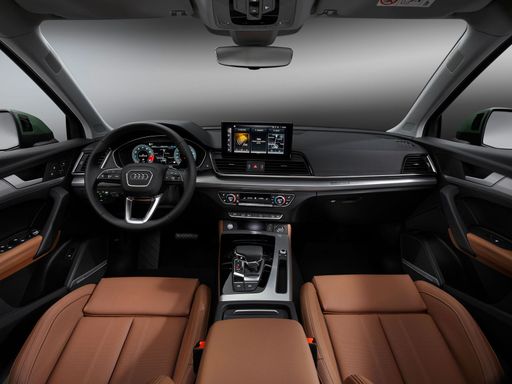
The Audi Q5 feels like the sensible luxury choice — polished cabin materials, a calm ride and enough tech to keep commuters and weekend adventurers equally pleased. It won't shout for attention but will quietly check the boxes for buyers who want refinement, space and everyday usability with a dash of Audi charisma.

details

Mercedes AMG GT

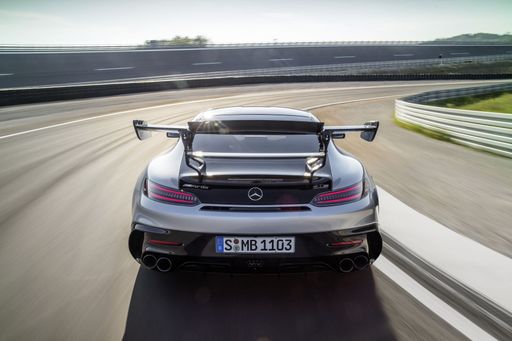
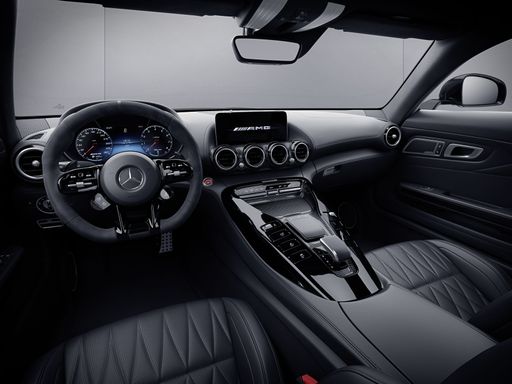
The Mercedes-AMG GT is a theatrical sports car with prowling looks and an aggressive exhaust note that announces its intentions the moment it fires up. It pairs ferocious performance with surprising everyday usability — a taut yet forgiving chassis and a cockpit that feels special — making sensible buyers suddenly very good at justifying indulgence.

details
Audi Q5
Mercedes AMG GT

Costs and Consumption

Price
46,400 - 79,600 £
Price
102,500 - 194,400 £
Consumption L/100km
2.5 - 8.3 L/100km
Consumption L/100km
10.3 - 14 L/100km
Consumption kWh/100km
-
Consumption kWh/100km
-
Electric Range
92 - 100 km
Electric Range
11 km
Battery Capacity
-
Battery Capacity
-
co2
56 - 189 g/km
co2
235 - 319 g/km
Fuel tank capacity
-
Fuel tank capacity
-

Dimensions and Body

Body Type
SUV
Body Type
Coupe
Seats
5
Seats
2
Doors
-
Doors
-
Curb weight
1,910 - 2,245 kg
Curb weight
1,790 - 2,195 kg
Trunk capacity
433 - 520 L
Trunk capacity
-
Length
-
Length
-
Width
1,900 mm
Width
1,929 mm
Height
-
Height
-
Max trunk capacity
-
Max trunk capacity
-
Payload
490 - 565 kg
Payload
170 - 215 kg

Engine and Performance

Engine Type
Plugin Hybrid, Petrol MHEV, Diesel MHEV
Engine Type
Petrol MHEV, Petrol, Plugin Hybrid
Transmission
Automatic
Transmission
Automatic
Transmission Detail
Dual-Clutch Automatic
Transmission Detail
Automatic Gearbox
Drive Type
All-Wheel Drive, Front-Wheel Drive
Drive Type
Rear-Wheel Drive, All-Wheel Drive
Power HP
204 - 367 HP
Power HP
435 - 816 HP
Acceleration 0-100km/h
4.5 - 8.6 s
Acceleration 0-100km/h
2.8 - 4.6 s
Max Speed
-
Max Speed
-
Torque
340 - 580 Nm
Torque
500 - 1,420 Nm
Number of Cylinders
4 - 6
Number of Cylinders
4 - 8
Power kW
150 - 270 kW
Power kW
320 - 600 kW
Engine capacity
1,968 - 2,995 cm3
Engine capacity
1,991 - 3,982 cm3

General

Model Year
2025
Model Year
2025
CO2 Efficiency Class
B, E, F, G
CO2 Efficiency Class
G
Brand
Audi
Brand
Mercedes-Benz
DriveDuel uses data analysis and artificial intelligence to evaluate vehicle data and create content. Content is regularly reviewed and improved. The displayed prices are estimates based on German list prices, adjusted to the respective country’s VAT. Country-specific registration taxes are not included. This information is not legally binding.