VS

Audi Q5 vs Mercedes GLC comparison

Compare performance (367 HP vs 472 HP), boot space and price (46,400 £ vs 50,300 £ ) at a glance. Find out which car is the better choice for you – Audi Q5 or Mercedes GLC?

Audi Q5 vs Mercedes GLC: Key differences

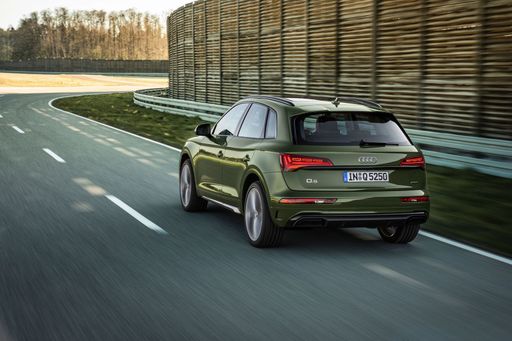
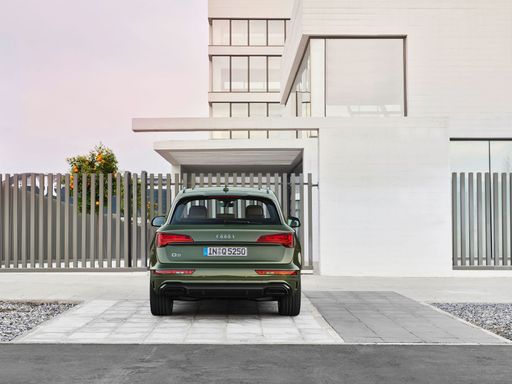
Audi Q5

4.5 (7 Reviews)
rate
  • very slightly cheaper
  • very slightly lighter
details

Mercedes GLC

4.4 (13 Reviews)
rate
  • markedly more power
  • significantly more efficient
  • clearly more electric range
  • barely quicker 0–100 km/h
  • slightly more trunk space
details

All details on performance, efficiency, range and trunk space can be found in the technical comparison below – including user reviews for both models.

By Achim Sedelmaier

Q5

Audi Q5 VS Mercedes GLC: the premium SUV face‑off buyers actually feel

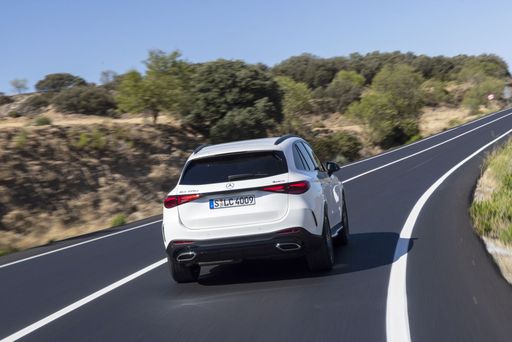
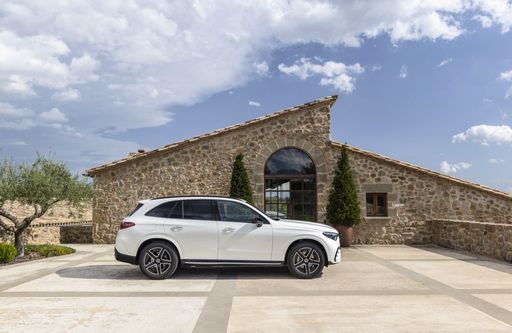
The Audi Q5 and Mercedes GLC aim at the same sweet spot—quiet, premium family transport that still feels special on a long drive. In practice they deliver that calm in different ways: the Audi Q5 leans into relaxed stability and fuss‑free progress, while the Mercedes GLC layers on a more luxurious vibe and a touch more effortless shove. Day to day, the Audi’s character is the steady one that shrugs off miles; the Mercedes feels silkier when specified right and a bit more energetic when you ask for speed. Choosing between them comes down to which balance of comfort, usability and cabin mood fits your life best.
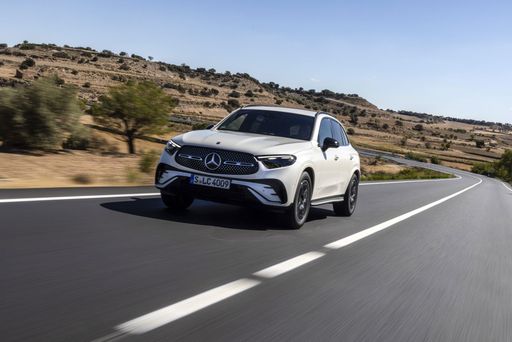
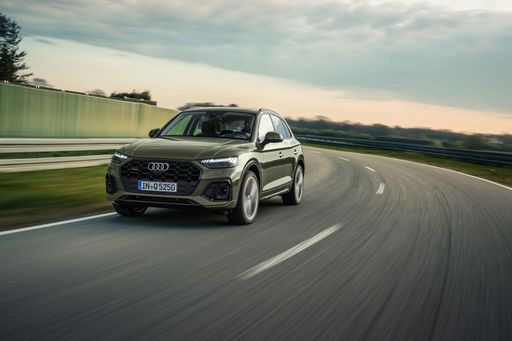
GLC

Ride comfort and long‑distance calm

Both settle into the motorway beautifully, but the Audi Q5 has that subtle, unflustered poise that keeps your shoulders down through a long stint. Its seats support you well and the car tracks straight with a calm, predictable feel, even when the surface gets patchy. The Mercedes GLC can match the serenity and go beyond it with optional air suspension, which adds a plush layer and lowers the rear for loading, though the base setup on big wheels can thump over sharp edges. If you prioritize consistent comfort regardless of spec, the Q5 is the safer bet; if you’ll choose the right options, the GLC turns into a whisper‑quiet cruiser with a more cosseting edge.

Q5

Cabin feel, tech and usability

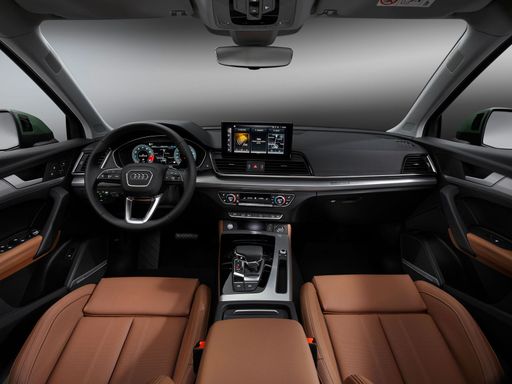
The Mercedes GLC wins first impressions with richer materials and a more theatrical cabin, and its voice assistant genuinely reduces menu diving once you get used to it. Touch surfaces remain a frustration, though—the steering wheel pads are easy to brush and climate lives in the screen. The Audi Q5 feels calmer and more businesslike, but its touch‑heavy approach and the door panel controls can also distract until you learn the system. In short, the GLC leans luxury‑show with helpful voice control, while the Q5 trades flash for a tidier layout that’s easy to live with once set up.

GLC

Space and everyday practicality

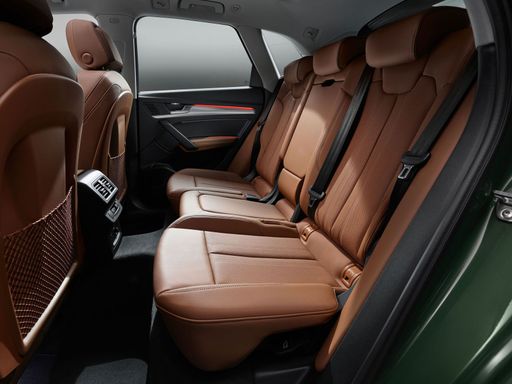
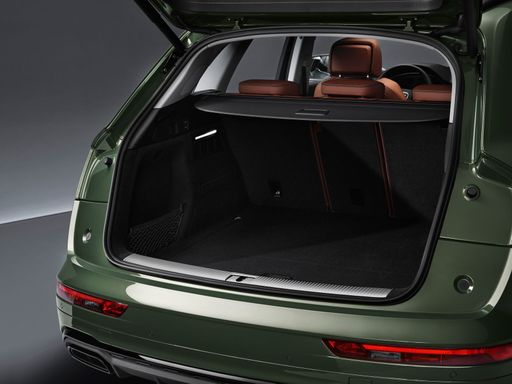
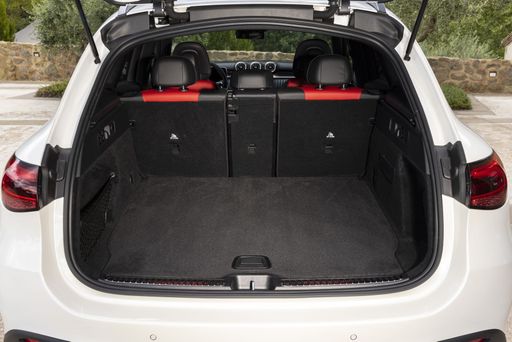
If you want maximum boot space from a non‑hybrid, the Mercedes GLC simply carries more and does it with a wide opening and neat remote seat releases. Go plug‑in, and the GLC pays a steeper cargo penalty with a higher floor and a step that families notice on holiday runs. The Audi Q5 counters with smart usability: a sliding rear bench, a low loading lip and neat storage touches make the most of its more modest volume. For sheer capacity the GLC (in combustion form) is the pack mule; for clever versatility in day‑to‑day life, the Q5 often feels easier to use.

Q5

City manners and the daily grind

Threading through tight streets, the Audi Q5 is easy to place and its cameras take the stress out of multi‑storey ramps, though thick front pillars can hide pedestrians at awkward angles. The Mercedes GLC feels a size broader, but optional rear‑axle steering is a game changer that shrinks the turning circle and makes tight U‑turns painless. Visibility to the rear is better managed by the Q5’s more conventional glasshouse, while the GLC leans more on its electronic aids. If you do a lot of urban miles, the Q5 is naturally friendly; tick the right box and the GLC becomes the easier tool in tight spots.

GLC

Performance, efficiency and buyer fit

The Mercedes GLC serves up a stronger punch in higher‑output versions, making overtakes feel almost casual, and its plug‑in hybrids deliver true commute‑length electric running when charged regularly. The Audi Q5 is no slouch, but its appeal is the composed, confidence‑inspiring way it deploys performance rather than the drama of it. Cost‑wise, the Q5 typically starts lower and feels better value if you don’t want to wade deep into options; the GLC asks more upfront but pays you back with a plusher ambience and, in PHEV form, standout EV range. If you want quiet confidence, towing traction and straightforward long‑haul comfort, the Audi Q5 fits neatly; if you prefer richer cabin feel, a bigger non‑hybrid boot and stronger electric capability, the Mercedes GLC makes its case—and the technical comparison below will spell out those trade‑offs in detail.

Here’s where it gets real: The technical differences in detail

Q5

Costs and Efficiency:

When it comes to price and running costs, the biggest differences usually appear. This is often where you see which car fits your budget better in the long run.

Audi Q5 is very slightly cheaper – starting at 46,400 £ , while the Mercedes GLC costs 50,300 £ . That’s a price difference of around 3,956 £.

Fuel consumption also shows a difference: the Mercedes GLC uses 1.6 L/100km and is significantly more efficient than the Audi Q5 with 2.5 L/100km. The difference is about 0.9 L/100km.

As for electric range, the Mercedes GLC offers clearly more range – reaching up to 128 km, about 28 km more than the Audi Q5.

GLC

Engine and Performance:

Under the bonnet, it becomes clear which model is tuned for sportiness and which one takes the lead when you hit the accelerator.

When it comes to engine power, the Mercedes GLC offers markedly more power – delivering 472 HP compared to 367 HP. That’s roughly 105 HP more horsepower.

When accelerating from 0 to 100 km/h, the Mercedes GLC is barely quicker – completing the sprint in 4.2 s, while the Audi Q5 takes 4.5 s. That’s about 0.3 s quicker.

There’s also a difference in torque: the Mercedes GLC delivers clearly more torque with 750 Nm compared to 580 Nm. That’s about 170 Nm more.

Q5

Space and Everyday Use:

Whether family car or daily driver – which one offers more room, flexibility and comfort?

Both vehicles offer seating for 5 people.

In terms of curb weight, Audi Q5 is very slightly lighter – 1,910 kg compared to 1,985 kg. The difference is around 75 kg.

Looking at boot space, the Mercedes GLC offers slightly more boot space – 620 L compared to 520 L. That’s a difference of about 100 L.

When it comes to payload, the Mercedes GLC carries barely more – 575 kg compared to 565 kg. That’s a difference of about 10 kg.

Who wins the race in the data check?

The Mercedes GLC is far ahead overall in the objective data comparison.
This result only shows which model scores more points on paper – not which of the two cars feels right for you.

from £50,300
GLC

Mercedes GLC

  • Engine Type Diesel MHEV, Plugin Hybrid, Petrol MHEV
  • Transmission Automatic
  • Drive Type All-Wheel Drive
  • Power HP 186 - 472 HP
  • Consumption L/100km 1.6 - 9.4 L/100km
  • Electric Range 122 - 128 km
Audi Q5
Mercedes GLC

Costs and Consumption

View detailed analysis

Engine and Performance

View detailed analysis

Dimensions and Body

View detailed analysis

Audi Q5

The Audi Q5 is a refined compact luxury SUV that blends a plush, well-appointed interior with confident, composed handling suited to everyday driving. It’s a strong choice if you want a comfortable, technology-rich cabin and a practical, upscale package that feels polished on both city streets and longer trips.

details

Mercedes GLC

The Mercedes GLC blends quiet refinement with premium materials to create a comfortable, modern cabin that feels more upscale than its size might suggest. It delivers composed handling and confident on-road manners while offering practical versatility and a strong suite of driver assistance and infotainment features.

details
Audi Q5
Mercedes GLC

Costs and Consumption

Price
46,400 - 79,600 £
Price
50,300 - 82,100 £
Consumption L/100km
2.5 - 8.3 L/100km
Consumption L/100km
1.6 - 9.4 L/100km
Consumption kWh/100km
-
Consumption kWh/100km
-
Electric Range
92 - 100 km
Electric Range
122 - 128 km
Battery Capacity
-
Battery Capacity
-
co2
56 - 189 g/km
co2
41 - 214 g/km
Fuel tank capacity
-
Fuel tank capacity
-

Dimensions and Body

Body Type
SUV
Body Type
SUV
Seats
5
Seats
5
Doors
-
Doors
-
Curb weight
1,910 - 2,245 kg
Curb weight
1,985 - 2,400 kg
Trunk capacity
433 - 520 L
Trunk capacity
390 - 620 L
Length
-
Length
-
Width
1,900 mm
Width
1,890 - 1,920 mm
Height
-
Height
-
Max trunk capacity
-
Max trunk capacity
-
Payload
490 - 565 kg
Payload
475 - 575 kg

Engine and Performance

Engine Type
Plugin Hybrid, Petrol MHEV, Diesel MHEV
Engine Type
Diesel MHEV, Plugin Hybrid, Petrol MHEV
Transmission
Automatic
Transmission
Automatic
Transmission Detail
Dual-Clutch Automatic
Transmission Detail
Automatic Gearbox
Drive Type
All-Wheel Drive, Front-Wheel Drive
Drive Type
All-Wheel Drive
Power HP
204 - 367 HP
Power HP
186 - 472 HP
Acceleration 0-100km/h
4.5 - 8.6 s
Acceleration 0-100km/h
4.2 - 9 s
Max Speed
-
Max Speed
-
Torque
340 - 580 Nm
Torque
380 - 750 Nm
Number of Cylinders
4 - 6
Number of Cylinders
4 - 6
Power kW
150 - 270 kW
Power kW
137 - 347 kW
Engine capacity
1,968 - 2,995 cm3
Engine capacity
1,993 - 2,999 cm3

General

Model Year
2025
Model Year
2,025 - 2,026
CO2 Efficiency Class
B, E, F, G
CO2 Efficiency Class
D, B, E, F, G
Brand
Audi
Brand
Mercedes-Benz
DriveDuel uses data analysis and artificial intelligence to evaluate vehicle data and create content. Content is regularly reviewed and improved. The displayed prices are estimates based on German list prices, adjusted to the respective country’s VAT. Country-specific registration taxes are not included. This information is not legally binding.