VS

Audi Q5 vs VW Touareg comparison

Compare performance (367 HP vs 462 HP), boot space and price (46,400 £ vs 64,300 £ ) at a glance. Find out which car is the better choice for you – Audi Q5 or VW Touareg?

Audi Q5 vs VW Touareg: Key differences

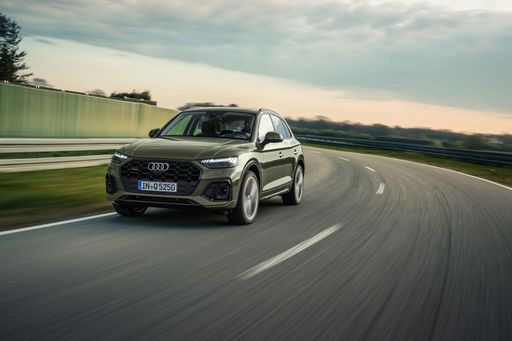
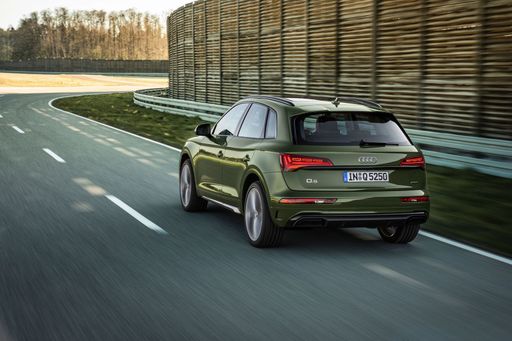
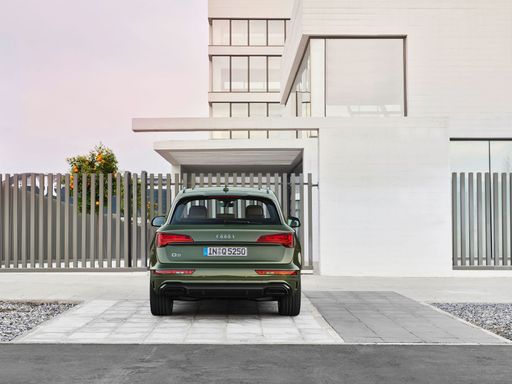
Audi Q5

4.5 (7 Reviews)
rate
  • visibly cheaper
  • substantially more efficient
  • considerably more electric range
  • a bit quicker 0–100 km/h
  • only slightly lighter
details

VW Touareg

4.9 (4 Reviews)
rate
  • clearly more power
  • noticeably more trunk space
details

All details on performance, efficiency, range and trunk space can be found in the technical comparison below – including user reviews for both models.

By Achim Sedelmaier

Q5

Compact Luxury vs. Robust Utility: Audi Q5 and VW Touareg Face-Off

When it comes to choosing an SUV combining sleek sophistication with modern innovation, both the Audi Q5 and the VW Touareg stand as paragons in their unique segments. Each offers a blend of performance, luxury, and cutting-edge technology. But which one should you drive home?

Touareg

Engine Specifications and Performance

The Audi Q5 presents a diverse array of engine options, including Diesel MHEV, Petrol MHEV, and Plugin Hybrid, catering to a spectrum of preferences from eco-conscious driving to spirited motoring. Power ranges broadly, starting at 163 HP and peaking at an energetic 367 HP, allowing the Q5 to accelerate from 0 to 100 km/h in as little as 4.5 seconds for the top variant. Audi’s Quattro all-wheel-drive system ensures sure-footed traction across all conditions.

Conversely, the VW Touareg offers a simpler yet powerful range with Diesel, Petrol, and Plugin Hybrid solutions. Catering to those looking for a bit more punch, Touareg’s engines deliver between 231 and 462 HP. Acceleration is equally impressive, with the most powerful Touareg hitting 0 to 100 km/h in just 5.1 seconds, offering a robust drive with its standout all-wheel-drive system.


Q5

Fuel Efficiency and Environmental Impact

The Audi Q5 particularly shines with its Plugin Hybrid variant achieving an impressive consumption rate as low as 1.5 L/100km, with an electric range of up to 62 km, perfect for urban commutes with minimal emissions. Diesel and petrol engines vary between 5.9 and 8.4 L/100km depending on configuration, emphasizing efficiency.

The Touareg’s Plugin Hybrid model offers similar eco-friendly credentials with a consumption fiercely low at 2.2 L/100km and an electric range of 48 to 51 km. Regular fuel consumption for diesel and petrol variants hovers between 8 to 11 L/100km, balancing power with efficiency.

Touareg

Interior and Cargo Space

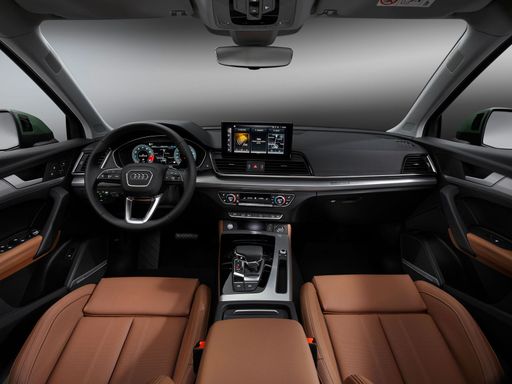
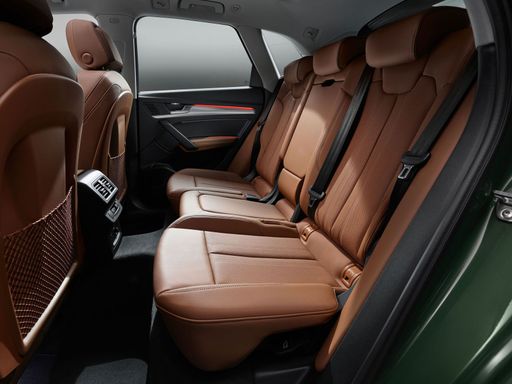
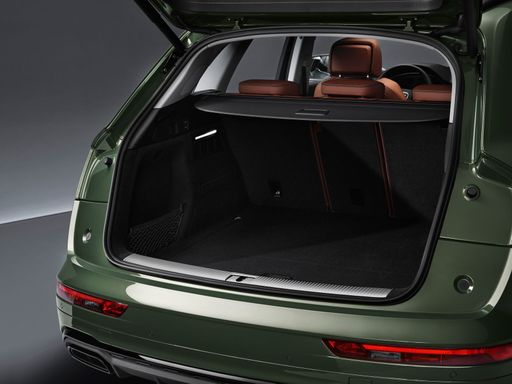
With an emphasis on luxury, the Audi Q5 offers a sleek and modern interior, designed to enhance the driving experience for both the driver and passengers. Cargo space is reasonable with a trunk capacity of up to 520 liters, accommodating the essentials for daily life with ease.

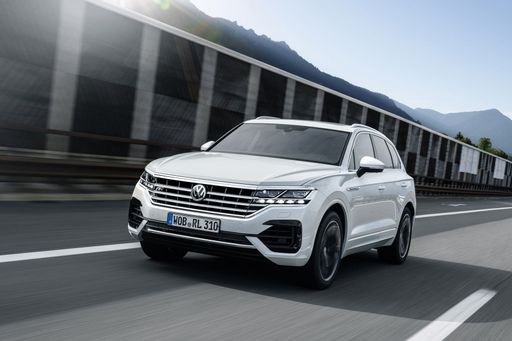
Meanwhile, the Touareg caters to those needing more room, boasting a significant 810 liters of trunk space. Its interior similarly drips with luxury but provides added emphasis on space, aiming to deliver comfort and utility for those who need a larger load capacity without sacrificing style.

Q5

Dimensions and Design

The Audi Q5 is slightly more compact, measuring up to 4717 mm in length with a width of 1900 mm, fitting snugly into urban settings and suburban environments alike. Its design is both aerodynamic and evocative of Audi’s sophisticated design language.

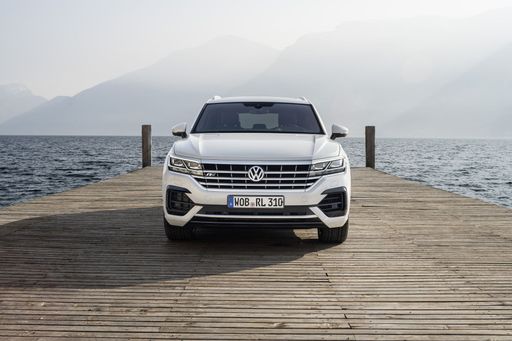
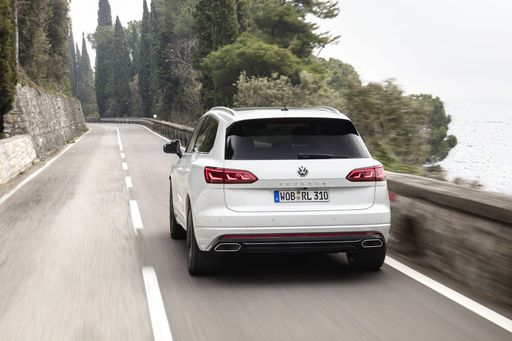
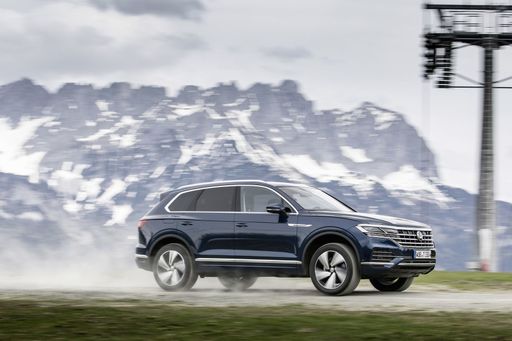
On the other hand, the more imposing VW Touareg stretches out to 4902 mm with a wider stance at 1984 mm, projecting a more muscular and commanding presence on the road. It embraces a rugged elegance that is as suitable for cityscapes as it is for countryside adventures.

Touareg

Innovations and Technology

Audi's Q5 impresses with its state-of-the-art infotainment system and driver aids, including Virtual Cockpit, MMI navigation, and a suite of semi-autonomous driving technologies. These features ensure the Q5 remains at the cutting edge of automotive innovation.

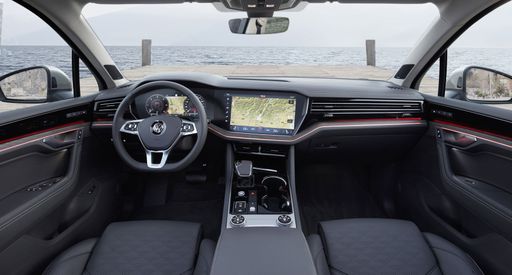
VW Touareg does not shy away from tech either, incorporating a large Innovision Cockpit, offering a holistic digital dashboard experience, coupled with advanced driver assistance systems. The model is particularly known for its innovation in creating a seamless and intuitive user interaction.

Q5

The Verdict

Both the Audi Q5 and VW Touareg showcase German engineering prowess, featuring advanced technologies and excellent performance. The Q5 stands as a refined and efficient choice ideal for those who value compact luxury and urban comfort. The Touareg, with its robust power and expansive interior, is tailor-made for those who prioritize space and capability in a more commanding form.

Your lifestyle and requirements will greatly influence your choice, but rest assured both models deliver remarkable experiences in their distinguished ways.

Here’s where it gets real: The technical differences in detail

Q5

Costs and Efficiency:

Looking at overall running costs, both models reveal some interesting differences in everyday economy.

Audi Q5 is visibly cheaper – starting at 46,400 £ , while the VW Touareg costs 64,300 £ . That’s a price difference of around 17,936 £.

Fuel consumption also shows a difference: the Audi Q5 uses 2.5 L/100km and is substantially more efficient than the VW Touareg with 5.2 L/100km. The difference is about 2.7 L/100km.

As for electric range, the Audi Q5 offers considerably more range – reaching up to 100 km, about 51 km more than the VW Touareg.

Touareg

Engine and Performance:

Under the bonnet, it becomes clear which model is tuned for sportiness and which one takes the lead when you hit the accelerator.

When it comes to engine power, the VW Touareg offers clearly more power – delivering 462 HP compared to 367 HP. That’s roughly 95 HP more horsepower.

When accelerating from 0 to 100 km/h, the Audi Q5 is a bit quicker – completing the sprint in 4.5 s, while the VW Touareg takes 5.1 s. That’s about 0.6 s quicker.

There’s also a difference in torque: the VW Touareg delivers a bit more torque with 700 Nm compared to 580 Nm. That’s about 120 Nm more.

Q5

Space and Everyday Use:

Beyond pure performance, interior space and usability matter most in daily life. This is where you see which car is more practical and versatile.

Both vehicles offer seating for 5 people.

In terms of curb weight, Audi Q5 is only slightly lighter – 1,910 kg compared to 2,059 kg. The difference is around 149 kg.

Looking at boot space, the VW Touareg offers noticeably more boot space – 810 L compared to 520 L. That’s a difference of about 290 L.

When it comes to payload, the VW Touareg carries visibly more – 751 kg compared to 565 kg. That’s a difference of about 186 kg.

Who wins the race in the data check?

The Audi Q5 is decisively ahead in the objective data comparison.
This result only shows which model scores more points on paper – not which of the two cars feels right for you.

from £46,400
Q5

Audi Q5

  • Engine Type Plugin Hybrid, Petrol MHEV, Diesel MHEV
  • Transmission Automatic
  • Drive Type All-Wheel Drive, Front-Wheel Drive
  • Power HP 204 - 367 HP
  • Consumption L/100km 2.5 - 8.3 L/100km
  • Electric Range 92 - 100 km
Audi Q5
VW Touareg

Costs and Consumption

View detailed analysis

Engine and Performance

View detailed analysis

Dimensions and Body

View detailed analysis

Audi Q5

The Audi Q5 is a refined compact luxury SUV that blends a plush, well-appointed interior with confident, composed handling suited to everyday driving. It’s a strong choice if you want a comfortable, technology-rich cabin and a practical, upscale package that feels polished on both city streets and longer trips.

details

VW Touareg

Volkswagen Touareg wraps a grown-up presence in a classy, well-appointed cabin that feels more like a premium saloon than an SUV. It glides with quiet composure, devours long journeys and tucks away clever tech that makes life easier whether you’re stuck in town or nipping off the beaten track.

details
Audi Q5
VW Touareg

Costs and Consumption

Price
46,400 - 79,600 £
Price
64,300 - 88,300 £
Consumption L/100km
2.5 - 8.3 L/100km
Consumption L/100km
5.2 - 10.5 L/100km
Consumption kWh/100km
-
Consumption kWh/100km
-
Electric Range
92 - 100 km
Electric Range
47 - 49 km
Battery Capacity
-
Battery Capacity
-
co2
56 - 189 g/km
co2
119 - 239 g/km
Fuel tank capacity
-
Fuel tank capacity
-

Dimensions and Body

Body Type
SUV
Body Type
SUV
Seats
5
Seats
5
Doors
-
Doors
-
Curb weight
1,910 - 2,245 kg
Curb weight
2,059 - 2,470 kg
Trunk capacity
433 - 520 L
Trunk capacity
665 - 810 L
Length
-
Length
-
Width
1,900 mm
Width
1,984 mm
Height
-
Height
-
Max trunk capacity
-
Max trunk capacity
-
Payload
490 - 565 kg
Payload
550 - 751 kg

Engine and Performance

Engine Type
Plugin Hybrid, Petrol MHEV, Diesel MHEV
Engine Type
Petrol, Plugin Hybrid, Diesel
Transmission
Automatic
Transmission
Automatic
Transmission Detail
Dual-Clutch Automatic
Transmission Detail
Automatic Gearbox
Drive Type
All-Wheel Drive, Front-Wheel Drive
Drive Type
All-Wheel Drive
Power HP
204 - 367 HP
Power HP
231 - 462 HP
Acceleration 0-100km/h
4.5 - 8.6 s
Acceleration 0-100km/h
5.1 - 7.7 s
Max Speed
-
Max Speed
-
Torque
340 - 580 Nm
Torque
450 - 700 Nm
Number of Cylinders
4 - 6
Number of Cylinders
6
Power kW
150 - 270 kW
Power kW
170 - 340 kW
Engine capacity
1,968 - 2,995 cm3
Engine capacity
2,967 - 2,995 cm3

General

Model Year
2025
Model Year
2025
CO2 Efficiency Class
B, E, F, G
CO2 Efficiency Class
G, D
Brand
Audi
Brand
VW
DriveDuel uses data analysis and artificial intelligence to evaluate vehicle data and create content. Content is regularly reviewed and improved. The displayed prices are estimates based on German list prices, adjusted to the respective country’s VAT. Country-specific registration taxes are not included. This information is not legally binding.