VS

Audi Q8 e-tron vs BMW i5 Touring comparison

Compare performance (503 HP vs 601 HP), boot space and price (65,100 £ vs 61,900 £ ) at a glance. Find out which car is the better choice for you – Audi Q8 e-tron or BMW i5 Touring?

Audi Q8 e-tron vs BMW i5 Touring: Key differences

Audi Q8 e-tron

BMW i5 Touring

  • marginally cheaper
  • moderately more power
  • markedly more efficient
  • only slightly more electric range
  • moderately quicker 0–100 km/h
  • moderately lighter
  • barely more trunk space
Q8 e-tron

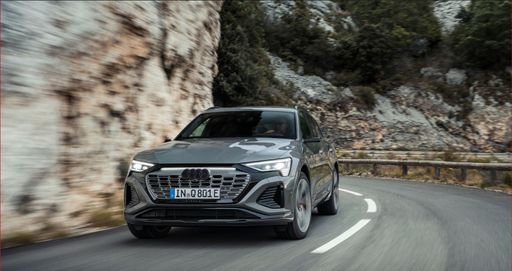
The automotive world is evolving rapidly, with electric vehicles (EVs) taking center stage in the ongoing battle for supremacy among luxury brands. In this comparison, we put the Audi Q8 e-tron head-to-head against the BMW i5 Touring to see how these two electric titans measure up in technical innovation, performance, and overall appeal.
i5 Touring

Design and Dimensions

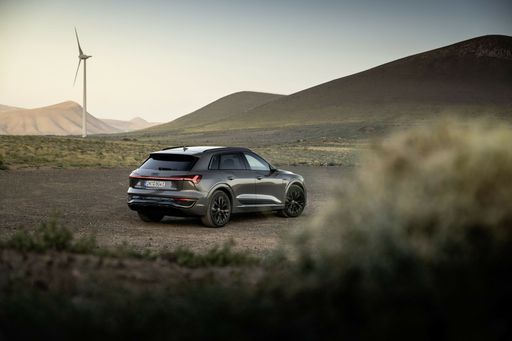
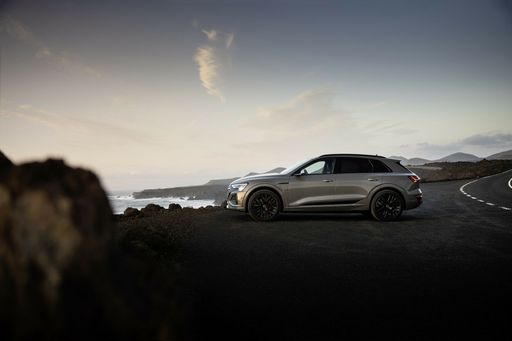
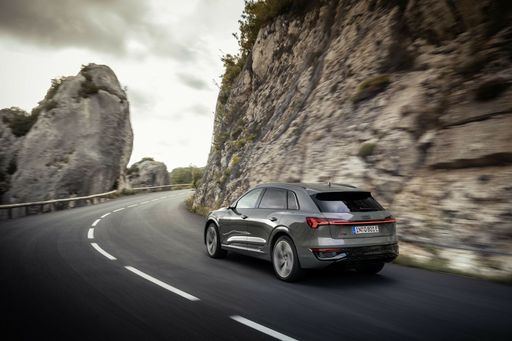
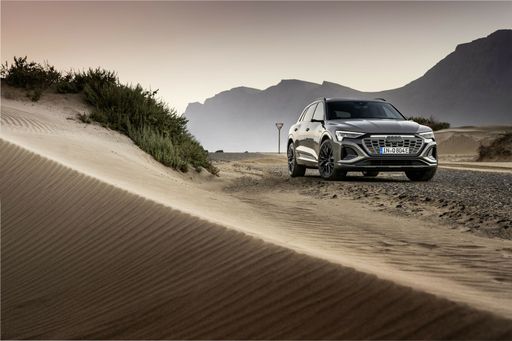
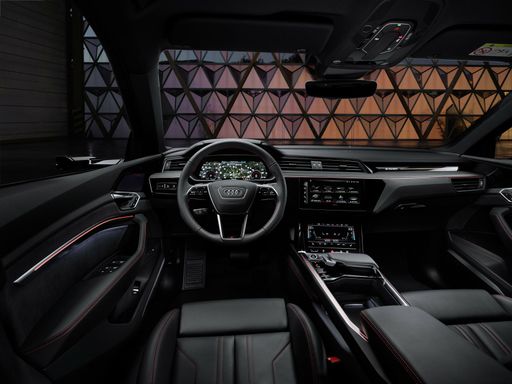
The Audi Q8 e-tron embodies a bold SUV silhouette, showcasing a blend of sporty lines and mass. Measuring 4915 mm in length and 1937-1994 mm in width depending on the variant, it offers a commanding road presence. The height options range from 1617 mm to 1683 mm, ensuring it remains an eye-catching choice in the luxury SUV segment.

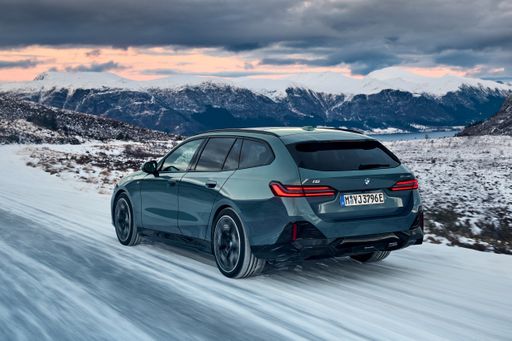
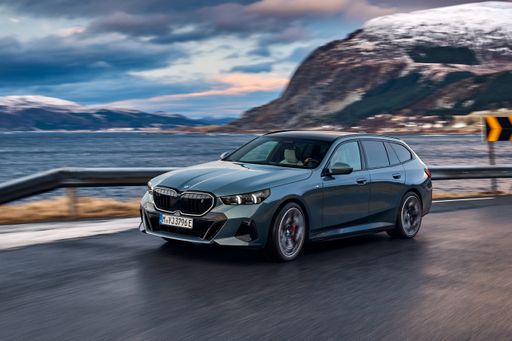
On the other hand, the BMW i5 Touring introduces a more aerodynamic wagon body type, measuring 5060 mm in length and 1900 mm in width. With a height of 1505-1515 mm, this vehicle emphasizes its modernity and efficiency, presenting a seamless integration of EV characteristics with BMW's sporty heritage.

Q8 e-tron

Powertrain Performance

The Audi Q8 e-tron offers a robust power range from 340 HP to an exhilarating 503 HP. Its electric motors produce impressive torque up to 973 Nm, allowing for swift acceleration, with the fastest variant achieving 0-100 km/h in just 4.5 seconds. The battery options of 89 kWh and 106 kWh facilitate electric ranges varying from 456 km to an impressive 595 km, depending on the variant chosen.

Contrarily, the BMW i5 Touring boasts an equally compelling power output, with a peak of 601 HP and torque reaching 820 Nm, leading to a thrilling 0-100 km/h in just 3.9 seconds for its top-tier model. Its single battery option of 81.2 kWh allows for an electric range between 500 km and 560 km, making it a competitive option for daily commuting and long trips alike.

i5 Touring

Technology and Innovations

Both vehicles are equipped with cutting-edge technology that enhances the driving experience. The Audi Q8 e-tron features an advanced MMI infotainment system, complete with dual touchscreens and an augmented reality heads-up display that optimizes navigation and connectivity.

In contrast, the BMW i5 Touring integrates the innovative iDrive 8 system, which offers a highly intuitive interface with voice command functionalities, and an expansive digital cockpit that includes a curved display merging the instrument cluster and infotainment screen. Both vehicles support over-the-air updates, ensuring that they remain at the cutting edge of technology even after purchase.

Q8 e-tron

Driving Dynamics and Comfort

In terms of driving dynamics, the Q8 e-tron utilizes Audi's renowned quattro all-wheel-drive system, providing exceptional grip and stability across various terrains. The air suspension system further enhances ride comfort, making it a delightful choice for long journeys.

The BMW i5 Touring, with available rear-wheel-drive and all-wheel-drive options, offers a sportier driving experience that feels more connected to the road. The low center of gravity provided by the battery placement enhances handling, while the chassis has been finely tuned to balance sportiness with comfort, making it a versatile choice for daily use and spirited drives.

Practicality and Space

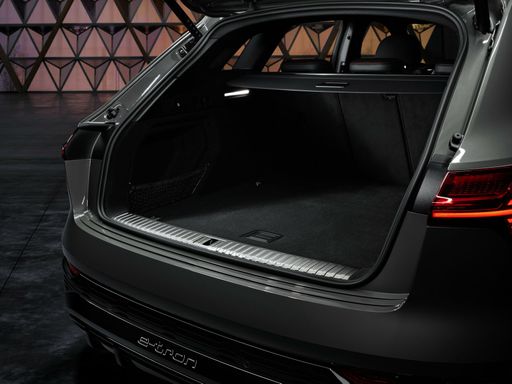
When it comes to practicality, both vehicles present significant advantages. The Audi Q8 e-tron has a trunk capacity ranging from 528 L to 569 L, while the BMW i5 Touring offers slightly more space at 570 L, catering to families or those needing extra cargo room.

Though the Q8 e-tron seats five comfortably, the BMW i5 Touring also accommodates five and provides a slightly more spacious feel due to its wagon design, which maximizes headroom and legroom for rear passengers.

Conclusion: Which to Choose?

In conclusion, both the Audi Q8 e-tron and BMW i5 Touring stand out with their distinct features and capabilities. The Q8 e-tron is positioned as a powerful electric SUV that emphasizes luxury and advanced technology, while the i5 Touring offers a sporty wagon alternative that doesn't compromise on practicality.

Your choice ultimately depends on preference—whether you prioritize an SUV's commanding presence or the sleek profile of a wagon, electric performance, and range efficiency remain constant across both offerings. As the electric vehicle arena continues to mature, it's clear that both Audi and BMW are leading the charge with exceptional products.

Here’s where it gets real: The technical differences in detail

Q8 e-tron

Costs and Efficiency:

Price and efficiency are key factors when choosing a car – and this is often where the real differences emerge.

BMW i5 Touring is marginally cheaper – starting at 61,900 £ , while the Audi Q8 e-tron costs 65,100 £ . That’s a price difference of around 3,172 £.

In terms of energy consumption, the BMW i5 Touring is markedly more efficient: consuming 15.4 kWh/100km compared to 19.7 kWh/100km for the Audi Q8 e-tron. That’s a difference of about 4.3 kWh/100km.

As for electric range, the BMW i5 Touring offers only slightly more range – reaching up to 602 km, about 7 km more than the Audi Q8 e-tron.

i5 Touring

Engine and Performance:

Power, torque and acceleration are the classic benchmarks for car enthusiasts – and here, some clear differences start to show.

When it comes to engine power, the BMW i5 Touring offers moderately more power – delivering 601 HP compared to 503 HP. That’s roughly 98 HP more horsepower.

When accelerating from 0 to 100 km/h, the BMW i5 Touring is moderately quicker – completing the sprint in 3.9 s, while the Audi Q8 e-tron takes 4.5 s. That’s about 0.6 s quicker.

Looking at top speed, the BMW i5 Touring is very slightly faster – reaching 230 km/h, while the Audi Q8 e-tron tops out at 210 km/h. The difference is around 20 km/h.

There’s also a difference in torque: the Audi Q8 e-tron delivers somewhat more torque with 973 Nm compared to 820 Nm. That’s about 153 Nm more.

Q8 e-tron

Space and Everyday Use:

Whether family car or daily driver – which one offers more room, flexibility and comfort?

Both vehicles offer seating for 5 people.

In terms of curb weight, BMW i5 Touring is moderately lighter – 2,255 kg compared to 2,585 kg. The difference is around 330 kg.

Looking at boot space, the BMW i5 Touring offers barely more boot space – 570 L compared to 569 L. That’s a difference of about 1 L.

For maximum load capacity, the BMW i5 Touring offers barely more capacity – up to 1,700 L, about 63 L more than the Audi Q8 e-tron.

When it comes to payload, the Audi Q8 e-tron carries barely more – 595 kg compared to 560 kg. That’s a difference of about 35 kg.

Who wins the race in the data check?

The BMW i5 Touring is clearly superior overall in the objective data comparison.
This result only shows which model scores more points on paper – not which of the two cars feels right for you.

from £61,900
i5 Touring

BMW i5 Touring

  • Engine Type : Electric
  • Transmission : Automatic
  • Drive Type : All-Wheel Drive, Rear-Wheel Drive
  • Power HP : 340 - 601 HP
  • Consumption kWh/100km : 15.4 - 17.7 kWh/100km
  • Electric Range : 522 - 602 km
Audi Q8 e-tron
BMW i5 Touring

Costs and Consumption

View detailed analysis

Engine and Performance

View detailed analysis

Dimensions and Body

View detailed analysis

Audi Q8 e-tron

The Audi Q8 e-tron wraps Audi’s usual premium polish into a quiet, composed electric SUV that feels refined and surprisingly effortless to drive. With a spacious, tech-forward cabin and understated road presence, it’s a practical yet stylish choice for buyers who want electric motoring without losing the dignity of a proper luxury SUV.

details

BMW i5 Touring

The BMW i5 Touring marries the everyday usefulness of a roomy estate with the hushed, premium feel of a modern electric BMW. It’s an appealing choice for buyers who want confident, relaxed driving and executive poise without sacrificing weekend practicality — and it even makes loading skis feel slightly glamorous.

details
Audi Q8 e-tron
BMW i5 Touring

Costs and Consumption

Price
65,100 - 102,800 £
Price
61,900 - 87,000 £
Consumption L/100km
-
Consumption L/100km
-
Consumption kWh/100km
19.7 - 26.3 kWh/100km
Consumption kWh/100km
15.4 - 17.7 kWh/100km
Electric Range
456 - 595 km
Electric Range
522 - 602 km
Battery Capacity
89 - 106 kWh
Battery Capacity
81.2 kWh
co2
0 g/km
co2
0 g/km
Fuel tank capacity
-
Fuel tank capacity
-

Dimensions and Body

Body Type
SUV
Body Type
Estate
Seats
5
Seats
5
Doors
5
Doors
4
Curb weight
2,585 - 2,725 kg
Curb weight
2,255 - 2,425 kg
Trunk capacity
528 - 569 L
Trunk capacity
570 L
Length
4,915 mm
Length
5,060 mm
Width
1,937 - 1,994 mm
Width
1,900 mm
Height
1,617 - 1,683 mm
Height
1,505 - 1,515 mm
Max trunk capacity
1,567 - 1,637 L
Max trunk capacity
1,700 L
Payload
515 - 595 kg
Payload
535 - 560 kg

Engine and Performance

Engine Type
Electric
Engine Type
Electric
Transmission
Automatic
Transmission
Automatic
Transmission Detail
Reduction Gearbox
Transmission Detail
Reduction Gearbox
Drive Type
All-Wheel Drive
Drive Type
All-Wheel Drive, Rear-Wheel Drive
Power HP
340 - 503 HP
Power HP
340 - 601 HP
Acceleration 0-100km/h
4.5 - 6 s
Acceleration 0-100km/h
3.9 - 6.1 s
Max Speed
200 - 210 km/h
Max Speed
193 - 230 km/h
Torque
664 - 973 Nm
Torque
430 - 820 Nm
Number of Cylinders
-
Number of Cylinders
-
Power kW
250 - 370 kW
Power kW
250 - 442 kW
Engine capacity
-
Engine capacity
-

General

Model Year
2,023 - 2,024
Model Year
2,024
CO2 Efficiency Class
A
CO2 Efficiency Class
A
Brand
Audi
Brand
BMW
DriveDuel uses data analysis and artificial intelligence to evaluate vehicle data and create content. Content is regularly reviewed and improved. The displayed prices are estimates based on German list prices, adjusted to the respective country’s VAT. Country-specific registration taxes are not included. This information is not legally binding.