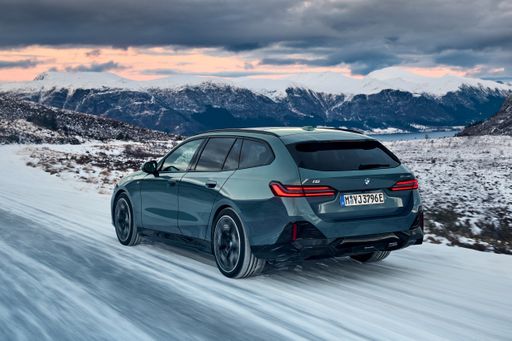
@ BMW Group Press
@ BMW Group Press
VS

BMW i4 vs BMW i5 Touring – Performance, range & efficiency compared

Both models have their strengths – but which one suits you more?
Compare performance, efficiency, price and space directly: BMW i4 or BMW i5 Touring?

i4 @ BMW Group Press

A Showdown of Electric Excellence: BMW i4 vs. BMW i5 Touring

The automotive world is experiencing a significant shift towards electrification, and BMW is at the forefront with its i4 and i5 Touring models. Both electric vehicles deliver impressive performance, luxurious comfort, and cutting-edge technology. But how do they compare? In this article, we will delve into the technical aspects, innovations, and unique features of each model to determine which one comes out on top.
i5 Touring @ BMW Group Press

Performance and Powertrains

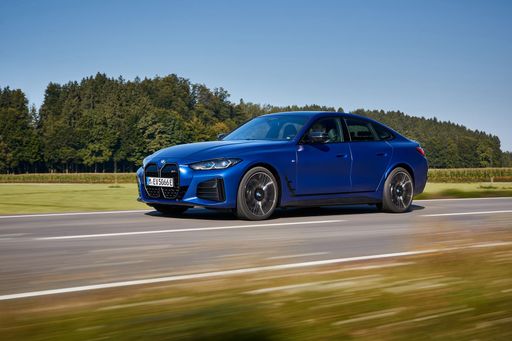
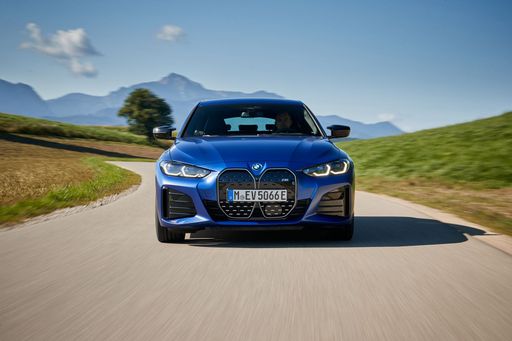
The BMW i4 is available in multiple configurations, providing a broad range of power outputs. Options include 286 HP for the base model, reaching up to a staggering 544 HP in the i4 M50. The unique rear-wheel and all-wheel drive provide flexibility in handling and performance, with acceleration times as quick as 3.9 seconds for the high-performance variant.

On the other hand, the BMW i5 Touring produces a maximum of 601 HP in its sporty variant. This model also features both all-wheel and rear-wheel drive options. Thanks to the high torque of 820 Nm, the i5 Touring can achieve 0-100 km/h in just 3.9 seconds, marking it as a robust performer within the BMW lineup.

i4 @ BMW Group Press

Efficiency and Range

Efficiency remains a hallmark of both models. The i4 boasts an electric range that varies between 485 to 582 km depending on the battery capacity of either 67.1 kWh or 81.3 kWh. It showcases excellent energy consumption, with figures ranging from 15.6 to 18 kWh/100 km.

In comparison, the i5 Touring also presents a commendable electric range of 500 to 560 km. Its 81.2 kWh battery ensures it remains efficient, albeit with slightly higher consumption metrics of up to 18.5 kWh/100 km. While both models excel in range, the i4 exhibits a slight edge in power efficiency.

i5 Touring @ BMW Group Press

Dimensions and Practicality

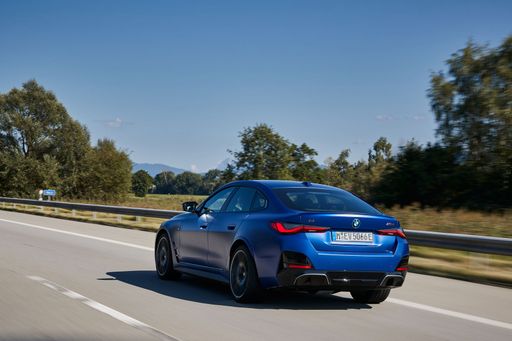
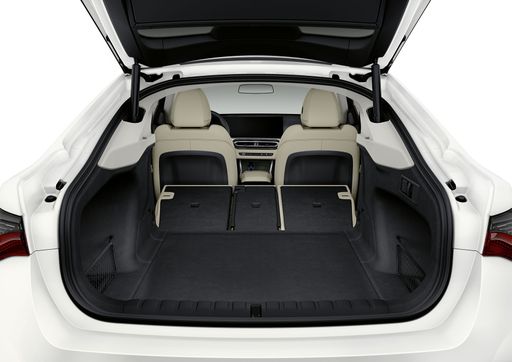
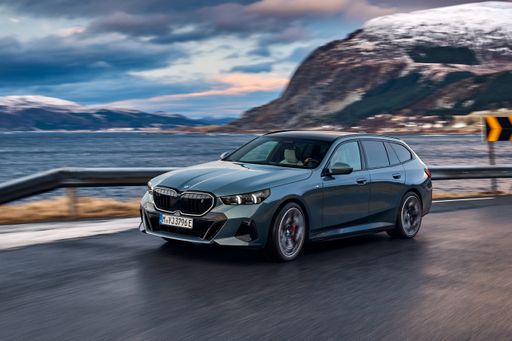
When it comes to size, the i4 comes in at a length of 4783 mm, 1852 mm in width, and a height of 1448 mm. This hatchback design promotes a sporty aesthetic, while offering a trunk capacity of 470 liters. The i5 Touring, on the other hand, is significantly larger, stretching to 5060 mm in length, 1900 mm in width, and a height of between 1505 to 1515 mm. Its wagon body type translates into increased practicality, boasting a trunk capacity of 570 liters—ideal for families or long trips.

i4 @ BMW Group Press

Technological Innovations

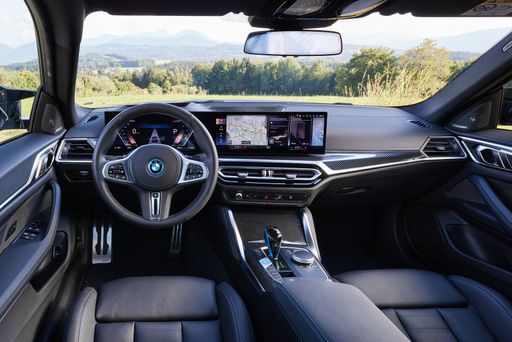
Both models showcase BMW's latest innovations in electric vehicle technology. The i4 features a suite of smart connectivity options, including a high-grade infotainment system and advanced driver assistance features. Furthermore, the i4 is built to support over-the-air updates, ensuring that the vehicle remains up-to-date with the latest software improvements.

The i5 Touring continues this trend with even more advanced technology. It boasts enhanced comfort features such as air suspension and advanced navigation systems that adapt to your driving style. Additionally, the intelligent energy management ensures optimal efficiency under varying driving conditions.

Interior Comfort and Features

Inside, the BMW i4 is designed with luxury and comfort in mind, with high-quality materials and ample cabin space for up to five passengers. It combines a sporty driving experience with the comfort expected from a premium vehicle.

Meanwhile, the interior of the BMW i5 Touring takes this up a notch with additional space and thoughtful touches. Its cabin is designed to maximize comfort, offering heated seats, ambient lighting, and plenty of room for passengers and their belongings. Both vehicles leverage BMW’s iconic design language but the i5 Touring’s more spacious layout may appeal more to those needing practical everyday usability.

Conclusion: Which Model Is Right for You?

Ultimately, the choice between the BMW i4 and the BMW i5 Touring boils down to personal needs and preferences. If you are in the market for a dynamic electric hatchback that emphasizes performance and efficiency, the i4 may be the superior choice. However, for those seeking a blend of performance, practicality, and advanced technology, the i5 Touring stands out with its spaciousness and versatility.

Whichever model you choose, both the BMW i4 and the i5 Touring exemplify the future of electric mobility, proving that you don’t have to compromise on performance while embracing sustainable driving.

Here’s where it gets real: The technical differences in detail

Costs and Efficiency:

Price and efficiency are often the first things buyers look at. Here it becomes clear which model has the long-term edge – whether at the pump, the plug, or in purchase price.

BMW i4 has a distinct advantage in terms of price – it starts at 49400 £, while the BMW i5 Touring costs 61900 £. That’s a price difference of around 12514 £.

In terms of energy consumption, the advantage goes to the BMW i4: with 14.70 kWh per 100 km, it’s slight more efficient than the BMW i5 Touring with 15.40 kWh. That’s a difference of about 0.70 kWh.

As for range, the BMW i4 performs hardly perceptible better – achieving up to 613 km, about 11 km more than the BMW i5 Touring.

Engine and Performance:

Power, torque and acceleration say a lot about how a car feels on the road. This is where you see which model delivers more driving dynamics.

Both models deliver identical power – 601 HP each.

In acceleration from 0 to 100 km/h, the BMW i4 is slight quicker – completing the sprint in 3.70 s, while the BMW i5 Touring takes 3.90 s. That’s about 0.20 s faster.

In terms of top speed, the BMW i5 Touring performs barely noticeable better – reaching 230 km/h, while the BMW i4 tops out at 225 km/h. The difference is around 5 km/h.

There’s also a difference in torque: BMW i5 Touring pulls barely noticeable stronger with 820 Nm compared to 795 Nm. That’s about 25 Nm difference.

Space and Everyday Use:

Cabin size, boot volume and payload all play a role in everyday practicality. Here, comfort and flexibility make the difference.

Both vehicles offer seating for 5 people.

In curb weight, BMW i4 is hardly perceptible lighter – 2070 kg compared to 2255 kg. The difference is around 185 kg.

In terms of boot space, the BMW i5 Touring offers slightly more room – 570 L compared to 470 L. That’s a difference of about 100 L.

In maximum load capacity, the BMW i5 Touring performs clearly perceptible better – up to 1700 L, which is about 410 L more than the BMW i4.

When it comes to payload, BMW i5 Touring a bit takes the win – 560 kg compared to 480 kg. That’s a difference of about 80 kg.

Who wins the race?

The BMW i5 Touring proves to be only a minor advantage and therefore becomes our DriveDuel Champion!
BMW i5 Touring is the better all-rounder in this comparison.

from about £61,900
i5 Touring @ BMW Group Press

BMW i5 Touring

  • Engine Type : Electric
  • Transmission : Automatic
  • Drive Type : All-Wheel Drive, Rear-Wheel Drive
  • Power HP : 340 - 601 HP
  • Consumption kWh/100km : 15.4 - 17.7 kWh
  • Electric Range : 522 - 602 km

BMW i4

5 (1)
rate

The BMW i4 arrives with the poise of a classic Gran Coupé, marrying BMW's playful handling with a sleek, modern interior that makes switching to electric feel like an upgrade rather than a compromise. For buyers who want a practical daily driver that still enjoys a spirited back-road run, the i4 quietly delivers smiles and a surprising dose of driver engagement.

details

BMW i5 Touring

The new BMW i5 Touring combines elegant design with cutting-edge electric mobility. Its spacious interior offers both luxury and practicality, making it an ideal choice for families and long journeys. Enhanced with advanced technology, this vehicle ensures a smooth and efficient driving experience.

details
BMW i4
BMW i5 Touring
i4 @ BMW Group Press
i5 Touring @ BMW Group Press

Costs and Consumption

Price
49400 - 62500 £
Price
61900 - 87000 £
Consumption L/100km
-
Consumption L/100km
-
Consumption kWh/100km
14.7 - 16.7 kWh
Consumption kWh/100km
15.4 - 17.7 kWh
Electric Range
514 - 613 km
Electric Range
522 - 602 km
Battery Capacity
67.1 - 81.3 kWh
Battery Capacity
81.20 kWh
co2
0 g/km
co2
0 g/km
Fuel tank capacity
-
Fuel tank capacity
-

Dimensions and Body

Body Type
Hatchback
Body Type
Estate
Seats
5
Seats
5
Doors
5
Doors
4
Curb weight
2070 - 2285 kg
Curb weight
2255 - 2425 kg
Trunk capacity
470 L
Trunk capacity
570 L
Length
4783 mm
Length
5060 mm
Width
1852 mm
Width
1900 mm
Height
1448 mm
Height
1505 - 1515 mm
Max trunk capacity
1290 L
Max trunk capacity
1700 L
Payload
445 - 480 kg
Payload
535 - 560 kg

Engine and Performance

Engine Type
Electric
Engine Type
Electric
Transmission
Automatic
Transmission
Automatic
Transmission Detail
Reduction Gearbox
Transmission Detail
Reduction Gearbox
Drive Type
Rear-Wheel Drive, All-Wheel Drive
Drive Type
All-Wheel Drive, Rear-Wheel Drive
Power HP
286 - 601 HP
Power HP
340 - 601 HP
Acceleration 0-100km/h
3.7 - 6 s
Acceleration 0-100km/h
3.9 - 6.1 s
Max Speed
190 - 225 km/h
Max Speed
193 - 230 km/h
Torque
400 - 795 Nm
Torque
430 - 820 Nm
Number of Cylinders
-
Number of Cylinders
-
Power kW
210 - 442 kW
Power kW
250 - 442 kW
Engine capacity
-
Engine capacity
-

General

Model Year
2025
Model Year
2024
CO2 Efficiency Class
A
CO2 Efficiency Class
A
Brand
BMW
Brand
BMW
What drivetrain options does the BMW i4 have?

The BMW i4 is available as Rear-Wheel Drive or All-Wheel Drive.

The prices and data displayed are estimates based on German list prices and may vary by country. This information is not legally binding.