VS

BMW 1 Series vs SEAT Arona comparison

Compare performance (300 HP vs 150 HP), boot space and price (29,400 £ vs 20,700 £ ) at a glance. Find out which car is the better choice for you – BMW 1 Series or SEAT Arona?

BMW 1 Series vs SEAT Arona: Key differences

BMW 1 Series

5 (1 Reviews)
rate
  • considerably more power
  • clearly more efficient
  • clearly quicker 0–100 km/h
details

SEAT Arona

4.9 (5 Reviews)
rate
  • substantially cheaper
  • visibly lighter
  • barely more trunk space
details

All details on performance, efficiency, range and trunk space can be found in the technical comparison below – including user reviews for both models.

By Achim Sedelmaier

1 Series

The Ultimate Urban Duo: BMW 1er Reihe vs SEAT Arona

In the bustling automotive landscape, two models stand out for their combination of performance, practicality, and innovation: the BMW 1er Reihe and the SEAT Arona. While they target somewhat different segments—with the 1er Reihe presenting itself as a sporty hatchback and the Arona as a versatile SUV—both vehicles have much to offer in terms of technology and driving dynamics. Let’s delve deeper into their key specifications and features to see how they compare.
Arona

Design and Dimensions

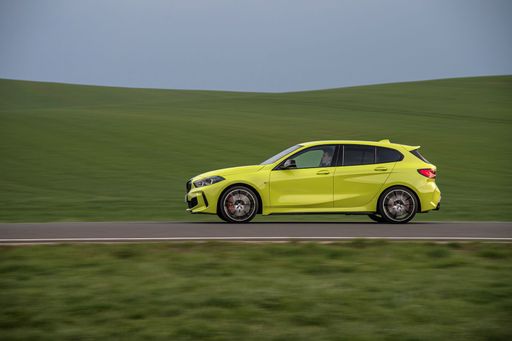
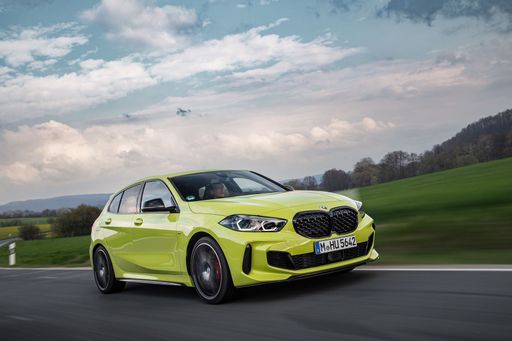
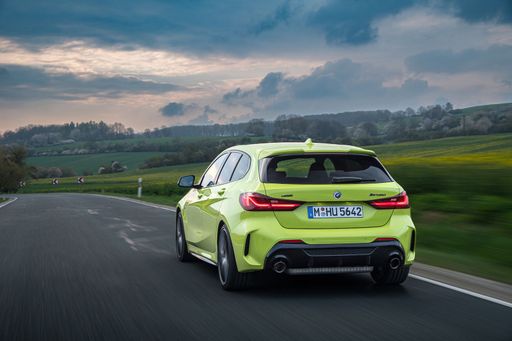
The BMW 1er Reihe boasts a sleek and sporty hatchback design, measuring 4361 mm in length, 1800 mm in width, and standing 1459 mm tall. This model exudes a dynamic presence that is typical of BMW, showcasing a low-profile aesthetic combined with functional design.

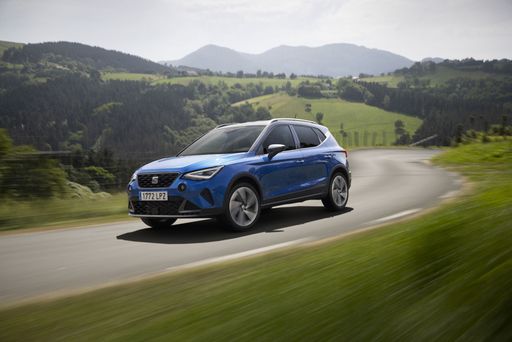
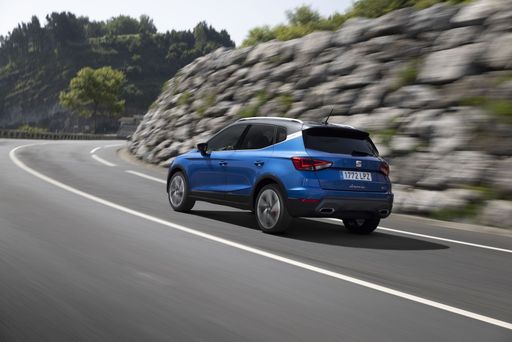
On the other hand, the SEAT Arona presents a more robust and elevated profile, typical of SUVs. With a length of 4153 mm, width of 1780 mm, and height of 1537 mm, the Arona offers a higher seating position, providing better visibility and a different aesthetic appeal compared to the BMW hatchback.

1 Series

Engine Performance

Under the hood, the BMW 1er Reihe offers a variety of engine options, including efficient Diesel and Petrol MHEV (mild hybrid electric vehicle) variants. With power outputs ranging from 150 HP to a magnificent 300 HP, drivers can enjoy exhilarating acceleration times of 4.9 to 9.8 seconds for 0-100 km/h, depending on the configuration. The models also present torque figures of up to 400 Nm, ensuring brisk acceleration and spirited handling.

In contrast, the SEAT Arona is equipped solely with petrol engines, offering up to 150 HP. Its acceleration times range from 8.4 seconds to 11.3 seconds for 0-100 km/h, making it slightly less performance-oriented than the BMW line-up, but still sufficient for daily urban driving. The torque in the Arona peaks at 250 Nm, providing a decent level of responsiveness for city and highway driving.

Arona

Transmission and Drive Type

The BMW 1er Reihe utilizes either front-wheel drive or all-wheel drive systems paired with a smooth dual-clutch automatic transmission. This combination not only enhances driving comfort but also ensures improved handling stability across various road conditions.

In contrast, the SEAT Arona is primarily offered with front-wheel drive and is available with both manual and dual-clutch automatic transmission options. This makes the Arona an accessible choice for those who prefer the engaging feel of a manual gearbox or the convenience of an automatic transmission.

1 Series

Fuel Efficiency and Emissions

Fuel efficiency is an essential consideration for many buyers today. The BMW 1er Reihe displays commendable consumption figures ranging from 4.3 to 7.6 L/100km, making it a relatively economical choice within the premium hatchback segment. Its CO2 emissions vary between 112 to 173 g/km, placing it in competitive efficiency classes from D to C.

The SEAT Arona, while being slightly less efficient, offers fuel consumption figures of 5.4 to 5.6 L/100km, with CO2 emissions around 122 to 128 g/km, resulting in a CO2 efficiency class of D. Though it edges out in terms of practicality and comfort with its larger trunk space of 400 liters, its overall efficiency may not appeal to all eco-conscious buyers.

Arona

Innovative Features and Technologies

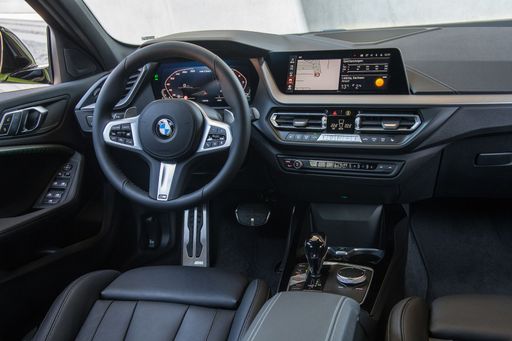
Both vehicles are equipped with cutting-edge technology. The BMW 1er Reihe features a premium infotainment system that not only offers seamless smartphone integration but also advanced driver assistance systems that enhance safety and convenience.

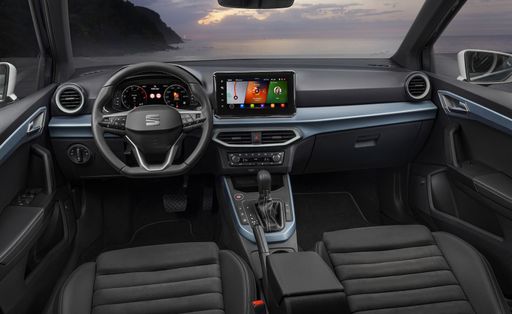
Similarly, the SEAT Arona incorporates a modern infotainment interface along with useful features like parking sensors and adaptive cruise control, ensuring that it caters well to the tech-savvy driver.

1 Series

Conclusion: Which One Is Right for You?

Choosing between the BMW 1er Reihe and the SEAT Arona ultimately depends on your personal preferences and driving needs. If you’re after performance, a sporty aesthetic, and premium features, the BMW 1er Reihe is hard to beat. However, if you prioritize practicality, spaciousness, and an elevated driving position, the SEAT Arona proves to be an excellent contender. Both vehicles embody a commitment to quality and technology, making them standout options in their respective categories.

Here’s where it gets real: The technical differences in detail

1 Series

Costs and Efficiency:

Price and efficiency are key factors when choosing a car – and this is often where the real differences emerge.

SEAT Arona is substantially cheaper – starting at 20,700 £ , while the BMW 1 Series costs 29,400 £ . That’s a price difference of around 8,657 £.

Fuel consumption also shows a difference: the BMW 1 Series uses 4.3 L/100km and is clearly more efficient than the SEAT Arona with 5.3 L/100km. The difference is about 1 L/100km.

Arona

Engine and Performance:

Power, torque and acceleration are the classic benchmarks for car enthusiasts – and here, some clear differences start to show.

When it comes to engine power, the BMW 1 Series offers considerably more power – delivering 300 HP compared to 150 HP. That’s roughly 150 HP more horsepower.

When accelerating from 0 to 100 km/h, the BMW 1 Series is clearly quicker – completing the sprint in 4.9 s, while the SEAT Arona takes 8.3 s. That’s about 3.4 s quicker.

There’s also a difference in torque: the BMW 1 Series delivers markedly more torque with 400 Nm compared to 250 Nm. That’s about 150 Nm more.

1 Series

Space and Everyday Use:

Whether family car or daily driver – which one offers more room, flexibility and comfort?

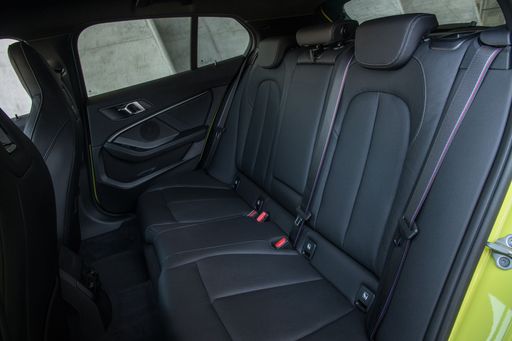
Both vehicles offer seating for 5 people.

In terms of curb weight, SEAT Arona is visibly lighter – 1,188 kg compared to 1,465 kg. The difference is around 277 kg.

Looking at boot space, the SEAT Arona offers barely more boot space – 400 L compared to 380 L. That’s a difference of about 20 L.

When it comes to payload, the SEAT Arona carries marginally more – 522 kg compared to 510 kg. That’s a difference of about 12 kg.

Who wins the race in the data check?

The BMW 1 Series is clearly superior overall in the objective data comparison.
This result only shows which model scores more points on paper – not which of the two cars feels right for you.

from £29,400
1 Series

BMW 1 Series

  • Engine Type Diesel, Petrol MHEV, Diesel MHEV, Petrol
  • Transmission Automatic
  • Drive Type Front-Wheel Drive, All-Wheel Drive
  • Power HP 122 - 300 HP
  • Consumption L/100km 4.3 - 7.6 L/100km
BMW 1 Series
SEAT Arona

Costs and Consumption

View detailed analysis

Engine and Performance

View detailed analysis

Dimensions and Body

View detailed analysis

BMW 1 Series

The BMW 1 Series is a compact premium hatchback that injects a proper sense of driving fun into everyday life, with sharp handling and a cabin that punches above its class. It’s a great pick for buyers who want sporty manners without losing practicality, and yes, you’ll still get that unmistakable BMW grin behind the wheel.

details

SEAT Arona

The SEAT Arona is a compact crossover that blends practical, city-friendly packaging with a sporty, youthful design. It delivers a comfortable ride, an intuitive cabin and economical running costs, making it a sensible pick for daily drives and weekend getaways.

details
BMW 1 Series
SEAT Arona

Costs and Consumption

Price
29,400 - 51,900 £
Price
20,700 - 30,300 £
Consumption L/100km
4.3 - 7.6 L/100km
Consumption L/100km
5.3 - 5.8 L/100km
Consumption kWh/100km
-
Consumption kWh/100km
-
Electric Range
-
Electric Range
-
Battery Capacity
-
Battery Capacity
-
co2
112 - 173 g/km
co2
120 - 132 g/km
Fuel tank capacity
-
Fuel tank capacity
-

Dimensions and Body

Body Type
Hatchback
Body Type
SUV
Seats
5
Seats
5
Doors
-
Doors
-
Curb weight
1,465 - 1,625 kg
Curb weight
1,188 - 1,268 kg
Trunk capacity
300 - 380 L
Trunk capacity
400 L
Length
-
Length
-
Width
1,800 mm
Width
1,780 mm
Height
-
Height
-
Max trunk capacity
-
Max trunk capacity
-
Payload
475 - 510 kg
Payload
502 - 522 kg

Engine and Performance

Engine Type
Diesel, Petrol MHEV, Diesel MHEV, Petrol
Engine Type
Petrol
Transmission
Automatic
Transmission
Manuel, Automatic
Transmission Detail
Dual-Clutch Automatic
Transmission Detail
Manual Gearbox, Dual-Clutch Automatic
Drive Type
Front-Wheel Drive, All-Wheel Drive
Drive Type
Front-Wheel Drive
Power HP
122 - 300 HP
Power HP
95 - 150 HP
Acceleration 0-100km/h
4.9 - 9.8 s
Acceleration 0-100km/h
8.3 - 11.1 s
Max Speed
-
Max Speed
-
Torque
230 - 400 Nm
Torque
175 - 250 Nm
Number of Cylinders
3 - 4
Number of Cylinders
3 - 4
Power kW
90 - 221 kW
Power kW
70 - 110 kW
Engine capacity
1,499 - 1,998 cm3
Engine capacity
999 - 1,498 cm3

General

Model Year
2024
Model Year
2025
CO2 Efficiency Class
D, C, F
CO2 Efficiency Class
D
Brand
BMW
Brand
SEAT
DriveDuel uses data analysis and artificial intelligence to evaluate vehicle data and create content. Content is regularly reviewed and improved. The displayed prices are estimates based on German list prices, adjusted to the respective country’s VAT. Country-specific registration taxes are not included. This information is not legally binding.