
 Deutschland
 France
 Nederland
 Great Britain
 Sverige
 Danmark
 Suomi
Suomi Italia
 Polska
 Česko
Česko España
VS
BMW 1 Series vs Toyota Urban Cruiser comparison
Compare performance (300 HP vs 184 HP), boot space and price (29,400 £ vs 33,400 £ ) at a glance. Find out which car is the better choice for you – BMW 1 Series or Toyota Urban Cruiser?
BMW 1 Series vs Toyota Urban Cruiser: Key differences
1 Series
Costs and Efficiency:
When it comes to price and running costs, the biggest differences usually appear. This is often where you see which car fits your budget better in the long run.
BMW 1 Series is somewhat cheaper – starting at 29,400 £ , while the Toyota Urban Cruiser costs 33,400 £ . That’s a price difference of around 4,063 £.
Urban Cruiser
Engine and Performance:
Under the bonnet, it becomes clear which model is tuned for sportiness and which one takes the lead when you hit the accelerator.
When it comes to engine power, the BMW 1 Series offers visibly more power – delivering 300 HP compared to 184 HP. That’s roughly 116 HP more horsepower.
When accelerating from 0 to 100 km/h, the BMW 1 Series is significantly quicker – completing the sprint in 4.9 s, while the Toyota Urban Cruiser takes 7.4 s. That’s about 2.5 s quicker.
There’s also a difference in torque: the BMW 1 Series delivers noticeably more torque with 400 Nm compared to 307 Nm. That’s about 93 Nm more.
1 Series
Space and Everyday Use:
Whether family car or daily driver – which one offers more room, flexibility and comfort?
Both vehicles offer seating for 5 people.
In terms of curb weight, BMW 1 Series is noticeably lighter – 1,465 kg compared to 1,839 kg. The difference is around 374 kg.
Looking at boot space, the BMW 1 Series offers somewhat more boot space – 380 L compared to 310 L. That’s a difference of about 70 L.
When it comes to payload, the BMW 1 Series carries a bit more – 510 kg compared to 421 kg. That’s a difference of about 89 kg.
Who wins the race in the data check?
The BMW 1 Series is clearly superior overall in the objective data comparison.
This result only shows which model scores more points on paper – not which of the two cars feels right for you.
from £29,400
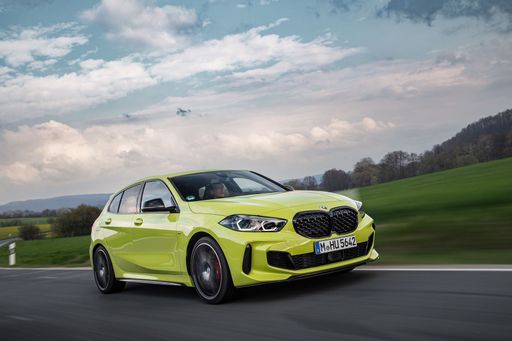
BMW 1 Series
BMW 1 Series
Toyota Urban Cruiser
Costs and Consumption
View detailed analysis
View detailed analysis
Engine and Performance
View detailed analysis
View detailed analysis
Dimensions and Body
View detailed analysis
View detailed analysis
BMW 1 Series
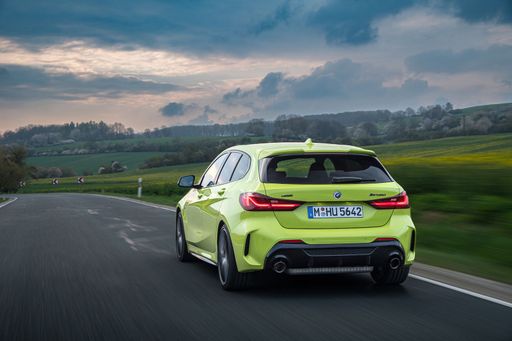
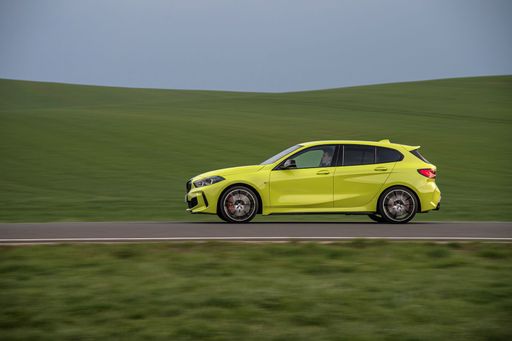
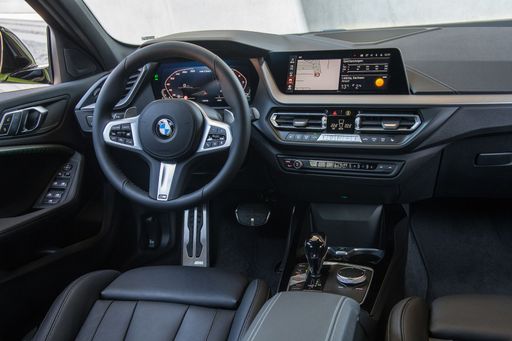
The BMW 1 Series is a compact premium hatchback that injects a proper sense of driving fun into everyday life, with sharp handling and a cabin that punches above its class. It’s a great pick for buyers who want sporty manners without losing practicality, and yes, you’ll still get that unmistakable BMW grin behind the wheel.
details
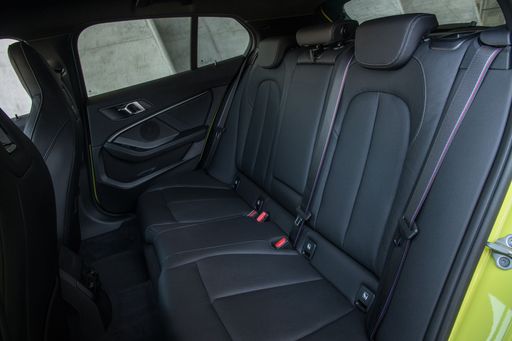
Toyota Urban Cruiser
The Toyota Urban Cruiser is a compact SUV that offers a blend of style and practicality, making it well-suited for urban living. It captures attention with its bold design, while providing a high driving position that enhances visibility and control on city roads. Inside, the Urban Cruiser offers comfortable seating and a range of features that cater to both driver and passengers, emphasizing convenience and everyday usability.
details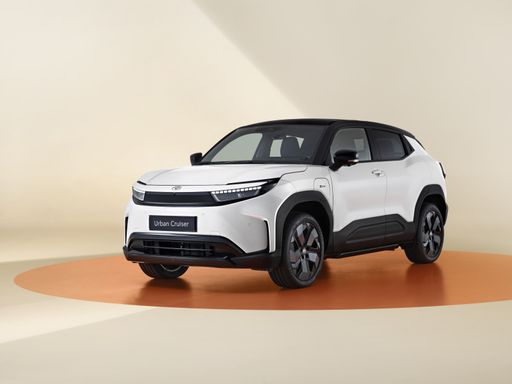
BMW 1 Series
Toyota Urban Cruiser
Costs and Consumption |
|
|---|---|
|
Price
29,400 - 51,900 £
|
Price
33,400 - 38,600 £
|
|
Consumption L/100km
4.3 - 7.6 L/100km
|
Consumption L/100km
-
|
|
Consumption kWh/100km
-
|
Consumption kWh/100km
15.1 - 16.6 kWh/100km
|
|
Electric Range
-
|
Electric Range
395 - 426 km
|
|
Battery Capacity
-
|
Battery Capacity
-
|
|
co2
112 - 173 g/km
|
co2
0 g/km
|
|
Fuel tank capacity
-
|
Fuel tank capacity
-
|
Dimensions and Body |
|
|---|---|
|
Body Type
Hatchback
|
Body Type
SUV
|
|
Seats
5
|
Seats
5
|
|
Doors
-
|
Doors
-
|
|
Curb weight
1,465 - 1,625 kg
|
Curb weight
1,839 - 1,939 kg
|
|
Trunk capacity
300 - 380 L
|
Trunk capacity
306 - 310 L
|
|
Length
-
|
Length
-
|
|
Width
1,800 mm
|
Width
1,800 mm
|
|
Height
-
|
Height
-
|
|
Max trunk capacity
-
|
Max trunk capacity
-
|
|
Payload
475 - 510 kg
|
Payload
411 - 421 kg
|
Engine and Performance |
|
|---|---|
|
Engine Type
Diesel, Petrol MHEV, Diesel MHEV, Petrol
|
Engine Type
Electric
|
|
Transmission
Automatic
|
Transmission
Automatic
|
|
Transmission Detail
Dual-Clutch Automatic
|
Transmission Detail
Reduction Gearbox
|
|
Drive Type
Front-Wheel Drive, All-Wheel Drive
|
Drive Type
Front-Wheel Drive, All-Wheel Drive
|
|
Power HP
122 - 300 HP
|
Power HP
174 - 184 HP
|
|
Acceleration 0-100km/h
4.9 - 9.8 s
|
Acceleration 0-100km/h
7.4 - 8.7 s
|
|
Max Speed
-
|
Max Speed
-
|
|
Torque
230 - 400 Nm
|
Torque
193 - 307 Nm
|
|
Number of Cylinders
3 - 4
|
Number of Cylinders
-
|
|
Power kW
90 - 221 kW
|
Power kW
128 - 135 kW
|
|
Engine capacity
1,499 - 1,998 cm3
|
Engine capacity
-
|
General |
|
|---|---|
|
Model Year
2024
|
Model Year
2026
|
|
CO2 Efficiency Class
D, C, F
|
CO2 Efficiency Class
A
|
|
Brand
BMW
|
Brand
Toyota
|
DriveDuel uses data analysis and artificial intelligence to evaluate vehicle data and create content. Content is regularly reviewed and improved.
The displayed prices are estimates based on German list prices, adjusted to the respective country’s VAT. Country-specific registration taxes are not included. This information is not legally binding.