VS

Toyota C-HR vs Toyota Urban Cruiser comparison

Compare performance (223 HP vs 184 HP), boot space and price (29,100 £ vs 33,400 £ ) at a glance. Find out which car is the better choice for you – Toyota C-HR or Toyota Urban Cruiser?

Toyota C-HR vs Toyota Urban Cruiser: Key differences

Toyota C-HR

4.9 (6 Reviews)
rate
  • somewhat cheaper
  • moderately more power
  • visibly lighter
  • markedly more trunk space
details

Toyota Urban Cruiser

4 (1 Reviews)
rate
  • significantly more electric range
details

All details on performance, efficiency, range and trunk space can be found in the technical comparison below – including user reviews for both models.

By Achim Sedelmaier

C-HR

Overview: Toyota C-HR VS Toyota Urban Cruiser — who suits your life?

The Toyota C-HR and the Toyota Urban Cruiser approach the compact SUV market from opposite angles: the C-HR leans into striking design, hybrid efficiency and a slightly more premium cabin feel, while the Urban Cruiser is a pragmatic, city-focused EV with a flexible rear bench and easy manoeuvrability. If you care about perceived quality and low running costs on mixed routes, the C-HR will feel like the more polished choice; if you want a no-nonsense electric daily that’s simple to park and adapt for passengers, the Urban Cruiser makes those compromises deliberately. Both are small SUVs, but their compromises differ — the C-HR asks you to accept tighter rear space for style and refinement, the Urban Cruiser trades some material finesse for rear-seat flexibility and EV simplicity. Read on for how those trade-offs play out in everyday life rather than on a specs sheet.
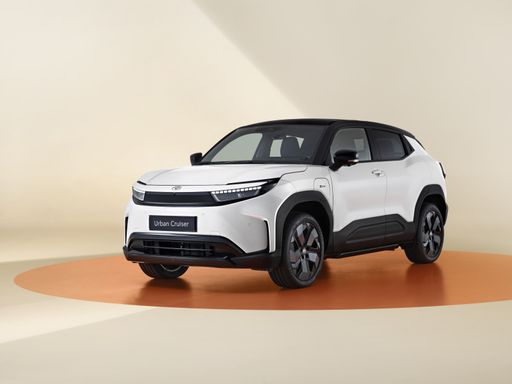
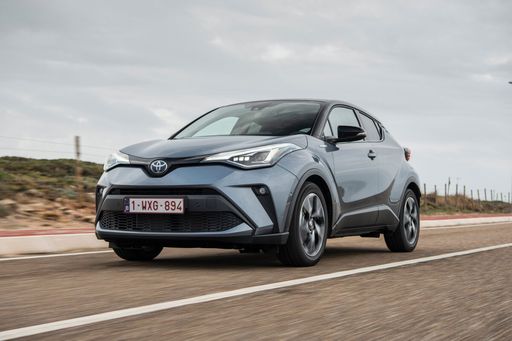
Urban Cruiser

Character and driving feel

The Toyota C-HR drives with a composed, Euro‑tuned demeanour: steering is precise, ride is settled and it feels more like a grown-up compact crossover when you’re cruising. By contrast, the Toyota Urban Cruiser is more polite than sporty — it’s light-footed in town and engineered for predictable, reassuring responses rather than involving steering or chassis feedback. Under hard acceleration the C-HR’s hybrid character can sound strained, which undermines the otherwise refined impression, while the Urban Cruiser’s EV drive is smooth off the line but can feel nervy over poor surfaces and lacks the same composure at higher speeds. The trade-off is clear: the C-HR favours driver refinement and efficiency, the Urban Cruiser prioritises ease of use and traction options for winter or slippery conditions.

C-HR

Comfort and cabin quality

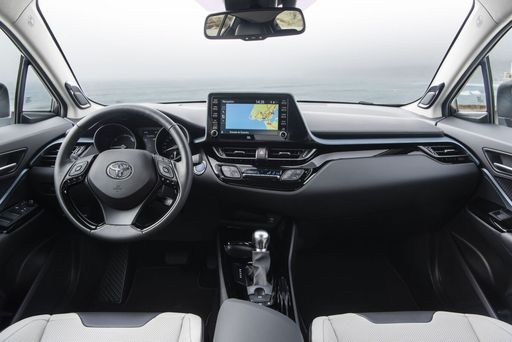
Inside, the Toyota C-HR presents a more cultivated environment with better materials, clearer graphics and logical physical controls that make daily use feel premium for the class. The Toyota Urban Cruiser, however, opts for a simpler, more utilitarian interior with harder plastics and a functional layout that emphasises practicality over polish. Rear-seat experience highlights the contrast: the C-HR’s back bench feels a touch claustrophobic and darker due to roofline and window treatment, whereas the Urban Cruiser delivers noticeably more legroom and a sliding bench that improves day‑to‑day flexibility despite less indulgent trim. So if tactile quality and a quieter cabin matter, the C-HR will please more; if rear passenger space and straightforward ergonomics are priorities, the Urban Cruiser is the pragmatic pick.

Practicality and everyday usability

Practical differences are where buyers will feel the split most sharply: the Toyota C-HR sacrifices boot practicality with a higher lip and awkward load shape that penalises bulky shopping and luggage, especially in its electrified variants. The Toyota Urban Cruiser also offers a small boot when the sliding rear bench is used for extra legroom, but it gives you choices — slide the seats forward and the usable cargo area increases, making it easier to carry kids’ kit or a folded buggy. Storage and controls underline the brands’ different priorities: the C-HR’s cabin controls are more intuitive and responsive, while the Urban Cruiser bundles useful app functions and basic tech but sometimes with slower on-screen response. In short, the C-HR feels less utilitarian but more refined, the Urban Cruiser feels more adjustable for family chores at the cost of load capacity when you prioritise passenger space.

City friendliness versus long-distance behaviour

In the urban environment the Toyota Urban Cruiser is the sharper tool — tiny turning circle, effortless low-speed manners and an EV powertrain that makes stop-start traffic relaxed and cheap to run. The Toyota C-HR is no slouch in town thanks to its hybrid smoothness, but it trades some of the Urban Cruiser’s nimbleness for a more composed ride and better highway manners. On longer trips the C-HR’s greater acoustic refinement and steadier chassis make motorway cruising less wearing, whereas the Urban Cruiser tends to feel noisier and more sensitive to road irregularities the moment speeds climb. Buyers must choose: Urban Cruiser for concentrated city use and winter traction options, C-HR for calmer long-distance comfort and a generally more refined highway presence.

Buyer fit — who should consider which car next?

Choose the Toyota C-HR if you prize style, interior refinement and low everyday running costs with the option of a hybrid or plug‑in setup that suits mixed commutes and occasional long drives. Opt for the Toyota Urban Cruiser if your life is largely urban, you need flexible rear seating for kids or cargo, and you want a straightforward EV that’s simple to park and confident in slippery conditions. Both cars ask you to accept trade-offs: the C-HR asks for forgiveness on rear space and boot practicality for a nicer cabin and quieter cruising, the Urban Cruiser asks you to accept a humbler finish and slower charging for greater everyday adaptability in tight city use. The technical comparison that follows will map those real‑world trade-offs to charging, range, power and boot choices so you can match the numbers to the lifestyle decision above.

Here’s where it gets real: The technical differences in detail

C-HR

Costs and Efficiency:

Price and efficiency are often the first things buyers look at. Here it becomes clear which model has the long-term edge – whether at the pump, the plug, or in purchase price.

Toyota C-HR is somewhat cheaper – starting at 29,100 £ , while the Toyota Urban Cruiser costs 33,400 £ . That’s a price difference of around 4,286 £.

As for electric range, the Toyota Urban Cruiser offers significantly more range – reaching up to 426 km, about 360 km more than the Toyota C-HR.

Urban Cruiser

Engine and Performance:

Power, torque and acceleration are the classic benchmarks for car enthusiasts – and here, some clear differences start to show.

When it comes to engine power, the Toyota C-HR offers moderately more power – delivering 223 HP compared to 184 HP. That’s roughly 39 HP more horsepower.

Both models accelerate almost equally fast – 7.4 s from 0 to 100 km/h.

C-HR

Space and Everyday Use:

Beyond pure performance, interior space and usability matter most in daily life. This is where you see which car is more practical and versatile.

Both vehicles offer seating for 5 people.

In terms of curb weight, Toyota C-HR is visibly lighter – 1,505 kg compared to 1,839 kg. The difference is around 334 kg.

Looking at boot space, the Toyota C-HR offers markedly more boot space – 447 L compared to 310 L. That’s a difference of about 137 L.

When it comes to payload, the Toyota C-HR carries very slightly more – 425 kg compared to 421 kg. That’s a difference of about 4 kg.

Who wins the race in the data check?

The Toyota Urban Cruiser stands well ahead of its rival in the objective data comparison.
This result only shows which model scores more points on paper – not which of the two cars feels right for you.

from £33,400
Urban Cruiser

Toyota Urban Cruiser

  • Engine Type : Electric
  • Transmission : Automatic
  • Drive Type : Front-Wheel Drive, All-Wheel Drive
  • Power HP : 174 - 184 HP
  • Consumption kWh/100km : 15.1 - 16.6 kWh/100km
  • Electric Range : 395 - 426 km
Toyota C-HR
Toyota Urban Cruiser

Costs and Consumption

View detailed analysis

Engine and Performance

View detailed analysis

Dimensions and Body

View detailed analysis

Toyota C-HR

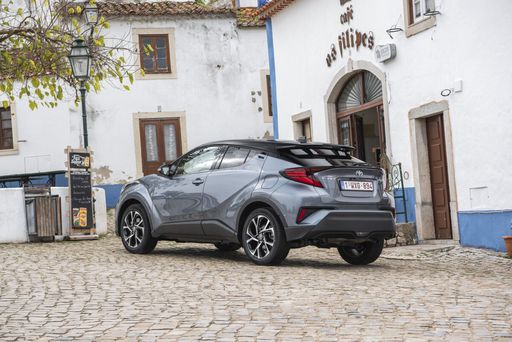
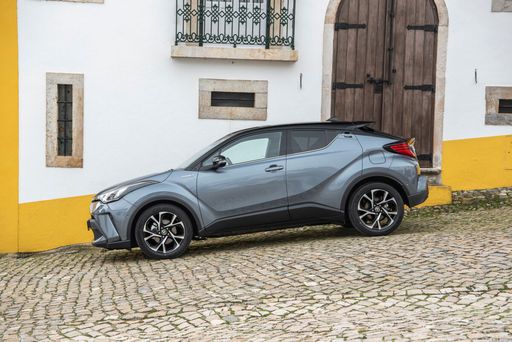
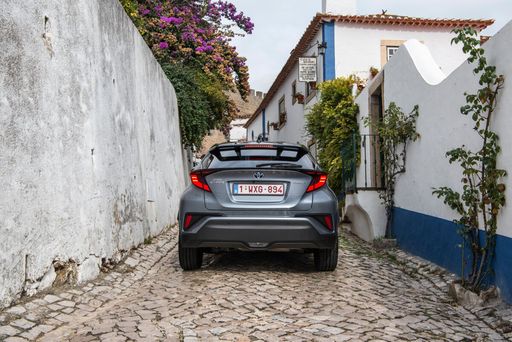
The Toyota C-HR is a bold, coupe-styled crossover that grabs attention with angular lines and a modern interior design. It’s aimed at comfortable urban driving and sensible efficiency, offering practical features and distinctive looks rather than rugged off-road ability.

details

Toyota Urban Cruiser

The Toyota Urban Cruiser is a compact SUV that offers a blend of style and practicality, making it well-suited for urban living. It captures attention with its bold design, while providing a high driving position that enhances visibility and control on city roads. Inside, the Urban Cruiser offers comfortable seating and a range of features that cater to both driver and passengers, emphasizing convenience and everyday usability.

details
Toyota C-HR
Toyota Urban Cruiser

Costs and Consumption

Price
29,100 - 42,800 £
Price
33,400 - 38,600 £
Consumption L/100km
2.3 - 5.1 L/100km
Consumption L/100km
-
Consumption kWh/100km
-
Consumption kWh/100km
15.1 - 16.6 kWh/100km
Electric Range
66 km
Electric Range
395 - 426 km
Battery Capacity
-
Battery Capacity
-
co2
52 - 116 g/km
co2
0 g/km
Fuel tank capacity
-
Fuel tank capacity
-

Dimensions and Body

Body Type
SUV
Body Type
SUV
Seats
5
Seats
5
Doors
-
Doors
-
Curb weight
1,505 - 1,755 kg
Curb weight
1,839 - 1,939 kg
Trunk capacity
350 - 447 L
Trunk capacity
306 - 310 L
Length
-
Length
-
Width
1,832 mm
Width
1,800 mm
Height
-
Height
-
Max trunk capacity
-
Max trunk capacity
-
Payload
375 - 425 kg
Payload
411 - 421 kg

Engine and Performance

Engine Type
Full Hybrid, Plugin Hybrid
Engine Type
Electric
Transmission
Automatic
Transmission
Automatic
Transmission Detail
CVT
Transmission Detail
Reduction Gearbox
Drive Type
Front-Wheel Drive, All-Wheel Drive
Drive Type
Front-Wheel Drive, All-Wheel Drive
Power HP
140 - 223 HP
Power HP
174 - 184 HP
Acceleration 0-100km/h
7.4 - 9.9 s
Acceleration 0-100km/h
7.4 - 8.7 s
Max Speed
-
Max Speed
-
Torque
-
Torque
193 - 307 Nm
Number of Cylinders
4
Number of Cylinders
-
Power kW
103 - 164 kW
Power kW
128 - 135 kW
Engine capacity
1,798 - 1,987 cm3
Engine capacity
-

General

Model Year
2026
Model Year
2026
CO2 Efficiency Class
C, D, B
CO2 Efficiency Class
A
Brand
Toyota
Brand
Toyota
DriveDuel uses data analysis and artificial intelligence to evaluate vehicle data and create content. Content is regularly reviewed and improved. The displayed prices are estimates based on German list prices, adjusted to the respective country’s VAT. Country-specific registration taxes are not included. This information is not legally binding.