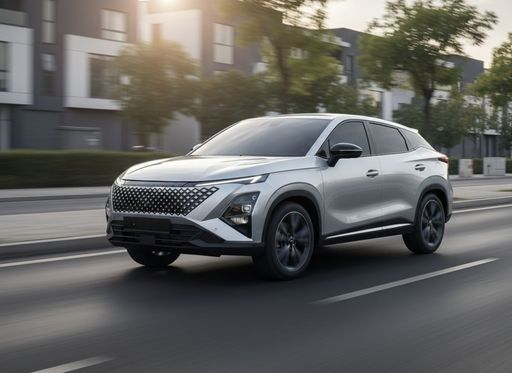
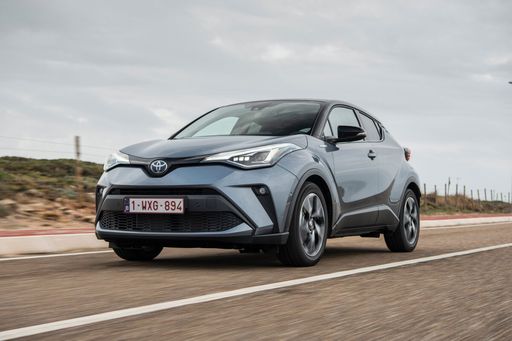
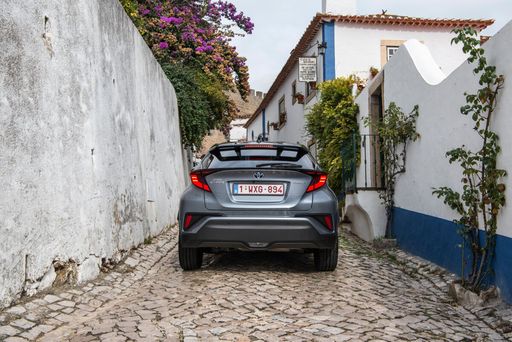
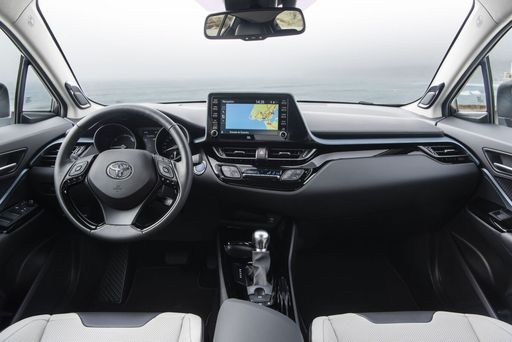
Compare performance (204 HP vs 223 HP), boot space and price (23,100 £ vs 29,100 £ ) at a glance. Find out which car is the better choice for you – Omoda 5 or Toyota C-HR?
When it comes to price and running costs, the biggest differences usually appear. This is often where you see which car fits your budget better in the long run.
Omoda 5 is markedly cheaper – starting at 23,100 £ , while the Toyota C-HR costs 29,100 £ . That’s a price difference of around 5,992 £.
Fuel consumption also shows a difference: the Toyota C-HR uses 2.3 L/100km and is clearly more efficient than the Omoda 5 with 7.5 L/100km. The difference is about 5.2 L/100km.
Power, torque and acceleration say a lot about how a car feels on the road. This is where you see which model delivers more driving dynamics.
When it comes to engine power, the Toyota C-HR offers only slightly more power – delivering 223 HP compared to 204 HP. That’s roughly 19 HP more horsepower.
When accelerating from 0 to 100 km/h, the Toyota C-HR is very slightly quicker – completing the sprint in 7.4 s, while the Omoda 5 takes 7.8 s. That’s about 0.4 s quicker.
Whether family car or daily driver – which one offers more room, flexibility and comfort?
Both vehicles offer seating for 5 people.
Looking at boot space, the Toyota C-HR offers clearly more boot space – 447 L compared to 0 L. That’s a difference of about 447 L.
The Toyota C-HR is clearly superior overall in the objective data comparison.
This result only shows which model scores more points on paper – not which of the two cars feels right for you.
The Omoda 5 arrives as a stylish, tech-forward compact crossover that punches above its class with bold design and a surprisingly premium cabin. It’s an attractive choice for buyers who want modern gadgets, confident road manners and value without the usual showroom drama.
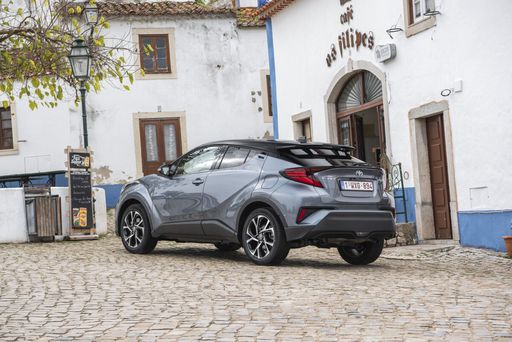
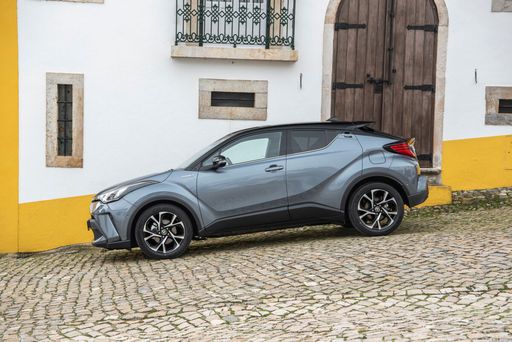
detailsThe Toyota C-HR cuts a striking figure with its angular styling and coupe-like profile, so you’ll never go unnoticed in the supermarket car park. It balances everyday practicality with a nimble, city-friendly personality, making routine commutes feel a touch more fun without asking for forgiveness.
detailsCosts and Consumption |
|
|---|---|
|
Price
23,100 £
|
Price
29,100 - 42,800 £
|
|
Consumption L/100km
7.5 L/100km
|
Consumption L/100km
2.3 - 5.1 L/100km
|
|
Consumption kWh/100km
-
|
Consumption kWh/100km
-
|
|
Electric Range
-
|
Electric Range
66 km
|
|
Battery Capacity
-
|
Battery Capacity
-
|
|
co2
-
|
co2
52 - 116 g/km
|
|
Fuel tank capacity
51 L
|
Fuel tank capacity
-
|
Dimensions and Body |
|
|---|---|
|
Body Type
SUV
|
Body Type
SUV
|
|
Seats
5
|
Seats
5
|
|
Doors
5
|
Doors
-
|
|
Curb weight
-
|
Curb weight
1,505 - 1,755 kg
|
|
Trunk capacity
0 L
|
Trunk capacity
350 - 447 L
|
|
Length
4,424 mm
|
Length
-
|
|
Width
1,830 mm
|
Width
1,832 mm
|
|
Height
1,588 mm
|
Height
-
|
|
Max trunk capacity
1,075 L
|
Max trunk capacity
-
|
|
Payload
-
|
Payload
375 - 425 kg
|
Engine and Performance |
|
|---|---|
|
Engine Type
Petrol
|
Engine Type
Full Hybrid, Plugin Hybrid
|
|
Transmission
Automatic
|
Transmission
Automatic
|
|
Transmission Detail
Dual-Clutch Automatic
|
Transmission Detail
CVT
|
|
Drive Type
Front-Wheel Drive
|
Drive Type
Front-Wheel Drive, All-Wheel Drive
|
|
Power HP
204 HP
|
Power HP
140 - 223 HP
|
|
Acceleration 0-100km/h
7.8 s
|
Acceleration 0-100km/h
7.4 - 9.9 s
|
|
Max Speed
220 km/h
|
Max Speed
-
|
|
Torque
290 Nm
|
Torque
-
|
|
Number of Cylinders
4
|
Number of Cylinders
4
|
|
Power kW
145 kW
|
Power kW
103 - 164 kW
|
|
Engine capacity
1,598 cm3
|
Engine capacity
1,798 - 1,987 cm3
|
General |
|
|---|---|
|
Model Year
2,024
|
Model Year
2,026
|
|
CO2 Efficiency Class
-
|
CO2 Efficiency Class
C, D, B
|
|
Brand
Omoda
|
Brand
Toyota
|