VS

Hyundai Tucson vs Omoda 5 comparison

Compare performance (288 HP vs 204 HP), boot space and price (20,900 £ vs 31,600 £ ) at a glance. Find out which car is the better choice for you – Hyundai Tucson or Omoda 5?

Hyundai Tucson vs Omoda 5: Key differences

Hyundai Tucson

3.9 (5 Reviews)
rate
  • clearly cheaper
  • markedly more power
  • very slightly quicker 0–100 km/h
  • somewhat lighter
  • clearly more trunk space
details

Omoda 5

4.9 (5 Reviews)
rate
  • clearly more electric range
details

All details on performance, efficiency, range and trunk space can be found in the technical comparison below – including user reviews for both models.

By Achim Sedelmaier

Tucson

Hyundai Tucson VS Omoda 5 — quick take

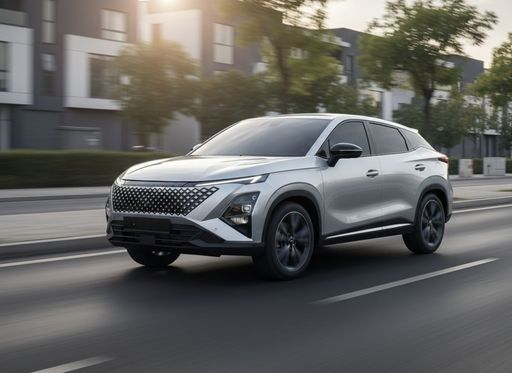
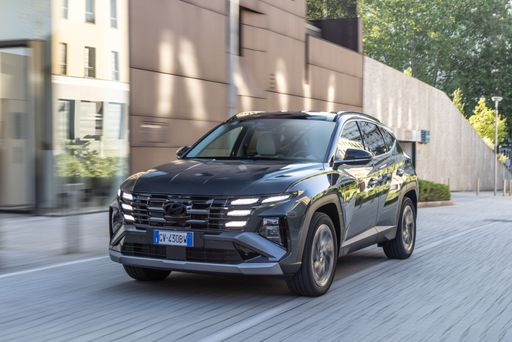
Hyundai Tucson VS Omoda 5 frames a clear choice between roomy, motorway-friendly refinement and a value-packed, well‑equipped newcomer. The Hyundai Tucson plays the role of a grown‑up compact SUV: lots of interior and luggage space, a calm highway demeanour and controls that feel more considered after a recent update. The Omoda 5 counters with an aggressive equipment list, a long warranty and strong safety credentials for a noticeably lower outlay, but it asks you to accept compromises in rear passenger space and boot practicality. This comparison will make those trade‑offs tangible for everyday use rather than rehashing spec sheets. Read on to see which car fits your routine and priorities before you dive into the numbers below.
5

Driving character and on‑road feel

The Hyundai Tucson steers light and predictable, tuned for safety and comfort rather than corner‑carving engagement, so it feels composed on long runs and reassuring in traffic. The Omoda 5 has a more tentative steering feel and a softer, sometimes wobbly suspension setup that can bob over uneven surfaces, leaving it less rewarding for drivers who expect crisp responses. Both cars avoid being harsh, but Tucson’s chassis and dampening make it feel more planted at speed while Omoda’s setup prioritises ride cushioning at the expense of precision. If you want a relaxing, confidence‑instilling commute the Tucson leans closer to that brief; if you want maximum kit for the money and can tolerate a less communicative chassis, the Omoda 5 answers differently.

Tucson

Comfort and long‑distance behavior

On motorways the Hyundai Tucson stands out for its low cabin noise and steady ride, making long days behind the wheel less tiring and masking hustle from the drivetrain until you really ask for performance. The Omoda 5 can be pleasantly quiet too, especially in its hybrid guise, but its body movements over sequenced bumps and the petrol engine’s vocal delivery under load make sustained high‑speed comfort a touch more variable. Front seating comfort is good in both cars, though taller occupants may find Tucson’s overall space advantage and better rear legroom more accommodating on family trips. In short, for long-distance serenity choose the Tucson; for a cheaper ticket to respectable motorway manners consider the Omoda, especially with the hybrid option.

Practicality, boot usability and family life

The Hyundai Tucson clearly targets families who need usable space: broad rear seats, flexible seat splits and a genuinely large, practical boot make packing for holidays or bulky weekly shops straightforward. The Omoda 5 delivers decent storage up front and clever interior cubbies, but its rear headroom and a shallower, flatter boot mean bigger suitcases and tall passengers feel cramped more quickly. There are ergonomic annoyances in both cars — Tucson’s higher loading sill and fiddly ISOFIX access versus Omoda’s tighter rear door apertures — so your decision will hinge on what you carry most often. Families who prioritise cargo versatility and roomier rear seats will find Tucson the more forgiving choice, while buyers who rarely use the back row and value warranty and equipment might prefer Omoda’s proposition.

City driving, visibility and everyday usability

In urban settings both cars are compact enough to park and nip around, but they take different approaches to driver assistance and ergonomics: Tucson’s updated controls and tactile shortcuts feel less distracting in daily use, while Omoda 5 pairs big screens with a denser menu structure that can be fiddly when you’re on the move. Visibility rearwards is a known weakness for both models and a camera is almost essential; Tucson’s driving position and light steering make tight manoeuvres easier, while Omoda compensates with more standard camera tech and a higher spec per pound. Ride comfort in slow town traffic reveals the contrast again — Tucson can show a slightly firmer response to short bumps depending on wheel size, whereas Omoda may feel softer but more prone to pitching. If you want uncomplicated, driver‑friendly controls in the city, the Tucson has the edge; if you prioritise standard kit like 360° cameras and driver aids, Omoda 5 is hard to beat for the money.

Buyer fit and the real trade‑offs

Choose the Hyundai Tucson if your priority is interior space, a calm highway experience and intuitive, higher‑grade ergonomics that suit family duties and regular long trips. The Omoda 5 will appeal if you want headline equipment, a long warranty and strong safety tech for a lower purchase price, and you can live with a snug rear bench and a smaller boot. Both cars offer hybrid or electrified options that change running costs and character — the Omoda hybrid smooths out city life, while Tucson’s plug‑in option rewards drivers who can charge regularly but has a few cold‑weather caveats to be aware of. The sections that follow will break those practical differences down into the technical figures you’ll want to compare next, so you can match the numbers to the real‑world trade‑offs described here.

Here’s where it gets real: The technical differences in detail

Tucson

Costs and Efficiency:

Looking at overall running costs, both models reveal some interesting differences in everyday economy.

Hyundai Tucson is clearly cheaper – starting at 20,900 £ , while the Omoda 5 costs 31,600 £ . That’s a price difference of around 10,731 £.

As for electric range, the Omoda 5 offers clearly more range – reaching up to 430 km, about 360 km more than the Hyundai Tucson.

5

Engine and Performance:

Under the bonnet, it becomes clear which model is tuned for sportiness and which one takes the lead when you hit the accelerator.

When it comes to engine power, the Hyundai Tucson offers markedly more power – delivering 288 HP compared to 204 HP. That’s roughly 84 HP more horsepower.

When accelerating from 0 to 100 km/h, the Hyundai Tucson is very slightly quicker – completing the sprint in 7.5 s, while the Omoda 5 takes 7.6 s. That’s about 0.1 s quicker.

There’s also a difference in torque: the Hyundai Tucson delivers a bit more torque with 379 Nm compared to 340 Nm. That’s about 39 Nm more.

Tucson

Space and Everyday Use:

Cabin size, boot volume and payload all play a role in everyday practicality. Here, comfort and flexibility make the difference.

Both vehicles offer seating for 5 people.

In terms of curb weight, Hyundai Tucson is somewhat lighter – 1,542 kg compared to 1,710 kg. The difference is around 168 kg.

Looking at boot space, the Hyundai Tucson offers clearly more boot space – 620 L compared to 350 L. That’s a difference of about 270 L.

When it comes to payload, the Hyundai Tucson carries barely more – 545 kg compared to 536 kg. That’s a difference of about 9 kg.

Who wins the race in the data check?

The Omoda 5 is narrowly ahead in the objective data comparison.
This result only shows which model scores more points on paper – not which of the two cars feels right for you.

£31,628
5

Omoda 5

  • Engine Type : Electric
  • Transmission : Automatic
  • Drive Type : Front-Wheel Drive
  • Power HP : 204 HP
  • Consumption kWh/100km : 15.9 kWh/100km
  • Electric Range : 430 km
Hyundai Tucson
Omoda 5

Costs and Consumption

View detailed analysis

Engine and Performance

View detailed analysis

Dimensions and Body

View detailed analysis

Hyundai Tucson

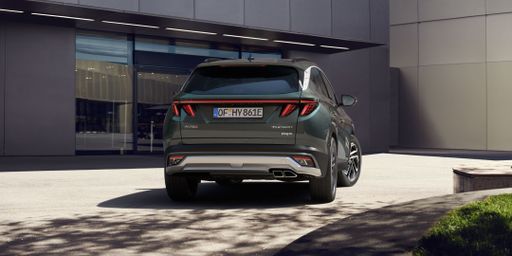
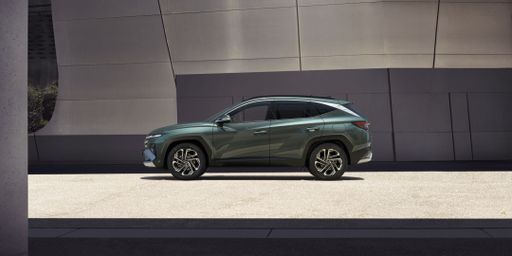
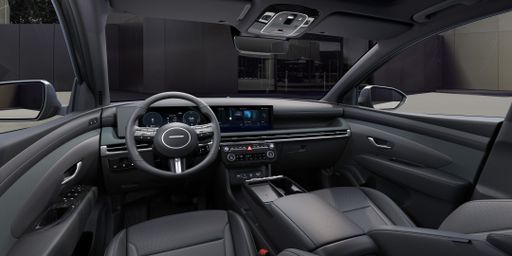
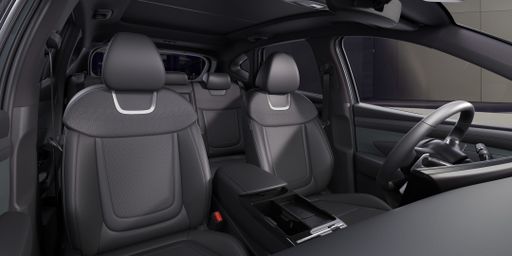
Hyundai Tucson marries bold, sculpted looks with a clever, roomy cabin that feels smarter than its price tag suggests. It's composed on the road, easy to live with day-to-day, and a sensible choice for buyers who want SUV style without the showroom theatrics.

details

Omoda 5

The Omoda 5 arrives as a stylish, tech-forward compact crossover that punches above its class with bold design and a surprisingly premium cabin. It’s an attractive choice for buyers who want modern gadgets, confident road manners and value without the usual showroom drama.

details
Hyundai Tucson
Omoda 5

Costs and Consumption

Price
20,900 - 47,900 £
Price
31,600 £
Consumption L/100km
2.7 - 7.6 L/100km
Consumption L/100km
-
Consumption kWh/100km
-
Consumption kWh/100km
15.9 kWh/100km
Electric Range
63 - 70 km
Electric Range
430 km
Battery Capacity
-
Battery Capacity
-
co2
62 - 172 g/km
co2
0 g/km
Fuel tank capacity
-
Fuel tank capacity
-

Dimensions and Body

Body Type
SUV
Body Type
SUV
Seats
5
Seats
5
Doors
-
Doors
-
Curb weight
1,542 - 1,893 kg
Curb weight
1,710 kg
Trunk capacity
546 - 620 L
Trunk capacity
350 L
Length
-
Length
-
Width
1,865 mm
Width
1,830 mm
Height
-
Height
-
Max trunk capacity
-
Max trunk capacity
-
Payload
518 - 545 kg
Payload
536 kg

Engine and Performance

Engine Type
Petrol, Full Hybrid, Plugin Hybrid, Diesel MHEV
Engine Type
Electric
Transmission
Manuel, Automatic
Transmission
Automatic
Transmission Detail
Manual Gearbox, Dual-Clutch Automatic, Automatic Gearbox
Transmission Detail
Reduction Gearbox
Drive Type
Front-Wheel Drive, All-Wheel Drive
Drive Type
Front-Wheel Drive
Power HP
136 - 288 HP
Power HP
204 HP
Acceleration 0-100km/h
7.5 - 11.6 s
Acceleration 0-100km/h
7.6 s
Max Speed
-
Max Speed
-
Torque
250 - 379 Nm
Torque
340 Nm
Number of Cylinders
4
Number of Cylinders
-
Power kW
100 - 212 kW
Power kW
150 kW
Engine capacity
1,598 cm3
Engine capacity
-

General

Model Year
2025
Model Year
2026
CO2 Efficiency Class
F, D, E, B
CO2 Efficiency Class
A
Brand
Hyundai
Brand
Omoda
DriveDuel uses data analysis and artificial intelligence to evaluate vehicle data and create content. Content is regularly reviewed and improved. The displayed prices are estimates based on German list prices, adjusted to the respective country’s VAT. Country-specific registration taxes are not included. This information is not legally binding.