VS

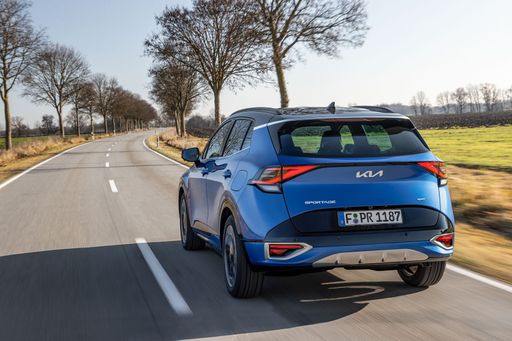
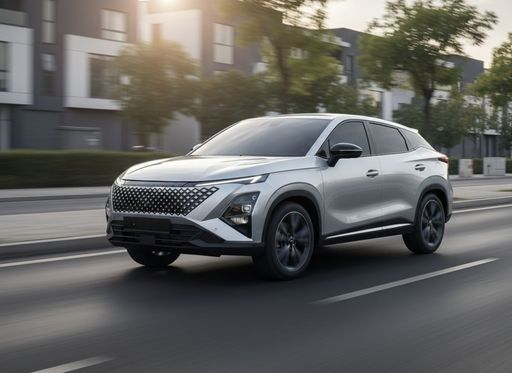
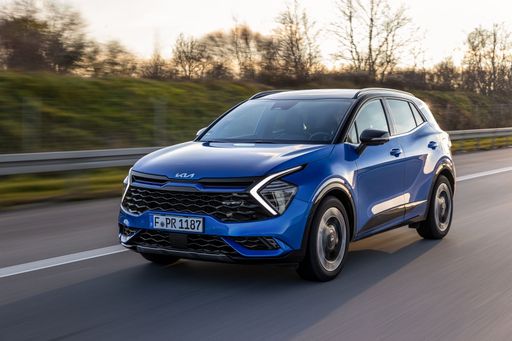
Kia Sportage vs Omoda 5 comparison

Compare performance (288 HP vs 204 HP), boot space and price (29,100 £ vs 31,600 £ ) at a glance. Find out which car is the better choice for you – Kia Sportage or Omoda 5?

Kia Sportage vs Omoda 5: Key differences

Kia Sportage

5 (3 Reviews)
rate
  • only slightly cheaper
  • clearly more power
  • barely quicker 0–100 km/h
  • a bit lighter
  • significantly more trunk space
details

Omoda 5

4.9 (5 Reviews)
rate
  • significantly more electric range
details

All details on performance, efficiency, range and trunk space can be found in the technical comparison below – including user reviews for both models.

By Achim Sedelmaier

Sportage

Quick take: Kia Sportage VS Omoda 5 — what this comparison is about

Kia Sportage VS Omoda 5 pits a roomy, comfort‑focused compact SUV against a newer, kit‑heavy challenger that undercuts on price. The Kia Sportage trades a bit of agility for a composed, long‑distance demeanor and one of the more practical cabins in the class. The Omoda 5 arrives with generous standard equipment, strong safety credentials and an attractive purchase price, but you pay for that with a tighter rear seat and a smaller boot. Read on to see which compromises matter for daily life, family use and long trips rather than for spec sheets alone.
5

Character and driving feel: relaxed cruiser versus eager upstart

The Kia Sportage leans into a composed, confidence‑inspiring character — it soaks up motorway miles and feels stable around bends without exciting you. The Omoda 5 aims to impress with a modern interior and eager value proposition, but its steering is less precise and the suspension can bob over uneven surfaces, which reduces driver confidence on twisty roads. If you choose the Omoda 5 with its hybrid powertrain you’ll notice quieter, smoother acceleration in daily traffic, whereas many Sportage versions prioritise a gruffer but predictable power delivery. The net effect: Sportage feels more mature and steady; Omoda feels newer and flashier but with compromises in steering and body control.

Sportage

Comfort and long‑distance behavior: space and serenity versus economical calm

For extended journeys the Kia Sportage stands out: roomy rear seats, adjustable recline and superior luggage flexibility make packing and passenger comfort straightforward. The Omoda 5 can be surprisingly quiet on the motorway, especially in hybrid form, but its rear headroom and seat space are noticeably tighter for tall passengers, and the softer suspension sometimes leads to unsettling bobbing over poor surfaces. Sportage’s cabin insulation and seat comfort favour families and frequent long‑distance drivers, while Omoda rewards commuters who prioritise low running noise and economy over rear‑seat generosity. Choose Sportage when passenger comfort and luggage space are top priorities; pick Omoda 5 if efficient, quiet commuting and low purchase cost matter more.

Practicality and everyday usability: thoughtful family utility vs clever value packaging

The Kia Sportage is engineered around practicality: a large, well‑shaped boot, split rear seats and smart load‑floor solutions make it easier to handle luggage, strollers and longer items without gymnastics. The Omoda 5 keeps things simple and its boot is shallower and less accommodating for bulky loads, which shows when you try to fit multiple suitcases or a child seat and cargo at once. Inside, Sportage offers more rear legroom and easier ISOFIX access, while Omoda 5 wins on upfront kit — think heated seats, driver aids and cameras as standard. In short, Sportage is the better everyday tool for families and holiday trips, Omoda 5 is better for buyers who want maximum features for their money and can live with tighter load space.

City friendliness and cabin usability: compact convenience versus ergonomic friction

In urban use the Omoda 5’s compact footprint and plentiful cameras make manoeuvring and parking feel straightforward, and its high equipment level reduces the need to option extra features. That said, Omoda’s cabin can irritate with frequent assistant alerts and a touchscreen workflow that buries some functions, so short trips can become annoying if you constantly mute warnings. The Kia Sportage offers a slightly more intuitive layout and a calmer cabin feel, but its thicker C‑pillars and narrower rear window mean you’ll rely on cameras more often when reversing. If you prioritise slick tech and a small exterior, Omoda 5 has the urban edge; if you prefer clearer ergonomics and a more substantial cabin presence, the Sportage is more comfortable day‑to‑day.

Buyer fit: who should consider which car before diving into the specs

If your priority is carrying people and luggage in comfort, making regular long trips and living with a proven, solid interior, the Kia Sportage aligns better with those needs. If you’re buying on a tight budget but want a loaded car out of the showroom, strong crash ratings and a reassuring warranty, the Omoda 5 is hard to beat — especially in hybrid form for efficient commuting. Both cars offer seven‑year coverage and contemporary safety assists, so the decision narrows to whether you value roomy practicality over headline kit and price. Below this editorial we break the differences down into technical details so you can match engines, boot space and running costs to the lifestyle described here.

Here’s where it gets real: The technical differences in detail

Sportage

Costs and Efficiency:

Price and efficiency are often the first things buyers look at. Here it becomes clear which model has the long-term edge – whether at the pump, the plug, or in purchase price.

Kia Sportage is only slightly cheaper – starting at 29,100 £ , while the Omoda 5 costs 31,600 £ . That’s a price difference of around 2,494 £.

As for electric range, the Omoda 5 offers significantly more range – reaching up to 430 km, about 364 km more than the Kia Sportage.

5

Engine and Performance:

Power, torque and acceleration say a lot about how a car feels on the road. This is where you see which model delivers more driving dynamics.

When it comes to engine power, the Kia Sportage offers clearly more power – delivering 288 HP compared to 204 HP. That’s roughly 84 HP more horsepower.

When accelerating from 0 to 100 km/h, the Kia Sportage is barely quicker – completing the sprint in 7.5 s, while the Omoda 5 takes 7.6 s. That’s about 0.1 s quicker.

There’s also a difference in torque: the Kia Sportage delivers moderately more torque with 380 Nm compared to 340 Nm. That’s about 40 Nm more.

Sportage

Space and Everyday Use:

Whether family car or daily driver – which one offers more room, flexibility and comfort?

Both vehicles offer seating for 5 people.

In terms of curb weight, Kia Sportage is a bit lighter – 1,552 kg compared to 1,710 kg. The difference is around 158 kg.

Looking at boot space, the Kia Sportage offers significantly more boot space – 587 L compared to 350 L. That’s a difference of about 237 L.

When it comes to payload, the Kia Sportage carries marginally more – 580 kg compared to 536 kg. That’s a difference of about 44 kg.

Who wins the race in the data check?

The Omoda 5 leads convincingly in the objective data comparison.
This result only shows which model scores more points on paper – not which of the two cars feels right for you.

£31,628
5

Omoda 5

  • Engine Type : Electric
  • Transmission : Automatic
  • Drive Type : Front-Wheel Drive
  • Power HP : 204 HP
  • Consumption kWh/100km : 15.9 kWh/100km
  • Electric Range : 430 km
Kia Sportage
Omoda 5

Costs and Consumption

View detailed analysis

Engine and Performance

View detailed analysis

Dimensions and Body

View detailed analysis

Kia Sportage

The Kia Sportage is a roomy, well-equipped compact SUV that balances comfort and practicality for daily driving. It delivers a modern interior, composed ride, and strong value for buyers who want versatility without fuss.

details

Omoda 5

The Omoda 5 is a stylish compact crossover that catches the eye with a bold, contemporary look and a tech-forward cabin. It offers a comfortable ride and a surprisingly spacious interior, making it a practical yet distinctive choice for buyers who want modern features and solid value.

details
Kia Sportage
Omoda 5

Costs and Consumption

Price
29,100 - 47,100 £
Price
31,600 £
Consumption L/100km
2.9 - 7.8 L/100km
Consumption L/100km
-
Consumption kWh/100km
-
Consumption kWh/100km
15.9 kWh/100km
Electric Range
63 - 66 km
Electric Range
430 km
Battery Capacity
-
Battery Capacity
-
co2
67 - 177 g/km
co2
0 g/km
Fuel tank capacity
-
Fuel tank capacity
-

Dimensions and Body

Body Type
SUV
Body Type
SUV
Seats
5
Seats
5
Doors
-
Doors
-
Curb weight
1,552 - 1,896 kg
Curb weight
1,710 kg
Trunk capacity
526 - 587 L
Trunk capacity
350 L
Length
-
Length
-
Width
1,865 mm
Width
1,830 mm
Height
-
Height
-
Max trunk capacity
-
Max trunk capacity
-
Payload
533 - 580 kg
Payload
536 kg

Engine and Performance

Engine Type
Petrol, Full Hybrid, Diesel MHEV, Plugin Hybrid
Engine Type
Electric
Transmission
Manuel, Automatic
Transmission
Automatic
Transmission Detail
Manual Gearbox, Dual-Clutch Automatic, Automatic Gearbox
Transmission Detail
Reduction Gearbox
Drive Type
Front-Wheel Drive, All-Wheel Drive
Drive Type
Front-Wheel Drive
Power HP
136 - 288 HP
Power HP
204 HP
Acceleration 0-100km/h
7.5 - 11.6 s
Acceleration 0-100km/h
7.6 s
Max Speed
-
Max Speed
-
Torque
250 - 380 Nm
Torque
340 Nm
Number of Cylinders
4
Number of Cylinders
-
Power kW
100 - 212 kW
Power kW
150 kW
Engine capacity
1,598 cm3
Engine capacity
-

General

Model Year
2,025 - 2,026
Model Year
2026
CO2 Efficiency Class
F, D, E, G, B
CO2 Efficiency Class
A
Brand
Kia
Brand
Omoda
DriveDuel uses data analysis and artificial intelligence to evaluate vehicle data and create content. Content is regularly reviewed and improved. The displayed prices are estimates based on German list prices, adjusted to the respective country’s VAT. Country-specific registration taxes are not included. This information is not legally binding.