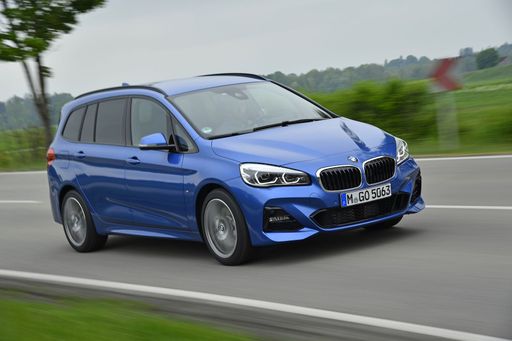
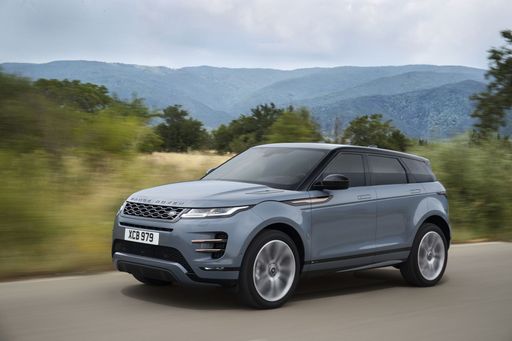
Compare performance (326 HP vs 269 HP), boot space and price (31000 £ vs 43300 £ ) at a glance. Find out which car is the better choice for you – BMW 2 Series Active Tourer or Land Rover Range Rover Evoque?
Price and efficiency are often the first things buyers look at. Here it becomes clear which model has the long-term edge – whether at the pump, the plug, or in purchase price.
BMW 2 Series Active Tourer has a clearly perceptible advantage in terms of price – it starts at 31000 £ , while the Land Rover Range Rover Evoque costs 43300 £ . That’s a price difference of around 12257 £.
Fuel consumption also shows a difference: BMW 2 Series Active Tourer manages with 2.90 L and is therefore evident more efficient than the Land Rover Range Rover Evoque with 3.70 L. The difference is about 0.80 L per 100 km.
As for electric range, the BMW 2 Series Active Tourer performs evident better – achieving up to 82 km, about 22 km more than the Land Rover Range Rover Evoque.
Under the bonnet, it becomes clear which model is tuned for sportiness and which one takes the lead when you hit the accelerator.
When it comes to engine power, the BMW 2 Series Active Tourer has a slightly edge – offering 326 HP compared to 269 HP. That’s roughly 57 HP more horsepower.
In acceleration from 0 to 100 km/h, the BMW 2 Series Active Tourer is clearly perceptible quicker – completing the sprint in 5.50 s, while the Land Rover Range Rover Evoque takes 7.20 s. That’s about 1.70 s faster.
In terms of top speed, the BMW 2 Series Active Tourer performs somewhat better – reaching 238 km/h, while the Land Rover Range Rover Evoque tops out at 213 km/h. The difference is around 25 km/h.
There’s also a difference in torque: Land Rover Range Rover Evoque pulls slightly stronger with 540 Nm compared to 477 Nm. That’s about 63 Nm difference.
Whether family car or daily driver – which one offers more room, flexibility and comfort?
Both vehicles offer seating for 5 people.
In curb weight, BMW 2 Series Active Tourer is a bit lighter – 1545 kg compared to 1792 kg. The difference is around 247 kg.
In terms of boot space, the Land Rover Range Rover Evoque offers hardly perceptible more room – 472 L compared to 470 L. That’s a difference of about 2 L.
In maximum load capacity, the BMW 2 Series Active Tourer performs noticeable better – up to 1455 L, which is about 299 L more than the Land Rover Range Rover Evoque.
When it comes to payload, Land Rover Range Rover Evoque slightly takes the win – 600 kg compared to 505 kg. That’s a difference of about 95 kg.
Overall, the BMW 2 Series Active Tourer shows itself to be leaves the rival little chance and secures the title of DriveDuel Champion.
It convinces with the more balanced overall package and proves to be the more versatile choice for everyday use.
The BMW 2 Series Active Tourer turns the family MPV into something you’d actually want to park outside a café, pairing compact practicality with surprisingly premium cabin flair. It won’t thrill like a sports car, but it drives with the composed poise you expect from the badge and keeps daily life easy and un-fussy.
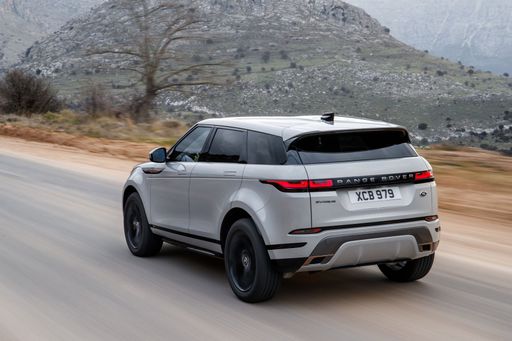
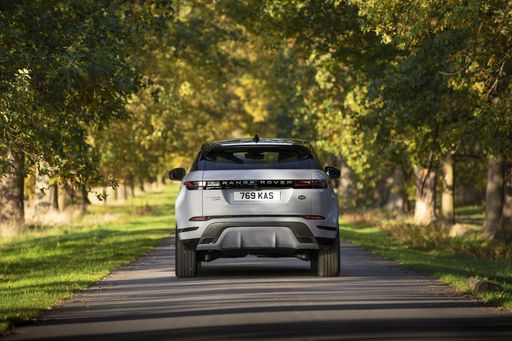
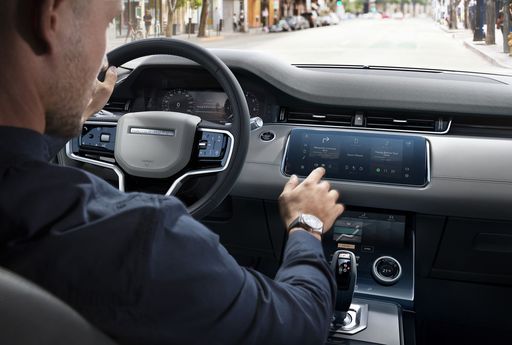
detailsThe Range Rover Evoque turns heads with a compact, sculpted silhouette and an interior that feels more boutique hotel than utility vehicle. It delivers composed, playful handling around town while keeping enough ruggedness for weekend escapes — perfect for buyers who want luxury without the ostentation.
detailsCosts and Consumption |
|
|---|---|
|
Price
31000 - 48000 £
|
Price
43300 - 64800 £
|
|
Consumption L/100km
2.9 - 6.2 L
|
Consumption L/100km
3.7 - 7.8 L
|
|
Consumption kWh/100km
-
|
Consumption kWh/100km
-
|
|
Electric Range
82 km
|
Electric Range
60 km
|
|
Battery Capacity
14.20 kWh
|
Battery Capacity
11.50 kWh
|
|
co2
65 - 140 g/km
|
co2
85 - 177 g/km
|
|
Fuel tank capacity
45 - 54 L
|
Fuel tank capacity
57 - 67 L
|
Dimensions and Body |
|
|---|---|
|
Body Type
MPV
|
Body Type
SUV
|
|
Seats
5
|
Seats
5
|
|
Doors
5
|
Doors
5
|
|
Curb weight
1545 - 1920 kg
|
Curb weight
1792 - 2157 kg
|
|
Trunk capacity
406 - 470 L
|
Trunk capacity
472 L
|
|
Length
4386 mm
|
Length
4371 mm
|
|
Width
1824 mm
|
Width
1900 mm
|
|
Height
1576 mm
|
Height
1649 mm
|
|
Max trunk capacity
1370 - 1455 L
|
Max trunk capacity
1156 L
|
|
Payload
465 - 505 kg
|
Payload
503 - 600 kg
|
Engine and Performance |
|
|---|---|
|
Engine Type
Petrol, Petrol MHEV, Diesel, Diesel MHEV, Plugin Hybrid
|
Engine Type
Petrol MHEV, Diesel MHEV, Plugin Hybrid
|
|
Transmission
Automatic
|
Transmission
Manuel, Automatic
|
|
Transmission Detail
Dual-Clutch Automatic
|
Transmission Detail
Manual Gearbox, Automatic Gearbox
|
|
Drive Type
Front-Wheel Drive, All-Wheel Drive
|
Drive Type
Front-Wheel Drive, All-Wheel Drive
|
|
Power HP
122 - 326 HP
|
Power HP
160 - 269 HP
|
|
Acceleration 0-100km/h
5.5 - 10.3 s
|
Acceleration 0-100km/h
7.2 - 10.3 s
|
|
Max Speed
195 - 238 km/h
|
Max Speed
190 - 213 km/h
|
|
Torque
230 - 477 Nm
|
Torque
260 - 540 Nm
|
|
Number of Cylinders
3 - 4
|
Number of Cylinders
3 - 4
|
|
Power kW
90 - 240 kW
|
Power kW
118 - 198 kW
|
|
Engine capacity
1499 - 1998 cm3
|
Engine capacity
1498 - 1998 cm3
|
General |
|
|---|---|
|
Model Year
2024 - 2025
|
Model Year
2025
|
|
CO2 Efficiency Class
E, D, B
|
CO2 Efficiency Class
G, F, B
|
|
Brand
BMW
|
Brand
Land Rover
|
Available configurations include Front-Wheel Drive or All-Wheel Drive.