VS

BMW 2 Series Active Tourer vs Mitsubishi Eclipse Cross comparison

Compare performance (326 HP vs 218 HP), boot space and price (31,500 £ vs 41,100 £ ) at a glance. Find out which car is the better choice for you – BMW 2 Series Active Tourer or Mitsubishi Eclipse Cross?

BMW 2 Series Active Tourer vs Mitsubishi Eclipse Cross: Key differences

BMW 2 Series Active Tourer

4.1 (2 Reviews)
rate
  • markedly cheaper
  • visibly more power
  • considerably quicker 0–100 km/h
  • clearly lighter
details

Mitsubishi Eclipse Cross

4.9 (2 Reviews)
rate
  • substantially more electric range
  • moderately more trunk space
details

All details on performance, efficiency, range and trunk space can be found in the technical comparison below – including user reviews for both models.

By Achim Sedelmaier

2 Series Active Tourer

In the evolving world of automotive design, consumers often find themselves choosing between a variety of incredibly equipped vehicles that cater to diverse needs. Today, we dive into a comparison between the BMW 2er Active Tourer and the Mitsubishi Eclipse Cross, two formidable contenders in the MPV and SUV segments, respectively. This article will outline their technical specifications, innovations, and what you can expect from each model in terms of performance, efficiency, and driving experience.
Eclipse Cross

Design and Dimensions

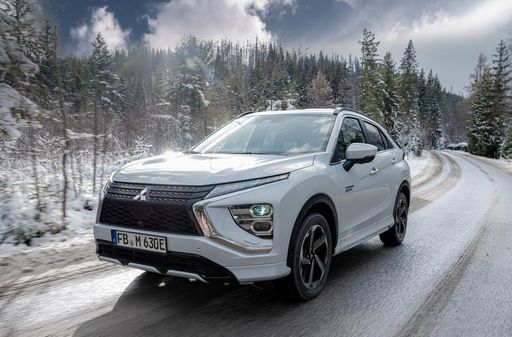
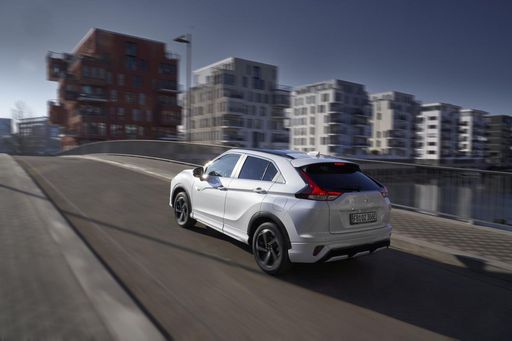
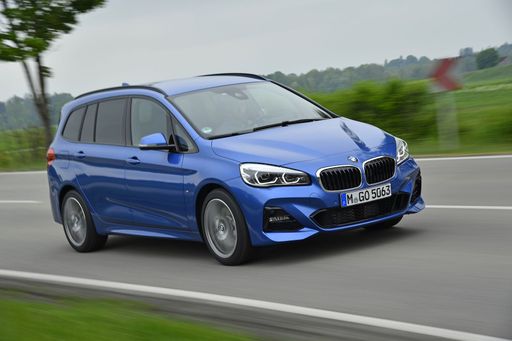
The BMW 2er Active Tourer is crafted as a compact MPV, measuring 4,386 mm in length, 1,824 mm in width, and 1,576 mm in height. Its sleek design, accentuated by a sporty silhouette, exudes a sense of modern luxury and functionality. In contrast, the Mitsubishi Eclipse Cross, an SUV, boasts larger dimensions with a length of 4,545 mm, width of 1,805 mm, and a height of 1,685 mm. This size not only contributes to a commanding road presence but also offers a spacious cabin suitable for families.

2 Series Active Tourer

Powertrain and Performance

The BMW 2er Active Tourer offers a range of engine options, including petrol, diesel, and hybrid variants. Power outputs range from 122 HP to a thrilling 326 HP, providing ample choices for varying driving styles. Its advanced transmission systems include a dual-clutch automatic, ensuring smooth gear transitions and enhanced performance. The vehicle can achieve 0-100 km/h in as little as 5.5 seconds, showcasing its impressive acceleration capabilities.

On the other hand, the Mitsubishi Eclipse Cross is equipped with a plug-in hybrid engine generating 188 HP. While its acceleration from 0-100 km/h is slightly less impressive at 10.9 seconds, it compensates with exceptional fuel efficiency, consuming as little as 2 L/100 km. This balance of power and efficiency makes the Eclipse Cross an attractive option for eco-conscious drivers.

Eclipse Cross

Efficiency and Range

When it comes to fuel efficiency and range, the BMW 2er Active Tourer also shines, with various models offering combined fuel consumption from 4.5 to 6.2 L/100 km. The plug-in hybrid variant boasts an electric range of 88 km, making it ideal for urban commuting. Additionally, its battery capacity of 14.2 kWh supports efficient short-range travel while reducing overall emissions.

In comparison, the Mitsubishi Eclipse Cross stands out with its 45 km electric range, making it well-suited for those who engage in shorter, more frequent trips. With a CO2 output of only 46 g/km, it clearly positions itself in the burgeoning green segment of the market, attracting users interested in sustainability without sacrificing performance.

2 Series Active Tourer

Interior and Comfort Features

Inside, the BMW 2er Active Tourer emphasizes a premium experience complete with high-quality materials and advanced technological features. It seats five comfortably and includes a trunk capacity of up to 470 liters, catering well to family needs. Infotainment options are plentiful, featuring the latest BMW iDrive system, connectivity, and comfort features designed for modern drivers.

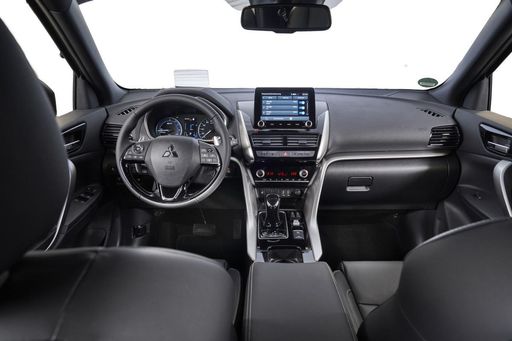
Meanwhile, the Mitsubishi Eclipse Cross also accommodates five passengers and provides a decent trunk capacity of 359 liters. It focuses on pragmatic comfort and technology but does not quite match the aesthetic finesse and sleek design of the BMW interior. Nonetheless, it includes essential infotainment features and driver assistive technologies, enhancing the overall driving experience.

Eclipse Cross

Final Thoughts

Choosing between the BMW 2er Active Tourer and the Mitsubishi Eclipse Cross ultimately boils down to consumer priorities. If luxury, high-performance capabilities, and innovative engineering are paramount, the BMW 2er Active Tourer is the clear choice. However, if efficiency, sustainability, and practical use are your main concerns, the Mitsubishi Eclipse Cross offers a compelling alternative that aligns well with eco-friendly values.

In conclusion, both vehicles present strong offerings in their classes, and understanding their individual strengths will help you make an informed decision. Whether you opt for the sporty flair of the BMW or the practicality of the Mitsubishi, both cars are ready to deliver outstanding experiences on the road.

Here’s where it gets real: The technical differences in detail

2 Series Active Tourer

Costs and Efficiency:

Price and efficiency are often the first things buyers look at. Here it becomes clear which model has the long-term edge – whether at the pump, the plug, or in purchase price.

BMW 2 Series Active Tourer is markedly cheaper – starting at 31,500 £ , while the Mitsubishi Eclipse Cross costs 41,100 £ . That’s a price difference of around 9,634 £.

As for electric range, the Mitsubishi Eclipse Cross offers substantially more range – reaching up to 627 km, about 545 km more than the BMW 2 Series Active Tourer.

Eclipse Cross

Engine and Performance:

Under the bonnet, it becomes clear which model is tuned for sportiness and which one takes the lead when you hit the accelerator.

When it comes to engine power, the BMW 2 Series Active Tourer offers visibly more power – delivering 326 HP compared to 218 HP. That’s roughly 108 HP more horsepower.

When accelerating from 0 to 100 km/h, the BMW 2 Series Active Tourer is considerably quicker – completing the sprint in 5.5 s, while the Mitsubishi Eclipse Cross takes 7.9 s. That’s about 2.4 s quicker.

There’s also a difference in torque: the BMW 2 Series Active Tourer delivers noticeably more torque with 477 Nm compared to 300 Nm. That’s about 177 Nm more.

2 Series Active Tourer

Space and Everyday Use:

Beyond pure performance, interior space and usability matter most in daily life. This is where you see which car is more practical and versatile.

Both vehicles offer seating for 5 people.

In terms of curb weight, BMW 2 Series Active Tourer is clearly lighter – 1,545 kg compared to 1,922 kg. The difference is around 377 kg.

Looking at boot space, the Mitsubishi Eclipse Cross offers moderately more boot space – 545 L compared to 470 L. That’s a difference of about 75 L.

When it comes to payload, the BMW 2 Series Active Tourer carries somewhat more – 505 kg compared to 413 kg. That’s a difference of about 92 kg.

Who wins the race in the data check?

The BMW 2 Series Active Tourer is narrowly ahead in the objective data comparison.
This result only shows which model scores more points on paper – not which of the two cars feels right for you.

from £31,500
2 Series Active Tourer

BMW 2 Series Active Tourer

  • Engine Type Petrol, Petrol MHEV, Diesel, Diesel MHEV, Plugin Hybrid
  • Transmission Automatic
  • Drive Type Front-Wheel Drive, All-Wheel Drive
  • Power HP 122 - 326 HP
  • Consumption L/100km 2.9 - 6.2 L/100km
  • Electric Range 82 km
BMW 2 Series Active Tourer
Mitsubishi Eclipse Cross

Costs and Consumption

View detailed analysis

Engine and Performance

View detailed analysis

Dimensions and Body

View detailed analysis

BMW 2 Series Active Tourer

The BMW 2 Series Active Tourer turns the family MPV into something you’d actually want to park outside a café, pairing compact practicality with surprisingly premium cabin flair. It won’t thrill like a sports car, but it drives with the composed poise you expect from the badge and keeps daily life easy and un-fussy.

details

Mitsubishi Eclipse Cross

Mitsubishi Eclipse Cross combines coupe-like looks with crossover practicality, so you get style without the showroom attitude. It’s an affable daily driver that hides a few quirks behind a confident grin, making it an easy pick for buyers who want personality without fuss.

details
BMW 2 Series Active Tourer
Mitsubishi Eclipse Cross

Costs and Consumption

Price
31,500 - 48,500 £
Price
41,100 - 48,200 £
Consumption L/100km
2.9 - 6.2 L/100km
Consumption L/100km
-
Consumption kWh/100km
-
Consumption kWh/100km
16.7 - 17.1 kWh/100km
Electric Range
82 km
Electric Range
615 - 627 km
Battery Capacity
-
Battery Capacity
-
co2
65 - 140 g/km
co2
0 g/km
Fuel tank capacity
-
Fuel tank capacity
-

Dimensions and Body

Body Type
MPV
Body Type
SUV
Seats
5
Seats
5
Doors
-
Doors
-
Curb weight
1,545 - 1,920 kg
Curb weight
1,922 - 1,950 kg
Trunk capacity
406 - 470 L
Trunk capacity
545 L
Length
-
Length
-
Width
1,824 mm
Width
1,908 mm
Height
-
Height
-
Max trunk capacity
-
Max trunk capacity
-
Payload
465 - 505 kg
Payload
385 - 413 kg

Engine and Performance

Engine Type
Petrol, Petrol MHEV, Diesel, Diesel MHEV, Plugin Hybrid
Engine Type
Electric
Transmission
Automatic
Transmission
Automatic
Transmission Detail
Dual-Clutch Automatic
Transmission Detail
Reduction Gearbox
Drive Type
Front-Wheel Drive, All-Wheel Drive
Drive Type
Front-Wheel Drive
Power HP
122 - 326 HP
Power HP
218 HP
Acceleration 0-100km/h
5.5 - 10.3 s
Acceleration 0-100km/h
7.9 s
Max Speed
-
Max Speed
-
Torque
230 - 477 Nm
Torque
300 Nm
Number of Cylinders
3 - 4
Number of Cylinders
-
Power kW
90 - 240 kW
Power kW
160 kW
Engine capacity
1,499 - 1,998 cm3
Engine capacity
-

General

Model Year
2,024 - 2,025
Model Year
2025
CO2 Efficiency Class
E, D, B
CO2 Efficiency Class
A
Brand
BMW
Brand
Mitsubishi
DriveDuel uses data analysis and artificial intelligence to evaluate vehicle data and create content. Content is regularly reviewed and improved. The displayed prices are estimates based on German list prices, adjusted to the respective country’s VAT. Country-specific registration taxes are not included. This information is not legally binding.